Apps & software
Set-up, comparisons and alternatives for apps and software.
Lifestyle
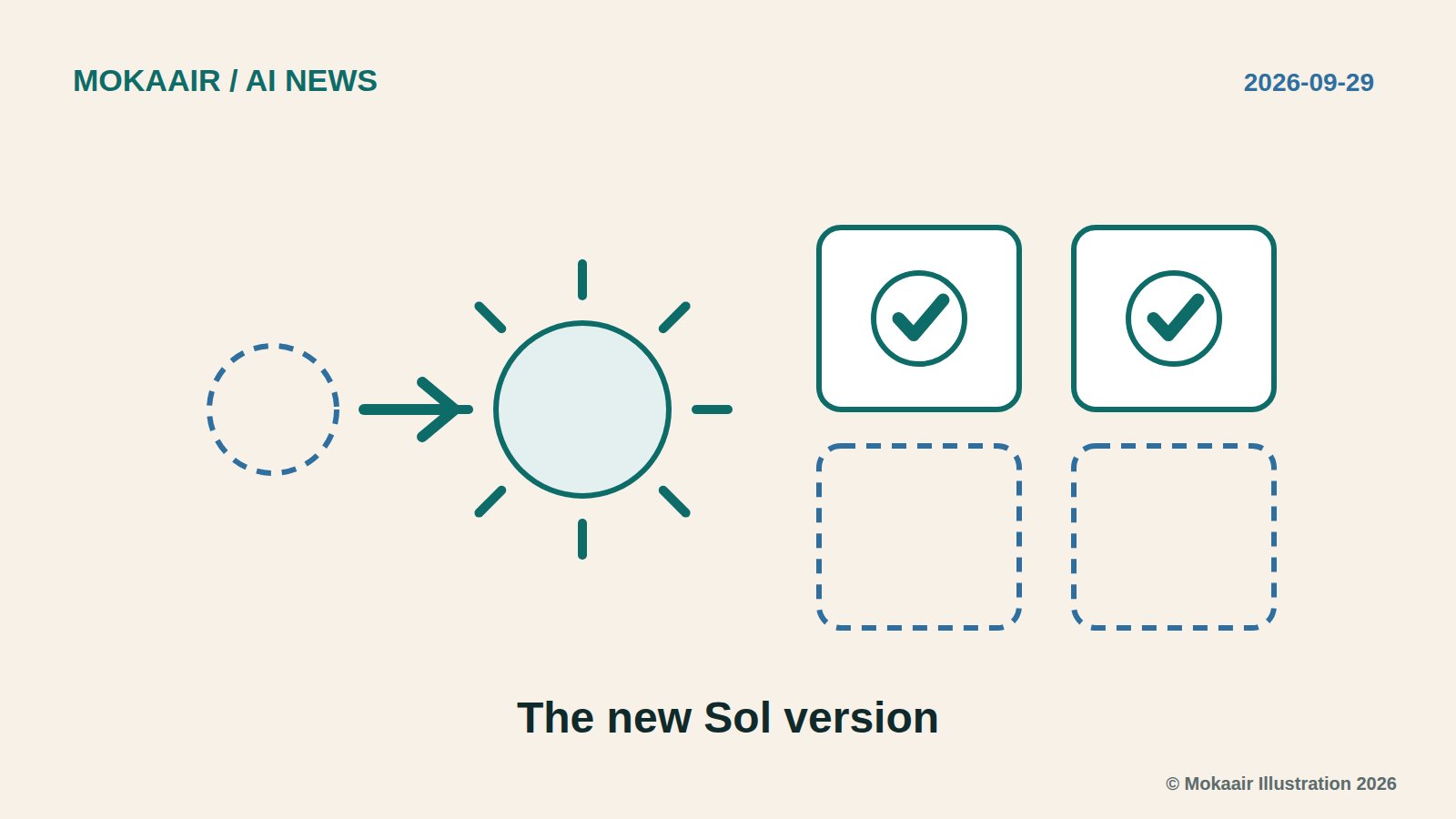
GPT-6.1 Sol Launches: New Sol Version in the API, Codex and ChatGPT Work, Not in Chat
OpenAI launched GPT-6.1 Sol on September 29, 2026, with the API name gpt-6.1-sol. The launch rollout covers Codex and ChatGPT Work on Plus, Pro, Business, Enterprise and Edu (Enterprise and Edu need an administrator to enable it); Free and Go are not included at launch, and it is not in Chat (checked September 2026).
- AI tools
- Apps & software
- AI news
Lifestyle
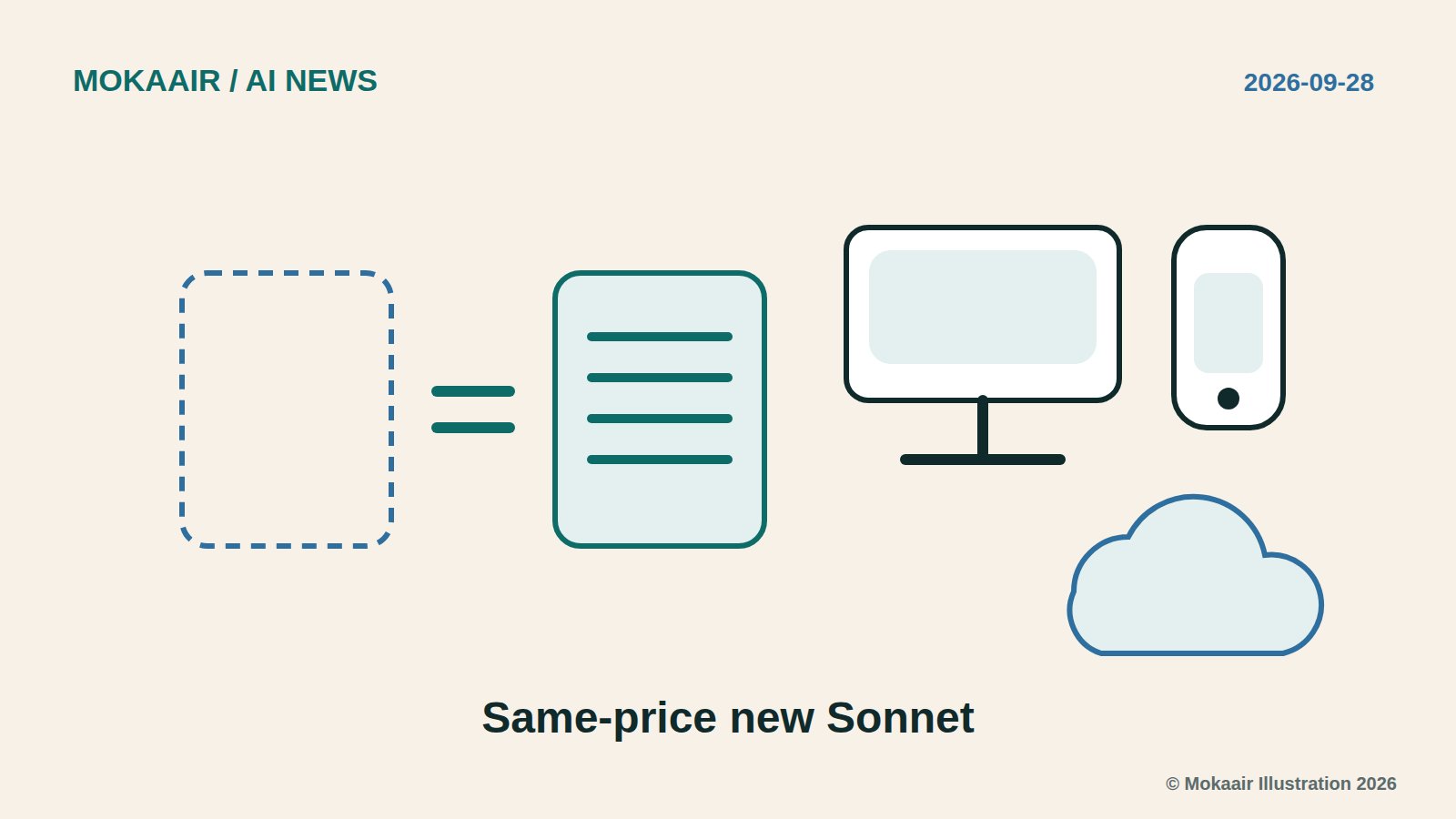
Claude Sonnet 5.5 Launches: Same List Price as Sonnet 5, Available in the API, on Cloud Platforms and in Claude.ai
Anthropic launched Claude Sonnet 5.5 on September 28, 2026. API list prices are the same as Sonnet 5 ($2 per million input tokens, $10 per million output tokens). It is available in Claude.ai, the API and several cloud platforms, and higher-risk cybersecurity requests fall back to Sonnet 5 (checked September 2026).
- AI tools
- Apps & software
- AI news
Lifestyle
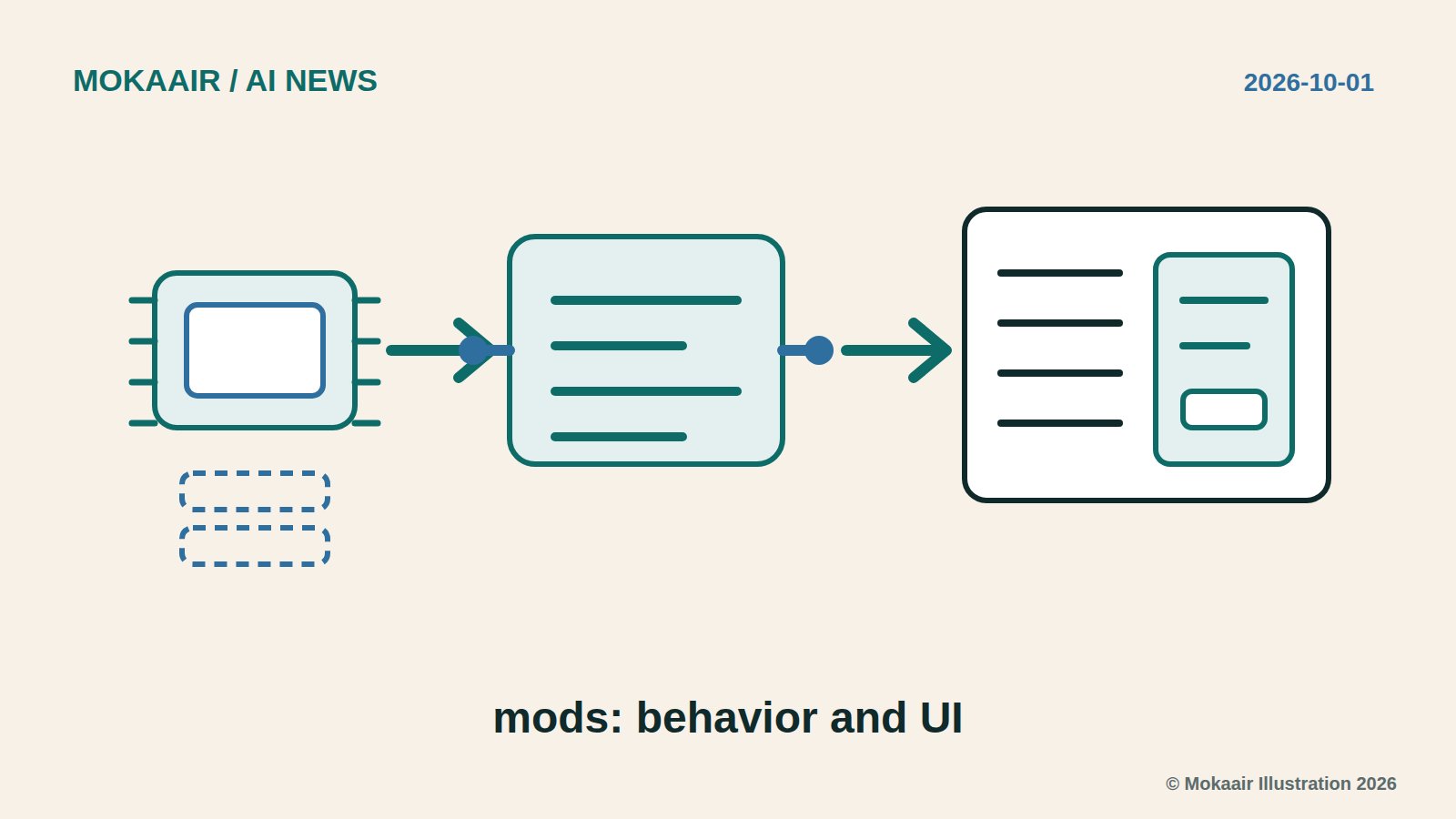
Claude Code Adds mods: TypeScript Functions in Plugins Change Its Behavior and Interface
On October 1, 2026, Anthropic introduced Claude Code mods: TypeScript or JavaScript functions that ship inside a plugin and run in the Claude Code process, and can rewrite prompts, manage tool calls and draw new interface. Anthropic says they work in the CLI and the desktop app and are not sandboxed; the documentation says v2.1.287 or later is required (checked October 2026).
- AI tools
- Apps & software
- AI news
Lifestyle
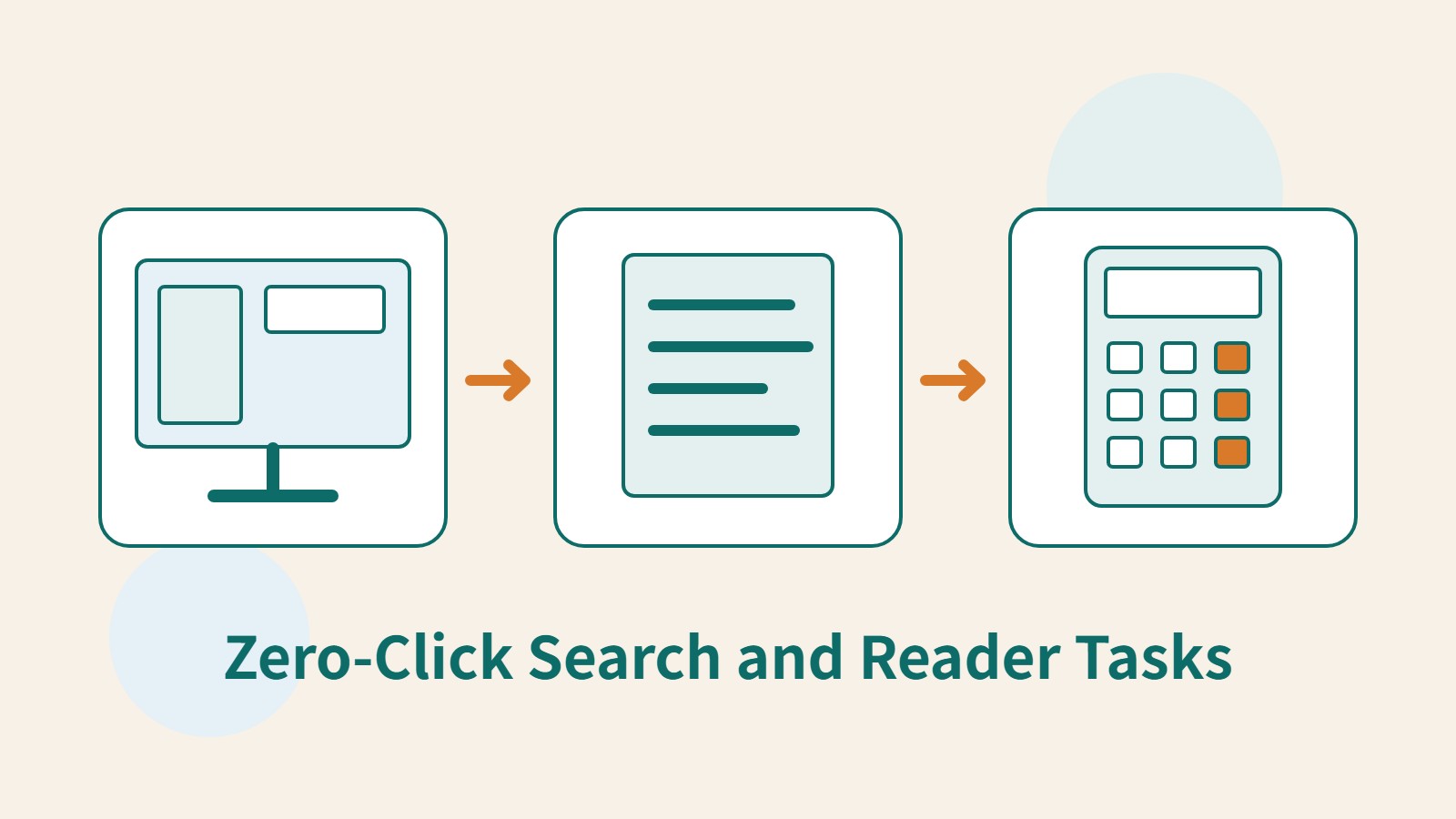
What to Do When Searches Get No Clicks: Rethinking Traffic Value Through Reader Tasks
Readers may find opening hours, phone numbers or brief answers on a search page without visiting a website. A non-click is not always a success, and site CTR cannot reveal the overall zero-click search rate. Using an original clothing alterations shop scenario, this article covers checks for search displays, business interactions and actual tasks, from finding information and comparing services to booking, with a comparison table, practical steps and original SVG diagrams.
- Tutorials
- Apps & software
- AI search & GEO
Lifestyle
Technical SEO audit order: crawling, indexing, rendering, and site structure
A useful technical SEO audit needs reproducible evidence and a sensible repair order. Using a site relaunch as an example, this guide explains how to sample page templates and check public access, indexing directives, JavaScript rendering, canonical URLs, and site structure. It separates urgent repairs, scheduled improvements, and later observation so that a general site owner can hand actionable findings to maintainers without treating a passing test as a ranking guarantee.
- Tutorials
- Apps & software
- Marketing & SEO
- SEO
Lifestyle
How to write article titles: Show search readers the scope and purpose
A useful title tells readers before they click what problem an article addresses, when it applies, and what information they will get. Using original rewrites of everyday tutorials, this guide checks the topic, purpose, limits, and evidence behind title promises. It explains why the page heading, HTML title, and Google search title may differ, then offers prepublication checks and post-change observation without stuffing keywords, claiming tests that never happened, or adding an unverified year.
- Tutorials
- Apps & software
- Marketing & SEO
- SEO
Lifestyle
How to Identify Search Intent: Turn Keywords into Questions Worth Answering
The same keyword can signal learning, comparison, finding a specific entry point or taking action. Using original luggage-storage examples, this guide shows how to judge intent from wording, time and place, result formats and your own query data, then turn a hypothesis into a clear content task. It includes an observation table, ways to handle mixed intent, content-format choices and later validation. Do not copy ranking pages or treat one search-results screen as the answer for every reader.
- Tutorials
- Apps & software
- Marketing & SEO
- SEO
Lifestyle
A beginner's SEO learning roadmap: make your site readable before measuring traffic and results
SEO beginners need not memorize ranking factors or buy a suite of tools. Using a small Taiwan website, this guide orders five topics: how search works, site readability, content planning, Search Console metrics, and results. Exercises by stage, a resource table, and a change log help you make pages readers and search engines can understand, then plan further work from data instead of tool scores or short-term swings.
- Tutorials
- Apps & software
- Marketing & SEO
- SEO
Lifestyle
A keyword research workflow: Reader needs, long-tail queries, and topic priorities
Keyword research should produce a schedulable content list, not hundreds of unused terms. Using a small baking tutorial site, this guide collects clues from reader questions, Search Console, Google Keyword Planner, and Google Trends. It separates search-volume estimates, ad competition, and relative interest, then groups specific needs, checks existing pages, and prioritizes topics by value and production capacity.
- Tutorials
- Apps & software
- Marketing & SEO
- SEO
Lifestyle
SEO Article Quality Checklist: Sources, Useful Detail and Maintenance
A content quality review checks whether evidence, interpretation, instructions and images agree. Using a comparison of digital note-taking tools, this guide shows how to map claims to sources, distinguish official features from hands-on tests, add the details readers need to compare options, and check image rights, titles, summaries and update ownership. An editorial checklist and correction workflow make ‘finished’ mean verifiable, readable and maintainable, not merely long enough.
- Tutorials
- Apps & software
- Marketing & SEO
- SEO
Lifestyle
Planning content with Semrush: keywords, competitor pages and a tracking list
Semrush can help expand keywords, inspect competing pages and track a chosen market, but its tools cover different data and purposes. Using a pottery studio in Taichung as an original scenario, this guide connects Keyword Magic Tool, Organic Rankings, Keyword Gap and Position Tracking. It distinguishes general from personal difficulty and estimated traffic. Steps, a comparison table and an original diagram help explain why a topic belongs on the list and how to observe it under fixed conditions.
- Tutorials
- Apps & software
- Marketing & SEO
- SEO
Lifestyle
Reading search results: SERP features, CTR and changing impressions
A search results page can contain text, images, videos, rich results and other features; average position cannot fully describe what readers see. Original figures show how CTR, impressions and clicks relate, then explain how to hold Search Console conditions constant, compare segments and check whether titles and snippets match the page. Steps, a comparison table and an original diagram prevent a falling percentage from being mistaken for lost traffic or proof that one feature caused the change.
- Tutorials
- Apps & software
- Marketing & SEO
- SEO
Lifestyle
On-page SEO workflow: From the reader's question to headings and page structure
On-page SEO is more than filling an SEO plugin with keywords. A useful article gives readers a consistent path from the search result to their next action. Using a family photo-organizing tutorial, this guide defines the reader's task, orders the steps, adds comparisons and exceptions, and checks WordPress headings, the URL, summaries, images, and links. It finishes with a real reading test and an update record instead of treating a plugin score as proof of quality.
- Tutorials
- Apps & software
- Marketing & SEO
- SEO
Lifestyle
Self-hosted store or marketplace: choose by product, traffic, and upkeep costs
A self-hosted store, a hosted branded storefront, and a marketplace solve different operating needs. This guide gives small brands in Taiwan a way to compare product fit, customer acquisition, payments and delivery, per-order costs, and customer data. It uses a limited trial and data-export checks to assess tools such as Shopify, SHOPLINE, and WooCommerce, helping you build a channel mix you can maintain instead of comparing only monthly fees or templates.
- Tutorials
- Apps & software
- Websites & e-commerce
- WooCommerce
Lifestyle
How to prepare website images: Size, alt text, and search readability
Clear, useful website images take more than a compression plugin. Starting from a typical website editor's workflow in Taiwan, this guide covers each image's purpose, dimensions and format, file name, alt text, WordPress upload checks, and the scope of Smush. An original herb-repotting example, checklist, and comparison table show how to keep masters, review images individually, and test the public page for readers and search systems.
- Tutorials
- Apps & software
- Marketing & SEO
- SEO
Lifestyle
Finding article ideas with Google Trends: relative interest, regions and seasons
Google Trends 100 is not a search count, and a darker region is not the number of potential customers. Using a Taiwan home-products example, this guide distinguishes search terms from topics, explains conditions behind relative-interest comparisons, and examines seasons, brief events, and top and rising queries. Steps, a comparison table and an original diagram turn trend signals into a documented, repeatable content plan without treating one spike as proof of rising product demand.
- Tutorials
- Apps & software
- Marketing & SEO
- SEO
Lifestyle
Understanding Google Search updates: lessons from Panda, Penguin and Hummingbird
Panda, Penguin and Hummingbird are useful names in the history of Google Search, but they cannot diagnose every traffic drop today. Using current Google guidance, this guide places each in its historical context, distinguishes core updates from manual actions and technical failures, then walks through dates, page groups, content and links. An original community-events website example shows how to keep evidence without chasing obsolete tactics or rewriting a whole site at once.
- Tutorials
- Apps & software
- Marketing & SEO
- SEO
Lifestyle
Product Page SEO: Organizing Specifications, Variants and Buying Questions
Product page SEO goes beyond putting popular terms in titles: search results, variant URLs and the buying interface must point to the same product. Using an original desktop storage box example, this article covers specifications, buying questions, single-page and multipage variants, Product structured data and launch checks. Comparison tables, practical steps and original SVGs help stores keep prices, stock and images in sync.
- Tutorials
- Apps & software
- Websites & e-commerce
- WooCommerce
Lifestyle
After a WordPress Move: Check Search Traffic, the Old Host, and Renewals
A completed WordPress move still needs checks that the new host is stable, search entry points work, backups can be used, and old services can safely stop. This guide provides a cutover observation checklist, a way to interpret search traffic, an inventory of old-host dependencies, and renewal closeout steps. Individual site owners and studios can retain the information needed for rollback without confusing temporary fluctuations, ending renewal, and immediately deleting a site.
- Tutorials
- Apps & software
- Websites & e-commerce
- WordPress
Lifestyle
Move WordPress to a New Host Without Changing the Domain: Migration, Testing, and DNS Cutover
When WordPress moves to a new host, its URLs can stay the same, but files, the database, certificates, and external services still need a handoff. This guide covers preparation of the new host, restricted previews, the final data sync, and DNS cutover in order. A verification table and rollback criteria help individual site owners and studios keep their domain while moving hosts, without canceling the old service before recovery options are secure.
- Tutorials
- Apps & software
- Websites & e-commerce
- WordPress
Lifestyle
Changing a WordPress Domain: Check Redirects, Search Signals, and Email
Changing a WordPress domain means handling internal URLs, redirects from old links, search signals, and email together. Starting with a URL mapping, this guide explains how to preview database replacements, check permanent redirects, test sending and receiving on the new domain, and monitor the change after launch. It helps personal brands and studios plan a name change without assuming that editing the WordPress site address completes the move.
- Tutorials
- Apps & software
- Websites & e-commerce
- WordPress
Lifestyle
Moving from WordPress.com to Self-Hosted WordPress: Content, Media, and URLs
Before moving a WordPress.com site to self-hosted WordPress, check your plan, domain, and the handoff for each kind of content. This guide covers the options available to free and paid sites, XML export and import, verification of actual image files, subscriber migration, and when Site Redirect is available. It helps individual creators in Taiwan plan the move and identifies features and billing items that need separate attention after the new site is ready.
- Tutorials
- Apps & software
- Websites & e-commerce
- WordPress
Lifestyle
WordPress booking systems: time slots, confirmation emails, and cancellation rules
A WordPress booking system must handle service hours, staff capacity, notifications, and cancellations together. This guide compares Amelia, Bookly, and WooCommerce Bookings for a Taiwanese studio, explains operating hours, buffers, and exceptional closures, then tests confirmation, rescheduling, and refunds as an ordinary customer so both staff and customers know when a booking is final.
- Tutorials
- Apps & software
- Websites & e-commerce
- WordPress
Lifestyle
WordPress contact buttons: LINE, customer support, and alternatives to the old Messenger plugin
A contact button should lead visitors to a channel someone actually handles without blocking key actions on a phone. This guide shows a small Taiwanese website how to plan LINE Official Account links, support and form entry points, replace the old Messenger Chat Plugin, and test offline hours, device differences, and removal of old code.
- Tutorials
- Apps & software
- Websites & e-commerce
- WordPress