Lifestyle
What happens when a domain or hosting expires: a checklist before renewal or shutdown
Domains, hosting and email can expire separately, with different effects if unpaid. Check orders, expiry details and admin access before renewal, recovery eligibility after expiry, and data to save before closing or moving a site. Build a checklist in time order; manage the domain, site backups, email and external accounts separately. Avoid cancelling a service only to lose verification emails, or keeping a content export without images and site settings.
About 7 min read
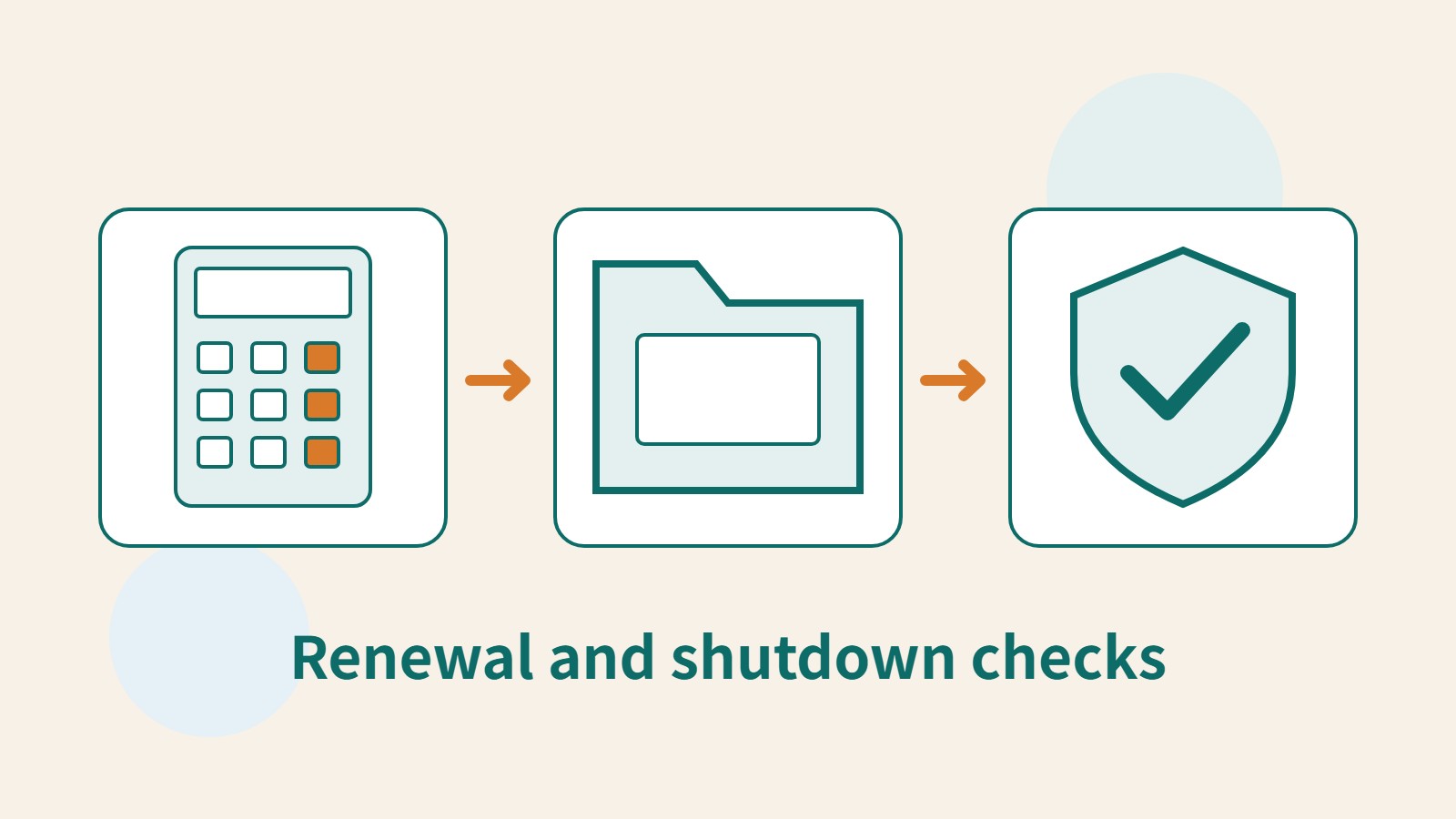
When an expiry notice arrives, first identify the service it refers to. Domain expiry can affect name resolution, hosting expiry can make the website software unavailable, and email expiry raises separate issues with sending, receiving and retaining messages. Even when bought from the same company, these services may have their own renewal dates and procedures. Paying a single bill does not mean everything is settled.
The work here is divided into three situations: continuing to use a service, dealing with an expired service, and preparing to stop using one. The domain type, provider and account status affect the actual procedure, so the guide provides an order for checking rather than applying a fixed grace period to every service. If you discover an expiry, immediately check the status in the official account. An old explanation found through search is no guarantee that it is safe to wait.
Match the notice to the services in your account
Open the official website yourself and sign in. Check the product name, identifying details, expiry date and unpaid orders to confirm that the notice concerns your service. A domain renewal email may use a different brand or billing name from the hosting service. If a reseller handles it, ask them to check the original records. If you cannot find a matching item, contact official support before paying through a link in an unfamiliar email.
List the domain, DNS, hosting, email, backup service and paid plugins in a table, with the person responsible and payment method. Also mark dependencies: for example, company email uses this domain, while domain notices are sent to that email address. If the services depend on each other, arrange backup notifications and account recovery channels in advance so that an outage does not cut off your way to contact them.
If you renew, verify that renewal actually succeeded
Check the renewal term, total amount, currency, taxes and included items, then compare them with your current needs. First-year promotions and renewal prices often differ; use the quote and terms in your account. If you want a smaller plan, first confirm that its capacity and feature limits still accommodate your data and requirements. A cheaper bill alone is not a reason to switch immediately.
Automatic renewal depends on a valid payment source and correct settings; it still needs attention. After an automatic charge or manual payment, verify that the order succeeded, check the service status and confirm the new expiry details. Closing the payment screen or seeing a temporary bank authorization does not necessarily mean the product has been renewed. If the status has not updated, keep the order number and contact official support instead of paying again without understanding why.
- Check the product, renewal term and full amount in the official account, and confirm whether you or the designated person will handle it.
- Check the payment method, automatic renewal and notification address, while retaining manual reminders and backup contact details.
- After payment, check the order result and expiry details, then test the website, administration area and essential email functions.
- Record the receipt, verification date and next review date in the management table, and handle other approaching expiries separately.
If the domain has expired, first establish its current status
ICANN's renewal and expiry guidance says to ask the registrar about renewal and any possible recovery process, fees and conditions. Different domain extensions may have different life cycles. Some statuses do not allow ordinary renewal, and the original registrant may no longer be able to recover the name directly. Supply the complete domain name and account details to obtain an answer specific to its current status.
A website that still opens temporarily does not prove that its domain has not expired. Nor does a failed lookup prove that the data is permanently lost. Check DNS resolution, caching, hosting and domain registration status separately. If a recovery process remains available, confirm the total cost and processing time first. If another holder or administrator must cooperate, arrange that immediately rather than waiting until the last day.
If hosting has stopped, find out what data remains accessible
Whether a provider retains files, databases and backups after hosting stops depends on the product and expiry status. For example, Hostinger's official guidance describes reactivation or generating a downloadable backup for some expired hosting plans, subject to eligibility and time conditions. This does not mean every product retains data for the same number of days, and it cannot replace a backup you saved yourself beforehand.
When contacting support, ask separately about website files, databases, email and the date and retrieval method of the latest backup. If you buy a different new plan, also check whether the old data will be moved into it. Activating new hosting does not mean the original site has been restored. Check the retrieved data for completeness, then restore and test it in the new environment. Do not rush to point the original domain at an empty site.
Export data and sort out external accounts before closing a site
Before shutting down a website, decide which content must be retained. WordPress sites generally require files and the database to be handled separately, while a platform's content export may include only data such as posts and pages. WordPress.com's official documentation says its content export does not include the complete design or plugins, and media downloads and transfers need separate attention. A single XML file therefore does not establish that the entire site has been backed up.
Next, list external services that use an email address on this domain to sign in, such as billing, social media, cloud storage or membership systems. Update login, recovery and notification addresses to channels that will remain available, and test verification emails. If you will not renew the domain, do this especially early to avoid losing access to important accounts after the mailbox becomes unavailable.
Store the data you need in a location you control, noting the export date, format and restoration method. Spot-check images, attachments and several posts, as well as essential emails. If you are moving the site, verify the website, email and redirects in the new environment before ending the old service. If you are closing it permanently, arrange a visitor notice and any necessary follow-up contact details.
Distinguish cancellation, automatic renewal and immediate deletion
Services may define cancelling a subscription, disabling automatic renewal, immediate removal and deleting a website differently. For example, WordPress.com's cancellation guidance describes different processes depending on purchase and refund status. Another person's screen does not establish that yours will have the same result. Before submitting, read the effective date, data consequences and refund conditions shown at that time.
After stopping the service, keep the confirmation email or account status and check whether separately purchased add-ons are still being billed. The final column of your management table can record decisions such as keeping the domain but ending hosting, or moving the site to a new service, so the next person understands what happened. Stopping a service should involve preserved data and verification; waiting for a payment to fail is not a substitute for a shutdown process.
Read the full description
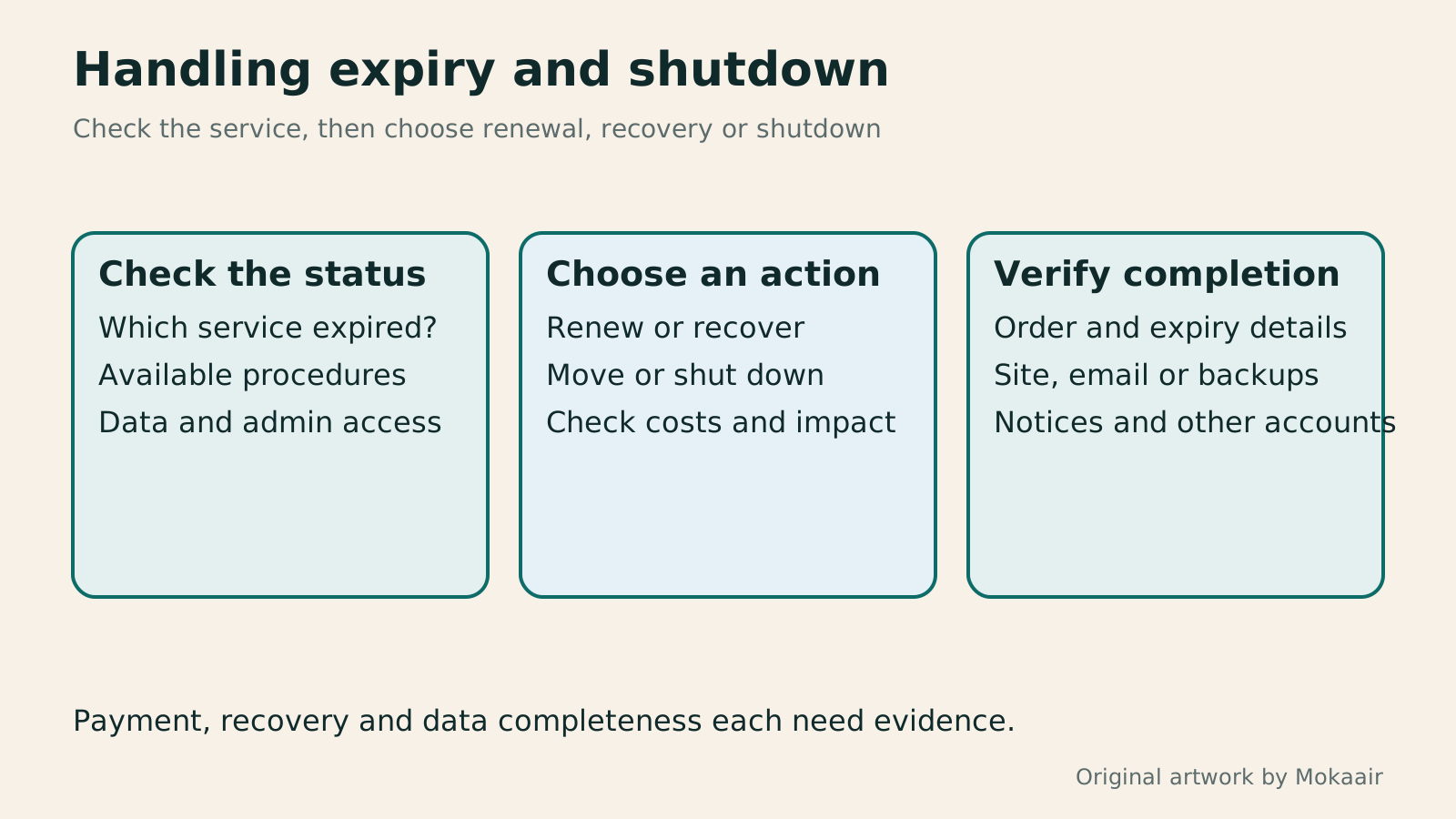
Arrange domain and hosting expiry work in three stages: establish the status, choose an action, and verify data and functionality.
| Service | What may be affected | Keep before stopping it |
|---|---|---|
| Domain | Website name, email and verification access | Registration details and replacement addresses for external accounts |
| Hosting | Software, files and databases | A complete backup and a usable restoration method |
| Sending, receiving, past messages and recovery emails | Messages, contact details and a new notification address | |
| Platform plan | Plan features and paid services | Content, media and a portability check |
| Add-ons | Backups, plugins or other subscriptions | Separate cancellation and billing confirmation |
How to budget for a website: separate first-year, renewal and maintenance costsPlanning a website budget: separate first-year, renewal and maintenance costsA website budget needs more than a promotional monthly price. Group spending into setup, ongoing use, renewal and migration; list hosting, domains, email, themes, plugins and maintenance time. Learn to distinguish long-term monthly equivalents, automatic renewal and outsourced quotes, then practise with clearly hypothetical figures. Build a cost list, decide what is needed now or later, and know which terms to keep before paying.Read the full article
Before buying a domain: names, registrants and renewal managementBefore You Buy a Domain: Name, Registrant, and Renewal ManagementA domain is the entrance to your website and an important record for email, future moves, and brand identity. This guide covers name choice; the roles of the registrant, registrar, host, and DNS; initial and renewal costs; account protection; and transfer prerequisites. A small-studio management sheet records the holder, notice destination, and handover when collaboration ends, so delegated setup does not leave you with website-admin access but no domain-management control.Read the full article
Lifestyle
Changing domain registrars: transfer locks, authorization codes and keeping DNS working
Moving a domain to another registrar changes who manages its registration; it does not automatically move your website or email. This guide covers eligibility, common locks, authorization codes and the application process. DNS, nameserver and email checks help users in Taiwan hand over domains such as .com, while reminding them to check the separate rules for .tw and other extensions.
Lifestyle
Comparing WordPress hosting: assess providers with one requirements worksheet
To compare WordPress hosting, align site content, service responsibilities and billing periods before interpreting plan differences. This guide offers a worksheet and verification process, separates official specifications from your own measurements and unresolved conditions, and covers renewal, backups, support and exit costs. It is for users in Taiwan choosing their first host or considering a different provider, without ranking services by a single speed test or promotional monthly price.
Lifestyle
Setting up a Namecheap domain: connecting it to a website and email after registration
After buying a Namecheap domain, identify its DNS manager to connect your website and email. Official documentation explains Nameservers, Advanced DNS and Mail Settings, with two routes: change nameservers or keep the current DNS. This guide provides preparation checks, step-by-step verification and fault-reporting details for people using different domain, hosting and email providers, helping prevent accidental deletion of existing email records while bringing a website online.
Lifestyle
Managing a Gandi domain: registration, DNS and renewal checks
Gandi keeps registration, DNS, email and renewal settings in separate places. Based on current official documentation, this guide covers post-purchase checks, LiveDNS records, backups, transfers and what the 2026 Classic DNS migration means for existing users. Check your own account and build a domain register others can take over, avoiding outdated tutorial nameservers and the assumption that paying means your website and email are fully configured.
Articles that cite this one
- Changing a WordPress Domain: Check Redirects, Search Signals, and Email
- Changing domain registrars: transfer locks, authorization codes and keeping DNS working
- Building with Hostinger: get your first WordPress website ready
- Managing a Gandi domain: registration, DNS and renewal checks
- Bluehost domains and billing: check add-ons, payments and renewals item by item
- Planning a website budget: separate first-year, renewal and maintenance costs
- What website maintenance involves: a routine for backups, updates, and incident reports
- Before You Buy a Domain: Name, Registrant, and Renewal Management
Latest travel guides

GuideTokyo
Where to Stay in Tokyo: Comparing Shinjuku, Ueno, Tokyo Station, Shibuya, Asakusa, Ikebukuro, and Ginza, Plus Airport Access, Accommodation Tax, and Luggage Delivery
Where should you stay in Tokyo? Compare Shinjuku, Ueno, Tokyo Station, Shibuya, Asakusa, Ikebukuro, and Ginza by the same criteria: access from Narita and Haneda, transit routes, nearby attractions, neighborhood character, and who each area suits. Includes a comparison table, a Yamanote Line diagram, Tokyo’s accommodation tax as verified in 2026/9 (changing to 3% in 2027/4), and Airport TA-Q-BIN luggage shipping rules.
- Budget
- Hotels

GuideTokyo
How to Choose Tokyo Transit Passes: Are Suica, Welcome Suica, the Tokyo Subway Ticket, and the JR Pass Worth It?
On a first Tokyo trip, start with an IC card and pay per ride (Welcome Suica has no deposit and is valid for 28 days). If you take four or more subway rides in a day, add a 72-hour Tokyo Subway Ticket for 2,000 yen; a JR Pass is never worthwhile if you stay in Tokyo and do not go to Kansai. See what TOURIST PASMO, Suica on iPhone, and the Tokyo Metro day pass do and do not cover, with a decision chart. Prices verified in September 2026.
- Transport
- Budget

GuideTokyo
Tokyo Disneyland and DisneySea Guide: Ticket Prices, Fantasy Springs, Disney Premier Access (DPA), Standby Pass, and Which Park to Choose for Your First Visit
Tokyo Disney one-day Passport prices vary: most weekdays in 9/2026 cost ¥9,900 and weekends ¥10,900. At 14:00 daily, tickets go on sale for the same date two months later. Free Priority Pass is no longer on the official service list; only paid Disney Premier Access (¥1,000–3,500 per person per use) shortens waits. Covers hours, the 25th anniversary, Standby Pass, Entry Request, Fantasy Springs access and first-visit park choice; checked on the official site in 9/2026.
- Itineraries
- Family