Lifestyle
Troubleshooting plugin connections
Distinguish installation, account connection, authorization and callable tools before reconnecting or removing a plugin.
About 15 min read · Practice 20 min
On this page
- Goal and preparation
- Step 1: Preserve the failure record
- Step 2: Choose a layer by symptom
- Step 3: Check surface, installation and enablement
- Step 4: Separate account and document access
- Step 5: Retest with an actual tool result
- Diagnosis exercise: three different read failures
- Common failures and recovery
- Acceptance and next step
Back to the Codex learning hubCodex learning hub: tutorial directoryA planned 60-lesson, ten-unit Codex curriculum, from setup and your first task to MD instructions and advanced integrations. Find your next lesson by experience, platform, goal or command; unpublished entries show their status.Read the full article
Goal and preparation
Lessons and resources mentioned here: Plugin setupPlugins and connected servicesA plugin can distribute skills and MCP tools as an installable capability. Installing it, connecting an external account and successfully calling a tool are distinct stages. A listing does not establish access to your data.Read the full article
Step 1: Preserve the failure record
Record date, OS, surface, version, plugin name/source, sign-in method and failing step. Use this format on Windows/macOS/Linux. Check CLI version in a terminal and desktop version in app information or updates. Record local and remote hosts separately: desktop installation does not prove CLI installation. Use actual versions, not the article's date.
codex --version
# Plugin incident
Date and time zone:
OS / surface / version:
Local or remote host:
Plugin name and source:
Sign-in method (no secrets):
Failing step:
Exact error (redacted):
Practice document revision:
Change attempted:
Retest result:
Redact emails, private document IDs, tokens and cookies from shared errors. Never include authentication URLs containing one-time codes. Retain error type, time and reproduction; use provider support for server logs. Change one condition per retest to distinguish account, session and permission effects.
Step 2: Choose a layer by symptom
| Symptom | First check | Observable result |
|---|---|---|
| No Plugins entry | Supported surface | Directory opens on a supported surface |
| Listed but cannot install | Source and workspace policy | Details or management restriction identified |
| Installed but no tools | Enabled state and new session | Capability selectable in a fresh task |
| Tool requests sign-in | External account connection | Correct account authenticated |
| Only one document fails | File access or URL | Same account opens original document |
| Old content in answer | Tool call and document revision | Fresh retrieval returns new marker |
These are diagnostic steps, not guaranteed code mappings. Interpret provider responses: 401 often concerns authentication, 403 access, while missing files or changed sharing may produce similar errors. For 429/outages, follow returned retry guidance and retry the same small document later. Do not flood requests or make the drive public.
Step 3: Check surface, installation and enablement
On desktop inspect Plugins, Installed and details. In CLI, start codex, enter /plugins, check marketplace and entry; Space toggles an installed plugin. After installing or enabling, test a fresh task because old tasks may retain earlier capabilities. Keep their results; do not delete tasks or clear Codex configuration.
/plugins
Plugins are unsupported in IDE; test desktop or CLI. iOS/Android Chat/Work only use available plugins; Desktop only cannot run on mobile. Linux preview and individual plugins may impose conditions. Record unsupported surfaces instead of reinstalling. See Cross-device workflowCross-device handoff: files and environmentsTrack the conversation, host, directory and branch so a handoff continues the intended work.Read the full article.
Step 4: Separate account and document access
Open the source document with the plugin's external account and verify title/Revision. Another browser account's access proves nothing about this account. For a mismatch, use reconnection and retry the same URL in a fresh task. For document-specific denial, check sharing with its owner; grant only necessary access to your practice file.
ChatGPT subscription sign-in differs from OpenAI API key sign-in; some plugins requiring OAuth are unavailable with API key authentication. Check plugin details and AccountsAccounts, sign-in, plans and usageCheck how you signed in before interpreting usage. ChatGPT sign-in uses the Codex allowance associated with that account; API-key authentication in a supported client requires checking API billing separately. This tutorial teaches you where to verify your own allowance rather than freezing a price or message limit that may change.Read the full article. Do not put a service password in config.toml or use unrestricted approvals to solve OAuth. Host sandboxing governs local work, while the external service governs document access; relaxing one layer does not guarantee access through the other.
Step 5: Retest with an actual tool result
Use the selected plugin to read my practice document at <PRACTICE_DOCUMENT_URL>.
Return its title, source link, Revision, Document marker and task counts.
Use a fresh tool result. If access fails, report the tool error and stop.
Do not edit, share, move or delete anything. Do not infer missing contents.
Replace the placeholder URL and select the plugin/capability. Inspect actual tool activity; compare title, source, Revision, marker and counts against the original. No tool call means checking availability; a denied call means preserving that error, not reconstructing an answer from old conversation.
Manually change Revision and one count at the source without telling Codex the value. Use the same prompt in a fresh task. If stale, check copied URLs, saved edits and supported reread options; record delay. A correct retry verifies only this document and surface.
Diagnosis exercise: three different read failures
| Case | Known evidence | Still unknown |
|---|---|---|
| A | Desktop Installed lists the bundle; failure occurs in the IDE on the same machine with no tool call | Whether a new task in a supported surface works |
| B | A new task has the tool; the service denies access; the same external account cannot open the document on the source site | Whether this account should have document access |
| C | The source site saved Revision 3; an actual tool call returns Revision 2; the source link is not yet checked | Whether it read a copy or an update has not propagated |
A: try a fresh desktop/CLI task; IDE lacks plugin support and connection success is unknown. B: check URL, account and sharing; change only authorized practice access. Reinstalling grants no document rights. C: compare source URLs, then record reread time/revision; do not guess memory or caching. Retest the same private document.
If the only evidence is the agent saying “success”, leave actual reading unconfirmed. Conversely, a tool that returned a denial was called and failed; do not label it “not loaded”. Using these distinctions in the incident record helps the next person inspect the correct surface or service.
Common failures and recovery
If Uninstall is absent, check whether the plugin is workspace-installed or a default managed by an administrator and record the restriction. Uninstalling removes that environment's bundle; separately connected MCP integrations can remain. To close the exercise, check both Installed and external connection management, revoking your practice authorization if needed. Preserve shared connections and do not equate one disconnection with disabling every device.
Restore the one changed condition: enable the plugin, reconnect the intended account or restore practice access. If a fresh task still fails, give the maintainer surface, plugin source, redacted error, attempted change and expected/actual results. Avoid repeated reinstalls. Use MCP troubleshootingMCP connection diagnosis and recoveryInspect process, transport, authentication and tool discovery, preserve errors and verify a minimal operation.Read the full article for server configuration, distinct from plugin-directory issues.
Acceptance and next step
Keep original failure, identified layer, one change, fresh same-document result, input preservation and retained/revoked connection state. Without a tool result, report a surface limitation or pending authentication. These operations are documented, not tested on your account, OAuth flow or physical phone; article rendering does not prove connectivity.
Keep this record separate from Skill acceptanceTesting skill selection and resultsTest format, selection and outcomes separately, using matching and non-matching requests to refine descriptions.Read the full article: loading a skill does not establish connection to its backing service. Reuse the fields from Templates and cheatsheetsPrompt, rules and handoff templatesChoose a prompt, rule or handoff template, fill its required fields and use the correct input location.Read the full article, updating observed values while retaining dates and unreproduced cases.
Back to the Codex learning hubCodex learning hub: tutorial directoryA planned 60-lesson, ten-unit Codex curriculum, from setup and your first task to MD instructions and advanced integrations. Find your next lesson by experience, platform, goal or command; unpublished entries show their status.Read the full article
Read the full description
Three numbered stages: identify the starting point, perform the exercise, and verify the result. Original illustration, not a product screenshot.
Lifestyle
Codex learning hub: tutorial directory
A planned 60-lesson, ten-unit Codex curriculum, from setup and your first task to MD instructions and advanced integrations. Find your next lesson by experience, platform, goal or command; unpublished entries show their status.
Lifestyle
Worktrees and isolated tasks
A Git worktree gives one repository multiple working directories on different branches. It isolates file edits, but databases, ports and external services may still be shared. File isolation is not full resource isolation.
Lifestyle
Workshop: build a small website
Plan and build the Small Steps task website from brief.md, with adding, completing, deleting, filtering and local persistence. Separate HTML, CSS, data functions, UI events and tests, verify with Node and browser checks, and document restart and recovery steps.
Lifestyle
Usage and efficiency: reducing rework
Record task conditions, model options, time and outcomes to reduce unnecessary retries and excess context.
Articles that cite this one
Latest travel guides

GuideTokyo
Where to Stay in Tokyo: Comparing Shinjuku, Ueno, Tokyo Station, Shibuya, Asakusa, Ikebukuro, and Ginza, Plus Airport Access, Accommodation Tax, and Luggage Delivery
Where should you stay in Tokyo? Compare Shinjuku, Ueno, Tokyo Station, Shibuya, Asakusa, Ikebukuro, and Ginza by the same criteria: access from Narita and Haneda, transit routes, nearby attractions, neighborhood character, and who each area suits. Includes a comparison table, a Yamanote Line diagram, Tokyo’s accommodation tax as verified in 2026/9 (changing to 3% in 2027/4), and Airport TA-Q-BIN luggage shipping rules.
- Budget
- Hotels
GuideTokyo
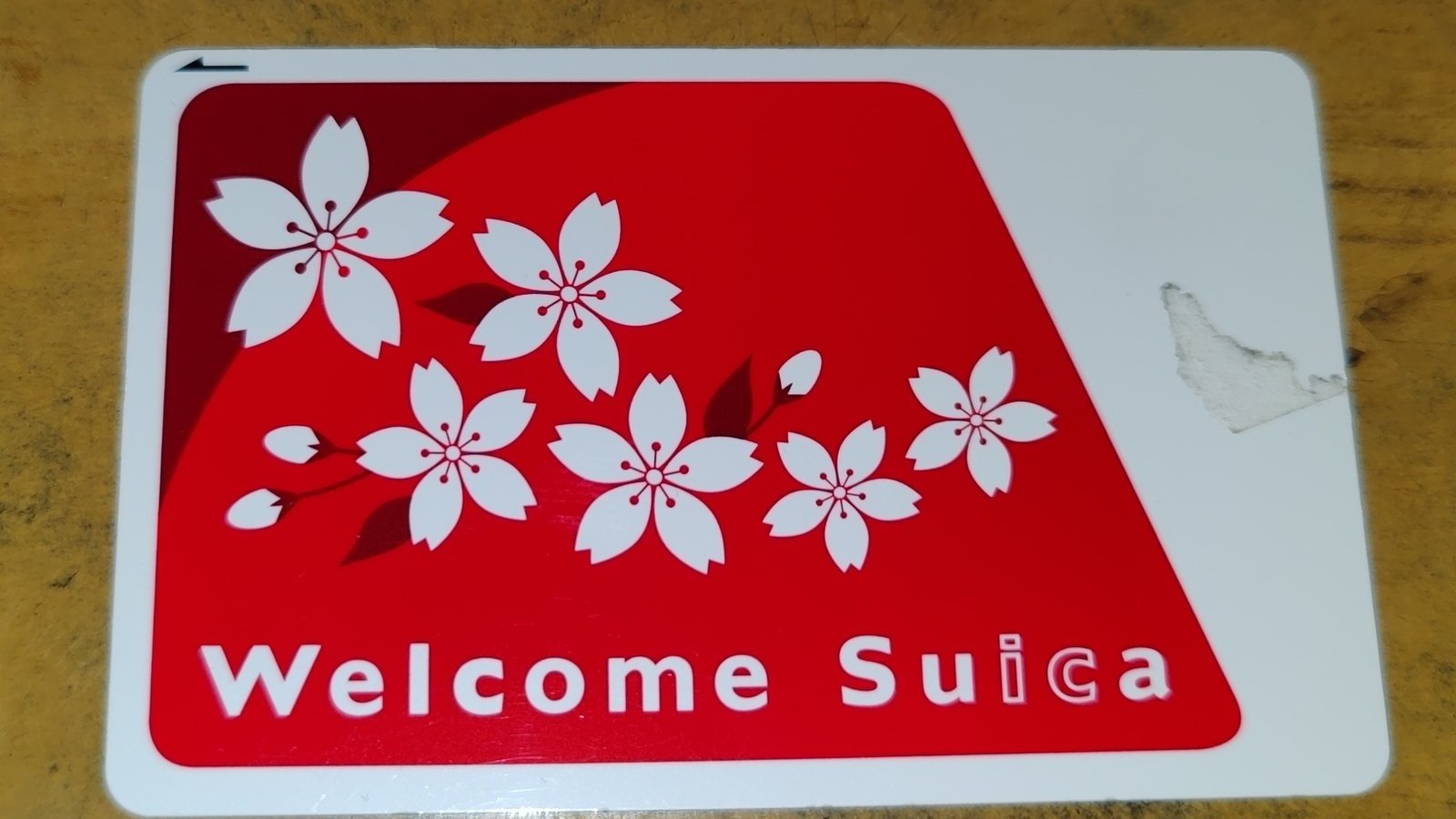
How to Choose Tokyo Transit Passes: Are Suica, Welcome Suica, the Tokyo Subway Ticket, and the JR Pass Worth It?
On a first Tokyo trip, start with an IC card and pay per ride (Welcome Suica has no deposit and is valid for 28 days). If you take four or more subway rides in a day, add a 72-hour Tokyo Subway Ticket for 2,000 yen; a JR Pass is never worthwhile if you stay in Tokyo and do not go to Kansai. See what TOURIST PASMO, Suica on iPhone, and the Tokyo Metro day pass do and do not cover, with a decision chart. Prices verified in September 2026.
- Transport
- Budget

GuideTokyo
Tokyo Disneyland and DisneySea Guide: Ticket Prices, Fantasy Springs, Disney Premier Access (DPA), Standby Pass, and Which Park to Choose for Your First Visit
Tokyo Disney one-day Passport prices vary: most weekdays in 9/2026 cost ¥9,900 and weekends ¥10,900. At 14:00 daily, tickets go on sale for the same date two months later. Free Priority Pass is no longer on the official service list; only paid Disney Premier Access (¥1,000–3,500 per person per use) shortens waits. Covers hours, the 25th anniversary, Standby Pass, Entry Request, Fantasy Springs access and first-visit park choice; checked on the official site in 9/2026.
- Itineraries
- Family