GuideTokyo
How to Choose Tokyo Transit Passes: Are Suica, Welcome Suica, the Tokyo Subway Ticket, and the JR Pass Worth It?
On a first Tokyo trip, start with an IC card and pay per ride (Welcome Suica has no deposit and is valid for 28 days). If you take four or more subway rides in a day, add a 72-hour Tokyo Subway Ticket for 2,000 yen; a JR Pass is never worthwhile if you stay in Tokyo and do not go to Kansai. See what TOURIST PASMO, Suica on iPhone, and the Tokyo Metro day pass do and do not cover, with a decision chart. Prices verified in September 2026.
About 10 min read
We may earn a commission through these links, at no extra cost to you.
Tokyo has enough ticket options to make anyone hesitate: which IC card to get, whether unlimited subway rides pay off, and whether you need a JR Pass at all. This guide uses prices checked on the JR East, Tokyo Metro, PASMO, and Japan Rail Pass official websites in 9/2026. It explains exactly what each ticket covers, then gives you a decision chart to follow.
The short answer: everyone should have an IC card, because paying per ride is simplest. If you take four or more subway rides a day and your sights are all along subway lines, add a Tokyo Subway Ticket. If you are only visiting Tokyo and not going to Kansai, the JR Pass is definitely poor value.
IC cards: Welcome Suica, TOURIST PASMO, and Suica on your phone
Welcome Suica: no deposit, valid for 28 days, no refunds
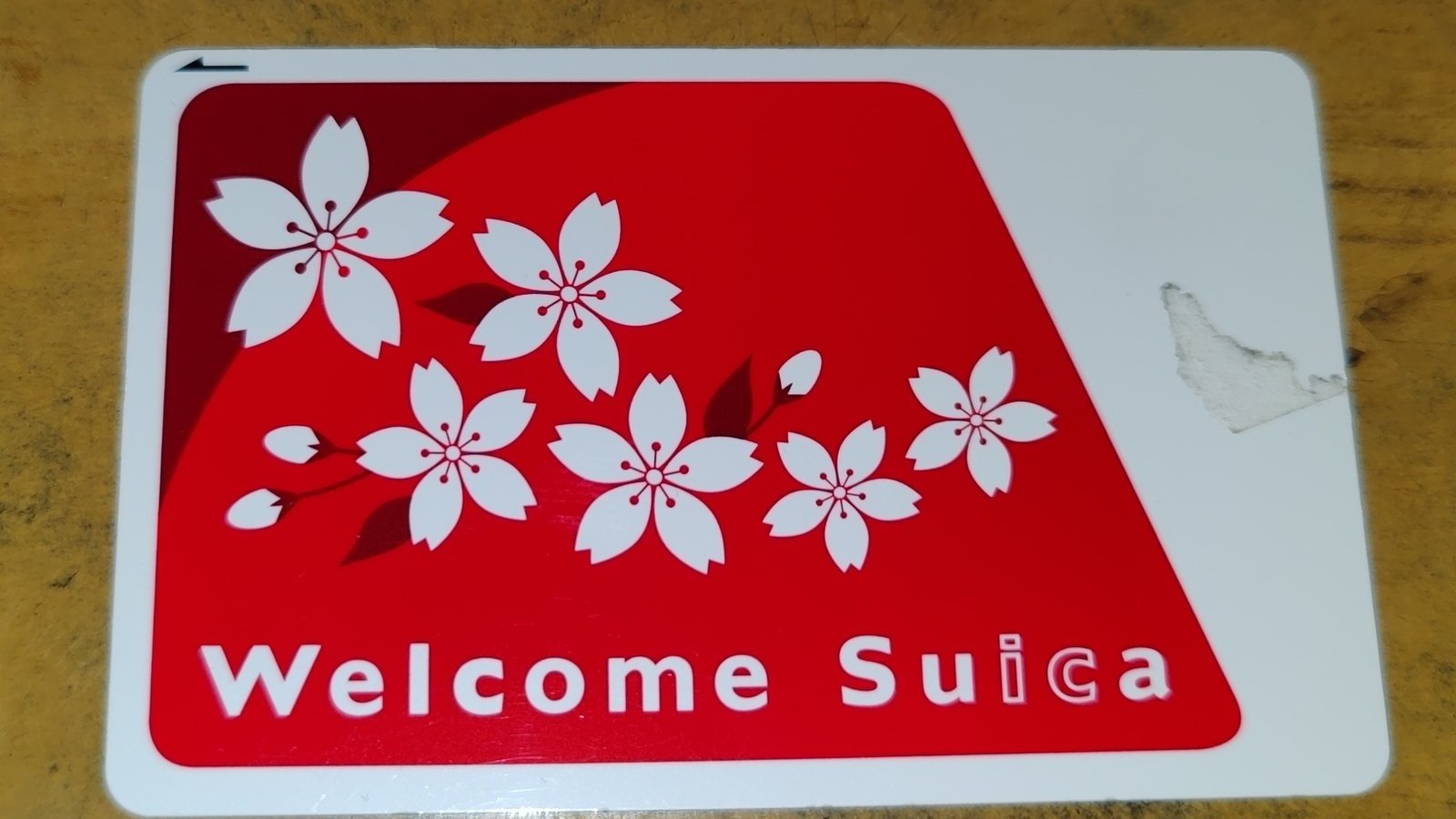
Welcome Suica is JR East’s IC card for short-term visitors. It has no deposit and is valid for 28 days, including the day of purchase. Choose a value from 1,000 to 10,000 yen; any remaining balance is nonrefundable. Dedicated ticket machines are available at Narita Airport Terminal 1 Station, Terminal 2・3 Station, and Haneda Airport Terminal 3’s monorail station. JR East Travel Service Centers also sell it at both Narita stations, Haneda Terminal 3, and Tokyo, Shibuya, Shinjuku, Ikebukuro, Ueno, and Yokohama stations. As a rule, each person needs their own card. You can top it up only with Japanese yen in cash, at ticket or fare-adjustment machines displaying the Welcome Suica logo or at Seven Bank ATMs in 7-Eleven stores. Credit cards cannot be used for top-ups, and the balance limit is 20,000 yen. You can use it on railways and buses and at convenience stores across Japan that display the transit IC symbol. You cannot ride continuously across IC service areas; for example, when traveling from Tokyo to Sendai, you must exit and re-enter through the ticket gates. The Tokunai Pass and Tokyo Free Ticket (東京フリーきっぷ) can be loaded directly onto the card.
TOURIST PASMO: launched in 5/2026, available at Narita and Haneda
The PASMO Council launched TOURIST PASMO in 5/2026, replacing PASMO PASSPORT, which stopped selling in 2024. Its rules are almost the same as Welcome Suica’s: it is valid for 28 days from issue, has no deposit, and offers no refund of unused balance. It works on transportation IC railways and buses and for electronic payments across Japan. At Haneda, buy it from the ticket machines at Keikyu’s Terminal 1・2 Station or the Keikyu Tourist Information Center in Terminal 3, with an initial balance from 1,000 to 10,000 yen. At Narita, buy it at Keisei’s SKYLINER & KEISEI Information Center; only the 2,000-yen version is sold there (including a 2,000-yen balance). It is an easy pickup if you take Keikyu or Keisei into the city.
Suica on your phone: add it directly on iPhone; Welcome Suica Mobile lasts 180 days
On iPhone, you can add Suica or PASMO directly in the Wallet app and top it up with a payment card in Wallet, without queuing for a physical card. Apple says Suica requires an iPhone 7 or later. JR East also offers Welcome Suica Mobile (iOS only), valid for 180 days after issue and available to anyone aged 13 or older. Its unused balance is likewise nonrefundable. In the app, you can buy ordinary-train Green Car tickets and reserve seats on N'EX and Shinkansen trains. Regulations in some countries restrict downloading or topping up before entering Japan, so open the app and try it before departure. Most overseas Android models lack FeliCa; a physical card is the safer choice.
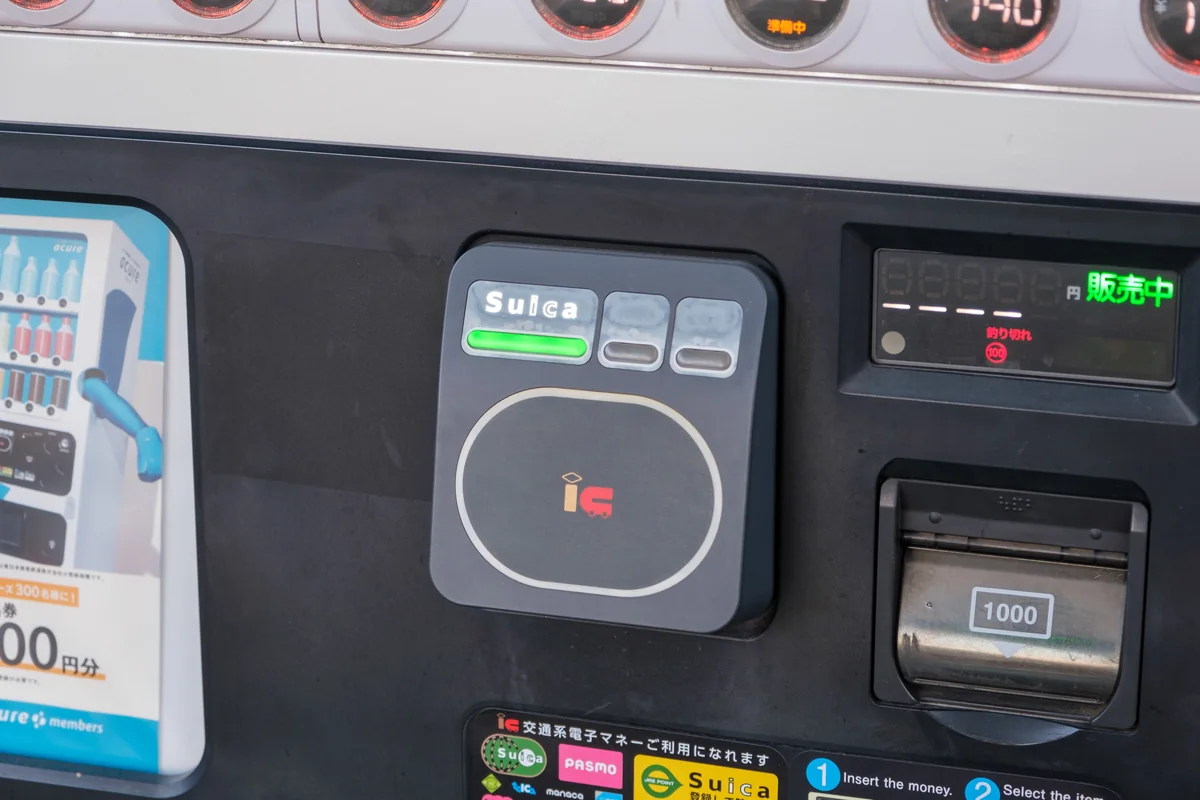
Tokyo Subway Ticket: unlimited rides on Tokyo Metro and Toei Subway
Prices and coverage
The Tokyo Subway Ticket costs 1,000 yen for 24 hours, 1,500 yen for 48 hours, or 2,000 yen for 72 hours; children pay half price. Time runs continuously from your first entry through a ticket gate rather than by calendar day, so starting in the evening does not waste a day. It covers all 9 Tokyo Metro lines and 4 Toei Subway lines, including Ginza, Asakusa, Omotesando, Roppongi, Ueno, Tsukiji, and Oshiage. Depending on the sales channel, paper tickets are available to inbound foreign visitors and to domestic travelers visiting Tokyo from outside Tokyo, Kanagawa, Saitama, Chiba, Ibaraki, Tochigi, Gunma, and Yamanashi. Transport or accommodation conditions differ by channel, and inbound foreign visitors must show a passport at designated counters. The QR version is sold only to inbound foreign visitors; domestic travelers cannot buy it. Confirm the eligibility rules for the specific ticket type and sales point.
Which lines are excluded
The JR Yamanote, Chuo, and Keihin-Tohoku lines are excluded. You must pay separately for direct JR trips such as Shinjuku to Tokyo Station, Harajuku, or Akihabara. Private railways are excluded too: use an IC card for the Yurikamome to Odaiba or Shin-Toyosu (teamLab Planets), as well as Odakyu, Tokyu, and Keio. Keisei, Keikyu, the monorail, and N'EX airport services also require separate tickets. The pass pays off only if your sights are concentrated along subway lines. Skip it if you take just two rides a day.
How to buy it
Eligible inbound foreign visitors can buy the QR version online. After purchasing through Tokyo Metro’s official ticket store, show the QR code on your phone at the gate; groups can send each traveler’s ticket to that person’s phone. Domestic travelers in Japan cannot buy the QR version. Paper tickets are sold through designated channels, including Tokyo Metro commuter pass offices; check the official website for sales points and eligibility conditions. Airport bundles can save more: from Narita, buy a Skyliner plus Tokyo Subway Ticket bundle at Keisei’s airport information center. If flying ANA or JAL into Haneda, buy the KEIKYU Hanetoku Ticket plus Tokyo Subway Ticket on the airline’s website: 24 hours costs 1,600 yen, 48 hours 2,100 yen, and 72 hours 2,600 yen. Redeem it at Haneda.
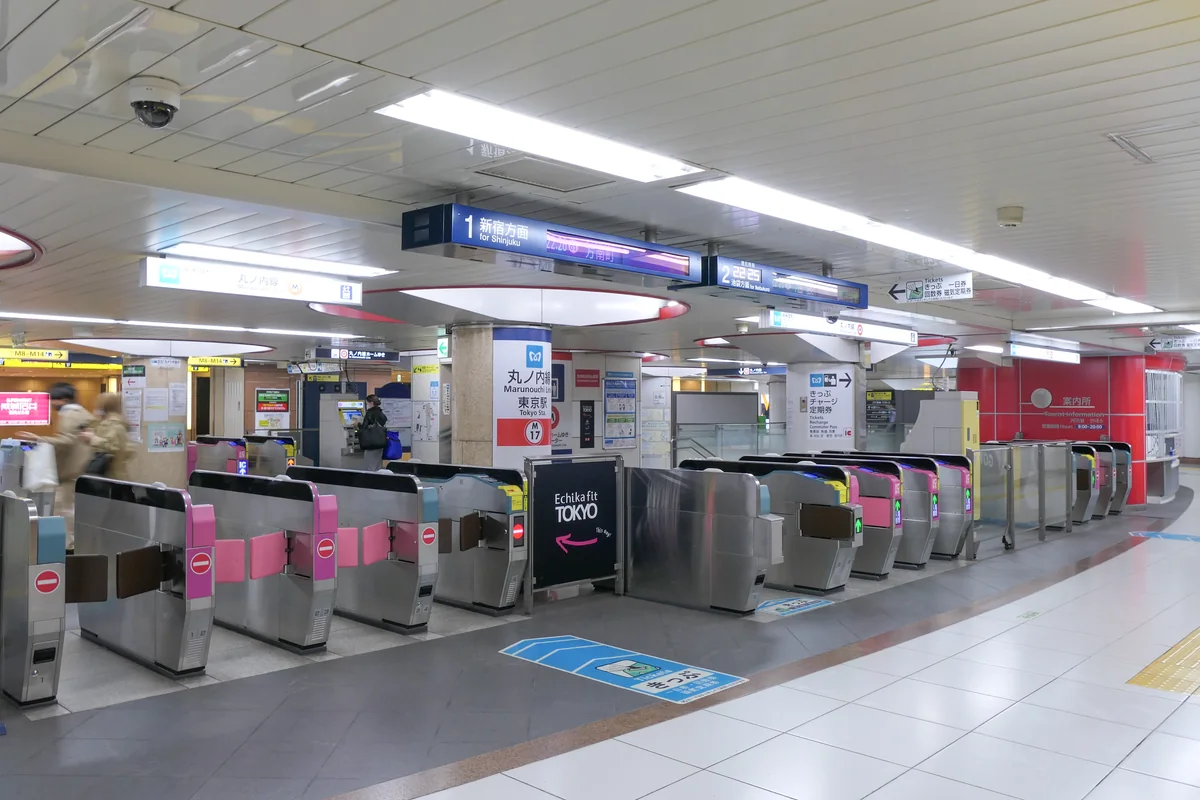
Buy your subway pass or airport bundle ahead of time and enter with a QR code on arrival
Other day passes: Metro 24-hour pass, Metro–Toei Common Day Pass, Tokyo Free Ticket, Tokunai Pass
- Tokyo Metro 24-hour pass: 700 yen for adults and 350 yen for children. It covers only the 9 Metro lines for 24 hours from first use. Buy it on the day at a station ticket machine, or preorder online and use it within 6 months.
- Tokyo Metro–Toei Subway Common Day Pass: 1,100 yen for adults and 550 yen for children. It covers 13 Metro and Toei lines but is valid by calendar day.
- Tokyo 1-Day Ticket (東京フリーきっぷ): 1,720 yen for adults and 860 yen for children. It covers Metro, Toei Subway, Tokyo Sakura Tram, Toei buses, the Nippori-Toneri Liner, and all JR lines within Tokyo’s 23 wards. It can be loaded onto Welcome Suica.
- JR Tokunai Pass: 870 yen for adults and 430 yen for children. It provides unlimited rides for one day in unreserved seats on ordinary JR trains within Tokyo’s 23 wards.
When the JR Pass is poor value: skip it if you are only visiting Tokyo
Through September 30, 2026, a 7-day ordinary-class JAPAN RAIL PASS costs 50,000 yen for adults. From October 1, 2026, an exchange order bought from an overseas sales agent costs 53,000 yen for 7 days in ordinary class; the 14-day price rises from 80,000 to 84,000 yen and the 21-day price from 100,000 to 105,000 yen. The 7-day Green Car price rises from 70,000 to 74,000 yen. The official JAPAN RAIL PASS Reservation website temporarily retains the previous prices, and no adjustment date has been announced. The increase depends on the purchase date and local time at the place of purchase, not the travel date. Nozomi and Mizuho trains require a separate special ticket. JR rides within Tokyo cost at most a few hundred yen per day, so a JR Pass is always a loss if you visit only Tokyo or Tokyo and nearby areas. For Nikko, Lake Kawaguchi, or Karuizawa, the 3-day JR TOKYO Wide Pass at 16,000 yen is a better fit, though it pays off only if you make long-distance trips on at least two consecutive days. If you arrive in Tokyo and depart from Osaka, simply buy a one-way Shinkansen ticket. A JR Pass is worth considering only if you travel from Tokyo to Kansai and back within 7 days and make other long-distance trips in between. Calculate the official fares for your purchase channel before deciding.
One decision chart: follow it to choose
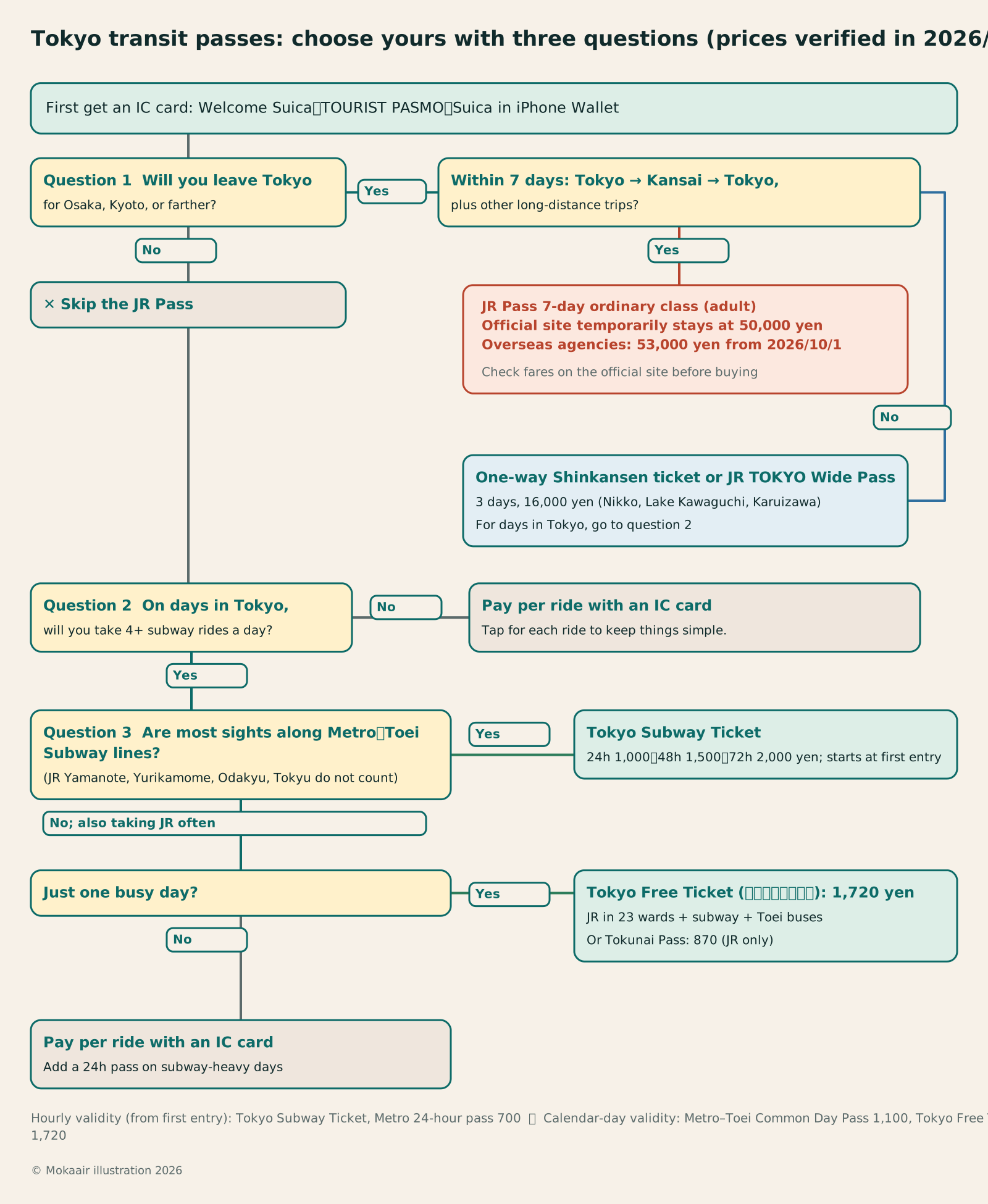
The chart below walks through three questions: whether you will visit cities outside Tokyo, how many subway rides you will take in a day, and whether your sights are along subway lines. Most first-time Tokyo visitors will end up with either “pay per ride with an IC card” or “IC card plus a 72-hour Tokyo Subway Ticket.”
Read the full description
First, buy an IC card. Question one: Will you leave Tokyo on this trip? If no, do not buy a JR Pass. If yes, consider a JR Pass only if you travel from Tokyo to Kansai and back to Tokyo within seven days and also have other long-distance trips; otherwise, buy a one-way Shinkansen ticket or a JR TOKYO Wide Pass. Question two: Will you take the subway four or more times in one day in Tokyo? If no, pay for each ride with your IC card. If yes, question three: Are most of your sights along Tokyo Metro and Toei Subway lines? If yes, buy a Tokyo Subway Ticket for 24、48、72 hours. If no and you have only one day of intensive travel, buy a Tokyo Free Kippu or a Tokunai Pass. For multiple days, pay for each ride with your IC card and buy a 24-hour ticket for the intensive travel days.
Comparison: prices, what is covered, and what is excluded
| Ticket | Adult price | What it covers | Keep in mind | Best for |
|---|---|---|---|---|
| Welcome Suica/TOURIST PASMO | Choose 1,000 to 10,000 yen; no deposit | Transportation IC railways, buses, and shops nationwide | Valid 28 days; no balance refunds; cash-only top-ups | Everyone |
| Mobile Suica/Welcome Suica Mobile | Free to set up | Same as Suica; buy Green Car tickets and reserve seats | Welcome Suica Mobile expires after 180 days; iPhone only | iPhone users |
| Tokyo Subway Ticket 24/48/72 hours | 1,000/1,500/2,000 yen | 9 Metro lines plus 4 Toei lines | Excludes JR, private railways, and airport lines | Four or more subway rides a day |
| Tokyo Metro 24-hour pass | 700 yen | 9 Metro lines | Excludes Toei and JR | A day using only Metro |
| Metro–Toei Common Day Pass | 1,100 yen | 13 Metro and Toei lines | Valid by calendar day | A subway-heavy day |
| Tokyo Free Ticket (東京フリーきっぷ) | 1,720 yen | Metro, Toei, trams, Toei buses, JR within the 23 wards | Excludes private railways and airport lines | A day mixing JR and subway rides |
| JR Tokunai Pass | 870 yen | Ordinary JR trains within the 23 wards | Excludes subways | Many Yamanote Line rides in one day |
| 7-day JAPAN RAIL PASS | Official website temporarily remains 50,000 yen; overseas agencies charge 53,000 yen from 2026/10/1 | JR nationwide | Nozomi and Mizuho cost extra; poor value within Tokyo | Long-distance round trips across regions within 7 days |
Tokyo city guide: sights, accommodation, and airport transport in one place
Tokyo food directory: explore restaurants and snacks by area
Guide
Where to Stay in Tokyo: Comparing Shinjuku, Ueno, Tokyo Station, Shibuya, Asakusa, Ikebukuro, and Ginza, Plus Airport Access, Accommodation Tax, and Luggage Delivery
Where should you stay in Tokyo? Compare Shinjuku, Ueno, Tokyo Station, Shibuya, Asakusa, Ikebukuro, and Ginza by the same criteria: access from Narita and Haneda, transit routes, nearby attractions, neighborhood character, and who each area suits. Includes a comparison table, a Yamanote Line diagram, Tokyo’s accommodation tax as verified in 2026/9 (changing to 3% in 2027/4), and Airport TA-Q-BIN luggage shipping rules.
Guide
Narita and Haneda Airports to Central Tokyo: How to Choose Skyliner, N'EX, Keikyu, or the Airport Limousine Bus
From Narita to Tokyo: take Keisei Skyliner to Ueno in 36–41 minutes for ¥2,580; for Shinjuku or Tokyo Station, JR N'EX reaches Tokyo in as little as 53 minutes for ¥3,140; choose the TYO-NRT bus for ¥1,500 when budget comes first. From Haneda, Keikyu reaches Shinagawa in 11–14 minutes for ¥330. Includes fares and times for Access Express, Airport Limousine and Tokyo Monorail, plus a stay-area route guide; checked on official sites in 9/2026.
Guide
Taoyuan Airport Departure Guide: A1/A3 In-Town Check-in, Baggage, Liquids and Power Banks at Security, e-Gate Registration, and When to Leave (2026)
Departure-day guide from Taipei or New Taipei: check in online and confirm the terminal; use in-town check-in at A1 (06:00–21:30) or A3 (09:00–16:00), with a three-hour cutoff and different airlines; follow the 100 mL/one-liter liquids rule, the two-power-bank carry-on limit and lighter rules; check e-Gate rules for ROC nationals with household registration in Taiwan using an ROC passport, from age 10 and 120 cm; then calculate when to leave. Verified in September 2026 using Taiwan sources.
Guide
Maps and taxi apps in Korea: Naver Map and Kakao Map routes, k.ride versus Kakao T, payments, Seoul fares and late-night surcharges
Which apps should you install for Korea, and can you book a taxi without a Korean phone number? Learn route searches in Naver Map and Kakao Map; registration, interface languages and payments for k.ride, Kakao T, TADA and TABA; and Seoul’s KRW 4,800 starting fare and late-night surcharges. Checked in September 2026 against the App Store, Kakao Mobility, Korea Tourism Organization, Seoul government and Incheon Airport websites.
Articles that cite this one
Sources
- JR East Welcome Suica (Purchasing and Using) · Checked:
- JR East Welcome Suica (Features) · Checked:
- JR East Welcome Suica Mobile · Checked:
- Apple Support: Add Suica or PASMO to Apple Wallet · Checked:
- PASMO official TOURIST PASMO page · Checked:
- PASMO Council press release: Launch of the TOURIST PASMO IC transit card for visitors to Japan (2026-04-17) · Checked:
- Tokyo Metro Tokyo Subway Ticket · Checked:
- Tokyo Metro 1-Day Open Tickets (24-hour pass, Common Day Pass, Tokyo Free Ticket) · Checked:
- Tokyo Metro Regular Tickets (standard fares) · Checked:
- Keikyu KEIKYU Hanetoku Ticket & Tokyo Subway Ticket · Checked:
- Keisei Keisei Skyliner & Tokyo Subway Ticket · Checked:
- JR East Tokunai Pass · Checked:
- JR East N'EX page (JR TOKYO Wide Pass, 16,000 yen) · Checked:
- JAPAN RAIL PASS Types and prices · Checked:
- JR Group notice on the October 2026 overseas-agency price change and the official website temporarily retaining its previous prices · Checked:
- Tokyo Metro Tokyo Subway Ticket for travelers: eligibility for paper, IC, and QR versions · Checked: