GuideTokyo
Where to Stay in Tokyo: Comparing Shinjuku, Ueno, Tokyo Station, Shibuya, Asakusa, Ikebukuro, and Ginza, Plus Airport Access, Accommodation Tax, and Luggage Delivery
Where should you stay in Tokyo? Compare Shinjuku, Ueno, Tokyo Station, Shibuya, Asakusa, Ikebukuro, and Ginza by the same criteria: access from Narita and Haneda, transit routes, nearby attractions, neighborhood character, and who each area suits. Includes a comparison table, a Yamanote Line diagram, Tokyo’s accommodation tax as verified in 2026/9 (changing to 3% in 2027/4), and Airport TA-Q-BIN luggage shipping rules.
About 13 min read
We may earn a commission through these links, at no extra cost to you.
Most Tokyo hotels cluster around the JR Yamanote Line loop. So “which area should I stay in?” really comes down to two questions: how easy is the trip from the airport, and which lines will you use each day to go out and return to your hotel? This guide compares seven areas commonly chosen by travelers from Taiwan—Shinjuku, Ueno, Tokyo Station, Shibuya, Asakusa, Ikebukuro, and Ginza—using the same criteria: airport access, transit lines, nearby sights, neighborhood character, and who each area suits. Fares for the airport leg are covered in the Narita and Haneda transport guide. Accommodation tax and luggage delivery, two things to consider before booking, appear at the end.
The quick answer: for a first visit with sights spread across the city, stay in Shinjuku or near Tokyo Station. If you are flying in and out of Narita and want one fewer transfer, stay in Ueno. For children or older relatives and quiet evenings, choose Asakusa or Ueno. On a limited budget but wanting to stay close to the Yamanote Line, look at Ikebukuro. For shopping and food, if you do not mind places closing early at night, choose Ginza. Shibuya suits younger travelers with plenty of energy whose plans focus on the western side of the city.
Start with the map: the seven areas and the airport connections
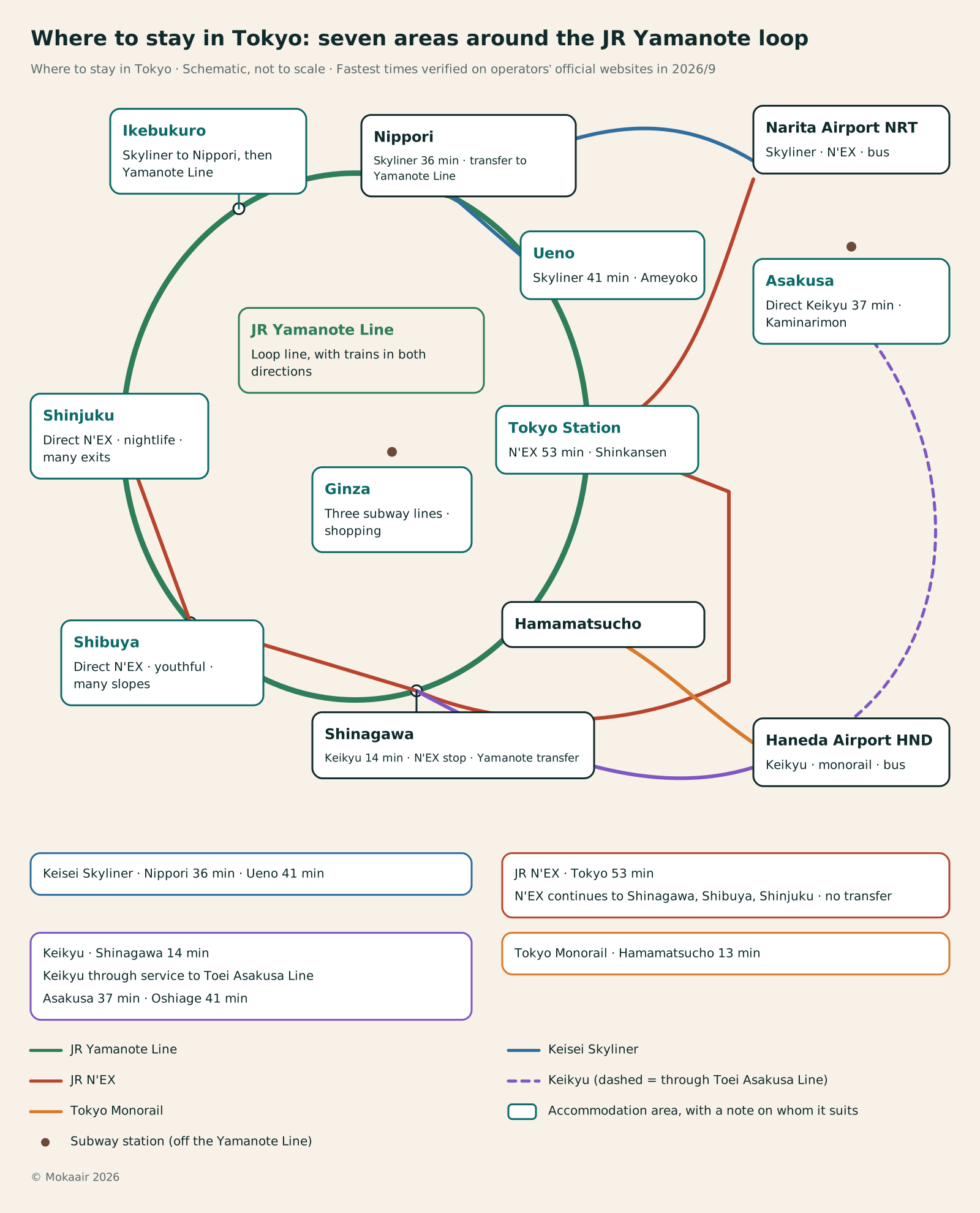
The Yamanote Line is a loop. Tokyo Station, Ueno, Ikebukuro, Shinjuku, Shibuya, and Shinagawa are on it; Ginza is inside the loop near Tokyo Station, while Asakusa is northeast of the loop and relies on the subway and Toei Asakusa Line. Airport routes follow that layout: Narita Airport: the Keisei Skyliner takes as little as 36 minutes to Nippori and 41 minutes to Ueno. It works well if you stay in Ueno or Nippori, or in Ikebukuro with a transfer to the Yamanote Line at Nippori. The JR N'EX reaches Tokyo Station in as little as 53 minutes, then continues directly to Shinagawa, Shibuya, and Shinjuku. Take it if you stay in one of those areas. International visitors can buy the 5,200 yen N'EX TOKYO Round Trip Ticket, valid for travel within 14 days. Haneda Airport: Keikyu reaches Shinagawa in 14 minutes, where the Yamanote Line connects conveniently to Shinjuku, Shibuya, and Tokyo Station. Keikyu also runs through onto the Toei Asakusa Line, reaching Asakusa in 37 minutes and Oshiage in 41 minutes without a transfer. The Tokyo Monorail reaches Hamamatsucho in as little as 13 minutes; from there, the Yamanote Line makes Tokyo Station, Ginza, and Shimbashi straightforward choices. Limousine buses run from both airports directly to many hotels and major stations. Consider one if you have lots of luggage, and check official websites for routes, fares, and schedules.
Complete Guide to Getting from Narita and Haneda Airports into Tokyo: Choosing Skyliner, N'EX, Keikyu, or a Limousine BusNarita and Haneda Airports to Central Tokyo: How to Choose Skyliner, N'EX, Keikyu, or the Airport Limousine BusFrom Narita to Tokyo: take Keisei Skyliner to Ueno in 36–41 minutes for ¥2,580; for Shinjuku or Tokyo Station, JR N'EX reaches Tokyo in as little as 53 minutes for ¥3,140; choose the TYO-NRT bus for ¥1,500 when budget comes first. From Haneda, Keikyu reaches Shinagawa in 11–14 minutes for ¥330. Includes fares and times for Access Express, Airport Limousine and Tokyo Monorail, plus a stay-area route guide; checked on official sites in 9/2026.Read the full article
Read the full description
A simplified schematic map of Tokyo. The JR Yamanote Line is drawn as a loop, with Ikebukuro, Shinjuku, Shibuya, Shinagawa, Hamamatsucho, Tokyo Station, Ueno, and Nippori appearing in that order around it. Ginza is inside the loop near Tokyo Station, and Asakusa is outside the loop to the northeast. From Narita Airport: Keisei Skyliner reaches Nippori in as little as 36 minutes and Ueno in 41 minutes; JR N'EX reaches Tokyo Station in as little as 53 minutes, then continues to Shinagawa, Shibuya, and Shinjuku. From Haneda Airport: Keikyu reaches Shinagawa in 14 minutes and runs through onto the Toei Asakusa Line, reaching Asakusa in 37 minutes and Oshiage in 41 minutes; Tokyo Monorail reaches Hamamatsucho in 13 minutes. Seven accommodation areas are outlined in teal, each with a sentence explaining who it suits.
The seven areas: transport, nearby sights, character, and who they suit
Shinjuku: the most lines and almost everything you need, an easy first-visit choice
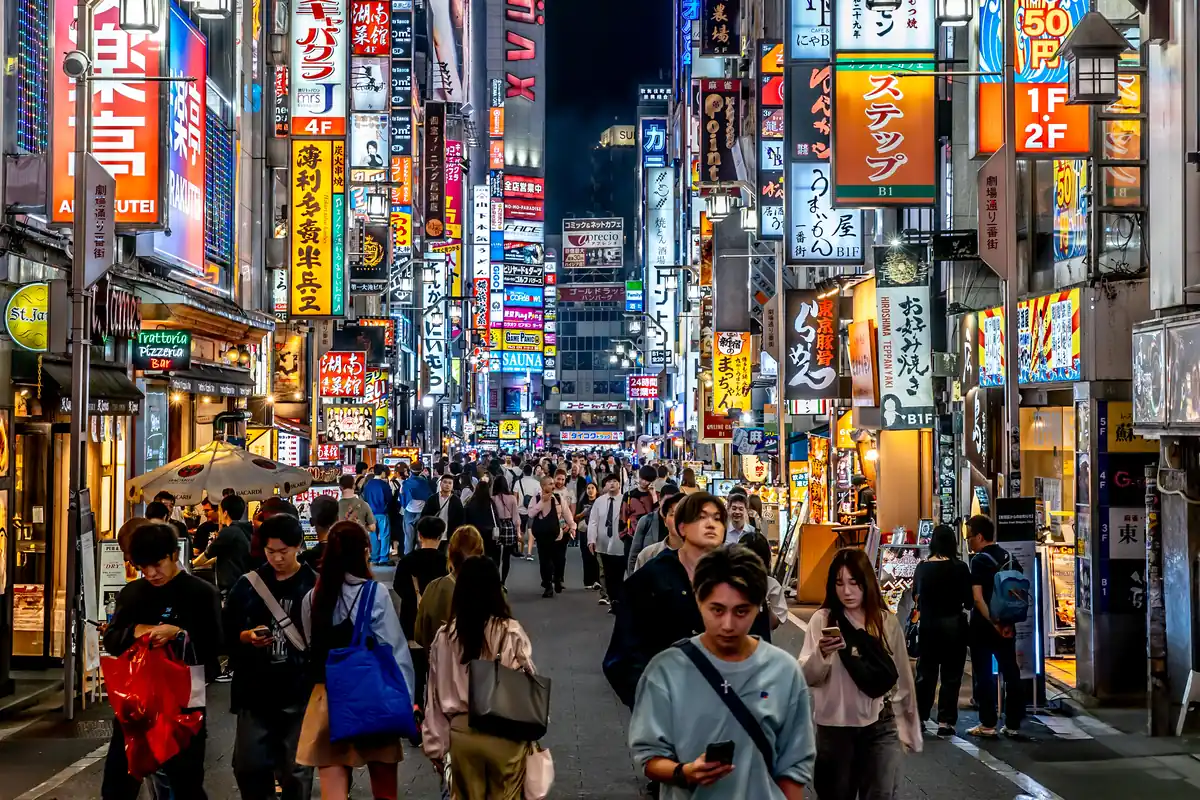
Shinjuku Station connects JR, Odakyu, Keio, the Seibu Shinjuku Line, the Tokyo Metro Marunouchi Line, and the Toei Shinjuku and Oedo Lines. The Narita N'EX runs directly here. The east exit leads to Kabukicho, department stores, and large electronics retailers. The west exit leads to the Tokyo Metropolitan Government buildings, office towers, and Shinjuku Central Park. The south exit has the Shinjuku Expressway Bus Terminal. The area is lively, with food available late at night. The drawback is the station’s size and many exits: check which exit is closest to your hotel before pulling your luggage through it. Shinjuku suits first-time visitors, travelers with scattered plans, and anyone who wants to shop or eat late. For less noise, choose the west or south exit side.
Ueno: direct Narita Skyliner service, with the park, museums, and Ameyoko within walking distance
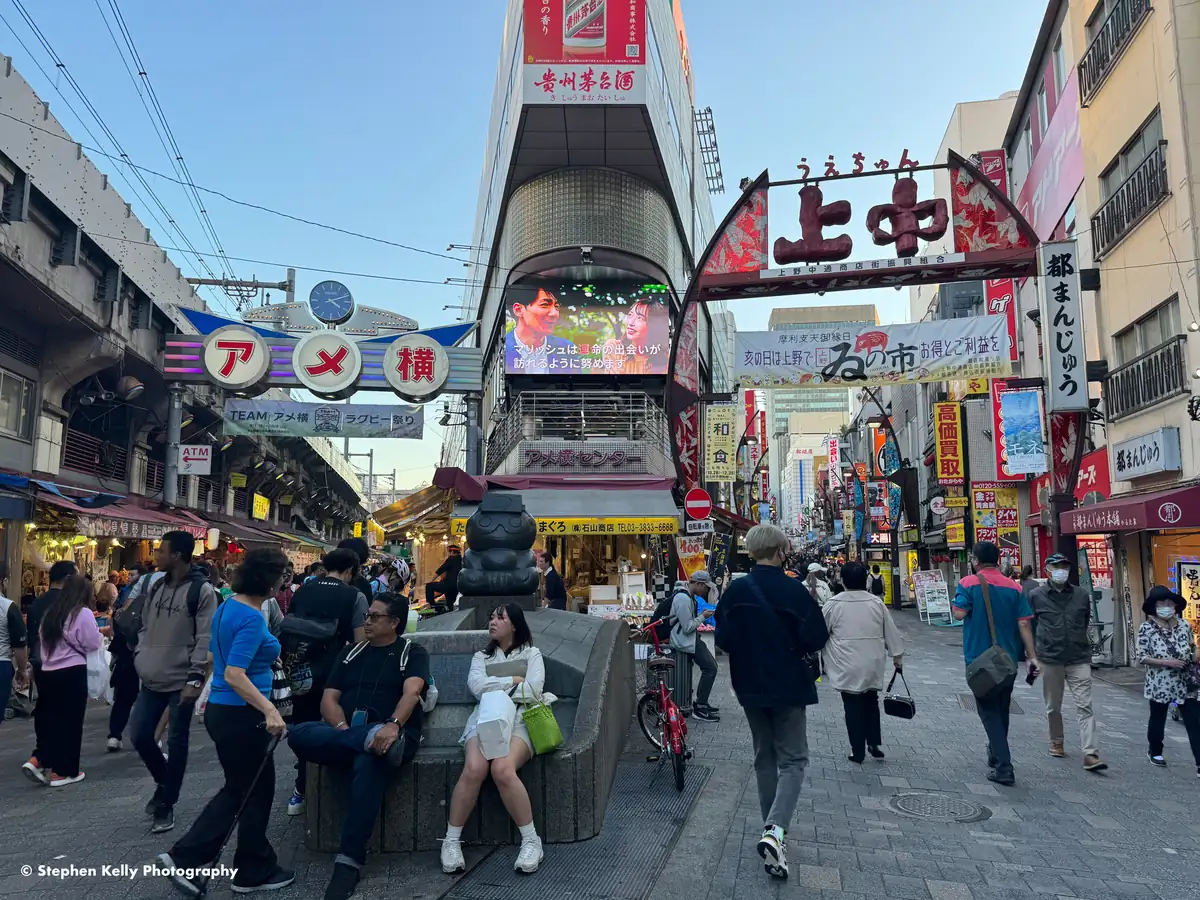
Keisei Ueno Station is next to JR Ueno Station, and the Skyliner arrives from Narita in 41 minutes without a transfer, including for late-night or early-morning arrivals. The JR Yamanote and Keihin-Tohoku Lines and Tokyo Metro Ginza and Hibiya Lines also serve the area. Ueno Park contains the Tokyo National Museum, the National Museum of Nature and Science, and the zoo. South of the station, Ameyoko is lined with shops selling dried goods, snacks, and cosmetics and medicines. The atmosphere is down-to-earth and lived-in, and hotels are usually more affordable than in Shinjuku or Ginza. Ueno suits travelers flying in and out of Narita, families with children or older relatives, and people who enjoy museums and older streets. Those seeking fashionable restaurants and bars may find it gets quiet too early.
Tokyo Station (Marunouchi, Yaesu, Nihonbashi): Shinkansen and N'EX on your doorstep
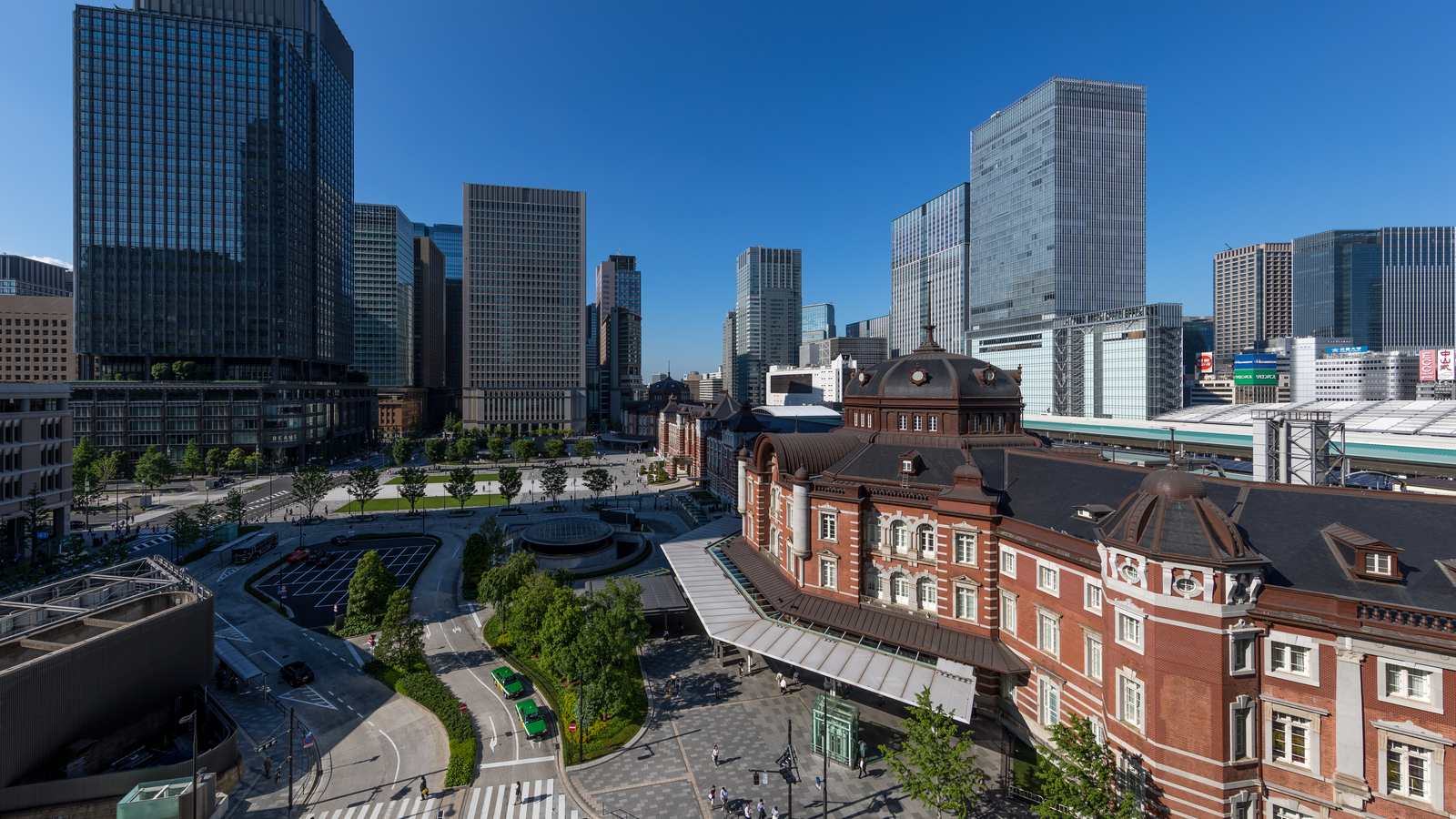
If you plan to take the Shinkansen to Kyoto, Osaka, or Tohoku, or the direct N'EX from Narita, staying near Tokyo Station is especially convenient. JR services and the Tokyo Metro Marunouchi Line are in the station; walk to Otemachi for the Tozai, Chiyoda, Hanzomon, and Mita Lines. On the Marunouchi side are the redbrick station building, the Imperial Palace Outer Gardens, and office towers. The Yaesu side has a bus terminal and underground shopping streets, with Nihonbashi to the north. The area feels orderly, quiet, and businesslike, and can be even emptier on weekends. It suits travelers planning Shinkansen trips or day trips, those who value efficient transfers, and those who do not need nightlife. Anyone seeking a lively neighborhood may find evenings too quiet.
Shibuya: young, trend-focused, and hilly; choose it for plans on the western side
Shibuya Station serves the JR Yamanote and Saikyo Lines, Tokyu Toyoko and Den-en-toshi Lines, Keio Inokashira Line, and Tokyo Metro Ginza, Hanzomon, and Fukutoshin Lines. The Narita N'EX also runs directly here. Outside the station are the scramble crossing, SHIBUYA SKY, department stores, and fashion shops; Harajuku, Omotesando, Daikanyama, and Ebisu are within walking distance. It has the youngest feel of the seven areas and crowds from morning to night, but its many slopes make pulling luggage tiring. Shibuya suits younger travelers focused on shopping and cafés who want to stay near Harajuku and Omotesando. If you have large bags or are traveling with older relatives, Shinjuku is the easier choice.
Asakusa: near Skytree and Kaminarimon, with quiet evenings and affordable hotels
Asakusa Station is served by the Tokyo Metro Ginza Line, Toei Asakusa Line, Tobu Isesaki Line, and Tsukuba Express. From Haneda, Keikyu runs through onto the Toei Asakusa Line and reaches Asakusa in 37 minutes without a transfer. From Narita, the Keisei Access Express also runs through onto this line. Kaminarimon, Nakamise, Sensoji Temple, and the Sumida River walkway are all within walking distance, and Tokyo Skytree is just across the river. Asakusa has an old-town feel and an early-to-bed, early-to-rise rhythm; the streets grow quiet around eight or nine at night. Hotels are plentiful and usually cheaper than inside the Yamanote Line loop. It suits families with children and travelers who want to photograph old streets and Skytree or keep accommodation costs down without staying too far out. Trips to Shinjuku and Shibuya cross the city, so avoid Asakusa if most of your plans are on the western side.
Ikebukuro: where Seibu and Tobu meet, a slightly cheaper alternative to Shinjuku
Ikebukuro Station serves the JR Yamanote, Saikyo, and Shonan-Shinjuku Lines; Tokyo Metro Marunouchi, Yurakucho, and Fukutoshin Lines; and the Seibu Ikebukuro and Tobu Tojo Lines. From Narita, take the Skyliner to Nippori and change to the Yamanote Line. From Haneda, take Keikyu to Shinagawa and change there. The east exit leads to Sunshine City and Otome Road, with its anime and capsule-toy shops. The west exit has department stores and the Tokyo Metropolitan Theatre. The atmosphere falls between lively Shinjuku and down-to-earth Ueno. There are many hotel choices, often a price tier below Shinjuku. Ikebukuro suits travelers on a budget, fans of anime merchandise, and those planning a Kawagoe day trip. The drawback is the lack of a direct airport train, which means another transfer with luggage.
Ginza: dense with shops and restaurants, most comfortable for early nights
Ginza Station serves the Tokyo Metro Ginza, Marunouchi, and Hibiya Lines. You can walk to the JR Yamanote Line at Yurakucho or to JR and the Toei Asakusa Line at Shimbashi. From Haneda, take the monorail to Hamamatsucho, then ride the Yamanote Line one stop to Shimbashi. From Narita, take the N'EX to Tokyo Station, then walk or change to the subway. Nearby are department stores, flagship shops, Tsukiji Outer Market, and Hibiya Park. Restaurants are plentiful but close early. Ginza feels polished and tidy, with luxury shops and long-established businesses throughout the walkable area. It suits travelers focused on shopping and dining, with no late-night plans and a generous budget. Budget travelers and nightlife fans may find it expensive and quiet.
Compare the seven areas at a glance
| Area | From the airport | Main lines | Best for | Keep in mind |
|---|---|---|---|---|
| Shinjuku | Direct N'EX from Narita; Keikyu from Haneda to Shinagawa, then Yamanote Line | JR, Odakyu, Keio, Seibu, Metro Marunouchi Line, Toei Shinjuku and Oedo Lines | First visits, scattered plans, late-night food | Large station with many exits; check which one is nearest your hotel |
| Ueno | Direct Skyliner from Narita in 41 min; Keikyu from Haneda to Shinagawa, then Yamanote Line | JR Yamanote and Keihin-Tohoku Lines, Metro Ginza and Hibiya Lines, Keisei | Narita flights, children or older relatives, museums and old streets | Gets quiet early at night |
| Tokyo Station | Direct N'EX from Narita in 53 min; Haneda monorail to Hamamatsucho, then Yamanote Line | JR lines, Shinkansen, Metro Marunouchi Line; four more subway lines at Otemachi | Shinkansen trips or day trips; efficient transfers | Business district with little nightlife |
| Shibuya | Direct N'EX from Narita; Keikyu from Haneda to Shinagawa, then Yamanote Line | JR, Tokyu, Keio Inokashira Line, Metro Ginza, Hanzomon, and Fukutoshin Lines | Younger travelers, shops and cafés, access to Harajuku and Omotesando | Many slopes; station routes often change during reconstruction |
| Asakusa | Through Keikyu service from Haneda in 37 min; through Keisei Access Express from Narita | Metro Ginza Line, Toei Asakusa Line, Tobu, Tsukuba Express | Children, old streets and Skytree, limited budgets | Cross-city trips to the western side |
| Ikebukuro | Skyliner from Narita to Nippori, then Yamanote Line; Keikyu from Haneda to Shinagawa, then transfer | JR, Metro Marunouchi, Yurakucho, and Fukutoshin Lines, Seibu, Tobu | Limited budgets, anime merchandise, Kawagoe day trips | No direct airport train |
| Ginza | Haneda monorail to Hamamatsucho, then Yamanote Line; N'EX from Narita to Tokyo Station | Metro Ginza, Marunouchi, and Hibiya Lines; walk to Yurakucho or Shimbashi | Shopping and dining, generous budgets, early nights | Expensive; places close early at night |
Chosen an area? Check its room prices for your dates
Two things to know before booking: accommodation tax and luggage delivery
Tokyo accommodation tax: currently 100 or 200 yen per person per night; changing to 3% from 2027/4
Tokyo charges an additional accommodation tax on stays at hotels and inns. It is usually excluded from the room price shown on booking sites and paid separately at the front desk at check-in or check-out. Under the rules verified in 2026/9, a room rate of at least 10,000 yen but less than 15,000 yen per person per night incurs 100 yen in tax; a rate of 15,000 yen or more incurs 200 yen; and a rate below 10,000 yen is exempt.
Send your luggage ahead: Airport TA-Q-BIN
Changing trains on the Yamanote Line is especially tiring with large bags. Yamato Transport’s Airport TA-Q-BIN can send luggage from your hotel or home to counters at major airports, including Narita, Haneda, and Kansai, for collection on your departure day. After landing, you can also send luggage from an airport counter to your hotel. Most hotel front desks can arrange shipment.
How to choose: three common situations
- First visit, five days and four nights, with sights on both the eastern and western sides: stay in Shinjuku or near Tokyo Station. Each day you can use the Yamanote Line or a direct service, and both airports have direct trains.
- Traveling with children or older relatives, seeking quiet evenings on a moderate budget: choose Ueno or Asakusa. The Narita Skyliner or Haneda Keikyu gets you there on one train; explore parks and old streets by day, then return to the hotel early.
- Plans focused on the western side, plenty of energy, and a wish to stay out late: choose Shibuya or Shinjuku, near Harajuku, Omotesando, and Shimokitazawa. If shopping and restaurants are the priority and your budget is generous, stay in Ginza.
- If changing hotels: stay first in an area convenient for your arrival airport, then in one convenient for your departure, and send your luggage by TA-Q-BIN.
Tokyo city page: sights, accommodation, and airport transport in one place
Tokyo food directory: find places to eat in the area where you stay
Guide
How to Choose Tokyo Transit Passes: Are Suica, Welcome Suica, the Tokyo Subway Ticket, and the JR Pass Worth It?
On a first Tokyo trip, start with an IC card and pay per ride (Welcome Suica has no deposit and is valid for 28 days). If you take four or more subway rides in a day, add a 72-hour Tokyo Subway Ticket for 2,000 yen; a JR Pass is never worthwhile if you stay in Tokyo and do not go to Kansai. See what TOURIST PASMO, Suica on iPhone, and the Tokyo Metro day pass do and do not cover, with a decision chart. Prices verified in September 2026.
Guide
Narita and Haneda Airports to Central Tokyo: How to Choose Skyliner, N'EX, Keikyu, or the Airport Limousine Bus
From Narita to Tokyo: take Keisei Skyliner to Ueno in 36–41 minutes for ¥2,580; for Shinjuku or Tokyo Station, JR N'EX reaches Tokyo in as little as 53 minutes for ¥3,140; choose the TYO-NRT bus for ¥1,500 when budget comes first. From Haneda, Keikyu reaches Shinagawa in 11–14 minutes for ¥330. Includes fares and times for Access Express, Airport Limousine and Tokyo Monorail, plus a stay-area route guide; checked on official sites in 9/2026.
Guide
Changi Airport to Singapore city: MRT transfers, terminals T1 and T4, Taiwan-issued cards and Tourist Pass value
First-time guide to getting from Changi Airport into Singapore: MRT transfers at Tanah Merah or Expo; reaching the station from T1 and T4; bus, taxi surcharges and airport transfer prices; the SGD 0.60 daily fee when paying with a Taiwan-issued Visa or Mastercard, why JCB is not accepted, whether EZ-Link or the Singapore Tourist Pass pays off, and late-night or return-trip trains. Fares and timings checked with Changi Airport and SimplyGo in September 2026.
Guide
Seoul Subway and T-money Complete Guide: Where to Buy, How to Top Up, and Whether the Climate Card Is Worth It
Seoul subway adult base fare is 1,550 won; transfers within 30 minutes are discounted. Count separately charged trips when comparing Climate Card short-term passes, and add 3,000 won for a new physical card. You cannot board at Incheon Airport with the pass, but a covered AREX all-stop trip from Seoul can end at T1 or T2. How to buy, top up, and refund T-money; covered routes and pass choices. Verified with official sources in 2026/9.
Articles that cite this one
Sources
- Keisei Electric Railway Skyliner Traditional Chinese website (fastest times: 36 minutes and 41 minutes) · Checked:
- Keisei Electric Railway Skyliner guide (Nippori in as little as 36 minutes; all seats reserved) · Checked:
- JR East N'EX (Narita Express) (Tokyo in 53 minutes; N'EX TOKYO Round Trip Ticket 5,200 yen) · Checked:
- Keikyu Haneda Airport Access Guide fare table (Shinagawa 14 minutes, Asakusa 37 minutes, Oshiage 41 minutes) · Checked:
- Tokyo Monorail Traditional Chinese website (Hamamatsucho from 13 minutes) · Checked:
- Tokyo Metropolitan Bureau of Taxation, Accommodation Tax (current rates: 100 yen and 200 yen) · Checked:
- Tokyo Metropolitan Bureau of Taxation, Accommodation Tax Revision (passed 2026/3/27; effective 2027/4/1; 3%) · Checked:
- Yamato Transport Airport TA-Q-BIN (ship 2 days before departure; 30 kg; sizes 60 to 200) · Checked:
- Yamato Transport Airport TA-Q-BIN (maximum single-side length: 170 cm) · Checked: