Guide
How to Read Hotel Booking Plans in Japan: Check Beds, Guest Counts, Meals, and Cancellation Terms
Rate differences at the same hotel are not necessarily just about room size. Compare bed types, guest counts, meals, payment, and cancellation deadlines for the same stay details to avoid booking a plan that does not meet your needs.
About 7 min read
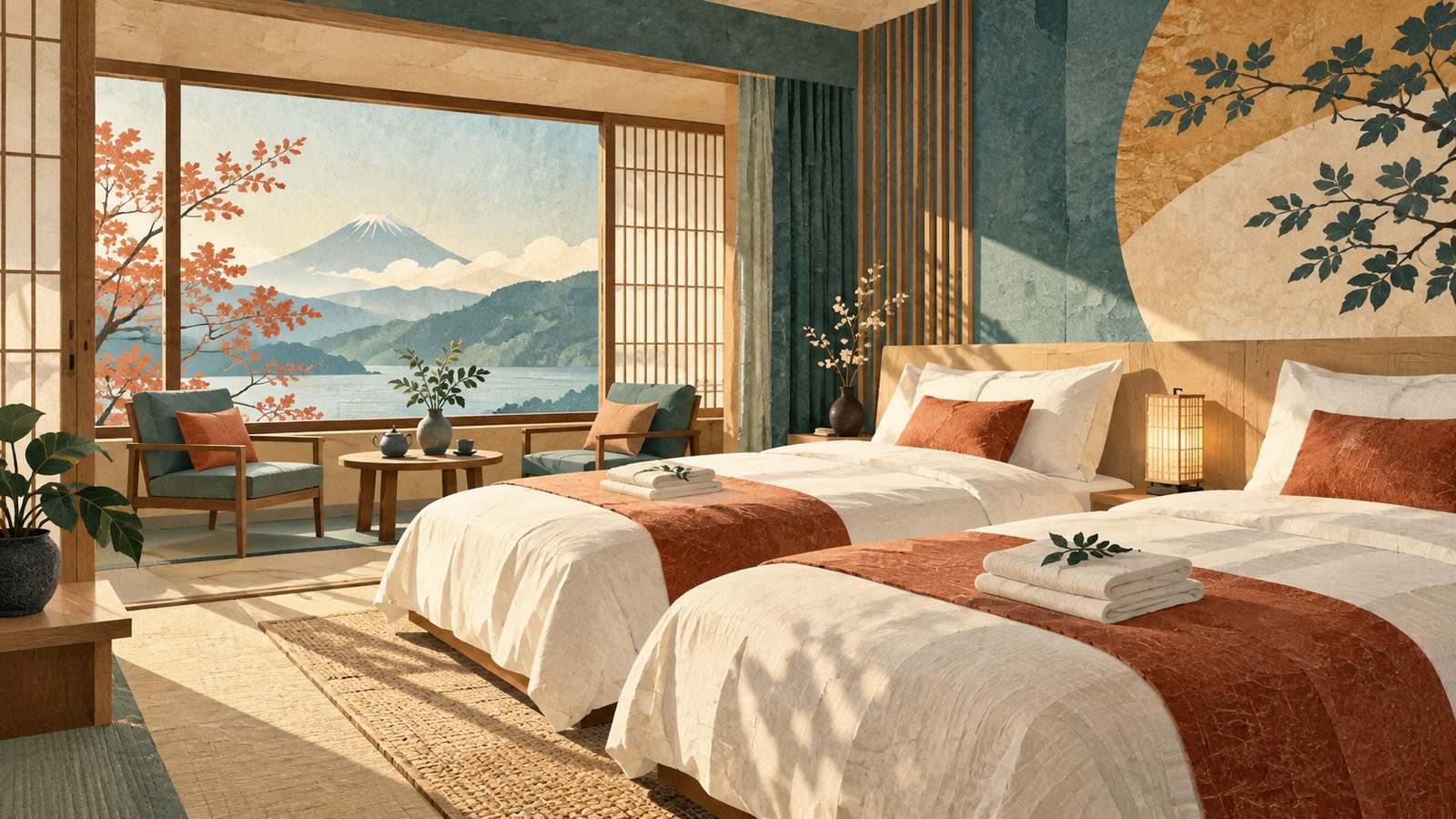
When you spot a low rate, it is easy to book first and only later discover that you cannot cancel, breakfast is not included for everyone, or the so-called double room has only one bed. This article does not recommend areas to stay or rank hotels; it breaks the booking page down into conditions you can check. Making sure the plan suits your travel companions before comparing costs is usually less trouble than buying extras or rebooking afterward.
Enter All Guests Before Comparing Room Rates
Before comparing, keep the dates, number of nights, number of adults, children's ages, and number of rooms the same. Check each hotel's and plan's terms to confirm whether children may share an existing bed and whether bedding or meals are provided; do not apply one brand's policy to every property. Leaving children out of the search and adding them to the notes after checkout does not mean the hotel has accepted the change in guest count. Families needing adjacent rooms, a crib, or specific equipment should obtain a clear answer while cancellation is still allowed.
The Japan National Tourism Organization's accommodation guide notes that some Japanese inns charge per person with meals included. This is a useful reminder that per-room, per-person, per-night, and whole-stay prices cannot be compared interchangeably. First convert every option into a checkout total for the same guest count and number of nights, then check for separately listed charges payable at the property. This article does not give fixed accommodation tax amounts or child age thresholds, because these depend on the location and the actual plan.
Read the full description
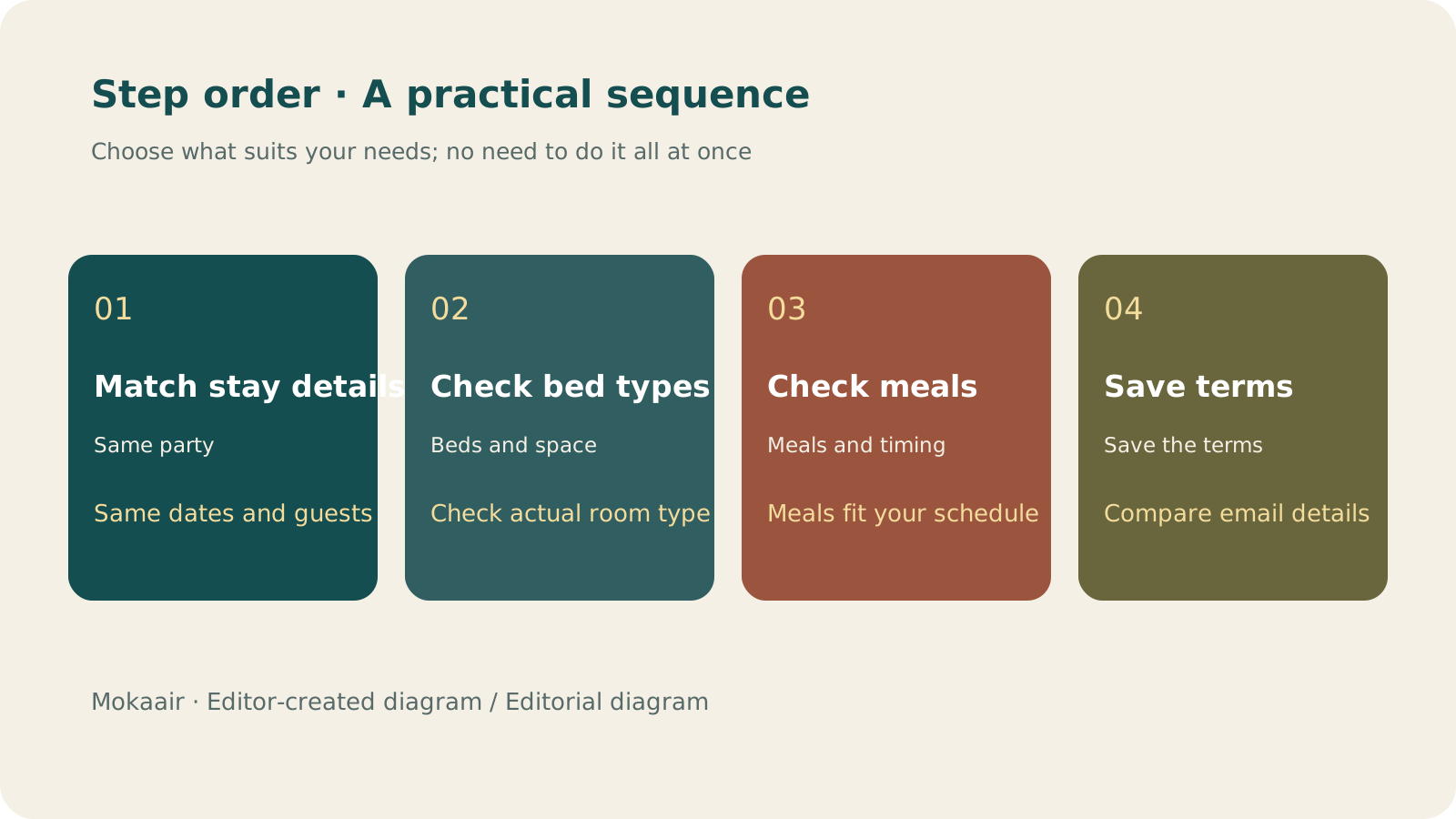
Check in order: set matching stay details, confirm bed types, check meals, and save the terms. Compiled by the editors; this is not a map or a record of measured times.
Check Twin Beds, Double Beds, and Bed Width Separately
Start with the room type's original-language name, then check the bed count, bed widths, and room photos. Labels such as Twin, Double, and Semi-double are only a starting point; what determines whether everyone can sleep comfortably is the bed count and dimensions listed for that room type. Two travelers who do not want to share a bed should confirm that there are two separate beds. If you need an extra bed, also check whether there will still be room to open your luggage after it is added. A sofa in a photo does not automatically mean a usable third bed is included.
| Comparison field | What to record | Common pitfalls |
|---|---|---|
| Guest details | Adults, children's ages, rules for sharing existing beds | Adding a guest count to the notes does not complete a booking change |
| Sleeping arrangements | Bed count, bed widths, confirmation of extra beds | A room for two does not guarantee twin beds |
| Meals | Which days, which guests, which meals | Included breakfast may not cover every guest |
| Cancellation rules | Deadline, time zone, cancellation charges | Free cancellation does not mean cancellation at any time |
| Payment method | Payment timing, currency, charges payable at the property | The search result price may not be the final total |
If you have specific sleeping requirements, prioritize conditions you can get confirmed in writing, such as a nonsmoking room, bed type, and whether there is a private bathroom. For a high floor, a view, a quiet room, or a room near the elevator, you generally need to check whether the plan guarantees it; a note may merely register a preference. Record confirmed arrangements separately from requests so you know what still needs following up before arrival and avoid promising your companions something the hotel has not guaranteed.
Do Meal Plans Fit Your Schedule?
Breakfast-inclusive plans suit travelers who are happy to eat at the hotel and leave at fairly consistent times. Those taking an early flight or departing before dawn should first check when breakfast starts and whether alternatives are available. For plans including dinner, check the latest check-in or dining time; do not turn a long-distance travel day into a stressful test of making it to dinner on time. If you have dietary restrictions, ask whether they can be accommodated and when you must notify the hotel. Do not use booking notes as a substitute for formal confirmation.
When comparing prices, first ask whether you will actually get to eat the meal. Consider the flexibility of eating out, your companions' food preferences, and any early departures or late returns before looking at the price difference for included meals. Refunds for unused meals depend on the plan's rules; if the booking page does not say they are refundable, do not count that money as recoverable in your budget. If the trip includes time for independent activities, you can also choose different plans for different nights, but confirm in advance whether the hotel will require you to change rooms.
Before Booking, Save the Terms So You Can Check Them Again
Save the plan name, room type, total guest count, total price, cancellation terms, and payment page, and check the dates and hotel branch in the confirmation email. If the free cancellation deadline uses the property's local time, specify the time zone in your calendar and set an advance reminder. Prepayment, payment at the property, and a credit card guarantee do not mean you will be charged at the same time. If the booking page is unclear, ask the platform or hotel before deciding whether to pay.
Compare Two Plans on the Same Checklist
Suppose two people are staying for three nights: Plan A looks cheaper per night, while Plan B includes breakfast and allows cancellation. First compare the same guest count, dates, bed type, and number of nights, then record the final checkout totals. Next, ask whether you will actually eat breakfast: if you leave early every day, included meals may not help; if your companions want a leisurely meal, the breakfast location and service arrangements may matter more than a small price difference. This is a judgment based on your needs, not a fixed rule to choose plans with or without meals.
When room type names look similar, open each plan's full description and compare the number and width of the beds, whether any are extra beds, and the usable space in the room. Photos may show several layouts, so you cannot judge your room from a single wide-angle image. If two people need separate beds, space for large luggage, or room for a stroller, make your questions specific so the property can say whether it meets your needs, rather than simply asking whether the room is large.
Record the cancellation deadline as a date, time, and applicable time zone, and keep the original plan's terms. If the page only shows a countdown or vague wording, check the booking details. If you later change the dates, guest count, or room type, review the new plan's total and cancellation terms; do not assume the original booking's benefits will carry over. If you need to rebook, also check the status of both reservations first to avoid thinking a change is complete while actually keeping two bookings.
Before arrival, list any requests that remain unanswered, such as late arrival, receiving luggage on your behalf, or accessibility equipment. The notes field is suitable for making requests, but conditions that affect whether you can check in or use the room still need explicit confirmation. Keep the property's replies and your booking together so you can quickly check them on arrival and your companions can easily take over if needed.
- Are the guest count, dates, and room type in the confirmation email entirely correct?
- Do the hotel's official name and map address refer to the same branch?
- Is the equipment you need guaranteed, or has the request merely been recorded?
- Have you added cancellation, payment, and meal deadlines to your to-do list?
After choosing a plan, compare areas to stay in TokyoWhere to Stay in Tokyo: Comparing Shinjuku, Ueno, Tokyo Station, Shibuya, Asakusa, Ikebukuro, and Ginza, Plus Airport Access, Accommodation Tax, and Luggage DeliveryWhere should you stay in Tokyo? Compare Shinjuku, Ueno, Tokyo Station, Shibuya, Asakusa, Ikebukuro, and Ginza by the same criteria: access from Narita and Haneda, transit routes, nearby attractions, neighborhood character, and who each area suits. Includes a comparison table, a Yamanote Line diagram, Tokyo’s accommodation tax as verified in 2026/9 (changing to 3% in 2027/4), and Airport TA-Q-BIN luggage shipping rules.Read the full article
Guide
Where to Stay in Tokyo: Comparing Shinjuku, Ueno, Tokyo Station, Shibuya, Asakusa, Ikebukuro, and Ginza, Plus Airport Access, Accommodation Tax, and Luggage Delivery
Where should you stay in Tokyo? Compare Shinjuku, Ueno, Tokyo Station, Shibuya, Asakusa, Ikebukuro, and Ginza by the same criteria: access from Narita and Haneda, transit routes, nearby attractions, neighborhood character, and who each area suits. Includes a comparison table, a Yamanote Line diagram, Tokyo’s accommodation tax as verified in 2026/9 (changing to 3% in 2027/4), and Airport TA-Q-BIN luggage shipping rules.
Guide
How to Choose Tokyo Transit Passes: Are Suica, Welcome Suica, the Tokyo Subway Ticket, and the JR Pass Worth It?
On a first Tokyo trip, start with an IC card and pay per ride (Welcome Suica has no deposit and is valid for 28 days). If you take four or more subway rides in a day, add a 72-hour Tokyo Subway Ticket for 2,000 yen; a JR Pass is never worthwhile if you stay in Tokyo and do not go to Kansai. See what TOURIST PASMO, Suica on iPhone, and the Tokyo Metro day pass do and do not cover, with a decision chart. Prices verified in September 2026.
Guide
Tokyo Disneyland and DisneySea Guide: Ticket Prices, Fantasy Springs, Disney Premier Access (DPA), Standby Pass, and Which Park to Choose for Your First Visit
Tokyo Disney one-day Passport prices vary: most weekdays in 9/2026 cost ¥9,900 and weekends ¥10,900. At 14:00 daily, tickets go on sale for the same date two months later. Free Priority Pass is no longer on the official service list; only paid Disney Premier Access (¥1,000–3,500 per person per use) shortens waits. Covers hours, the 25th anniversary, Standby Pass, Entry Request, Fantasy Springs access and first-visit park choice; checked on the official site in 9/2026.
Guide
Narita and Haneda Airports to Central Tokyo: How to Choose Skyliner, N'EX, Keikyu, or the Airport Limousine Bus
From Narita to Tokyo: take Keisei Skyliner to Ueno in 36–41 minutes for ¥2,580; for Shinjuku or Tokyo Station, JR N'EX reaches Tokyo in as little as 53 minutes for ¥3,140; choose the TYO-NRT bus for ¥1,500 when budget comes first. From Haneda, Keikyu reaches Shinagawa in 11–14 minutes for ¥330. Includes fares and times for Access Express, Airport Limousine and Tokyo Monorail, plus a stay-area route guide; checked on official sites in 9/2026.