Lifestyle
Separating rules, documentation and context
Separate working rules, project entry points, design requirements and handoff state. Check outdated hypotheses against actual files and tests.
About 12 min read · Practice 25 min
Practical · Desktop / CLI / VS Code / JetBrains / cloud
Before you start
On this page
Back to the Codex learning hubCodex learning hub: tutorial directoryA planned 60-lesson, ten-unit Codex curriculum, from setup and your first task to MD instructions and advanced integrations. Find your next lesson by experience, platform, goal or command; unpublished entries show their status.Read the full article
Goal and preparation
Not every document belongs inside AGENTS.md. Rules hold durable work requirements; README helps people find entry points; design notes specify a feature; handoffs record current progress and next actions. Links among ordinary Markdown files do not automatically load every document. State when to read each source in rules or the task, then verify the files were actually consulted.
| File | Keep here | Avoid putting here |
|---|---|---|
| AGENTS.md | When to read docs, test/delivery rules | Full conversation history |
| README.md | Purpose, file map, startup | Every temporary log line |
| docs/filters.md | Inputs, expected behavior, constraints | Claims about current test execution |
| docs/handoff.md | Verified, unverified, next step | Passwords or permanent general rules |
Step 1: Prepare a complete project copy
Extract the Small Steps pack, copy expected to codex-docs-lab and retain the original. Use expected, not broken: this exercise identifies an outdated handoff hypothesis rather than repairing the filter again. Confirm index.html, style.css, app.js, core.mjs and core.test.mjs at the root, then add docs.
The following four samples are complete files for the stated paths. If your copy already contains one, preserve and merge its content rather than overwriting important guidance. Shared English samples make filenames, links and criteria comparable across all five editions; your own documents may use your preferred language.
Step 2: Write rules and entry points
Write root AGENTS.md below. It directs filter work to docs/filters.md and resumed work to docs/handoff.md, then requires checking old notes against code and execution. That avoids treating a previous hypothesis as fact. It neither loads every design for every task nor grants tool permissions.
# Small Steps working instructions

- Before analyzing or changing filters, read docs/filters.md.
- When resuming work, read docs/handoff.md and verify its claims against current files.
- Preserve the task data format, localStorage key, existing tests and unrelated behavior.
- Use node --test core.test.mjs for core behavior checks.
- Do not add dependencies or network requests for this exercise.
- Record actual test results separately from hypotheses and checks not run.
- Update docs/handoff.md only within the scope authorized by the current task.
Root README.md gives purpose, file roles and the test entry point. Its two links should open real files under docs. Relative links help readers and editors but do not prove Codex automatically expanded them. Use the first project walkthroughFinish your first small projectUse an independent copy of the Small Steps todo website to change its heading and background. Identify the five practice files and compare the diff, core tests and two viewport widths while preserving behavior and data.Read the full article for preview setup, and do not invent an npm test entry point for this package-free project.
# Small Steps documentation lab

A local todo app using fictional practice data.

## File map

- index.html: page structure and filter controls.
- style.css: presentation and focus styles.
- app.js: browser events and storage integration.
- core.mjs: task operations and filters.
- core.test.mjs: core behavior tests.

## Read next

- [Filter requirements](./docs/filters.md)
- [Current handoff](./docs/handoff.md)

## Check

Run node --test core.test.mjs from this folder with Node.js installed.
This command description is not a claim that tests have run.
Step 3: Separate requirements from execution records
docs/filters.md states verifiable requirements. Read completed and Build incomplete provide fixed inputs, each filter has an explicit output, and an empty list supplies a boundary. This describes how the feature should work, not what this computer has tested. Order and nonmutation constraints remain visible when assessing a change.
# Filter requirements

Given Read is completed and Build is incomplete:

- All returns Read, then Build.
- Active returns Build only.
- Completed returns Read only.
- An empty input returns an empty result for every filter.
- Filtering preserves task order and does not modify the input.

Core checks: node --test core.test.mjs
Browser check: create both tasks, complete Read, and inspect all three filters.

[Back to project](../README.md)
docs/handoff.md deliberately retains an unverified old hypothesis: Completed may return unfinished tasks. Because this starts from expected, the next task should check and reject that hypothesis rather than break working code to follow a note. Identify the source version. This exercise uses an expected copy and subsequent file/test evidence; a real Git project can also record its commit.
# Current handoff

Starting material: an untouched copy of the Small Steps expected folder.
Goal: verify the current Completed behavior before changing any code.

## Verified

No checks have been run for this copy yet.

## Unverified hypothesis

An older note suggested Completed might return unfinished tasks.
Treat this as a hypothesis, not an instruction to change the implementation.

## Next action

Read docs/filters.md and core.mjs, then run node --test core.test.mjs.
Record the actual result and which checks remain unperformed.

[Back to project](../README.md)
Before verification, copy these four new documents to a backup folder outside the project, preserving their relative paths. Compare the five source files with the untouched expected copy. Afterwards, only docs/handoff.md may differ. Make sure any editor comparison uses this backup, not an older task's files; Git is not required to compare two real files.
Step 4: Verify the documents in a fresh task
Save all files and start a fresh desktop task or CLI session in codex-docs-lab. Submit the request below, authorizing only handoff.md edits while preserving source, tests and rules. If read-only permissions prevent that update, collect and verify the read/test results, then update the note manually or adjust the specific permission scope using the permissions lessonPermissions, sandbox, network and keysSandbox rules define technical access to files and networks; approval policy determines when the agent asks before acting. No prompt does not guarantee permission, and read access does not imply write access everywhere.Read the full article.
Resume this documentation lab. Read AGENTS.md, README.md, docs/filters.md and docs/handoff.md. Check the handoff hypothesis against core.mjs and run node --test core.test.mjs. Do not change source code, tests or rules. You may update only docs/handoff.md with observed results, evidence, and remaining checks. Explain which document supplied requirements and which supplied unverified history. Do not mark the browser check as passed without performing it.
A valid result identifies the current correct completed predicate, three passing core tests and a rejected stale hypothesis. Verified records actual commands, outcomes and relevant files; Pending retains the unperformed browser check. README and filter requirements stay unchanged. Defining a browser check does not mean it passed. Independently run the command below and verify only handoff.md changed.
node --test core.test.mjs
Make the handoff traceable
Fill the fields below from your output in the appropriate handoff.md sections; unresolved brackets are not a completion record. If Node is unavailable, tests fail or no run occurs, keep the hypothesis unresolved with the reason. Reading code supports code inspection, not a claim of executed tests or browser use.
Checked at: [time and timezone]
Working copy: [actual practice folder and starting material]
Requirement source: docs/filters.md
Historical claim: [the old hypothesis]
Code inspected: [actual file/function and observed behavior]
Test execution: [command, exit code, pass/fail counts / not run and reason]
Hypothesis outcome: [supported / contradicted / unresolved, with evidence]
Browser verification: [actual scope and result / not run]
Files compared: [actual comparison against the saved originals]
Next action: [remaining work]
Failure exercise, restoration and maintenance
To practice a missing design document, preserve handoff.md and filters.md, rename the latter to filters.saved.md and request the original path in a fresh task. Expect an explicit missing-file result and path/directory checks, not invented evidence from old chat. Restore the name and verify README's ./docs/filters.md and the document's ../README.md return link.
When documents conflict, identify product requirements versus historical hypotheses and align with the current explicit task. Do not silently rewrite all documents to conceal the discrepancy. Shorten oversized rules by moving duplicate background/logs while retaining specific reading triggers and valid links. Refresh handoffs after actual verification, with pending work, rather than pre-filling success at task start.
To repeat, restore only your saved handoff.md to its initial unverified state and keep correct code. The four documents affect this lab, not global settings. Completion means valid files/links, distinguished rules/history, sourced test results, detected missing files and no invented passes. The samples are original and rule discovery is documentation-checked. Locally passing expected tests are not proof of each reader's Codex execution.
Back to the Codex learning hubCodex learning hub: tutorial directoryA planned 60-lesson, ten-unit Codex curriculum, from setup and your first task to MD instructions and advanced integrations. Find your next lesson by experience, platform, goal or command; unpublished entries show their status.Read the full article
Read the full description
Three numbered stages: identify the starting point, perform the exercise, and verify the result. Original illustration, not a product screenshot.
Lifestyle
Codex learning hub: tutorial directory
A planned 60-lesson, ten-unit Codex curriculum, from setup and your first task to MD instructions and advanced integrations. Find your next lesson by experience, platform, goal or command; unpublished entries show their status.
Lifestyle
Worktrees and isolated tasks
A Git worktree gives one repository multiple working directories on different branches. It isolates file edits, but databases, ports and external services may still be shared. File isolation is not full resource isolation.
Lifestyle
Workshop: build a small website
Plan and build the Small Steps task website from brief.md, with adding, completing, deleting, filtering and local persistence. Separate HTML, CSS, data functions, UI events and tests, verify with Node and browser checks, and document restart and recovery steps.
Lifestyle
Usage and efficiency: reducing rework
Record task conditions, model options, time and outcomes to reduce unnecessary retries and excess context.
Articles that cite this one
Latest travel guides

GuideTokyo
Where to Stay in Tokyo: Comparing Shinjuku, Ueno, Tokyo Station, Shibuya, Asakusa, Ikebukuro, and Ginza, Plus Airport Access, Accommodation Tax, and Luggage Delivery
Where should you stay in Tokyo? Compare Shinjuku, Ueno, Tokyo Station, Shibuya, Asakusa, Ikebukuro, and Ginza by the same criteria: access from Narita and Haneda, transit routes, nearby attractions, neighborhood character, and who each area suits. Includes a comparison table, a Yamanote Line diagram, Tokyo’s accommodation tax as verified in 2026/9 (changing to 3% in 2027/4), and Airport TA-Q-BIN luggage shipping rules.
- Budget
- Hotels
GuideTokyo
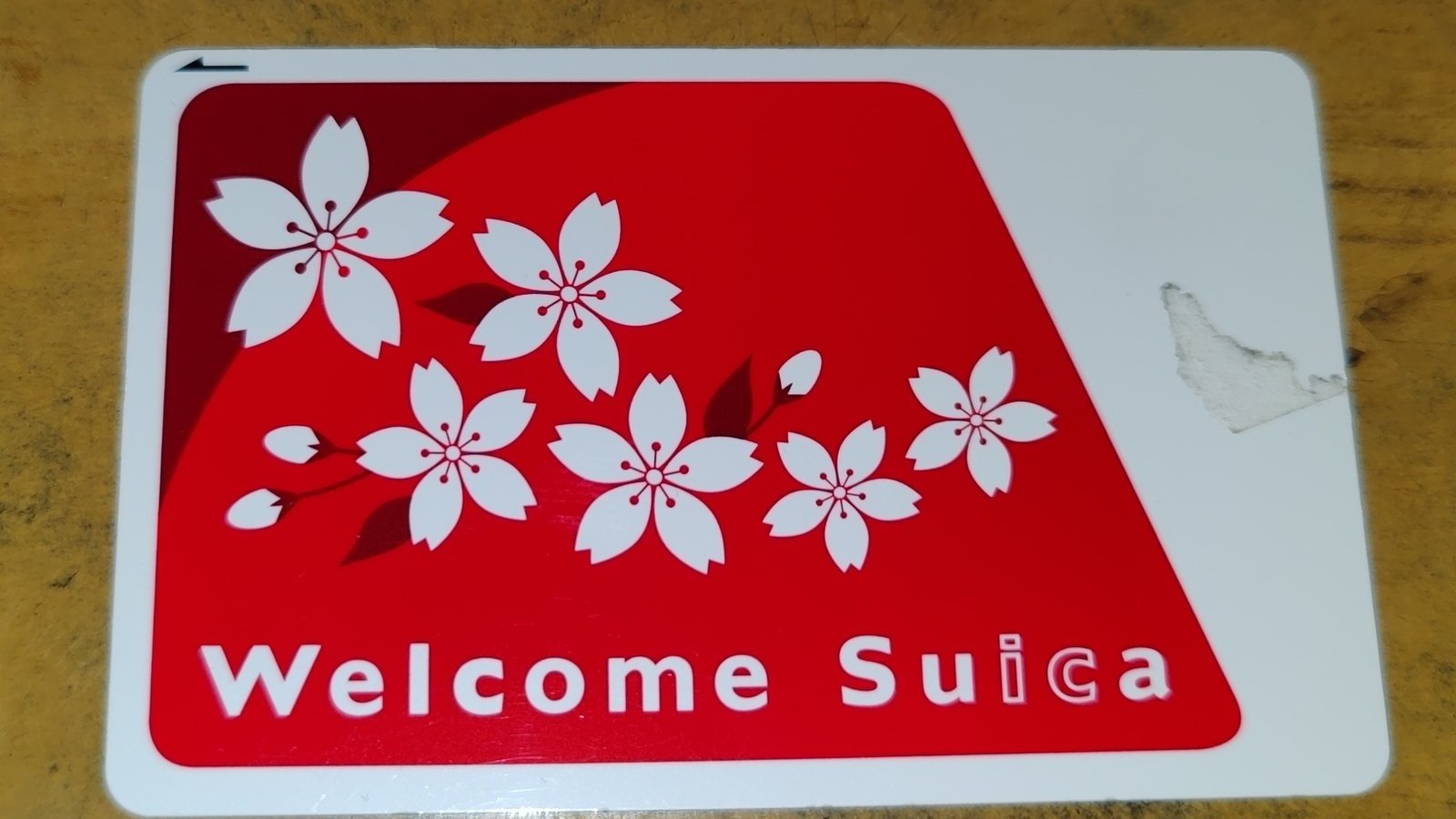
How to Choose Tokyo Transit Passes: Are Suica, Welcome Suica, the Tokyo Subway Ticket, and the JR Pass Worth It?
On a first Tokyo trip, start with an IC card and pay per ride (Welcome Suica has no deposit and is valid for 28 days). If you take four or more subway rides in a day, add a 72-hour Tokyo Subway Ticket for 2,000 yen; a JR Pass is never worthwhile if you stay in Tokyo and do not go to Kansai. See what TOURIST PASMO, Suica on iPhone, and the Tokyo Metro day pass do and do not cover, with a decision chart. Prices verified in September 2026.
- Transport
- Budget

GuideTokyo
Tokyo Disneyland and DisneySea Guide: Ticket Prices, Fantasy Springs, Disney Premier Access (DPA), Standby Pass, and Which Park to Choose for Your First Visit
Tokyo Disney one-day Passport prices vary: most weekdays in 9/2026 cost ¥9,900 and weekends ¥10,900. At 14:00 daily, tickets go on sale for the same date two months later. Free Priority Pass is no longer on the official service list; only paid Disney Premier Access (¥1,000–3,500 per person per use) shortens waits. Covers hours, the 25th anniversary, Standby Pass, Entry Request, Fantasy Springs access and first-visit park choice; checked on the official site in 9/2026.
- Itineraries
- Family
Sources
- Custom instructions with AGENTS.md · Checked:
- Prompting · Checked: