Lifestyle
What to Do When Searches Get No Clicks: Rethinking Traffic Value Through Reader Tasks
Readers may find opening hours, phone numbers or brief answers on a search page without visiting a website. A non-click is not always a success, and site CTR cannot reveal the overall zero-click search rate. Using an original clothing alterations shop scenario, this article covers checks for search displays, business interactions and actual tasks, from finding information and comparing services to booking, with a comparison table, practical steps and original SVG diagrams.
About 8 min read
An alterations shop's website is getting fewer clicks, but staff still receive calls about adjusting trouser length. The owner may worry that search pages are answering questions directly, or suspect a problem with traffic tracking. At this point, website visits alone should not be used to conclude that business is declining or that zero-click searches are already bringing benefits.
This article builds a practical checking process based on Google's official explanations of metrics and search displays, reviewed on 2026-9-14. The alterations shop is an original scenario, with no real business data used; the article provides no market-wide zero-click percentage and does not present assumptions as observed results.
First Define the Scope of Zero-Click Observations
Zero-click search generally refers to situations where a search is not followed by a click through to an external website. However, different studies may classify clicks into maps, interactions within a platform, revised queries or ended searches differently. When reading a percentage, first check the study population, devices, regions and units of measurement. You cannot apply just any published figure directly to your own website.
For an individual website, there are many reasons for not receiving a click. Readers may have already found an answer, clicked another site, continued searching or simply not noticed your result. Search Console mainly describes impressions of and interactions with your own links. This report alone cannot reconstruct readers' subsequent actions across the entire results page.
Therefore, "one minus website CTR" is not the zero-click rate. Suppose an original example has one thousand impressions and fifty clicks: its CTR is five percent. The remaining impressions did not produce clicks to this site, but that is still insufficient to prove that ninety-five percent of searches involved no clicks to any website. Keep this information gap visible in the report.
Use Reader Tasks to Judge Whether a Site Visit Is Needed
The alterations shop can divide search needs into finding basic information, understanding service differences, checking garment intake requirements and making an appointment. Whether the shop is open today may be answered in the business listing; whether a suit jacket's shoulder width can be altered may require photos, limitations and a professional assessment process, rather than a single generic answer.
For each task, list the information readers should receive and their next step. An address needs precise entrance details, dropping off garments requires intake hours, and a quote requires an explanation of how to describe the garments' condition. Not every question needs to lead to an immediate purchase. Some pages are valuable because they clarify unsuitable requests early, preventing a fruitless visit that wastes both parties' time.
Next, check whether the current content matches the task. If opening hours are simply out of sync, correct the information first; if the service page contains only promotional slogans, add specific procedures and the scope of work available. Using content to fill real information gaps makes decisions easier for readers than deliberately hiding basic answers to recover clicks.
Keep Basic Information in Search Accurate
Google's systems determine whether a featured snippet is suitable for a particular search. Simply adding markup to your website does not guarantee placement. You can clearly address readers' common questions, but should not add unsupported claims about guaranteed turnaround times or the ability to alter every garment just to win a snippet. Even brief search content needs to retain important conditions.
For businesses with physical premises, the address, phone number and opening hours in the business listing should match those on the website. Create a checklist for checking all information channels together when holiday hours, locations or intake procedures change. The person responsible at the shop can confirm the details, then the site maintainer can synchronize them, avoiding updates to social posts that overlook the official service page.
If a search answer misrepresents a service, first save the query terms, date and screenshot, then check the page it cites. The problem may stem from outdated information, a different branch or overly vague content. Do not immediately conclude that a platform is deliberately reducing referral traffic. Once you locate the error, correct the information you control and track whether confusion persists.
Give Readers a Reason to Visit for Questions Worth Exploring
A website can provide content that brief search answers cannot fully accommodate, such as which angles to photograph before an alteration, how fabric condition affects assessment and a checklist before dropping off garments. This information should come from the shop's actual service experience. If the shop has not performed a particular alteration, clearly state that it needs confirmation first, rather than filling the page with fabricated examples.
For an original page-planning example, start by explaining what information a quote requires, then offer a downloadable photography checklist and contact steps. Readers visit the site to complete a specific task, rather than to see half an answer that was deliberately split up. Forms should collect only necessary information and explain what happens after submission, setting clear expectations for the next step.
You can also let readers save useful content or subscribe to it, but do not lock all basic service information behind registration. For frequently updated information, make the latest version easy to find. For a question that already has an answer, prioritize maintaining the original page rather than creating a batch of similar articles that makes it difficult for both search systems and readers to identify the valid version.
- Classify the main queries by tasks: basic information, comparison, checking requirements and booking.
- Cross-check search results, business listings and website content, correcting inconsistent or vague statements.
- Add procedures, evidence and clear next steps for questions requiring more detailed attention.
- Review website clicks, platform interactions and actual garment intake side by side, recording what cannot be attributed.
Count Platform Interactions Separately from Actual Sales
At the time of review, Google Business Profile performance data could provide applicable interaction metrics. Calls refers to clicks on the call button, Directions to direction requests, and Website clicks to clicks on the website link. These actions are different, and clicking the call button cannot be counted directly as a connected call or completed garment intake.
Business performance data may include interactions from organic search and Google Ads, so reports should state their scope. Shops can select a period on the performance page in their management account and save the available metrics; fields that are not displayed should not be filled in as zero. When reviewing multiple branches, retain location information to avoid mixing service outcomes from different shops.
Then use the inquiry and garment intake records actually retained by the shop to check whether customers achieved their goals. If customers report how they found the shop, note that their recollection may be unclear. Do not collect unnecessary information just to assemble a complete conversion path. Trends at different stages can be viewed side by side, but the figures cannot be added up as unique customers without evidence linking them.
Evaluate Content Trade-offs Against Business Goals
During monthly reviews, record content changes, search demand, advertising campaigns and changes to in-store services on the same timeline. If website clicks fall while qualified inquiries remain steady, first investigate where readers may be getting information. If inquiries also fall, check search visibility, service appeal and the contact process, rather than attributing everything to zero-click search.
An increase in branded queries can only serve as a clue to changing interest. It may occur alongside campaigns, word of mouth or other exposure, and cannot directly prove how much brand value a particular article generated. Add sources and limitations to each conclusion so that the next decision can distinguish facts from matters that still need further investigation.
If you are considering restricting search snippets or AI displays, first confirm exactly what the controls cover, your current goals and the entry points you might lose, then let the website owner decide. Evaluating a content strategy should include information accuracy, whether readers can complete their tasks and whether operating costs are reasonable. A single traffic figure cannot replace these judgments.
Read the full description
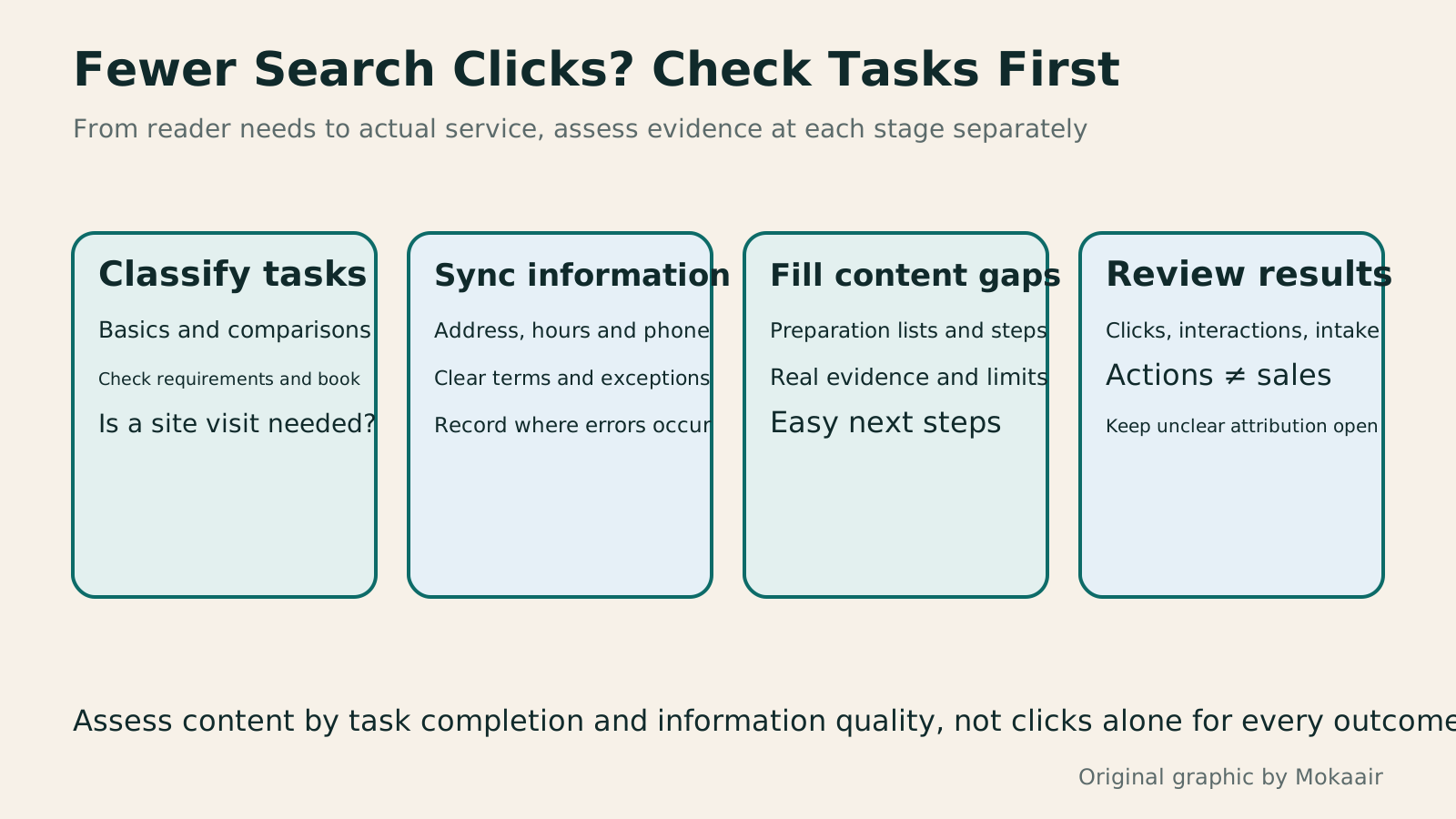
Four columns explain task categories, information syncing, in-depth content and outcome checks, reminding readers that platform actions are not sales and unresolved attribution remains unknown.
| Reader task | Where it may be completed directly | In-depth content the website can provide |
|---|---|---|
| Find the shop's address and hours | Search or business listings | Entrance directions and notices of temporary changes |
| Understand alteration services | A snippet can provide an initial overview | Applicable conditions, exceptions and procedures |
| Prepare for a garment alteration quote | A short answer is usually insufficient for confirmation | Photography checklist and how to provide information |
| Arrange garment drop-off | Phone or other contact channels | Garment intake steps and confirmation records |
Understanding Search Results Pages and CTR ChangesReading search results: SERP features, CTR and changing impressionsA search results page can contain text, images, videos, rich results and other features; average position cannot fully describe what readers see. Original figures show how CTR, impressions and clicks relate, then explain how to hold Search Console conditions constant, compare segments and check whether titles and snippets match the page. Steps, a comparison table and an original diagram prevent a falling percentage from being mistaken for lost traffic or proof that one feature caused the change.Read the full article
Organizing Content by Search IntentHow to Identify Search Intent: Turn Keywords into Questions Worth AnsweringThe same keyword can signal learning, comparison, finding a specific entry point or taking action. Using original luggage-storage examples, this guide shows how to judge intent from wording, time and place, result formats and your own query data, then turn a hypothesis into a clear content task. It includes an observation table, ways to handle mixed intent, content-format choices and later validation. Do not copy ranking pages or treat one search-results screen as the answer for every reader.Read the full article
Measuring AI Search Citations and Evidence of Site Visits
Lifestyle
Google Cloud Launches Spanner Queues: Putting Message Queues Inside Database Transactions to Make AI Agents More Reliable
Google Cloud has announced the general availability of Spanner queues, which make message creation part of a database transaction. The aim is to stop AI agents' "state" and "actions" from falling out of sync. This article covers Google Cloud's claims, the main features, and what it means for general readers.
Lifestyle
GPT-6.1 Sol Launches: New Sol Version in the API, Codex and ChatGPT Work, Not in Chat
OpenAI launched GPT-6.1 Sol on September 29, 2026, with the API name gpt-6.1-sol. The launch rollout covers Codex and ChatGPT Work on Plus, Pro, Business, Enterprise and Edu (Enterprise and Edu need an administrator to enable it); Free and Go are not included at launch, and it is not in Chat (checked September 2026).
Lifestyle
Claude Sonnet 5.5 Launches: Same List Price as Sonnet 5, Available in the API, on Cloud Platforms and in Claude.ai
Anthropic launched Claude Sonnet 5.5 on September 28, 2026. API list prices are the same as Sonnet 5 ($2 per million input tokens, $10 per million output tokens). It is available in Claude.ai, the API and several cloud platforms, and higher-risk cybersecurity requests fall back to Sonnet 5 (checked September 2026).
Lifestyle
Claude Code Adds mods: TypeScript Functions in Plugins Change Its Behavior and Interface
On October 1, 2026, Anthropic introduced Claude Code mods: TypeScript or JavaScript functions that ship inside a plugin and run in the Claude Code process, and can rewrite prompts, manage tool calls and draw new interface. Anthropic says they work in the CLI and the desktop app and are not sandboxed; the documentation says v2.1.287 or later is required (checked October 2026).
Latest travel guides

GuideTokyo
Where to Stay in Tokyo: Comparing Shinjuku, Ueno, Tokyo Station, Shibuya, Asakusa, Ikebukuro, and Ginza, Plus Airport Access, Accommodation Tax, and Luggage Delivery
Where should you stay in Tokyo? Compare Shinjuku, Ueno, Tokyo Station, Shibuya, Asakusa, Ikebukuro, and Ginza by the same criteria: access from Narita and Haneda, transit routes, nearby attractions, neighborhood character, and who each area suits. Includes a comparison table, a Yamanote Line diagram, Tokyo’s accommodation tax as verified in 2026/9 (changing to 3% in 2027/4), and Airport TA-Q-BIN luggage shipping rules.
- Budget
- Hotels
GuideTokyo
How to Choose Tokyo Transit Passes: Are Suica, Welcome Suica, the Tokyo Subway Ticket, and the JR Pass Worth It?
On a first Tokyo trip, start with an IC card and pay per ride (Welcome Suica has no deposit and is valid for 28 days). If you take four or more subway rides in a day, add a 72-hour Tokyo Subway Ticket for 2,000 yen; a JR Pass is never worthwhile if you stay in Tokyo and do not go to Kansai. See what TOURIST PASMO, Suica on iPhone, and the Tokyo Metro day pass do and do not cover, with a decision chart. Prices verified in September 2026.
- Transport
- Budget

GuideTokyo
Tokyo Disneyland and DisneySea Guide: Ticket Prices, Fantasy Springs, Disney Premier Access (DPA), Standby Pass, and Which Park to Choose for Your First Visit
Tokyo Disney one-day Passport prices vary: most weekdays in 9/2026 cost ¥9,900 and weekends ¥10,900. At 14:00 daily, tickets go on sale for the same date two months later. Free Priority Pass is no longer on the official service list; only paid Disney Premier Access (¥1,000–3,500 per person per use) shortens waits. Covers hours, the 25th anniversary, Standby Pass, Entry Request, Fantasy Springs access and first-visit park choice; checked on the official site in 9/2026.
- Itineraries
- Family