Lifestyle
How affiliate marketing works: Links, disclosures, and checking results
Affiliate marketing pays commissions for qualifying purchases or actions under a program's terms. Using an original desk cable-management guide, this article covers applications, link creation, disclosure, tracking windows, returns, and validation. It distinguishes clicks, pending commissions, withdrawable balances, and actual bank receipts. A workflow, comparison table, and original diagram help creators assess rules and costs before choosing reader-appropriate partnerships.
About 6 min read
A desk cable-management guide explains how to secure cables and links to suitable accessories. If a reader clicks and orders, does the author earn a commission? That depends on program terms, tracking, purchase validity, returns, and payout. Clicks alone do not reveal the article's earnings.
This article uses primary-source rules checked September 14, 2026. The desk guide, calculation, and workflow are original. Amazon Associates US and impact.com only illustrate different rules: we have not joined, posted paid links, or tested purchases, nor reused source sites' rankings or coupon codes.
Understand who is responsible for each part of a sale
The parties are usually a brand supplying a product or service, a publisher posting content and links, and a platform tracking and settling results. Brands may pay a share of valid orders, approved leads, or other agreed actions. Check the terms for eligible actions and excluded products.
An affiliate link usually sends readers to the merchant to buy; the publisher does not automatically become order support. Amazon's agreement separates its customers and service duties. Check who handles payment, delivery, and refunds in other programs. Authors remain responsible for their claims, links, and disclosures.
An original desk guide can explain cable fastening and which mounts suit different desktop materials before linking to suitable products. Copying merchant copy and images gives readers no added basis for choosing. Program membership alone does not make content useful.
Read the terms before applying; do not choose by the top commission rate
Before applying, list your site or social channels, reader needs, and planned link placements. Check permitted regions and channels. Terms may differ by category, customer type, subscription, or promotion. A homepage's top commission rate does not cover every order.
Record payment basis, exclusions, tracking, validation period, payout threshold, and creative-material rights. Check whether paid keyword ads, email links, coupons, and shortened URLs are allowed. Rules vary; do not transfer another program's practices without checking.
For Taiwan readers, check shipping, product fit, and after-sales access. This article gives no unverified product price or shipping cost. A high rate on a poor fit with many returns and much upkeep may be worse than a smaller partnership that solves a real problem.
After creating a link, check the tracking terms and limits
Generate links with the program's tool; check the landing page, product variant, and ID. UTM parameters label traffic in your analytics but cannot earn commission for a URL without affiliate tracking. Check platform guidance for link changes, cross-site journeys, and app opens.
A cookie duration is not the whole rule. Under Amazon Associates US policies, a Session may end 24 hours after a click, or sooner after certain orders or a click on another person's Special Link. Cart and product terms also apply. A 24-hour window therefore does not guarantee a commission in every case, and it is not a rule shared by all affiliate programs.
Check links with platform diagnostics first. For a test order, obtain the program's permitted procedure. Do not fabricate results with friends' purchases, fake leads, or repeated clicks. For cross-device, blocked-tracking, or attribution questions, keep shareable, non-sensitive records and ask the partner; do not claim complete attribution for every click.
Show the partnership disclosure to readers; give link attributes to systems
Taiwan Fair Trade Commission endorsement rules require truthful claims and adequate disclosure of material ties consumers could not reasonably expect. Near affiliate recommendations and links, state clearly that qualifying purchases may earn the author a commission. A vague footer label is insufficient.
An original example: ‘Some links here are affiliate links. We may receive a commission from qualifying purchases through them.’ This is a pattern, not a substitute for required program wording or applicable rules. Amazon has specific terms for disclosing associate status; one generic sentence cannot replace every platform's requirements.
For paid or affiliate links, Google Search prefers the rel value sponsored as a marker; nofollow also works. Neither code marker replaces visible disclosure. Disclosure cannot justify false reviews or claimed long-term use of an untried product.
Commissions must be validated, and returns can change the result
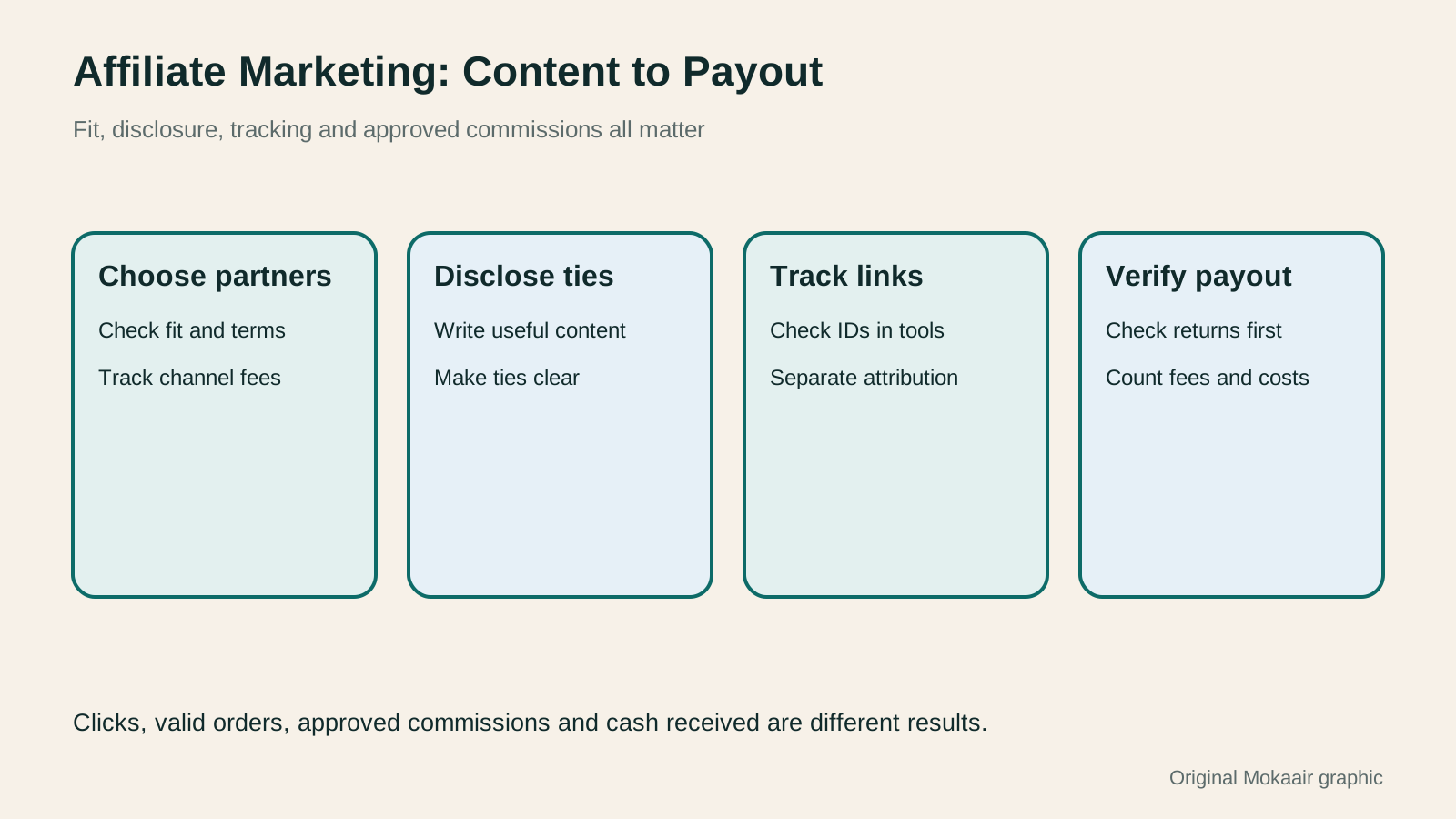
impact.com distinguishes Pending, Locked, Clearing, Overdue, and Reversed. A pending action can change or reverse before locking, such as after a return or cancellation. Settlement and payment conditions follow. A pending figure is not money already in the bank.
Original calculation: at NT$1,200 commissionable value per item and a 5% rate, 6 pending transactions show NT$360. If 2 are cancelled and excluded from commission, the remaining 4 yield NT$240. These assumptions show validation's effect, not any platform's actual rate or market price.
If direct content upkeep costs NT$150, NT$90 remains before author time, tax, or other costs. When a report falls from 360 to 240, check transaction status and reasons before alleging underpayment. Reconcile currencies, fees, and transfers separately; not every gap signals a wrong rate.
Treat links and content as ongoing maintenance
Keep each partnership's official terms URL, check date, applied channels, and contact. Log each article's products, links, and update owner. Readers may arrive after a product, term, or partnership ends; promptly update or remove inapplicable purchase links.
Brand payment and platform withdrawal may occur at different times. impact.com says insufficient brand funds can show as overdue; publishers must meet payment and auto-withdrawal conditions too. Locked does not promise same-day bank receipt. For delays, ask the right contact with contract and report records.
Review usefulness to readers, qualifying sales, return reasons, and upkeep time together. Do not hide a better free solution for commission or lure clicks with unrelated popular terms. Sustainability depends on content, program rules, and trust—not link volume.
- Define the reader's problem and useful criteria; choose a fitting program.
- Check channel, pay, tracking, returns, payout, and material rights.
- Use official link tools with visible disclosure and suitable attributes.
- Match valid commissions to receipts by status; update articles and dead links.
| What you observe | What it tells you | What it does not yet prove |
|---|---|---|
| Link clicked | A reader opened the tracked link | A valid purchase occurred |
| Pending action | Platform logged an unvalidated action | A fixed commission |
| Locked commission | That process locked the action | Same-day bank receipt |
| Reversed action | That action was reversed | Other actions are invalid |
| Withdrawable balance | Funds reached withdrawal stage | Payment details and terms are met |
| Bank receipt | Payment actually received | Profit after time costs |
Understand the full cost of advertising and revenue
Handle creator partnerships, content, and disclosures
Manage link naming and tracking scope
Lifestyle
What to Do When Searches Get No Clicks: Rethinking Traffic Value Through Reader Tasks
Readers may find opening hours, phone numbers or brief answers on a search page without visiting a website. A non-click is not always a success, and site CTR cannot reveal the overall zero-click search rate. Using an original clothing alterations shop scenario, this article covers checks for search displays, business interactions and actual tasks, from finding information and comparing services to booking, with a comparison table, practical steps and original SVG diagrams.
Lifestyle
Technical SEO audit order: crawling, indexing, rendering, and site structure
A useful technical SEO audit needs reproducible evidence and a sensible repair order. Using a site relaunch as an example, this guide explains how to sample page templates and check public access, indexing directives, JavaScript rendering, canonical URLs, and site structure. It separates urgent repairs, scheduled improvements, and later observation so that a general site owner can hand actionable findings to maintainers without treating a passing test as a ranking guarantee.
Lifestyle
How to write article titles: Show search readers the scope and purpose
A useful title tells readers before they click what problem an article addresses, when it applies, and what information they will get. Using original rewrites of everyday tutorials, this guide checks the topic, purpose, limits, and evidence behind title promises. It explains why the page heading, HTML title, and Google search title may differ, then offers prepublication checks and post-change observation without stuffing keywords, claiming tests that never happened, or adding an unverified year.
Lifestyle
How to Identify Search Intent: Turn Keywords into Questions Worth Answering
The same keyword can signal learning, comparison, finding a specific entry point or taking action. Using original luggage-storage examples, this guide shows how to judge intent from wording, time and place, result formats and your own query data, then turn a hypothesis into a clear content task. It includes an observation table, ways to handle mixed intent, content-format choices and later validation. Do not copy ranking pages or treat one search-results screen as the answer for every reader.
Latest travel guides

GuideTokyo
Where to Stay in Tokyo: Comparing Shinjuku, Ueno, Tokyo Station, Shibuya, Asakusa, Ikebukuro, and Ginza, Plus Airport Access, Accommodation Tax, and Luggage Delivery
Where should you stay in Tokyo? Compare Shinjuku, Ueno, Tokyo Station, Shibuya, Asakusa, Ikebukuro, and Ginza by the same criteria: access from Narita and Haneda, transit routes, nearby attractions, neighborhood character, and who each area suits. Includes a comparison table, a Yamanote Line diagram, Tokyo’s accommodation tax as verified in 2026/9 (changing to 3% in 2027/4), and Airport TA-Q-BIN luggage shipping rules.
- Budget
- Hotels

GuideTokyo
How to Choose Tokyo Transit Passes: Are Suica, Welcome Suica, the Tokyo Subway Ticket, and the JR Pass Worth It?
On a first Tokyo trip, start with an IC card and pay per ride (Welcome Suica has no deposit and is valid for 28 days). If you take four or more subway rides in a day, add a 72-hour Tokyo Subway Ticket for 2,000 yen; a JR Pass is never worthwhile if you stay in Tokyo and do not go to Kansai. See what TOURIST PASMO, Suica on iPhone, and the Tokyo Metro day pass do and do not cover, with a decision chart. Prices verified in September 2026.
- Transport
- Budget

GuideTokyo
Tokyo Disneyland and DisneySea Guide: Ticket Prices, Fantasy Springs, Disney Premier Access (DPA), Standby Pass, and Which Park to Choose for Your First Visit
Tokyo Disney one-day Passport prices vary: most weekdays in 9/2026 cost ¥9,900 and weekends ¥10,900. At 14:00 daily, tickets go on sale for the same date two months later. Free Priority Pass is no longer on the official service list; only paid Disney Premier Access (¥1,000–3,500 per person per use) shortens waits. Covers hours, the 25th anniversary, Standby Pass, Entry Request, Fantasy Springs access and first-visit park choice; checked on the official site in 9/2026.
- Itineraries
- Family
Sources
- Taiwan Fair Trade Commission: Truthful endorsements and material-relationship disclosure · Checked:
- Amazon Associates US: Participation and disclosure terms · Checked:
- Amazon Associates US: Compensation and Session rules · Checked:
- impact.com: Pending actions and validation · Checked:
- impact.com: Reversed actions and reasons · Checked:
- impact.com: From action to actual payout · Checked:
- Google: Qualifying paid outbound links with attributes · Checked:
- Google: Affiliate content and spam policies · Checked: