Lifestyle
Taiwan's Central Bank on Stablecoins, Deposit Tokens and CBDC: Layers Can Coexist, No Urgency Yet for Retail CBDC
On September 17, 2026, the Central Bank of the Republic of China (Taiwan) compared stablecoins, deposit tokens and central bank digital currency (CBDC), saying there is no urgency to issue a retail CBDC while research and trials continue on the wholesale side. This article covers who issues each, how they circulate and are regulated, and Taiwan's trial progress; the FSC's separate deposit-token pilot five days later is a different story (checked September 2026).
About 16 min read
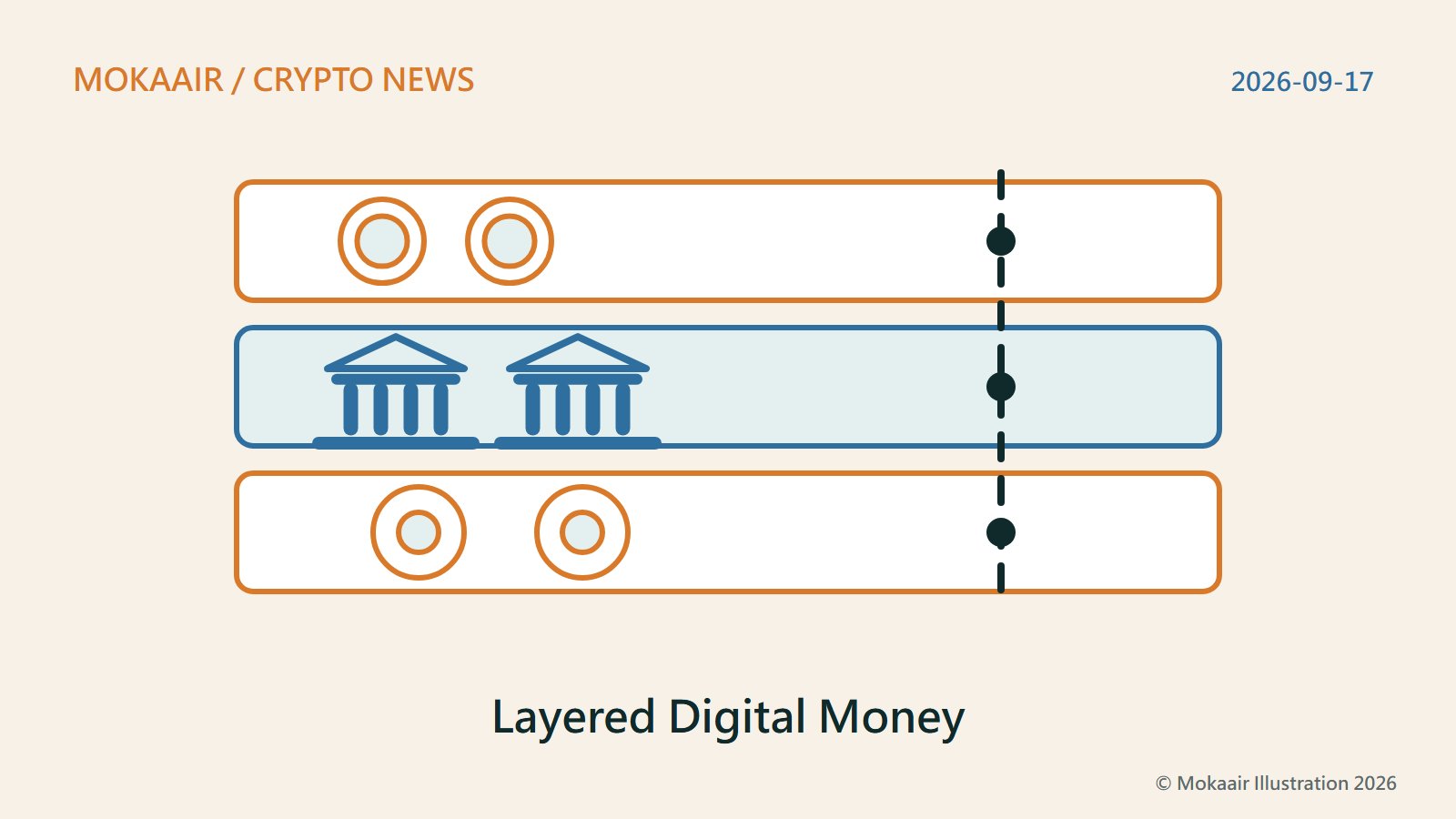
On September 17, 2026, the Central Bank of the Republic of China (Taiwan) used the materials from its post-meeting press conference to explain the differences among stablecoins, deposit tokens and central bank digital currency (CBDC), saying the three can coexist and complement each other across different layers. It said that because Taiwan's payment environment is already diverse and convenient, there is no urgency to issue a retail CBDC, and that for now it is starting with a test project to support payments for digital vouchers. This is a written question-and-answer that the Central Bank itself prepared after the joint meeting of its Board of Directors and Supervisors, not a resolution of that board. What matters for readers in Taiwan: a retail CBDC is simply digital cash for the public's everyday transactions, and these materials give no timetable for issuing one in Taiwan; a stablecoin can be held or traded through a wallet, while a deposit token requires opening an account at a commercial bank first.
This article was checked on September 26, 2026, drawing on two sets of written materials from that Central Bank press conference and on the FSC's press release of September 22. The Central Bank's press-conference materials use the words "trial," "pilot" and "test project"; the FSC's press release uses "pilot programme." These are two agencies' own separate word choices, and this article follows each one's original wording rather than mixing them.
What This Document Is: A Written Q&A From the Press Conference, Not a Board Resolution
On September 17, the Central Bank held a press conference after the joint meeting of its Board of Directors and Supervisors. The written materials it released were the post-meeting press briefing and Topics of Public Interest, plus separate Reference Materials for the press conference. The explanation of stablecoins, deposit tokens and CBDC sits in Question 7 of Topics of Public Interest and in Section 7 of the Reference Materials, both titled "Issues Related to the Development Trends of Central Bank Money in the Digital Era."
The four questions and answers under Question 7 are a written statement the Central Bank drafted and answered itself, not a record of questions reporters actually asked. The Central Bank has addressed this topic before: a footnote in the Reference Materials notes that its press-conference materials of June 19, 2025 discussed the roles played by deposit tokens, stablecoins and CBDC, and that its materials of September 18, 2025 also discussed issues related to New Taiwan dollar stablecoins.
Where the Three Differ: Issuer, Value Backing, Use Cases, Access and Regulation
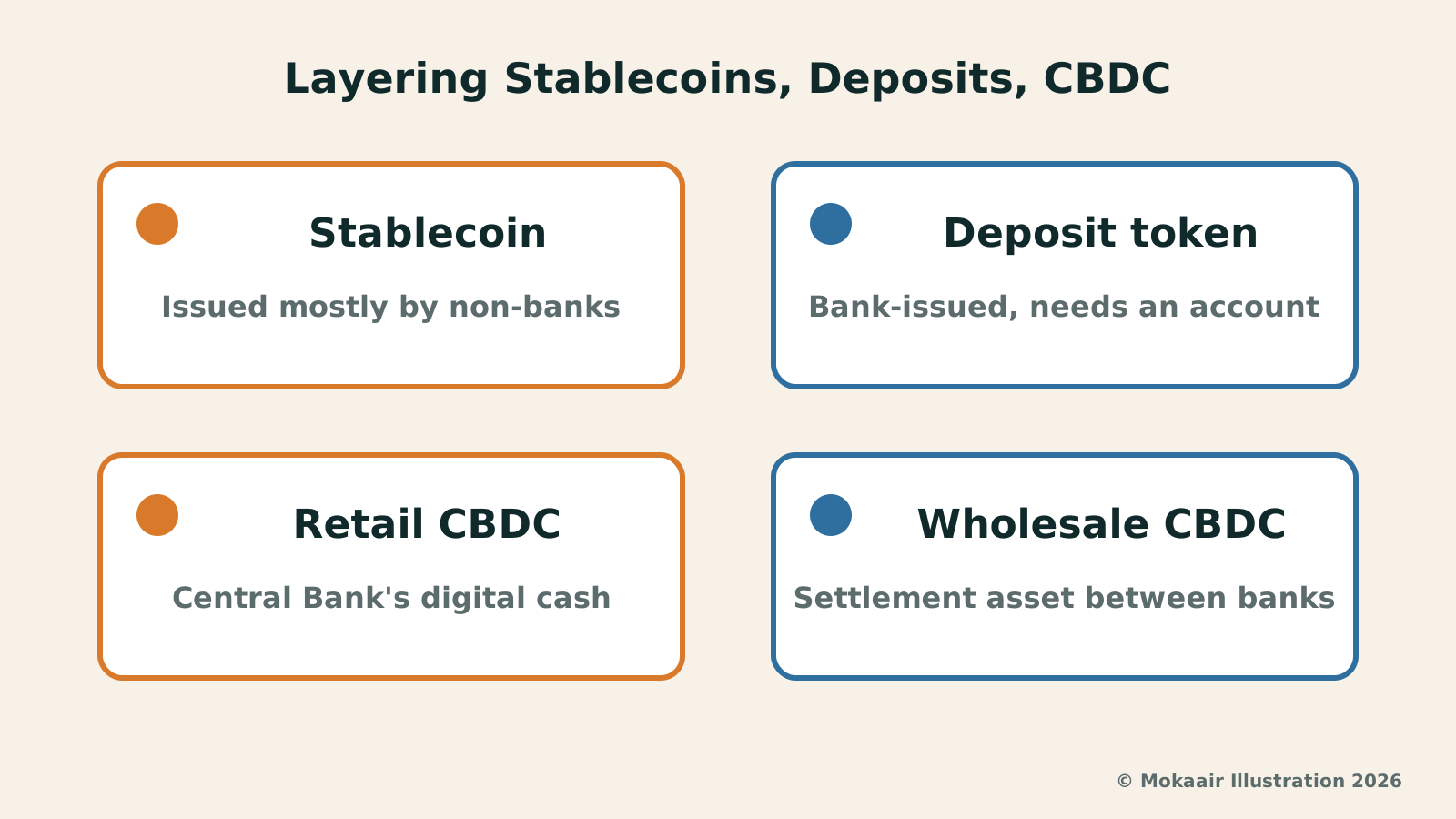
The table the Central Bank compiled compares the three on four dimensions: issuer and value backing, use cases, access and circulation, and the regulatory framework. Start with who issues each and what backs its value: a stablecoin is mostly issued by a non-bank institution and is a liability of its issuer, who must hold fiat-currency assets equal in full to back its value; a deposit token is a tokenized bank deposit issued by a commercial bank and is a liability of that bank; CBDC is digital currency issued by the Central Bank and is a direct liability of the Central Bank, which, in Taiwan's case, must hold reserves equal in full to what it issues.
Next, access and circulation. A stablecoin can be held or traded through a wallet, allows peer-to-peer payment, and runs on a permissionless public blockchain, making it a bearer instrument. A deposit token's holder must first complete a commercial bank's KYC process and open an account before using it, and it can, in principle, only move between that bank's own customers; it generally runs on a permissioned private blockchain, and banks use tokenized Central Bank reserves (such as wholesale CBDC) as the settlement asset so that deposit tokens at different banks can move across banks at face value.
Retail and wholesale CBDC are also accessed differently: a retail CBDC would have its wallet provided by the Central Bank or by an intermediary such as a bank, while a wholesale CBDC is mainly provided to financial institutions that hold a reserve account at the Central Bank, as a settlement asset. On the regulatory framework, the Central Bank's compilation of how other countries handle this says: a stablecoin is mostly brought under revised payment rules or a dedicated statute; a deposit token can fall under existing bank-deposit rules; issuing a retail CBDC would, in most cases, require revising existing law or enacting a dedicated statute, while a wholesale CBDC could fall under existing Central Bank reserve rules — this is the Central Bank's summary of practice abroad, not a provision of Taiwan's current law.
| Comparison | Stablecoin | Deposit Token | CBDC (Retail / Wholesale) |
|---|---|---|---|
| Issuer | Mostly non-bank institutions | Commercial banks | The Central Bank |
| Value backing | Reserve assets | Deposits | Issuance reserves |
| Use cases | On-chain crypto-asset trading, cross-border payment | Liquidity management, cross-border payment | Retail: transfers, everyday spending; Wholesale: settlement asset among financial institutions |
| Access and circulation | Held or traded via a wallet; peer-to-peer payment possible | Holder must open a bank account; in principle moves only between that bank's customers | Retail: wallet from the Central Bank or an intermediary such as a bank; Wholesale: for institutions with a reserve account at the Central Bank |
| Regulatory framework | Mostly revised payment rules or a dedicated statute | Can fall under existing bank-deposit rules | Retail: mostly revised law or a dedicated statute; Wholesale: can fall under existing Central Bank reserve rules |
Why the Central Bank Says They Can Coexist in Layers
The Central Bank takes the view that retail CBDC competes with stablecoins and deposit tokens on payment functions, but that a retail CBDC could help prevent monopoly in the private payments market, could support lower-margin payment needs (for example, hospitals and clinics), and could serve as a shared piece of infrastructure that lets private-sector firms compete fairly and innovate on top of it. That is the first reason the Central Bank gives for why the three can coexist and complement one another.
The second reason sits on the wholesale side: the Central Bank believes that wholesale CBDC, as a tokenized settlement tool that works across systems and platforms, could promote interoperability among different deposit tokens or stablecoins and help avoid fragmentation that would otherwise arise from insufficient interoperability between platforms. In other words, wholesale CBDC plays the role of a settlement layer underneath, letting different banks and different deposit tokens connect with one another.
Put the two reasons together and that is what "layers" means here: a stablecoin, mostly issued by non-bank institutions, is used for on-chain crypto-asset trading and cross-border payment; a deposit token, issued by a commercial bank, can be used by businesses for liquidity management or cross-border payment; a retail CBDC is digital cash issued by the Central Bank for the public's everyday transactions; and a wholesale CBDC is a settlement asset among financial institutions. The Central Bank's own word is that they "can" coexist and complement each other — a possibility in the Central Bank's view, not something already decided.
Taiwan's Progress: No Rush on Retail, Wholesale Trials Continue
In the Reference Materials, the Central Bank sets out Taiwan's own progress: because the payment environment here is already diverse and convenient, there is no urgency to issue a retail CBDC, and for now it is starting with a test project supporting digital-voucher payments; on the wholesale side, it continues research and trials on tokenized reserves. In 2024 the Central Bank repurposed its earlier, already-trialed "CBDC Prototype Platform" into a "Digital Public Infrastructure Payment Platform," integrating it with the retail payment system, with a test project to support government agencies disbursing digital vouchers or subsidies.
In August and November 2025, this payment platform helped process the Hakka Affairs Council's "Hakka Coin 1.0" and the Executive Yuan's NT$10,000 universal cash payout, respectively; in 2026 it helped the Hakka Affairs Council run "Hakka Coin 2.0," and it has worked with other ministries too, for instance helping the Ministry of Health and Welfare disburse its "Health Coin" and handle the related payment processing. The verb the Central Bank uses is "helped": the platform for disbursing digital vouchers themselves belongs to the Ministry of Digital Affairs, while this payment platform handles the payment processing that the vouchers involve; neither of the Central Bank's two documents says that what people receive is CBDC.
On the wholesale side, the Central Bank worked with the Financial Information Service Co. (FISC) and the Taiwan Depository & Clearing Corporation in 2025 to trial the feasibility of jointly building tokenized financial infrastructure; in 2026 it is running two trials: one, with FISC and 12 banks, forms a "Financial Alliance Chain" that puts gold passbook business on-chain and runs it with gold tokens; the other has the Financial Alliance Chain plan to work with an "RWA Token Platform" to trial a plan for integrating asset tokens, bank deposit tokens and interbank settlement tokens for collaboration on the same platform. The Central Bank says it will keep running tokenization trials together with the FSC, banks, FISC and others, to make sure that the Central Bank still provides the ultimate settlement tool and the basis of trust for the tokenized financial system of the future.
As for a New Taiwan dollar stablecoin, the Central Bank's judgment is that the New Taiwan dollar is not an international currency, so cross-border payment applications should still rely mainly on US dollar stablecoins; on top of that, Taiwan's payment system is already diverse and convenient, so a New Taiwan dollar stablecoin has limited incentive as a domestic payment tool — this is the Central Bank's own judgment, not a prohibition or a rule. Five days later, on September 22, the FSC separately issued a press release opening applications for banks to run a deposit-token pilot programme: when a bank issues a deposit token, it is presenting a bank deposit in a new form such as on a blockchain, its legal nature remains a bank deposit, and the related business is, in principle, handled under the existing Banking Act and related rules. None of these documents from the Central Bank and the FSC states that the two are part of the same policy or that one caused the other.
The International Picture, as the Central Bank Compiles It, and How to Check It Yourself
On the international picture, the Central Bank states in the materials themselves that its source is "the websites of central banks in various countries, the Atlantic Council and international media reports; compiled by this Bank." According to the Central Bank's own compilation, aside from the United States, which clearly halted its push for a CBDC once Trump began his second term, most major economies, together with Taiwan, continue related research or trials; the euro area is actively advancing a retail CBDC, and mainland China's domestic digital yuan has now been repositioned as a digital deposit currency.
The Central Bank's compilation notes that the euro area's timetable is conditional: if the relevant EU legislative process is completed successfully by the end of 2026, the European Central Bank (ECB) plans to launch a one-year pilot in the second half of 2027, with the digital euro hoped to formally launch in 2029; "if" marks a condition and "hoped" marks an expectation, neither being a settled timetable. On mainland China, the Central Bank's compilation says the People's Bank of China repositioned the digital yuan as a digital deposit currency in early 2026, citing reasons that include Alipay and WeChat Pay already being deeply embedded in daily life, the public lacking motivation to use it, and weak incentives for commercial banks to promote it.
Readers who want to see the original text themselves can find the September 17 and September 22 items on the press-release lists of the Central Bank (cbc.gov.tw) and the FSC (fsc.gov.tw); the status of other countries is the Central Bank's own compilation, and confirming it means going back to each country's own official sources.
Frequently asked questions
Is the Central Bank going to issue a digital currency for the public to use?
The Central Bank's own term is "central bank digital currency (CBDC)," split into a retail kind for the public's everyday transactions and a wholesale kind used for settling asset tokens among financial institutions. The Central Bank says there is no urgency for Taiwan to issue a retail CBDC and gives no timetable for doing so; on the wholesale side it continues research and trials.
Whose liability is each of a stablecoin, a deposit token and CBDC?
A stablecoin is mostly issued by a non-bank institution and is a liability of its issuer, who must hold fiat-currency assets equal in full to back it; a deposit token is a tokenized bank deposit and a liability of the commercial bank that issues it; CBDC is digital currency issued by the Central Bank and is a direct liability of the Central Bank, which, in Taiwan's case, must hold reserves equal in full to what it issues.
When the Central Bank says the three can coexist in layers, is that already decided?
No. The Central Bank's own wording is that the three can coexist and complement each other at different layers — this is the Central Bank's own view and explanation of how they relate, not a policy or new rule that has already been settled; the document itself is not a resolution of its board either, but a written Q&A from a press conference.
Is the FSC's September 22 decision to let banks pilot deposit tokens connected to this Central Bank material?
The two are documents from different agencies on different dates. Neither of the Central Bank's two September 17 documents mentions the FSC's September 22 pilot programme; the Reference Materials, when discussing tokenization trials, say they will continue together with the FSC, banks, FISC and others. The FSC's press release does not mention the Central Bank or this press conference; it explains that when a bank issues a deposit token, the legal nature is still a bank deposit, and the related business is, in principle, handled under the existing Banking Act and related rules. None of these documents states that the two are part of the same policy.
Is Taiwan running any CBDC trials right now?
Yes. On the wholesale side, the Central Bank says that in 2025 it worked with FISC and the Taiwan Depository & Clearing Corporation to trial the feasibility of building tokenized financial infrastructure; in 2026 it is running two trials, including a "Financial Alliance Chain" formed with FISC and 12 banks that puts gold passbook business on-chain. On the retail side, the Central Bank says there is no urgency to issue a retail CBDC, and for now it is starting with a test project to support digital-voucher payments: it repurposed its earlier, already-trialed "CBDC Prototype Platform" into a payment platform, which has helped with the NT$10,000 universal cash payout, Hakka Coin and other disbursement policies, handling the payment processing involved.
Where does each country stand on CBDC right now?
This section is the Central Bank's own compilation, not a first-hand fact this article verified independently. According to the Central Bank's compilation, the United States clearly halted its push for a CBDC once Trump began his second term; the euro area is actively advancing a retail CBDC (if the relevant EU legislative process is completed successfully by the end of 2026, the ECB plans to launch a one-year pilot in the second half of 2027, with the digital euro hoped to formally launch in 2029); and mainland China's domestic digital yuan has now been repositioned as a digital deposit currency. Confirming any country's own official text means checking that country's first-hand sources separately.
2026 Crypto News Roundup: Key Developments in Regulation, Technology and Industry2026 Crypto News Roundup: Key Developments in Regulation, Technology and IndustryThis site's 2026 crypto news explainers, in six jurisdictions — Taiwan, the US, the UK, the EU, Japan, South Korea: the Virtual Asset Service Act, the proposed GENIUS Act rules, the joint SEC–CFTC interpretation and the SEC's own proposal, the end of MiCA's transitional period and its link to the payment rules, the FCA's perimeter guidance, Japan's FSA reports and South Korea's manipulation referrals. Regulation, technology and industry only, no prices, with official sources and a check date.Read the full article
Taiwan's Virtual Asset Service Act Clears Third Reading: Seven Kinds of Provider, Stablecoin Licensing, No Commencement Date YetTaiwan's Virtual Asset Service Act Clears Third Reading: Seven Kinds of Provider, Stablecoin Licensing, No Commencement Date YetOn June 30, 2026 Taiwan's Legislative Yuan passed the Virtual Asset Service Act (虛擬資產服務法) on third reading, and its 56 articles were promulgated on July 22, 2026. Working from the Financial Supervisory Commission's press release and two official legal databases, this article sets out the seven kinds of virtual asset service provider, licensing kind by kind, the reserve-asset rules for stablecoins, and why the 12- and 21-month transition periods in article 55 have not started running.Read the full article
Lifestyle
Japan's FSA Sets Up an Onchain Finance Forum: Stablecoins, Tokenized Deposits and JGB Tokenization Go Into a Cross-Ministry Review
On September 25, 2026, Japan's Financial Services Agency announced a cross-ministry 「AI時代を見据えたオンチェーン金融フォーラム」 (an Onchain Finance Forum With an Eye on the AI Era), putting stablecoins, tokenized deposits, JGB tokenization and quantum-computing risk on one review list. This sets up a forum for review, not a law change or approval of any product; its first meeting is scheduled for September 30 and is closed to the public (verified September 2026).
Lifestyle
South Korea Refers 4 Suspected Virtual-Asset Manipulation Cases to Investigators: API-Made Fake Activity, Issuer-Inflated Volume to Keep a Listing
On September 23, 2026, South Korea's Financial Services Commission resolved at its 16th regular meeting to refer or notify investigators about 4 suspected virtual-asset market manipulation cases it investigated together with the Financial Supervisory Service; this article summarizes the methods described in each case and the regulator's warnings to ordinary investors from the official press-reference material, without naming any coin, exchange or amount (checked September 2026).
Lifestyle
Brazil's Petrobras tests Cardano blockchain to track claims about cleaner jet fuel and diesel
According to CoinDesk, Brazil's state-owned energy company Petrobras is testing the Cardano blockchain in two research projects: one to stop the same emissions cut from sustainable aviation fuel being counted twice, the other to record the history of its partly renewable Diesel R. Both are still research work, with no timeline for wider use.
Lifestyle
Cboe and S&P Dow Jones Indices extend their S&P 500 options deal to 2051 and leave the door open to tokenized options
According to CoinDesk, exchange operator Cboe and index provider S&P Dow Jones Indices have extended Cboe's exclusive right to offer S&P 500 options by 25 years, to 2051. The deal says they may explore blockchain-based 'tokenized' options, but no product, timeline or details were announced. Here is what that means and what it does not.
Articles that cite this one
Latest travel guides

GuideTokyo
Where to Stay in Tokyo: Comparing Shinjuku, Ueno, Tokyo Station, Shibuya, Asakusa, Ikebukuro, and Ginza, Plus Airport Access, Accommodation Tax, and Luggage Delivery
Where should you stay in Tokyo? Compare Shinjuku, Ueno, Tokyo Station, Shibuya, Asakusa, Ikebukuro, and Ginza by the same criteria: access from Narita and Haneda, transit routes, nearby attractions, neighborhood character, and who each area suits. Includes a comparison table, a Yamanote Line diagram, Tokyo’s accommodation tax as verified in 2026/9 (changing to 3% in 2027/4), and Airport TA-Q-BIN luggage shipping rules.
- Budget
- Hotels

GuideTokyo
How to Choose Tokyo Transit Passes: Are Suica, Welcome Suica, the Tokyo Subway Ticket, and the JR Pass Worth It?
On a first Tokyo trip, start with an IC card and pay per ride (Welcome Suica has no deposit and is valid for 28 days). If you take four or more subway rides in a day, add a 72-hour Tokyo Subway Ticket for 2,000 yen; a JR Pass is never worthwhile if you stay in Tokyo and do not go to Kansai. See what TOURIST PASMO, Suica on iPhone, and the Tokyo Metro day pass do and do not cover, with a decision chart. Prices verified in September 2026.
- Transport
- Budget

GuideTokyo
Tokyo Disneyland and DisneySea Guide: Ticket Prices, Fantasy Springs, Disney Premier Access (DPA), Standby Pass, and Which Park to Choose for Your First Visit
Tokyo Disney one-day Passport prices vary: most weekdays in 9/2026 cost ¥9,900 and weekends ¥10,900. At 14:00 daily, tickets go on sale for the same date two months later. Free Priority Pass is no longer on the official service list; only paid Disney Premier Access (¥1,000–3,500 per person per use) shortens waits. Covers hours, the 25th anniversary, Standby Pass, Entry Request, Fantasy Springs access and first-visit park choice; checked on the official site in 9/2026.
- Itineraries
- Family
Sources
- Central Bank of the Republic of China (Taiwan): Press Briefing and Topics of Public Interest After the September 17, 2026 (ROC Year 115) Board Meeting (press release) · Checked:
- Central Bank (Taiwan): Topics of Public Interest, September 17, 2026 Board Meeting (PDF, Q7 "Central Bank Money in the Digital Era," pp. 44–47 / printed pp. 43–46) · Checked:
- Central Bank (Taiwan): Reference Materials for the September 17, 2026 Board Meeting Press Conference (PDF, Sec. 7 "Central Bank Money in the Digital Era," pp. 95–109 / printed pp. 92–106) · Checked:
- Financial Supervisory Commission (FSC): FSC Opens Applications for Banks to Pilot Deposit-Token Business (press release, 2026-09-22) · Checked: