Lifestyle
SEC Proposes Regulation Crypto Assets: Two Offering Exemptions and a Safe Harbor, Not Yet Adopted
On August 21, 2026, the Regulation Crypto Assets proposed by the U.S. SEC was published in the Federal Register at 91 FR 54510. Working from the Federal Register full text and the official GovInfo PDF, this article sets out the two offering exemptions, the investment contract safe harbor and the state law preemption in this 146-page proposal, and why it has no effective date and why the comment period runs to October 20, 2026.
About 18 min read
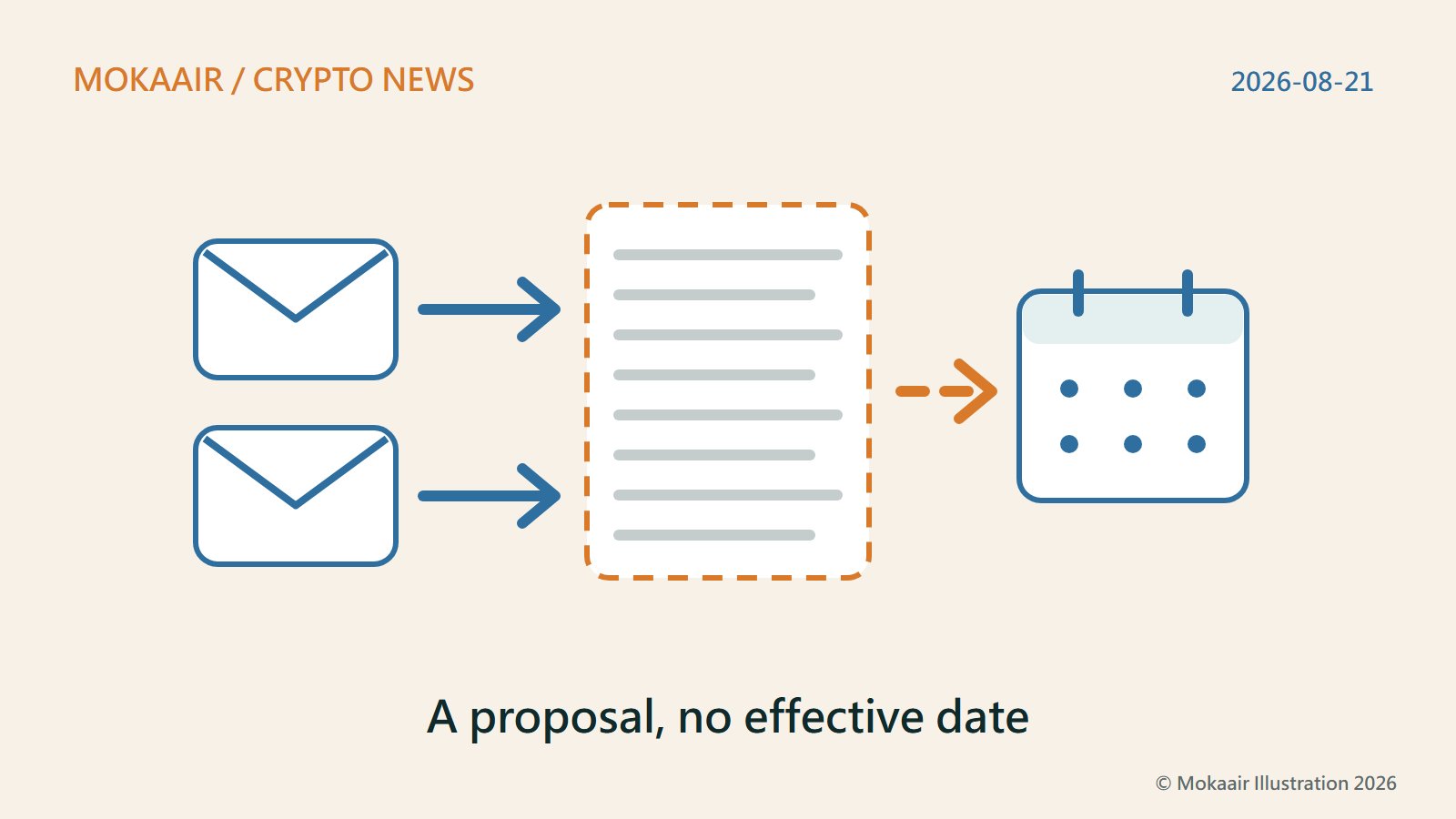
On August 21, 2026, “Regulation Crypto Assets,” proposed by the U.S. Securities and Exchange Commission (SEC), was published in the Federal Register at citation 91 FR 54510, running 146 pages. The document’s ACTION field reads “Proposed rule.”, the AGENCY field names a single agency, the SEC, and the file number is File No. S7-2026-27.
This article was verified on September 17, 2026, reading the full text of the document as the Federal Register serves it, the official PDF on GovInfo, and the Federal Register’s document record for it. This site ran no tests of its own and offers neither investment nor legal advice. This is a proposal: every operative sentence below describes what the proposed rule would do, not an obligation that exists today.
Dated, filed and published are three dates, and there is no effective date
The Commission dated this proposal August 18, 2026; the signature block reads, word for word, “By the Commission. Dated: August 18, 2026.” The Federal Register notation on the document’s last line shows a filing date of August 20, 2026, and the publication date is August 21, 2026.
The DATES field says two things only: that this release was published in the Federal Register on August 21, 2026, and that comments should be received on or before October 20, 2026. Nowhere in the field is there an effective date or a compliance deadline. Where the proposed rule text would carry a date — in the disqualification provision, and in the issuer eligibility provision of the fundraising exemption — it carries a placeholder string instead: “[INSERT EFFECTIVE DATE OF FINAL RULE, IF ADOPTED]”.
The Federal Register’s document record does carry an effective_on field filled in as 2026-08-21, but the document’s DATES field states no effective date and that field cannot stand in for one; the type field in the same record reads “Proposed Rule”.
Who the proposal reaches: crypto assets, covered investment contracts and two exemptions
The proposal defines “crypto asset” as any digital representation of value that is recorded on a cryptographically-secured distributed ledger. Footnote 122 states that this definition is identical to the definition of “Digital Asset” in the Guiding and Establishing National Innovation for U.S. Stablecoins Act (Public Law 119-27).
What is reached is not every crypto asset but the “covered investment contract”: a contract, transaction or scheme involving a crypto asset that constitutes an investment contract, where the investment contract must also meet three numbered requirements — a crypto asset is subject to the investment contract, that crypto asset is not itself a security, and no asset other than that crypto asset is subject to the investment contract. The rule text also uses the phrasing “including, but not limited to” to place distributions referred to as “airdrops” among the transactions the startup exemption speaks of.
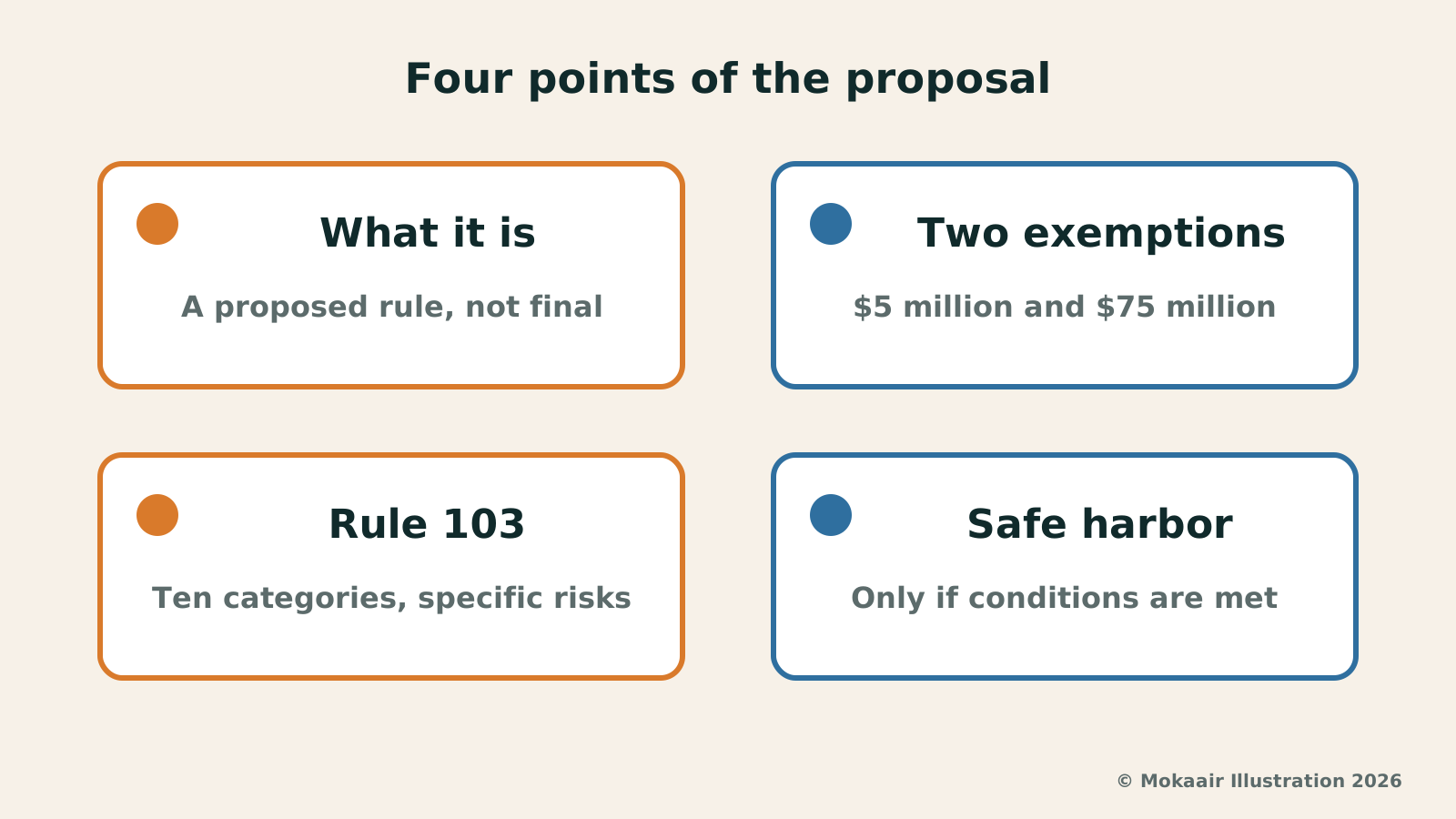
Both exemptions would exempt an offering from the registration requirements of Section 5 of the Securities Act of 1933. The SUMMARY field states that the first would permit offerings of up to $5 million during a four-year period and the second offerings of up to $75 million during each 12-month period; that under both exemptions issuers would be required to make certain principles-based narrative disclosures available to their investors; that issuers under the second would in addition be required to provide financial statements and would be subject to ongoing reporting requirements; and that issuers who rely on these exemptions would remain subject to the antifraud and antimanipulation provisions of the Federal securities laws. The second is the fundraising exemption, and it is split into two tiers.
| What the proposal sets up | Offering limit | Financial statements |
|---|---|---|
| Startup exemption (Rule 200) | $5 million over a four-year period | None required |
| Fundraising exemption, Tier 1 | $20 million in 12 months | Required, no audit requirement |
| Fundraising exemption, Tier 2 | $75 million in 12 months | Required and audited |
What an issuer would disclose: the ten categories of Rule 103
Rule 103 sets a principle first: the information should be tailored to the issuer, the subject crypto asset and the associated crypto network or crypto application, and “should be presented in clear, concise, and understandable language, without overly relying on technical terminology or jargon”. It should also be consistent with what the issuer says about material aspects through existing public channels, such as its website or its official social media accounts, and in promotional material such as a whitepaper. Where a particular disclosure requirement is not applicable, or the responsive information is unknown and not reasonably available, the proposal states that disclosure is not required to be provided.
Rule 103(b) organizes the information to be disclosed into ten categories. The material terms of the investment contract are to include the essential managerial efforts the issuer has promised to undertake and their progress; the category on the terms of the offering calls for the website address at which any whitepapers or other offering materials the issuer prepared and distributed are publicly accessible, free of charge; the tokenomics category covers matters such as supply, pricing, lockups and release schedules; and the risk factors category requires the description to “avoid generalized statements” and to include only factors specific to the case.
The security category does not amount to “the proposal requires source code to be published”: it calls for a description of the material aspects of security, and only then, “to the extent the issuer has made it publicly available”, for the website address at which that code is accessible — and that paragraph says nothing about free of charge. Rule 104 provides that no exemption under Regulation Crypto Assets is available where a bad actor disqualification would apply, but the proposal would separately authorize the Director of the Division of Corporation Finance to grant applications upon a showing of good cause.
The safe harbor, and the proposal’s own line that an exemption is not immunity
The proposed investment contract safe harbor (Rule 400) has two conditions only: the issuer of the covered investment contract has completed or otherwise permanently ceased all essential managerial efforts it represented or promised it would engage in under the contract and is not making and does not intend to make any new representations or promises to engage in essential managerial efforts with respect to the crypto asset; and it files with the Commission a transition report containing the information required by Form TR. Where the conditions are satisfied, the covered investment contract would be deemed to have terminated, and the crypto asset would be deemed not to be subject to that investment contract for purposes of the definitions of “security” in the Securities Act and the Securities Exchange Act.
The proposal sets down the limits in the same breath. The Commission would not be precluded from challenging the matter afterwards — the example it gives itself is that if an issuer were to misstate on Form TR that the first condition had been satisfied (the text puts it as whether or not intentionally), the Commission could assert that the investment contract has not terminated and that the reporting and registration requirements still apply. Even without satisfying the safe harbor, a crypto asset may well not be subject to an investment contract in the first place under the Howey test. And the safe harbor would control only with respect to the Commission’s administration of the Federal securities laws: the proposal states plainly that it would not prevent other parties from asserting that the crypto asset is subject to an investment contract, or is otherwise a security.
Under the proposal, the fundraising exemption could also be suspended. Rule 306 provides that where it has reason to believe that one of six numbered situations exists — among them a material misstatement in the offering statement or in a report filed, or an issuer obstructing an investigation — the Commission may at any time enter an order temporarily suspending an exemption under that subpart. A person notified may request a hearing in writing within 30 calendar days after the order is entered; if no hearing is requested and none is ordered by the Commission, the order becomes permanent on the 30th calendar day and remains in effect unless or until the Commission modifies or vacates it. Rule 101(d) provides that where the person relying on the exemption can show that the failure to comply did not pertain to a condition directly intended to protect that particular individual or entity, that it was insignificant with respect to the offering as a whole, and that a good faith and reasonable attempt was made to comply with all the conditions, the offer or sale to that person does not lose the exemption; the same provision also states that where an exemption is established only through reliance upon that paragraph, the failure to comply is nonetheless actionable by the Commission under Section 20 of the Securities Act.
How to check the status yourself, and what it has to do with readers in Taiwan
The proposal sets out its own lineage. An executive order of January 23, 2025 established the President’s Working Group on Digital Asset Markets, and that group’s report of July 30 the same year made recommendations to the Commission that include a fit-for-purpose exemption from the registration requirements of Section 5 of the Securities Act, a time-limited safe harbor, and a safe harbor for certain airdrops; on July 31 of the same year, Chairman Paul S. Atkins announced the launch of “Project Crypto”. The proposal also cites repeatedly an interpretation dated March 17, 2026 and published on March 23 at 91 FR 13714, which sorts crypto assets into five categories.
To establish where a U.S. federal rule stands, go back to the Federal Register’s document record. For this one the type field is “Proposed Rule” and the action field is “Proposed rule.”, which is to say it is still out for comment; then look at whether the DATES field carries an effective date. For the document itself, GovInfo holds the official PDF, 146 pages in all, whose first page is page 54510 of the Federal Register.
This proposal does not mention Taiwan. What is required to have a U.S. connection is the issuer under the fundraising exemption, not the buyer; on the purchaser’s side the condition is accredited investor status, and failing that a 10 percent cap. The following is an example the editors constructed: on seeing a headline along the lines of “the United States has legalized a class of token”, all this document supports is that the SEC has proposed a regime for offerings and disclosure with a comment period running to October 20, 2026 — and as to which crypto asset it applies to, the document does not say.
Frequently asked questions
Has this set of rules taken effect?
No. In the Federal Register, the type field of this document is Proposed Rule and the action field is “Proposed rule.”, and the DATES field states only the publication date of August 21, 2026 and the comment deadline of October 20, 2026, with no effective date. Where the proposal’s rule text would carry an effective date — in the disqualification provision and in the issuer eligibility provision of the fundraising exemption — it carries the placeholder string “[INSERT EFFECTIVE DATE OF FINAL RULE, IF ADOPTED]”. When, or whether, the Commission will adopt a final rule is not something the document says.
Who may use the two exemptions, and does this have anything to do with how much an ordinary person may invest?
It does not; these are offering limits on the issuer’s side. The startup exemption would allow no more than $5 million in total during a four-year period, and the rule text states that the issuer may be an entity, an individual, or a group of individuals or entities. The fundraising exemption would require the issuer to be an entity organized under, and subject to, the laws of the United States, or any State or territory of the United States or the District of Columbia, with a majority of its executive officers or directors U.S. citizens or residents, more than 50 percent of its assets located in the United States, and its business administered principally in the United States. It would also carry a condition on the purchaser’s side: unless the purchaser is an accredited investor as defined in Regulation D, the aggregate purchase price to be paid may be no more than 10 percent of the greater of that purchaser’s annual income or net worth (revenue or net assets, for an entity).
If the proposal is adopted, could an issuer take money before qualification?
Not under the proposal. Rule 304 would let an issuer or its authorized person use oral or written communications to gauge interest before the offering statement is qualified, but the same rule states that no solicitation or acceptance of money or other consideration, nor of any commitment, binding or otherwise, from any person is permitted until qualification. It also requires the communications to state matters including: that no money or other consideration is being solicited and if sent will not be accepted; that no offer to buy will be accepted and no part of the purchase price received until qualification, that the offer may be withdrawn any time before notice of acceptance; and that an indication of interest creates no obligation or commitment. For an issuer not yet subject to ongoing reporting, the proposal also requires a Preliminary Offering Circular to be delivered at least 48 hours before the sale to anyone who indicated an interest in purchasing before qualification.
Does the safe harbor mean a token will no longer count as a security?
No. Where the safe harbor’s two conditions are satisfied, the covered investment contract would be deemed to have terminated and the crypto asset would be deemed not to constitute, represent or be subject to that investment contract for purposes of the definition of “security” in Section 2(a)(1) of the Securities Act and Section 3(a)(10) of the Securities Exchange Act. But the proposal draws the lines itself: the Commission may still challenge whether the issuer did in fact satisfy the conditions; even without satisfying the safe harbor, a crypto asset may well not be subject to an investment contract in the first place under the Howey test; and the safe harbor would not prevent other parties from asserting that the crypto asset is subject to an investment contract or is otherwise a security. A legal status is also not an investment assessment.
Are airdrops covered too?
The proposal writes distributions referred to as airdrops, together with distributions made as compensation or as an incentive — for example as compensation for past or future use of the network or application, or as a reward for operating, governing or securing it — into the definition of the transactions the startup exemption speaks of, using the phrasing “including, but not limited to”. Note that this is part of a definition: what it deals with is whether such a distribution has to go through the exemption and disclosure process, not the size of a distribution. This article likewise says nothing about how much anyone could receive.
What about state law: would individual states still require registration?
Rule 500 of the proposal would add a definition of “qualified purchaser” for purposes of Section 18(b)(3) of the Securities Act, the effect being that state securities law registration and qualification requirements are preempted — not only for an offering made under this regulation itself, but also for secondary market transactions by persons other than the issuer, an underwriter or a dealer, including covered investment contracts initially sold under another federal exemption. What the proposal says, though, is that the preemption at the secondary market layer would continue for the period during which the issuer continues to satisfy the disclosure and filing and/or periodic reporting requirements of an exemption under Regulation Crypto Assets for that covered investment contract — so that layer of preemption is not permanent.
Are users in Taiwan covered?
This proposal does not mention Taiwan; what is restricted to having a U.S. connection is the issuer under the fundraising exemption. On the purchaser’s side, the conditions Rule 300(c)(2) lists are accredited investor status and, failing that, a 10 percent cap; nationality and place of residence are not among them. The rule text of the startup exemption carries no issuer nationality requirement — on the contrary, in Question 49 the Commission asks whether use of it should be limited to entities and, if so, whether such an entity should be required to be formed or incorporated in the United States, and in Question 50 whether the U.S. connection conditions of the fundraising exemption should be added. What a document does not say cannot be inferred from it, and what applies in Taiwan is Taiwan’s own law.
How can I follow what happens to this next?
Keep the file number File No. S7-2026-27 and the Federal Register document number 2026-17183, and go back to this document in the Federal Register to see whether the type field and the DATES field have changed. The DATES field gives a publication date of August 21, 2026 and a comment deadline of October 20, 2026; the document does not say whether the comment period will be extended. The proposal lists the ways to submit a comment itself: the Commission’s internet comment form, email with the subject line referring to File Number S7-2026-27, or paper sent to the Secretary of the Commission. The document states that the Commission will post all comments it receives on its website, and for that reason warns against including personally identifiable information in a submission; obscene or copyrighted material may be redacted in part or withheld in whole.
2026 Crypto News Roundup: Key Developments in Regulation, Technology and Industry2026 Crypto News Roundup: Key Developments in Regulation, Technology and IndustryThis site's 2026 crypto news explainers, in six jurisdictions — Taiwan, the US, the UK, the EU, Japan, South Korea: the Virtual Asset Service Act, the proposed GENIUS Act rules, the joint SEC–CFTC interpretation and the SEC's own proposal, the end of MiCA's transitional period and its link to the payment rules, the FCA's perimeter guidance, Japan's FSA reports and South Korea's manipulation referrals. Regulation, technology and industry only, no prices, with official sources and a check date.Read the full article
Taiwan's Virtual Asset Service Act Clears Third Reading: Seven Kinds of Provider, Stablecoin Licensing, No Commencement Date YetTaiwan's Virtual Asset Service Act Clears Third Reading: Seven Kinds of Provider, Stablecoin Licensing, No Commencement Date YetOn June 30, 2026 Taiwan's Legislative Yuan passed the Virtual Asset Service Act (虛擬資產服務法) on third reading, and its 56 articles were promulgated on July 22, 2026. Working from the Financial Supervisory Commission's press release and two official legal databases, this article sets out the seven kinds of virtual asset service provider, licensing kind by kind, the reserve-asset rules for stablecoins, and why the 12- and 21-month transition periods in article 55 have not started running.Read the full article
Lifestyle
Joint SEC and CFTC Interpretation: Five Categories of Crypto Assets, Effective the Day It Was Published
On March 17, 2026 the Securities and Exchange Commission (SEC) and the Commodity Futures Trading Commission (CFTC) jointly issued an interpretation of the securities laws for crypto assets; it was published in the Federal Register on March 23, 2026 and took effect that day. From the Federal Register full text and document data, the as-published PDF and the CFTC press release: the five categories, how an investment contract begins and ends, and what the release says it does not address.
Lifestyle
Brazil's Petrobras tests Cardano blockchain to track claims about cleaner jet fuel and diesel
According to CoinDesk, Brazil's state-owned energy company Petrobras is testing the Cardano blockchain in two research projects: one to stop the same emissions cut from sustainable aviation fuel being counted twice, the other to record the history of its partly renewable Diesel R. Both are still research work, with no timeline for wider use.
Lifestyle
Cboe and S&P Dow Jones Indices extend their S&P 500 options deal to 2051 and leave the door open to tokenized options
According to CoinDesk, exchange operator Cboe and index provider S&P Dow Jones Indices have extended Cboe's exclusive right to offer S&P 500 options by 25 years, to 2051. The deal says they may explore blockchain-based 'tokenized' options, but no product, timeline or details were announced. Here is what that means and what it does not.
Lifestyle
SEC Charges Two Groups of Entities Allegedly Behind Crypto Frauds Using WhatsApp and "AI Trading" Claims
On September 29, 2026, the US SEC charged two groups of entities, Cryptoaiml and TSAI, alleging they defrauded hundreds of individual investors, many in the US. The SEC says they falsely claimed to be SEC-regulated and used AI trading signals and bots as bait in schemes totaling at least $15 million. Here is what the SEC alleges and the warning signs readers can watch for.
Articles that cite this one
Latest travel guides

GuideTokyo
Where to Stay in Tokyo: Comparing Shinjuku, Ueno, Tokyo Station, Shibuya, Asakusa, Ikebukuro, and Ginza, Plus Airport Access, Accommodation Tax, and Luggage Delivery
Where should you stay in Tokyo? Compare Shinjuku, Ueno, Tokyo Station, Shibuya, Asakusa, Ikebukuro, and Ginza by the same criteria: access from Narita and Haneda, transit routes, nearby attractions, neighborhood character, and who each area suits. Includes a comparison table, a Yamanote Line diagram, Tokyo’s accommodation tax as verified in 2026/9 (changing to 3% in 2027/4), and Airport TA-Q-BIN luggage shipping rules.
- Budget
- Hotels

GuideTokyo
How to Choose Tokyo Transit Passes: Are Suica, Welcome Suica, the Tokyo Subway Ticket, and the JR Pass Worth It?
On a first Tokyo trip, start with an IC card and pay per ride (Welcome Suica has no deposit and is valid for 28 days). If you take four or more subway rides in a day, add a 72-hour Tokyo Subway Ticket for 2,000 yen; a JR Pass is never worthwhile if you stay in Tokyo and do not go to Kansai. See what TOURIST PASMO, Suica on iPhone, and the Tokyo Metro day pass do and do not cover, with a decision chart. Prices verified in September 2026.
- Transport
- Budget

GuideTokyo
Tokyo Disneyland and DisneySea Guide: Ticket Prices, Fantasy Springs, Disney Premier Access (DPA), Standby Pass, and Which Park to Choose for Your First Visit
Tokyo Disney one-day Passport prices vary: most weekdays in 9/2026 cost ¥9,900 and weekends ¥10,900. At 14:00 daily, tickets go on sale for the same date two months later. Free Priority Pass is no longer on the official service list; only paid Disney Premier Access (¥1,000–3,500 per person per use) shortens waits. Covers hours, the 25th anniversary, Standby Pass, Entry Request, Fantasy Springs access and first-visit park choice; checked on the official site in 9/2026.
- Itineraries
- Family