Lifestyle
NCUA's Proposed Stablecoin Standards: Credit Unions Could Issue Only Through a Subsidiary; Stablecoins Get No Share Insurance
On May 18, 2026 the U.S. National Credit Union Administration's supplemental proposed rule implementing the GENIUS Act was published in the Federal Register (91 FR 28956). From that full text, the NCUA press release, the enacted GENIUS Act and the agency's February licensing proposal: why a credit union could issue payment stablecoins only through a subsidiary, how tokenized shares and the coin differ on share insurance, and why every line here reads as a proposal.
About 18 min read
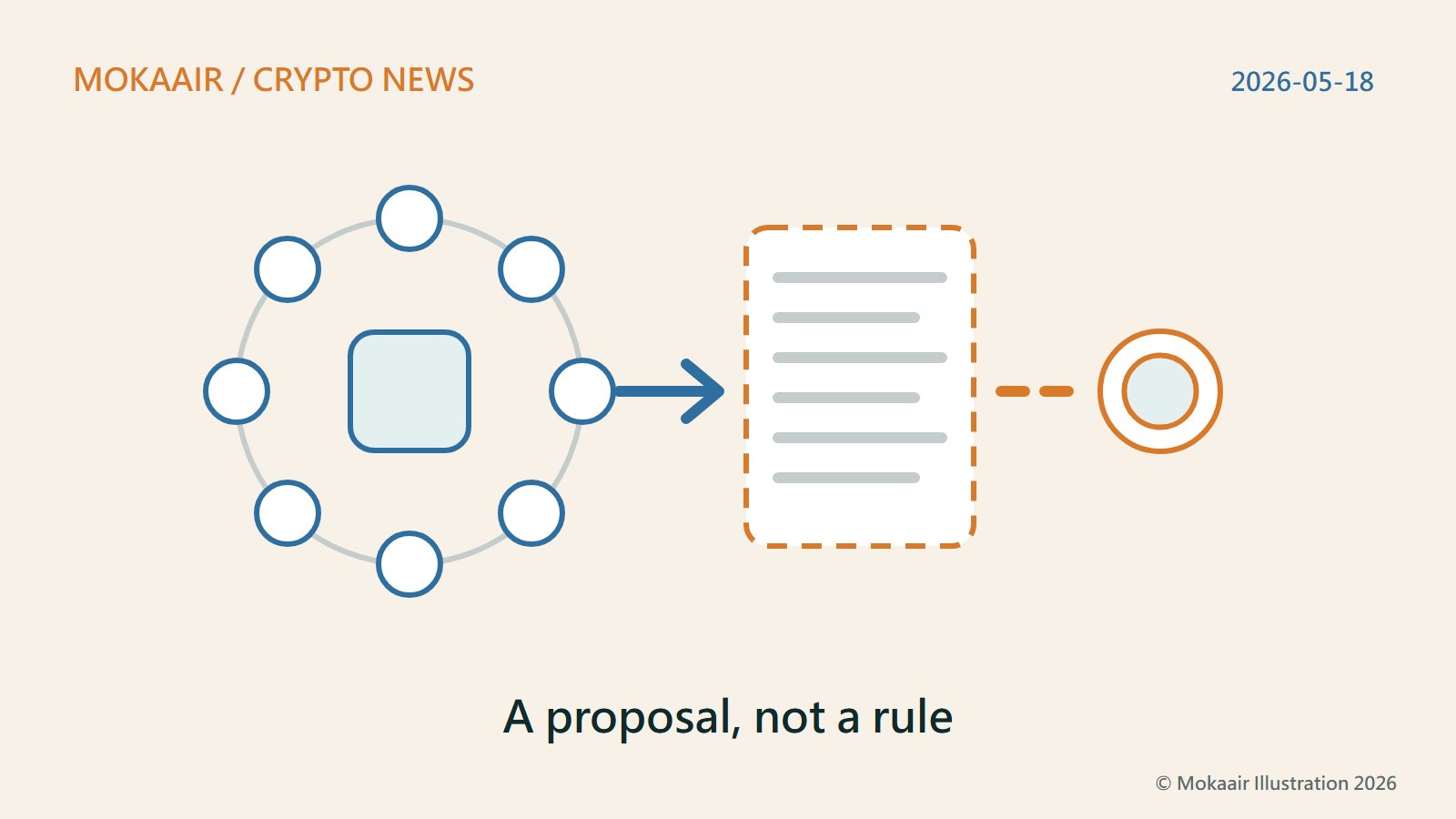
On May 18, 2026 a supplemental proposed rule from the National Credit Union Administration (NCUA) implementing the GENIUS Act was published in the Federal Register, cited as 91 FR 28956, its ACTION field reading Supplemental proposed rule. Three dates belong apart: the document is signed on May 14, filed with the Office of the Federal Register and announced in an NCUA press release on May 15, and published on May 18.
This article was checked on September 17, 2026, reading the original Federal Register PDF on the U.S. Government Publishing Office's govinfo, the NCUA press release of May 15, the enacted text of the GENIUS Act, and the agency's earlier proposal of February 12 of the same year. We have tested nothing ourselves, and we give no investment or legal advice. This is a proposal and not a rule in force; where the agency has not said something, this article says so rather than filling the gap by inference.
What this document is: a supplemental proposal, with an earlier one behind it
The GENIUS Act is the 2025 U.S. law on payment stablecoins, Public Law 119-27, and its enacted text ends "Approved July 18, 2025." It divides the licensing and supervision of payment stablecoins among several Federal agencies and the States, and this article covers one strand of that. The agency note at the end of the press release describes the NCUA as the federal agency created by the U.S. Congress to regulate, charter and supervise federal credit unions.
The NCUA published first, on February 12, 2026, the proposal dealing with who may apply and how an application is reviewed (91 FR 6531, RIN 3133-AF69, comments due by April 13 of the same year); what the May document adds is the standards, and the two carry different RIN and docket numbers. The May document draws its own line: unless explicitly stated in this supplemental proposal, the NCUA is not reproposing or otherwise modifying the provisions proposed in the licensing proposal, so most of the licensing procedure that appears in the May regulatory text was proposed in February and is reproduced here.
On the comment deadline, both the DATES field in the Federal Register and the NCUA press release say July 17, 2026; the full text poses 199 numbered questions (Question 1 through Question 199), which makes it a request for comment rather than a settled rule. Section 13 of the GENIUS Act requires each primary Federal payment stablecoin regulator, the Secretary of the Treasury and each State payment stablecoin regulator to promulgate regulations not later than one year after the date of enactment, and the NCUA, in the summary of its February proposal, printed that deadline as July 18, 2026.
Whom it reaches: a credit union cannot issue itself, only through a subsidiary
Credit unions are unfamiliar ground for readers in Taiwan: the NCUA speaks of the cooperative model in which credit unions operate, the money a member puts in is a share account in U.S. law, and it is covered by the NCUA's Federal share insurance rather than by the deposit insurance that applies to banks; a credit union insured by the NCUA is a federally insured credit union, FICU for short.
Under the GENIUS Act, insured depository institutions, which the document calls IDIs and which take in both depository institutions insured by the Federal Deposit Insurance Corporation (FDIC) and FICUs, cannot be issuers of payment stablecoins and must use subsidiaries as issuers; the proposal states that FICUs are not permitted to issue payment stablecoins directly. The statutory definition of an insured credit union subsidiary has three separate prongs: an organization providing services related to the routine operations of a credit union, a credit union service organization (CUSO) in which the credit union holds an ownership interest or to which it has lent, and a subsidiary of a State-chartered insured credit union established under State law; each prong is a separate and distinct avenue to qualify. Such a subsidiary must be regulated by the primary Federal payment stablecoin regulators and cannot opt for the state-level framework; the document says those regulators include the NCUA, the FDIC, the Office of the Comptroller of the Currency (OCC) and the Board of Governors of the Federal Reserve System.
The application and its review come from the February proposal and are reproduced in the May regulatory text: the subsidiary must file jointly with any insured credit union parent company; the GENIUS Act requires the NCUA to render a decision not later than 120 days after receiving a substantially complete application, and the application is deemed approved if no decision is rendered within that period, while an application already considered substantially complete stays so unless there is a material change in circumstances that requires the NCUA to treat it as a new application; not later than 30 days after receiving an application the NCUA is to notify the applicant whether it determined the application substantially complete; and the issuance of a payment stablecoin on an open, public, or decentralized network is not a valid ground for denial. The February proposal also limits a credit union to investing only in an issuer already licensed by the NCUA.
| Item | What the proposals say | Which document it comes from |
|---|---|---|
| Who may issue | A credit union may not issue itself; a subsidiary must be licensed | The statute and both proposals |
| How to apply | The subsidiary files jointly with its credit union parent company | February licensing proposal |
| Decision period | A decision within 120 days of a substantially complete application; deemed approved if none is rendered | February licensing proposal |
| Investment limit | A credit union may invest only in an NCUA-licensed issuer | February licensing proposal |
| Operational and risk standards | Permitted activities, reserve assets, redemption, risk management, examination and reporting | May supplemental proposal |
| Share insurance treatment | Would amend the share insurance rules, tokenized shares included | May supplemental proposal |
What the May document proposes: permitted activities, reserves and redemption
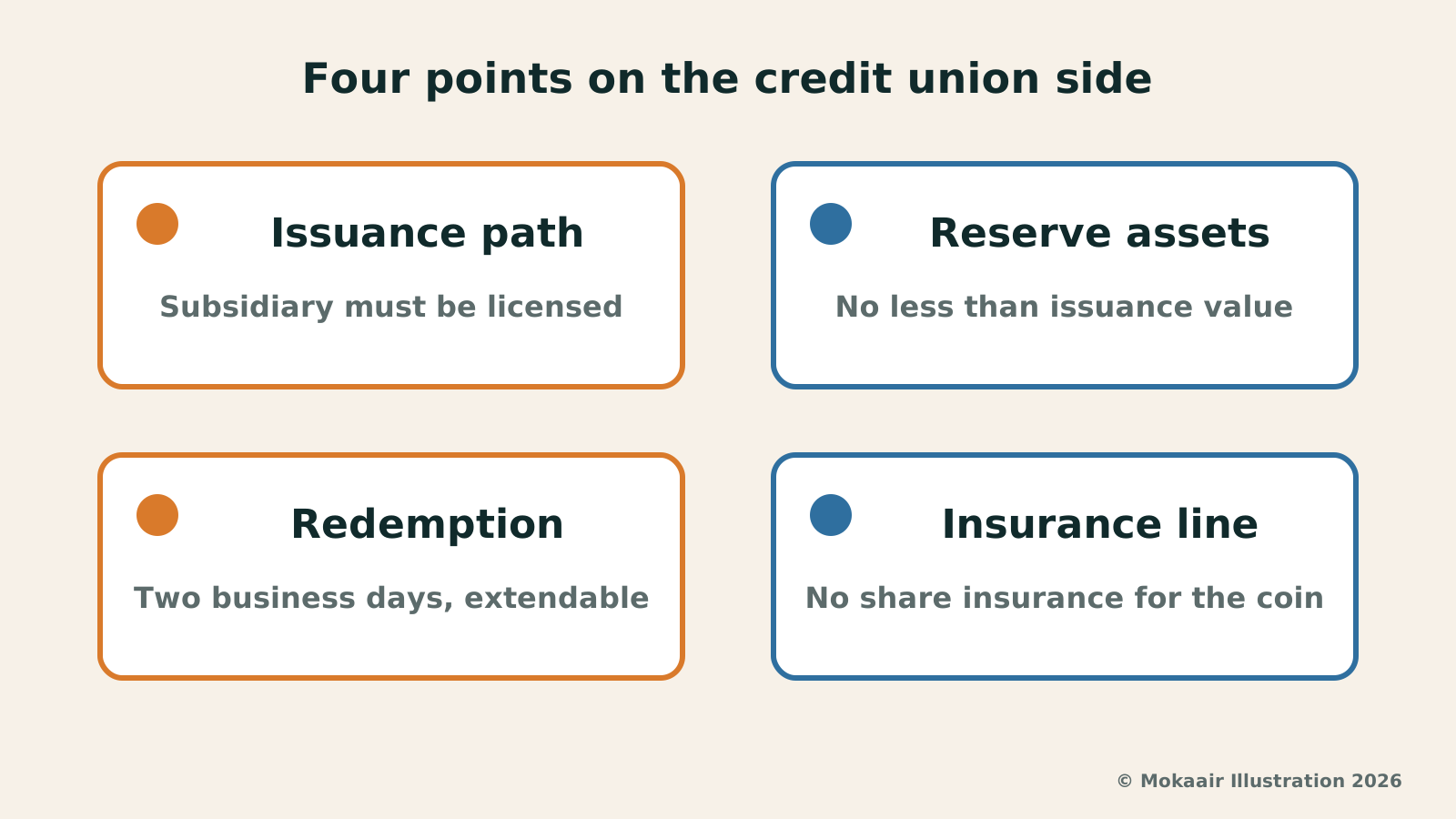
Proposed § 706.201 begins by fencing off the business: an NCUA-licensed permitted payment stablecoin issuer may only do eight things, among them issuing, redeeming, managing reserve assets, providing custody or safekeeping for the stablecoins and for the reserves and private keys required, and charging a fee for purchase or redemption. Two of the prohibitions in the same section matter most to an ordinary reader: the issuer may not, directly or through implication, represent that payment stablecoins are backed by the full faith and credit of the United States, guaranteed by the United States Government, or subject to Federal deposit insurance or Federal share insurance; and it may not pay the holder any form of interest or yield, whether in cash, tokens, or other consideration, solely in connection with the holding, use, or retention of the coin itself.
The proposal would require reserve assets to have, at all times, a total fair value that equals or exceeds the outstanding issuance value, to be identifiable and segregated from the issuer's other assets, and monthly composition reports to be published and examined by a registered public accounting firm. A shortfall would have to be reported to the NCUA on the day it occurs, and new issuance would be prohibited immediately (other than issuance solely to move stablecoins across ledgers where the net outstanding issuance value does not increase); after 15 consecutive business days below the minimum, which may be extended in the NCUA's sole discretion, the issuer would have to begin liquidating reserve assets and redeeming, and could not charge a redemption fee at any time during the liquidation. The redemption policy would have to state that timely redemption may not exceed two business days following the date of the requested redemption and that any discretionary limitation can only be imposed by the NCUA; where redemption requests exceed 10 percent of the outstanding issuance value in a single 24-hour period, the period would be automatically extended to seven calendar days, and the NCUA could extend it in its discretion as well, for safety and soundness, financial stability, or otherwise in the public interest.
On capital and supervision, the NCUA says that where possible the proposed part would maintain consistency with the standards and terminology proposed by the other primary Federal payment stablecoin regulators: a de novo issuer, one licensed to issue for less than three years, would hold minimum capital equal to the greater of the amount specified in its licensing conditions or $5 million, and would hold that minimum for 36 months, which its licensing conditions or a later NCUA determination may shorten or lengthen, plus an operational backstop of assets equal to 12 months of total expenses, presented separately from the reserve assets.
Where the coverage stops: no share insurance for the coin, share insurance for tokenized shares
The GENIUS Act explicitly dictates that payment stablecoins are not backed by the full faith and credit of the United States, are not guaranteed by the U.S. Government and are not covered by deposit or share insurance from the FDIC or NCUA, and it is unlawful to represent otherwise. On the reserve side, the proposal's treatment is this: funds held in share accounts at a credit union as reserves for a payment stablecoin would be insured to the issuer under the coverage rules for corporate accounts, not passed through to holders, and would be aggregated with the issuer's other corporate accounts at the same credit union, up to the standard maximum share insurance amount (SMSIA), currently $250,000. The NCUA's reason is that, the statute reading as it does, providing share insurance to payment stablecoin holders on a pass-through basis appears to be inconsistent with those provisions.
The same proposal deals separately with tokenized shares. The NCUA states that payment stablecoins and tokenized shares are economically and legally distinct, and that the GENIUS Act's definition of a payment stablecoin expressly excludes a deposit, including a deposit recorded using distributed ledger technology. The proposal would therefore amend the share insurance rules to make clear that the technology or type of recordkeeping an insured credit union uses to record account liabilities does not affect whether those liabilities constitute accounts; a member using tokenized shares is afforded the same Federal share insurance as a member using non-tokenized shares.
What it means for readers in Taiwan, and how to check it yourself
The boundary first: this is a U.S. proposed rule, it reaches U.S. federally insured credit unions and their subsidiaries, it does not bind users, platforms or regulators in Taiwan, and the full text does not mention Taiwan. What follows is an example we constructed editorially, not something we tested: someone pays an overseas freelancer with a U.S. dollar stablecoin, sees "issued by a subsidiary of an insured credit union", and reads it as deposit insurance. On the terms of the proposal that reading is wrong: the issuer is forbidden to make such a representation, and the stablecoin itself has no share insurance.
To check where things stand yourself, the steadiest route is back to the Federal Register and govinfo: this document is number 2026-09915 under RIN 3133-AG10, and the February one is 91 FR 6531 under RIN 3133-AF69. As for when the GENIUS Act takes effect, section 20 gives a formula rather than a date: the Act and its amendments take effect on the earlier of 18 months after the date of enactment, or 120 days after the primary Federal payment stablecoin regulators issue any final regulations implementing the Act. The NCUA's proposal prints that formula as well and does not convert it into a date, and neither does this article.
Frequently asked questions
Is this rule in force yet?
No. It is a supplemental proposed rule, which is exactly what the ACTION field in the Federal Register says, Supplemental proposed rule, and the document itself carries no effective date. The comment period closed on July 17, 2026. In its cost and benefit analysis the NCUA writes conditionally, "if finalized as proposed"; none of the four documents cited here gives a date for finalizing this rulemaking, and we do not predict one.
Can credit unions in the United States issue stablecoins now?
Under the GENIUS Act an insured depository institution, federally insured credit unions included, cannot issue payment stablecoins itself; only a subsidiary licensed by the NCUA could, and the February document that governs the licensing procedure also reads Proposed rule in its ACTION field. In its cost analysis the NCUA assumes that approximately 15 FICUs would perform one or more of the activities authorized under the proposed rule, and notes that this number is consistent with the number of FICUs that report offering digital asset services as of December 31, 2025; that is an assumption for the analysis, not a count of applications made or licenses granted.
Do payment stablecoins carry U.S. deposit insurance?
No. The GENIUS Act explicitly dictates that payment stablecoins are not backed by the full faith and credit of the United States, are not guaranteed by the U.S. Government and are not covered by deposit or share insurance from the FDIC or NCUA, and representing otherwise is unlawful; the proposal turns that into a marketing prohibition on the issuer. Reserves held at a credit union would, under the proposal, be corporate accounts of the issuer, aggregated with its other corporate accounts at the same credit union up to a cap currently of $250,000, and not passed through to coin holders. The NCUA also notes that this treatment is itself open for comment: it asks whether this is the appropriate approach and reflects the appropriate interpretation of the GENIUS Act and the Federal Credit Union Act.
How do tokenized deposits differ from payment stablecoins?
The NCUA considers the two economically and legally distinct. The proposal would make clear that the technology or type of recordkeeping a credit union uses to record account liabilities does not affect whether those liabilities constitute accounts, so tokenized shares carry the same Federal share insurance as traditional share accounts. The NCUA also cautions that there may be tokenized FICU liabilities that are not insurable share accounts, irrespective of an intention or representation that they are: a product that does not meet the statutory definition of an account will not be an insurable share account. It is separately seeking comment on whether the final rule should specifically exempt share accounts recorded using distributed ledger technology from the GENIUS Act's definition of a payment stablecoin.
Can you earn interest for holding a payment stablecoin?
The proposal would forbid an issuer from paying the holder any form of interest or yield, whether in cash, tokens, or other consideration, solely in connection with the holding, use, or retention of the payment stablecoin itself, and it sets a rebuttable presumption for arrangements with affiliates and certain related third parties, which the issuer may rebut by submitting written materials. That is a prohibition in a proposal, not a description of any product's return; this article discusses no yield figures.
Is cash always available on redemption?
The proposal would require the redemption policy to state that timely redemption may not exceed two business days following the date of the requested redemption, and that any discretionary limitation can only be imposed by the NCUA; where redemption requests exceed 10 percent of the outstanding issuance value in a single 24-hour period, though, the period is automatically extended to seven calendar days. The NCUA may also, in its discretion, extend the two business days or the seven calendar days if it determines that the issuer poses a threat to safety and soundness or financial stability, or that an extension is otherwise in the public interest. Where reserves stay below the minimum for 15 consecutive business days, which may be extended in the NCUA's sole discretion, the issuer must begin liquidating reserve assets and redeeming the coins outstanding, without charging a redemption fee. All of this is what the proposal would do; none of it is in force.
How often would the NCUA examine an issuer?
The proposal would have the NCUA conduct a full-scope examination of every licensed issuer under its supervision at least once during each 12-month period; for an issuer meeting four conditions the NCUA could, in its sole discretion, move to a 14- to 24-month cycle. The conditions are that the issuer is not currently subject to a formal enforcement action or order; that no one became its parent company or acquired control of it during the preceding 12-month period in which it would otherwise have been examined; that its outstanding issuance value or its monthly transaction volume is below a threshold (the provision says "or", so both need not be low); and that it complies with the reserve asset and reporting requirements. This too is what the proposal says.
How does the NCUA proposal relate to the other agencies' versions?
The NCUA says that where possible the proposed part 706 would maintain consistency with the standards and terminology proposed by the other primary Federal payment stablecoin regulators, and its chairman says the agency worked diligently to align the standards for NCUA-licensed issuers with the standards proposed for bank subsidiaries. Both are the agency's own statements; the press release sets out no specific difference in the text, and we have not read the other agencies' proposals, so this article does not compare provisions. What belongs to the credit union context in these two proposals is this: no issuing directly, only through a subsidiary; a credit union may invest only in an NCUA-licensed issuer; and the treatment of share insurance and tokenized shares.
2026 Crypto News Roundup: Key Developments in Regulation, Technology and Industry2026 Crypto News Roundup: Key Developments in Regulation, Technology and IndustryThis site's 2026 crypto news explainers, in six jurisdictions — Taiwan, the US, the UK, the EU, Japan, South Korea: the Virtual Asset Service Act, the proposed GENIUS Act rules, the joint SEC–CFTC interpretation and the SEC's own proposal, the end of MiCA's transitional period and its link to the payment rules, the FCA's perimeter guidance, Japan's FSA reports and South Korea's manipulation referrals. Regulation, technology and industry only, no prices, with official sources and a check date.Read the full article
Taiwan's Virtual Asset Service Act Clears Third Reading: Seven Kinds of Provider, Stablecoin Licensing, No Commencement Date YetTaiwan's Virtual Asset Service Act Clears Third Reading: Seven Kinds of Provider, Stablecoin Licensing, No Commencement Date YetOn June 30, 2026 Taiwan's Legislative Yuan passed the Virtual Asset Service Act (虛擬資產服務法) on third reading, and its 56 articles were promulgated on July 22, 2026. Working from the Financial Supervisory Commission's press release and two official legal databases, this article sets out the seven kinds of virtual asset service provider, licensing kind by kind, the reserve-asset rules for stablecoins, and why the 12- and 21-month transition periods in article 55 have not started running.Read the full article
Lifestyle
The OCC's Proposed Stablecoin Rules: One-to-One Reserves, Redemption in Two Business Days and Periodic Reporting
On March 2, 2026 the U.S. Office of the Comptroller of the Currency published a proposed rule on payment stablecoins implementing the GENIUS Act in the Federal Register, cited as 91 FR 10202 and running to 102 pages, with comments due by May 1, 2026. Working from the Federal Register full text and the public law text of the GENIUS Act, this article sets out whom the new 12 CFR part 15 would reach, what it would require on reserves and redemption, and why it is not yet a rule in force.
Lifestyle
FDIC Stablecoin Proposal: Reserve Deposits Insured to the Issuer, Not Passed Through to Holders
On April 7, 2026 the board of the U.S. Federal Deposit Insurance Corporation (FDIC) approved a proposal implementing the GENIUS Act, published in the Federal Register on April 10 at 91 FR 18534. Working from that full text and the FDIC's own press release, this article sets out whom the proposal would reach, the proposed reserve asset and redemption requirements, and why it would count the deposit insurance on reserve deposits as the issuer's rather than each stablecoin holder's.
Lifestyle
FinCEN and OFAC's Joint AML and Sanctions Compliance Proposal for Stablecoin Issuers, Not Yet in Effect
On April 10, 2026 a joint FinCEN and OFAC proposed rule, from two U.S. Treasury agencies, was published in the Federal Register (91 FR 18582). From the full text, FinCEN's fact sheet, the Treasury release and the Federal Register's docket lookup, this article sets out how the proposal would bring permitted payment stablecoin issuers under the Bank Secrecy Act, the four AML program requirements, the $5,000 suspicious activity reporting threshold, and OFAC's proposed sanctions compliance program.
Lifestyle
Brazil's Petrobras tests Cardano blockchain to track claims about cleaner jet fuel and diesel
According to CoinDesk, Brazil's state-owned energy company Petrobras is testing the Cardano blockchain in two research projects: one to stop the same emissions cut from sustainable aviation fuel being counted twice, the other to record the history of its partly renewable Diesel R. Both are still research work, with no timeline for wider use.
Articles that cite this one
Latest travel guides

GuideTokyo
Where to Stay in Tokyo: Comparing Shinjuku, Ueno, Tokyo Station, Shibuya, Asakusa, Ikebukuro, and Ginza, Plus Airport Access, Accommodation Tax, and Luggage Delivery
Where should you stay in Tokyo? Compare Shinjuku, Ueno, Tokyo Station, Shibuya, Asakusa, Ikebukuro, and Ginza by the same criteria: access from Narita and Haneda, transit routes, nearby attractions, neighborhood character, and who each area suits. Includes a comparison table, a Yamanote Line diagram, Tokyo’s accommodation tax as verified in 2026/9 (changing to 3% in 2027/4), and Airport TA-Q-BIN luggage shipping rules.
- Budget
- Hotels

GuideTokyo
How to Choose Tokyo Transit Passes: Are Suica, Welcome Suica, the Tokyo Subway Ticket, and the JR Pass Worth It?
On a first Tokyo trip, start with an IC card and pay per ride (Welcome Suica has no deposit and is valid for 28 days). If you take four or more subway rides in a day, add a 72-hour Tokyo Subway Ticket for 2,000 yen; a JR Pass is never worthwhile if you stay in Tokyo and do not go to Kansai. See what TOURIST PASMO, Suica on iPhone, and the Tokyo Metro day pass do and do not cover, with a decision chart. Prices verified in September 2026.
- Transport
- Budget

GuideTokyo
Tokyo Disneyland and DisneySea Guide: Ticket Prices, Fantasy Springs, Disney Premier Access (DPA), Standby Pass, and Which Park to Choose for Your First Visit
Tokyo Disney one-day Passport prices vary: most weekdays in 9/2026 cost ¥9,900 and weekends ¥10,900. At 14:00 daily, tickets go on sale for the same date two months later. Free Priority Pass is no longer on the official service list; only paid Disney Premier Access (¥1,000–3,500 per person per use) shortens waits. Covers hours, the 25th anniversary, Standby Pass, Entry Request, Fantasy Springs access and first-visit park choice; checked on the official site in 9/2026.
- Itineraries
- Family
Sources
- Federal Register: Implementing the GENIUS Act for the Issuance of Stablecoins by Entities Subject to the Jurisdiction of the National Credit Union Administration (91 FR 28956, govinfo PDF) · Checked:
- NCUA press release: NCUA Announces Proposed Rule for Permitted Payment Stablecoin Issuer Standards (2026-05-15) · Checked:
- Full enacted text of the GENIUS Act (Public Law 119-27, govinfo) · Checked:
- Federal Register: Investments in and Licensing of Permitted Payment Stablecoins Issuers (91 FR 6531, govinfo PDF) · Checked: