Lifestyle
FDIC Stablecoin Proposal: Reserve Deposits Insured to the Issuer, Not Passed Through to Holders
On April 7, 2026 the board of the U.S. Federal Deposit Insurance Corporation (FDIC) approved a proposal implementing the GENIUS Act, published in the Federal Register on April 10 at 91 FR 18534. Working from that full text and the FDIC's own press release, this article sets out whom the proposal would reach, the proposed reserve asset and redemption requirements, and why it would count the deposit insurance on reserve deposits as the issuer's rather than each stablecoin holder's.
About 15 min read
On April 10, 2026 a proposed rule from the Federal Deposit Insurance Corporation (FDIC) was published in the Federal Register at volume and page 91 FR 18534 under RIN 3064-AG19, its category field reading Notice of proposed rulemaking, that is, a rulemaking proposal. The FDIC Board of Directors had approved it three days earlier, on April 7, 2026; the press release that day said the Board "today approved" it. This article treats the publication date as the event date.
This article was checked on September 17, 2026, reading the full text of the proposal in the Federal Register, the FDIC press release issued with it, the FDIC website's page listing its Federal Register publications and public comments, and a separate reporting forms notice the FDIC published on July 20, 2026. We have tested nothing ourselves and we give no investment or legal advice; every item below is still at the proposal stage, and a final rule may differ from what is proposed.
This is a proposal, not a rule already in force
The document's ACTION field reads Notice of proposed rulemaking, and the first sentence of its SUMMARY field is that the FDIC is soliciting comment on a proposal that would do three things: implement certain requirements of the GENIUS Act applicable to FDIC-supervised permitted payment stablecoin issuers and insured depository institutions, clarify deposit insurance coverage for deposits held as reserve assets for payment stablecoins, and clarify the treatment of tokenized deposits. The proposal itself carries no effective date.
For when the GENIUS Act applies, the proposal cites the statute's own provision: it will become effective on January 18, 2027, or 120 days after the date on which the primary Federal payment stablecoin regulators issue any final regulations implementing the Act, if earlier — that is the law's effective date provision, not this proposal's. The April document does not print the date the Act was enacted; it was a separate FDIC notice of July 20, 2026 that wrote it "was enacted on July 18, 2025".
The comment deadline is given as printed: the DATES field requires comments to be received by the FDIC no later than June 9, 2026. Checked against the FDIC's publications page on September 17, 2026, RIN 3064-AG19 appears only in the row for April 10, 2026, a row marked Comment Period End: June 9, 2026, with no row for a final rule under the same RIN.
Whom it reaches: the depository institutions the FDIC supervises, and their stablecoin subsidiaries
The GENIUS Act sets up four primary Federal payment stablecoin regulators, which the document lists as the FDIC, the Office of the Comptroller of the Currency (OCC), the Board of Governors of the Federal Reserve System (FRB) and the National Credit Union Administration (NCUA). The FDIC handles only its own part of that: it is the primary Federal payment stablecoin regulator of subsidiaries of insured State nonmember banks and State savings associations approved to issue payment stablecoins, and the document states that such an issuer must be a subsidiary of an insured depository institution (IDI). The other half is custody: the proposed subpart B would apply to persons supervised by the FDIC that are engaged in the business of providing custodial or safekeeping services for payment stablecoin reserves, payment stablecoins used as collateral, or private keys used to issue payment stablecoins. The deposit insurance section has a wider reach: in its impact section, the document lists every insured depository institution maintaining tokenized deposits or deposits held as stablecoin reserves as falling within the direct scope of the proposed rule.
The document also draws its own boundary: the OCC's proposal, published on March 2, 2026, "is more expansive than this proposed rule", and its reach, as the document describes it, also takes in nonbank entities. Using September 30, 2025 as its reference point, the document says the FDIC at that time "supervises zero PPSIs" — it supervises none of these issuers. Checked against the full text of this proposal on September 17, 2026, we saw no provision at all about non-U.S. users, cross-border offering or operators in Taiwan.
| Item | What the proposal would do | Status |
|---|---|---|
| Reserve deposits | Insured to the issuer, as corporate deposits | Proposed |
| Tokenized deposits | Still deposits, insurance unchanged | Proposed |
| Redemption deadline | No later than two business days | Proposed |
| Reserve asset concentration | No more than 40% at any one institution | Proposed |
| Minimum redemption amount | May not be greater than one coin | Proposed |
Deposit insurance: the issuer is the insured party, not each holder
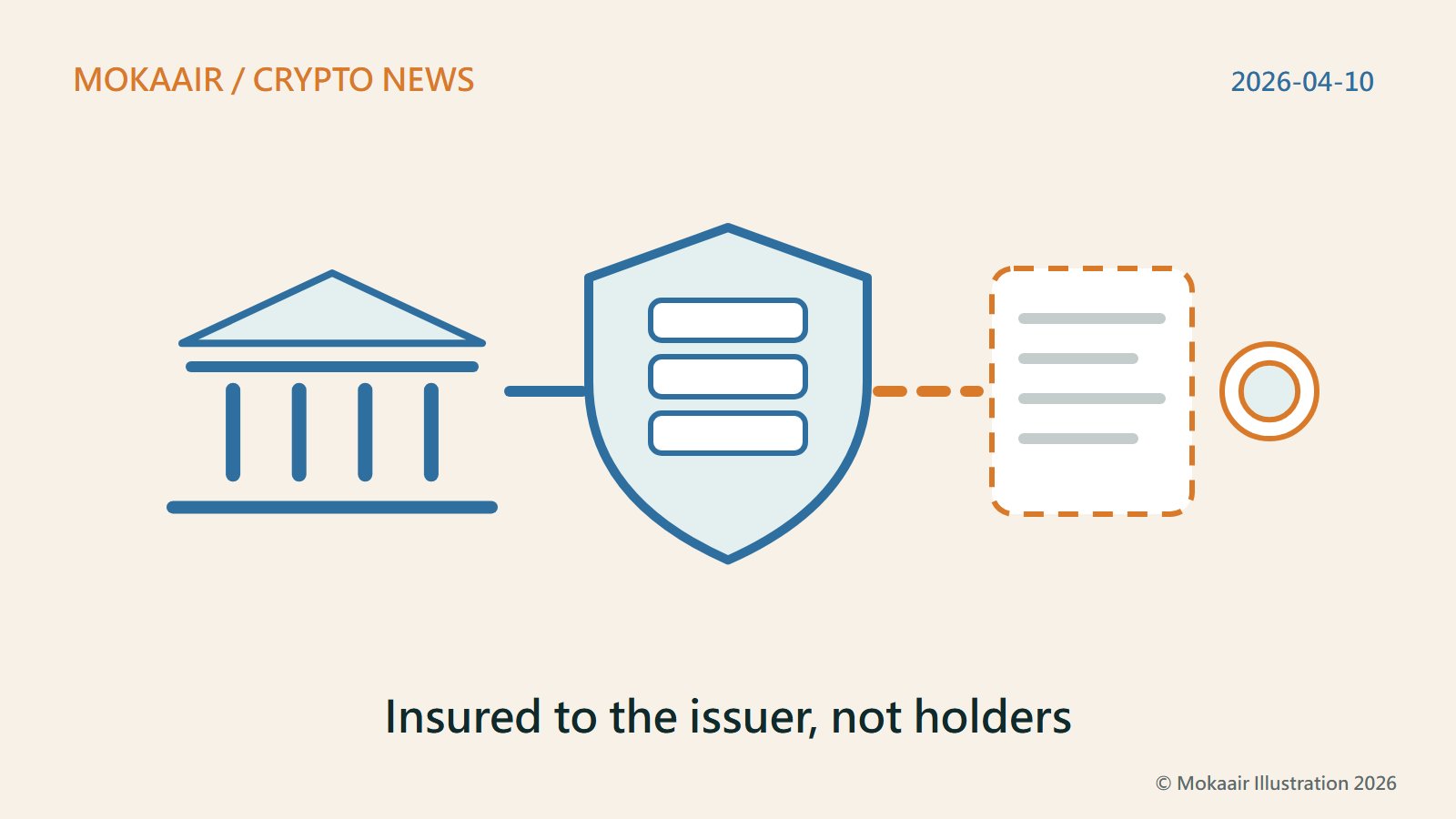
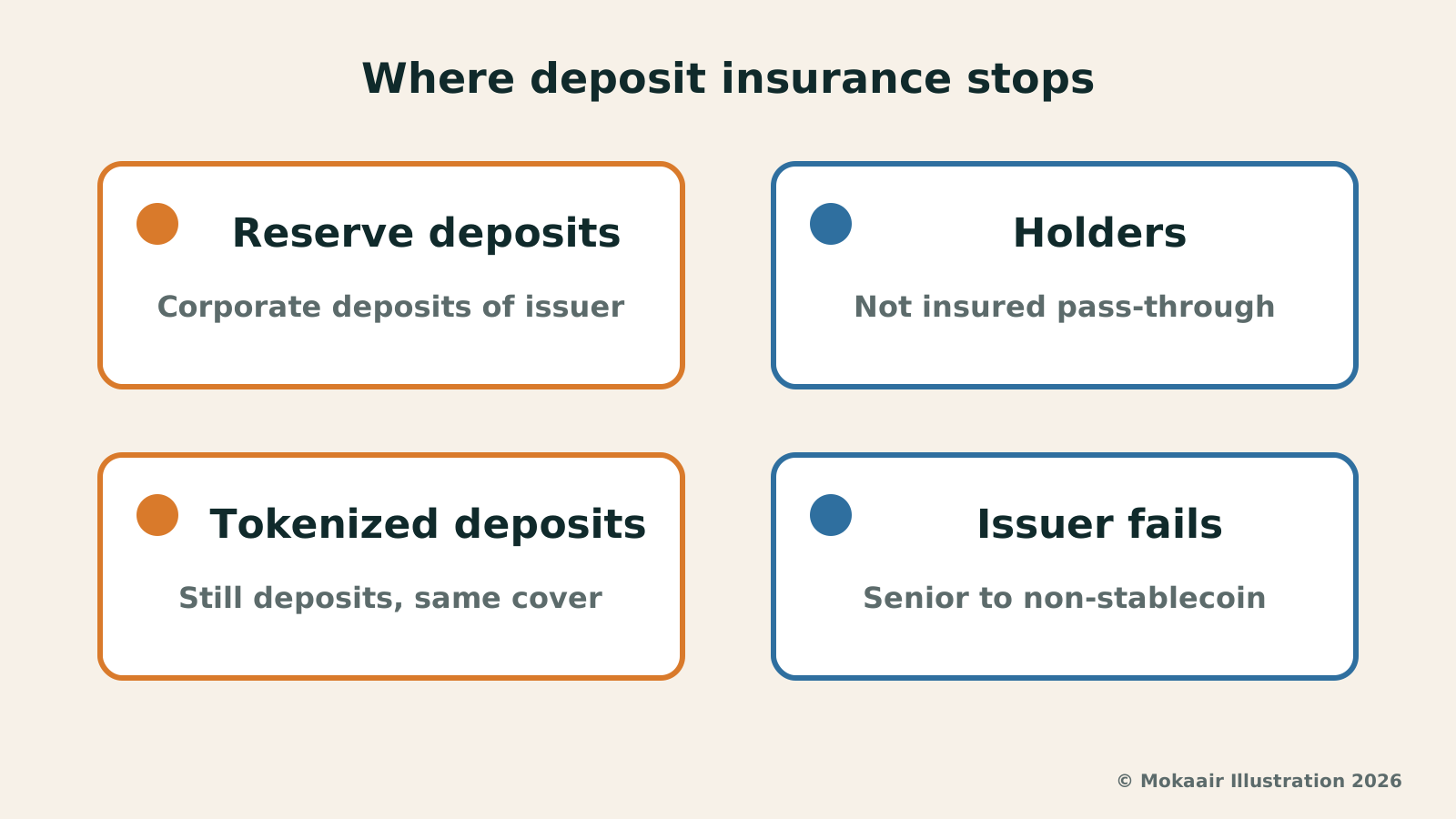
The FDIC proposes to amend its deposit insurance rules in part 330 so that deposits placed at an insured depository institution as reserves backing a payment stablecoin would be insured to the permitted payment stablecoin issuer (PPSI) under the rules for corporate deposits, and would not be insured to holders on a pass-through basis; the proposed new 12 CFR 330.11(a)(3) is that mechanism. The document explains that the corporate deposit rules add together the corporate deposits of the same depositor at the same insured institution and insure them up to the standard maximum deposit insurance amount (SMDIA), an amount the document writes as "currently $250,000".
The document writes: "In other words, the SMDIA is $250,000 per depositor, per IDI, for deposits held in each ownership category." — the depositor here is the issuer, and it is not that each holder enjoys $250,000 of their own; under the proposed rule, all deposits a PPSI maintains at the same institution would be added together, whether they are reserves or operating expenses, and the FDIC insures only "deposits", so other types of reserve assets fall outside the coverage.
There are two reasons. The first is the statute's own words, which the document quotes: a payment stablecoin shall not be backed by the full faith and credit of the United States, guaranteed by the United States Government, subject to deposit insurance by the Federal Deposit Insurance Corporation, or subject to share insurance by the National Credit Union Administration, and representing otherwise is unlawful. The second is that holders usually settle by transferring the stablecoin, without funds ever leaving that insured deposit account. For tokenized deposits the conclusion runs the other way: the proposed 12 CFR 330.3(k) would state that the technology used for recordkeeping does not affect whether a liability constitutes a "deposit", so the federal deposit insurance the depositor enjoys is unchanged — but the FDIC cautions that not every tokenized bank liability is a deposit.
The proposed requirements a holder would see
The proposed reserve asset requirement is at least one-to-one: an issuer would have to maintain identifiable reserve assets whose value at all times meets or exceeds the total outstanding issuance value of its payment stablecoins, and on each business day it could not let its exposure to any one eligible financial institution exceed 40 percent of its reserve assets. The issuer would also have to publish monthly, on its own website, the number of coins outstanding and the composition of its reserve assets as of the close of business on the last day of the previous month, and that monthly report would have to be examined by a registered public accounting firm.
On redemption, the FDIC proposes to define "timely" as no later than two business days following the date of the requested redemption, states plainly that this is a ceiling and that an issuer may be faster, and at the same time acknowledges that the market may expect redemptions far more quickly than that, so it seeks comment on whether the number of days is appropriate. A significant redemption request would be defined as aggregate redemption requests exceeding 10 percent of an issuer's outstanding issuance value within a single 24-hour period. The proposed provision would require an issuer to redeem any number greater than or equal to one payment stablecoin, but the text then adds one qualifier: subject to appropriate screening and onboarding. Fees would have to be disclosed, and an increase would require at least seven calendar days' prior notice; an issuer also could not pay a holder any form of interest or yield solely in connection with the holding, use or retention of the stablecoin.
And if the issuer fails? The proposal gives holders no deposit insurance style guarantee of repayment, but it does address priority of claims: the FDIC's approval authority extends only to activities that would not jeopardize the claims of payment stablecoin holders in the insolvency proceedings described in section 11 of the GENIUS Act, and those claims would rank senior to claims of non-payment stablecoin creditors.
What is still unsettled, and how to check the current status yourself
Almost every number in the proposal is still out for comment: the document's questions run all the way to Question 144, and Question 125 asks whether the FDIC's proposed treatment of deposits comprising stablecoin reserves is appropriate and whether it is the best reading of the GENIUS Act and the Federal Deposit Insurance Act. There has been follow-up as well: on July 20, 2026 the FDIC separately published a notice seeking comment on the weekly and quarterly reporting forms proposed in this rulemaking, under OMB control number 3064-0225, with a printed deadline of September 18, 2026 — a different comment period from the April proposal's June 9 deadline.
What follows is an editorially designed example, not a test. Suppose someone receives a dollar stablecoin through some cross-border service and assumes the balance is insured the way a bank deposit is: under what this proposal would do, and within the scope it reaches, what is insured is the reserve deposit the issuer holds at the bank, counted as a corporate deposit and added together with the issuer's other corporate deposits there, rather than each holder being insured separately. To see how far the proposal has got, go to the FDIC's page of Federal Register publications and public comments, find the row for April 10, 2026 with RIN 3064-AG19, and look at whether an additional row for a final rule under the same RIN has appeared beside it. We do not compare or recommend any stablecoin, exchange, wallet or issuer.
Frequently asked questions
Is this rule already in force?
No. It is a Notice of proposed rulemaking, that is, a rulemaking proposal, and the document itself carries no effective date. The comment deadline, as printed in the Federal Register, is June 9, 2026; checked against the FDIC's page of Federal Register publications and public comments on September 17, 2026, RIN 3064-AG19 appears only in the row for the day of publication, with no final rule under the same RIN. Whether a final rule will be issued, when, and how far it would differ from the proposal is not stated in the document.
Is the dollar stablecoin I hold covered by U.S. deposit insurance?
Under what this proposal would do, a stablecoin holder would not be insured merely because the reserves sit at an insured bank. The document quotes the express words of the GENIUS Act: a payment stablecoin shall not be backed by the full faith and credit of the United States, guaranteed by the United States Government, subject to deposit insurance by the Federal Deposit Insurance Corporation, or subject to share insurance by the National Credit Union Administration, and representing otherwise is unlawful. The proposal would insure reserve deposits to the issuer under the rules for corporate deposits, and would not insure them to holders on a pass-through basis.
Is that $250,000 limit there to protect me?
No. The document says the standard maximum deposit insurance amount is calculated per depositor, per insured institution, for deposits held in each ownership category, and the depositor here is the issuer. Under the proposed provision, all of the issuer's corporate deposits at the same insured institution would be added together before that limit is applied, whether the money is stablecoin reserves or operating expenses. Under what this proposal would do, holders would not be treated as insured depositors of that bank and would not each receive a limit of their own.
Are tokenized deposits and stablecoins the same thing?
In this proposal they are two opposite things. A tokenized deposit remains a deposit as long as it meets the statutory definition of a deposit, and the proposed provision would state that the recordkeeping technology does not affect whether a liability is a deposit, so the federal deposit insurance the depositor enjoys is unchanged. But the FDIC also cautions that not every tokenized bank liability is a deposit; one that does not meet the statutory definition is, by definition, a non-deposit product.
If the issuer fails, do holders get their money back?
The document provides no deposit insurance style guarantee of repayment. What it does set out is priority of claims: the FDIC's approval authority extends only to activities that would not jeopardize the claims of payment stablecoin holders in the insolvency proceedings described in section 11 of the GENIUS Act, and those claims would rank ahead of the claims of non-payment stablecoin creditors. Note that in Question 13 the FDIC is still seeking comment on how "holder" should be defined at all — as the beneficial owner, or by possession of a digital wallet or control of a private key.
Does this proposal reach platforms in Taiwan or users in Taiwan?
Checked against the full text of this proposal on September 17, 2026, we saw no provision at all about non-U.S. users, cross-border offering or operators in Taiwan. What it covers is the depository institutions supervised by the FDIC, those institutions' subsidiaries approved to issue payment stablecoins, and the related custodians supervised by the FDIC; the deposit insurance section also reaches every U.S. insured depository institution that maintains tokenized deposits or deposits held as stablecoin reserves. Taiwan's own regime is a separate matter, and the link at the end of this article covers it.
Is redemption within two business days a protection that is already settled?
No, that is a proposed definition. The proposal defines timely redemption as no later than two business days following the date of the requested redemption, and explains that two business days is a ceiling and that an issuer may be faster, while acknowledging that the market may expect redemptions far more quickly than that, so it seeks comment on whether the number of days is appropriate. The proposed minimum redemption amount would require an issuer to redeem any number of one coin or more, but it comes with the qualifier that this is subject to appropriate screening and onboarding.
Where do I go to see the latest status of this?
Go to the FDIC website's page of Federal Register publications and public comments and find the row for RIN 3064-AG19. That page lists the documents the FDIC sends to the Federal Register, the category of each document and the comment deadline, and if a final rule is issued later, another row will appear under the same RIN. That page is also one of the channels for submitting comments listed in the ADDRESSES field of this proposal.
2026 Crypto News Roundup: Key Developments in Regulation, Technology and Industry2026 Crypto News Roundup: Key Developments in Regulation, Technology and IndustryThis site's 2026 crypto news explainers, in six jurisdictions — Taiwan, the US, the UK, the EU, Japan, South Korea: the Virtual Asset Service Act, the proposed GENIUS Act rules, the joint SEC–CFTC interpretation and the SEC's own proposal, the end of MiCA's transitional period and its link to the payment rules, the FCA's perimeter guidance, Japan's FSA reports and South Korea's manipulation referrals. Regulation, technology and industry only, no prices, with official sources and a check date.Read the full article
Taiwan's Virtual Asset Service Act Clears Third Reading: Seven Kinds of Provider, Stablecoin Licensing, No Commencement Date YetTaiwan's Virtual Asset Service Act Clears Third Reading: Seven Kinds of Provider, Stablecoin Licensing, No Commencement Date YetOn June 30, 2026 Taiwan's Legislative Yuan passed the Virtual Asset Service Act (虛擬資產服務法) on third reading, and its 56 articles were promulgated on July 22, 2026. Working from the Financial Supervisory Commission's press release and two official legal databases, this article sets out the seven kinds of virtual asset service provider, licensing kind by kind, the reserve-asset rules for stablecoins, and why the 12- and 21-month transition periods in article 55 have not started running.Read the full article
Lifestyle
The OCC's Proposed Stablecoin Rules: One-to-One Reserves, Redemption in Two Business Days and Periodic Reporting
On March 2, 2026 the U.S. Office of the Comptroller of the Currency published a proposed rule on payment stablecoins implementing the GENIUS Act in the Federal Register, cited as 91 FR 10202 and running to 102 pages, with comments due by May 1, 2026. Working from the Federal Register full text and the public law text of the GENIUS Act, this article sets out whom the new 12 CFR part 15 would reach, what it would require on reserves and redemption, and why it is not yet a rule in force.
Lifestyle
NCUA's Proposed Stablecoin Standards: Credit Unions Could Issue Only Through a Subsidiary; Stablecoins Get No Share Insurance
On May 18, 2026 the U.S. National Credit Union Administration's supplemental proposed rule implementing the GENIUS Act was published in the Federal Register (91 FR 28956). From that full text, the NCUA press release, the enacted GENIUS Act and the agency's February licensing proposal: why a credit union could issue payment stablecoins only through a subsidiary, how tokenized shares and the coin differ on share insurance, and why every line here reads as a proposal.
Lifestyle
FinCEN and OFAC's Joint AML and Sanctions Compliance Proposal for Stablecoin Issuers, Not Yet in Effect
On April 10, 2026 a joint FinCEN and OFAC proposed rule, from two U.S. Treasury agencies, was published in the Federal Register (91 FR 18582). From the full text, FinCEN's fact sheet, the Treasury release and the Federal Register's docket lookup, this article sets out how the proposal would bring permitted payment stablecoin issuers under the Bank Secrecy Act, the four AML program requirements, the $5,000 suspicious activity reporting threshold, and OFAC's proposed sanctions compliance program.
Lifestyle
Brazil's Petrobras tests Cardano blockchain to track claims about cleaner jet fuel and diesel
According to CoinDesk, Brazil's state-owned energy company Petrobras is testing the Cardano blockchain in two research projects: one to stop the same emissions cut from sustainable aviation fuel being counted twice, the other to record the history of its partly renewable Diesel R. Both are still research work, with no timeline for wider use.
Articles that cite this one
Latest travel guides

GuideTokyo
Where to Stay in Tokyo: Comparing Shinjuku, Ueno, Tokyo Station, Shibuya, Asakusa, Ikebukuro, and Ginza, Plus Airport Access, Accommodation Tax, and Luggage Delivery
Where should you stay in Tokyo? Compare Shinjuku, Ueno, Tokyo Station, Shibuya, Asakusa, Ikebukuro, and Ginza by the same criteria: access from Narita and Haneda, transit routes, nearby attractions, neighborhood character, and who each area suits. Includes a comparison table, a Yamanote Line diagram, Tokyo’s accommodation tax as verified in 2026/9 (changing to 3% in 2027/4), and Airport TA-Q-BIN luggage shipping rules.
- Budget
- Hotels

GuideTokyo
How to Choose Tokyo Transit Passes: Are Suica, Welcome Suica, the Tokyo Subway Ticket, and the JR Pass Worth It?
On a first Tokyo trip, start with an IC card and pay per ride (Welcome Suica has no deposit and is valid for 28 days). If you take four or more subway rides in a day, add a 72-hour Tokyo Subway Ticket for 2,000 yen; a JR Pass is never worthwhile if you stay in Tokyo and do not go to Kansai. See what TOURIST PASMO, Suica on iPhone, and the Tokyo Metro day pass do and do not cover, with a decision chart. Prices verified in September 2026.
- Transport
- Budget

GuideTokyo
Tokyo Disneyland and DisneySea Guide: Ticket Prices, Fantasy Springs, Disney Premier Access (DPA), Standby Pass, and Which Park to Choose for Your First Visit
Tokyo Disney one-day Passport prices vary: most weekdays in 9/2026 cost ¥9,900 and weekends ¥10,900. At 14:00 daily, tickets go on sale for the same date two months later. Free Priority Pass is no longer on the official service list; only paid Disney Premier Access (¥1,000–3,500 per person per use) shortens waits. Covers hours, the 25th anniversary, Standby Pass, Entry Request, Fantasy Springs access and first-visit park choice; checked on the official site in 9/2026.
- Itineraries
- Family
Sources
- GENIUS Act Requirements and Standards for FDIC-Supervised Permitted Payment Stablecoin Issuers and Insured Depository Institutions (91 FR 18534, full text of the proposal) · Checked:
- FDIC press release: FDIC Approves Proposal to Implement GENIUS Act Requirements and Standards · Checked:
- FDIC Federal Register Publications and Public Comments (the list of Federal Register publications and public comments) · Checked:
- Reporting Forms and Instructions Associated With Requirements and Standards for FDIC-Supervised Permitted Payment Stablecoin Issuers (91 FR 45274, the reporting forms notice) · Checked: