Lifestyle
OpenAI Confidentially Submits a Draft S-1: What the One-Line Announcement Doesn't Say
On June 8, 2026, OpenAI confirmed it had confidentially submitted a draft S-1 to the SEC, with no decision yet on timing. Based on OpenAI's announcement, the Securities Act of 1933's confidential-submission rules, and a May 2026 SEC proposed rule, this article explains what the announcement does and does not represent, and confirms by full-text search that, as of the check date, no public registration statement under OpenAI's filer name could be found.
About 13 min read
On June 8, 2026, OpenAI published a company-category announcement on its official website confirming that it had confidentially submitted a draft S-1 registration statement to the U.S. Securities and Exchange Commission (SEC), and stating that it had not yet decided on the timing of any further action. The announcement runs to just two short paragraphs, with no exchange, no ticker symbol, no funding amount, and no timeline. This article explains what that announcement actually does, and does not, represent under U.S. securities law.
This article was checked on September 18, 2026, against the full text of OpenAI's official announcement, the confidential-submission provisions of the Securities Act of 1933, and a proposed rule the Securities and Exchange Commission published in May 2026. Using the Securities and Exchange Commission's full-text search system, it confirms that, as of the day it was checked, the database showed no publicly disclosed registration statement filed under OpenAI's name. Mokaair has not done any hands-on testing for this article; it is not investment advice, does not assess valuation, and does not predict a timeline for any public listing.
What the Announcement Itself Says
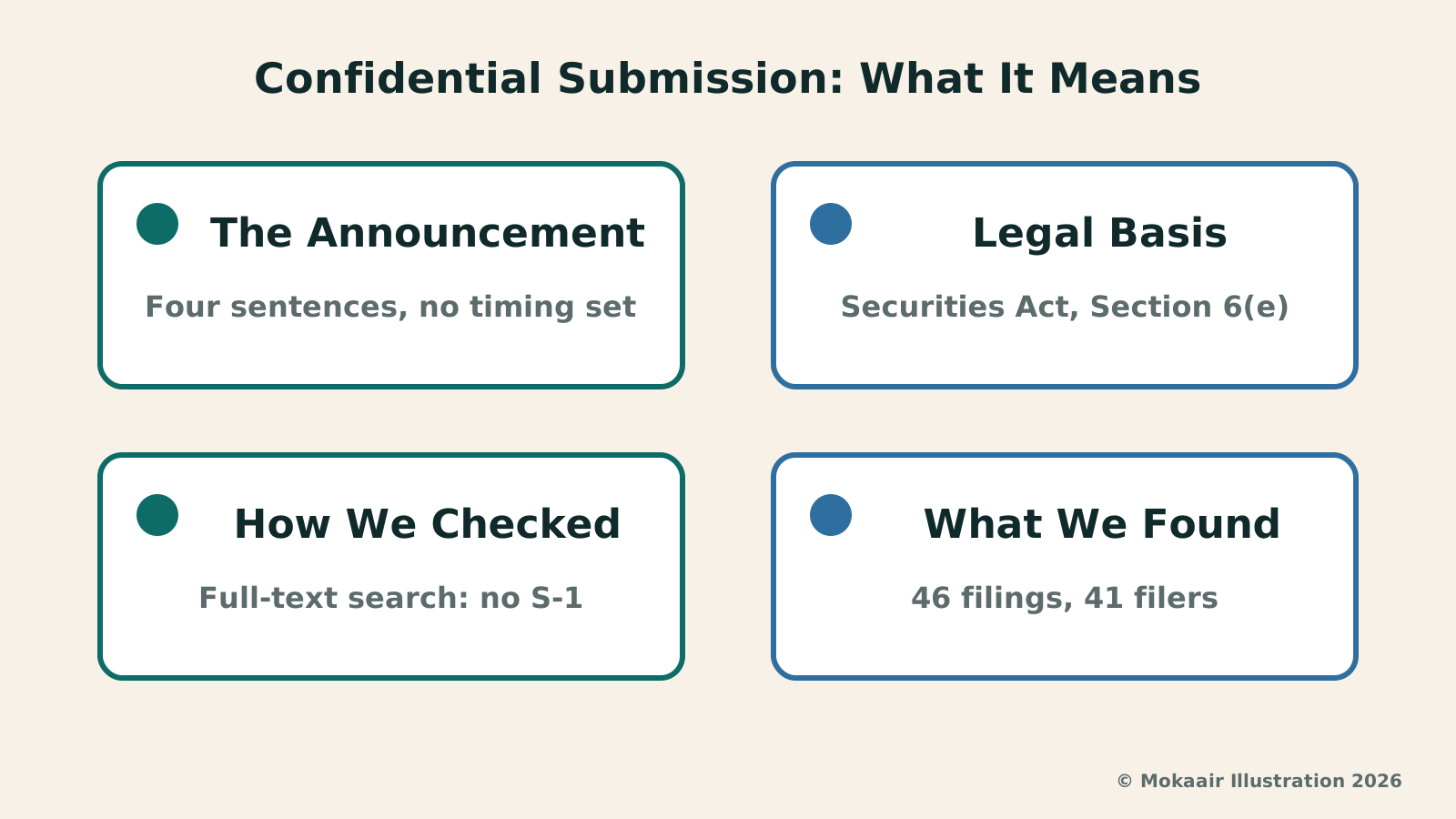
The body of the announcement is four sentences OpenAI wrote in the first person. In substance: the company recently submitted a confidential S-1; it expects this to leak, so it is announcing it directly; it has not decided on timing yet, and it may be a while, because there are things the company wants to do that are likely easier as a private company; but this is a complicated set of tradeoffs, and doing this preserves the option to go public sooner if that ends up being best.
Beneath that, in italics, the announcement carries a separate legal notice: it states that the announcement is being made pursuant to Rule 135 under the Securities Act of 1933, as amended, and that it does not constitute an offer to sell, or a solicitation of an offer to buy, any securities; any future offer, solicitation, or sale will be made separately in accordance with the registration requirements of the Securities Act. The announcement itself does not further explain what Rule 135 does, and this article does not interpret it on the company's behalf.
On the web page, the announcement is categorized under "Company," credited to OpenAI as the named author, and the page marks its publication time as June 8, 2026. The announcement's full text does not give the actual date of submission, and it does not name which legal entity submitted the draft. The day of public confirmation is not necessarily the same day the draft was actually sent.
Confidentially Submitting a Draft S-1: What It Means Under U.S. Law
S-1 is one of the registration statement forms under the U.S. Securities Act of 1933; the SEC proposed rule this article cites refers to it as a "registration statement on Form S-1" and notes its regulatory citation. Section 6(e) of the same Act allows an emerging growth company (EGC) to confidentially submit a draft registration statement to the SEC before its initial public offering, for confidential, nonpublic review by the staff prior to public filing. That right was added as subsection (e) by Public Law 112-106 (the JOBS Act) in 2012, and Public Law 114-94 (the FAST Act) in 2015 shortened the deadline for the final public filing from 21 days before a road show to 15 days.
Nonpublic review is not unique to emerging growth companies. A proposed rule the SEC published on May 21, 2026 (cited as 91 FR 30086, which the Commission issued on May 19 of the same year) states that the staff of the Division of Corporation Finance have accepted draft submissions for nonpublic review from all issuers since 2017, and later expanded the practice further — but the same passage also says the Commission is not proposing to codify this process, and is only requesting comment on whether doing so would help. The document separately states the current qualification threshold for an emerging growth company: total gross revenues of less than $1.235 billion in its most recently completed fiscal year.
The two paths do not carry the same degree of confidentiality. Section 6(e)(2) provides that the SEC cannot be compelled to disclose information obtained under that subsection, which counts as a statutory exemption under the Freedom of Information Act. But the same proposed rule goes on to state that the Commission lacks the authority to extend this confidentiality to non-EGC companies, so only statutory emerging growth companies remain eligible for this accommodation. The same passage adds that non-emerging-growth-company filers submitting drafts for nonpublic review can still use the Commission's existing confidential-treatment procedures to respond to Freedom of Information Act requests. None of the four sources this article checked says whether the SEC will confirm, or decline to confirm, in response to a public inquiry, whether a given company has submitted a draft.
| Item | Basis | Detail |
|---|---|---|
| Public filing deadline | Section 6(e)(1) of the Securities Act of 1933 | Emerging growth companies must publicly file everything no later than 15 days before a road show |
| Confidentiality protection | Section 6(e)(2) of the Securities Act of 1933 | Cannot be compelled to disclose under FOIA; the proposed rule says only emerging growth companies qualify |
| Path for non-EGC companies | 91 FR 30086 (SEC proposed rule) | Division of Corporation Finance staff have accepted this from all issuers since 2017; the document does not propose codifying it |
| Emerging growth company threshold | 91 FR 30086 (SEC proposed rule) | Total gross revenues of less than $1.235 billion in the most recently completed fiscal year |
What the Announcement Doesn't Say
The announcement does not give the actual date of submission — it says only, "We recently submitted a confidential S-1." June 8, 2026 is the day of public confirmation, not necessarily the day the draft was actually sent. The announcement's full text also does not name which legal entity submitted the draft.
The announcement gives no figures related to the scale of any offering: no valuation, no amount raised, no projected share count, no exchange, no ticker symbol. Nor does it say the SEC has approved, accepted, or expressed any view — on the announcement's own wording, a confidential submission only hands over a draft; it does not obtain any approval, and it does not say the company will necessarily proceed to a public filing.
The announcement does not classify this submission as the confidential-submission right available to emerging growth companies, or as the staff review practice open to all issuers since 2017, and this article does not judge on OpenAI's behalf which one applies. The announcement likewise says nothing about any change to ChatGPT's plans, pricing, features, or availability, and does not mention Taiwan or any other country.
What You Can Find Yourself in the SEC's Database
The SEC's EDGAR full-text search system is open to the public. Searching for a filer name containing "OpenAI" returns 46 filing records as of September 18, 2026; expanding the filer field of each one individually yields 41 distinct filers (one filing lists two co-filers). Of the 46 filings, 40 are classified as Form D and 6 as Form D/A. None of the four sources this article checked explains what a Form D is for, so this article writes down only the form type the query returned, without explaining what it is used for.
The names of these 41 filers read as various funds and special-purpose entities — for example, the OpenAI Startup Fund series, several funds named "a Series of CGF2021 LLC," and names such as BP OpenAI LP. Every name contains the word OpenAI, but none of the filer names is the company OpenAI itself. It is worth noting that this query returns filing fields such as filer name, form type, filing date, state of incorporation, and business location — none of the fields say what these funds actually invest in, and this article does not infer that either.
The same query also returns a form-type aggregation: all 46 filings fall under a single form category (root form D), and the aggregation's count of "filings in other categories" is explicitly zero, meaning the result was not truncated and no filing was placed in any other form category. In other words, as checked through this full-text search system on September 18, 2026, there is no filing with a filer name containing OpenAI whose form type is something other than Form D or Form D/A — this is what the announcement's word "confidential" looks like in a public database.
How to Track What Happens Next
The announcement does not say what happens next: it does not say whether the draft will be revised, whether it will convert to a public filing, or whether it will be paused, and it does not rule out staying nonpublic indefinitely, nor does it give a timeline. What OpenAI put on the record is only the line that it has not decided on the timing of further action; none of the four sources this article checked offers any other account.
To track this on your own, you can periodically search the SEC's EDGAR full-text search system for a filer name containing "OpenAI"; the day a filing appears with a form type of S-1 or DRS (the proposed rule's abbreviation for a draft registration statement) is the signal that the draft has become a public document. This query's results will change over time — the 46 filings and 41 filers this article records are only a snapshot at the moment of the query, on September 18, 2026.
For now, this stays at the level of corporate governance and securities filings. The official sources this article checked do not mention any effect on ChatGPT's service, pricing, or availability, and do not mention Taiwan. When readers see a headline like "OpenAI is preparing to go public," they can check it against the sources listed here and judge for themselves what this announcement actually says, and does not say.
Frequently asked questions
Has OpenAI already filed to go public?
No. What OpenAI confirmed publicly is that it "confidentially submitted" a draft S-1 to the SEC — under the statute, that is a document handed to SEC staff for nonpublic review before any public filing, not a public filing itself. Under the SEC's EDGAR full-text search system, checked through September 18, 2026, the 46 records with a filer name containing OpenAI are all classified as Form D or Form D/A; none is an S-1 or any other registration statement.
Does this tell us when OpenAI will go public?
The announcement gives no timeline. OpenAI's own line is that it has not decided on the timing of further action, and mentions it may be a while, because there are things the company wants to do that are likely easier as a private company. This article does not speculate, and does not cite any timeline claim.
What does confidentially submitting a draft S-1 actually mean?
S-1 is one of the registration statement forms under the U.S. Securities Act of 1933. Section 6(e) of that Act lets an emerging growth company confidentially submit a draft to the SEC before its initial public offering, for confidential, nonpublic review by the staff prior to public filing. The staff of the SEC's Division of Corporation Finance have also opened nonpublic review to all issuers since 2017, but the proposed rule states that the statutory confidentiality under Section 6(e)(2) applies only to statutory emerging growth companies.
Has the SEC approved or accepted it?
The announcement does not say so. The statute describes confidential submission as confidential, nonpublic review by SEC staff prior to public filing, and none of the four sources this article checked mentions any outward-facing approval or acceptance procedure at this stage. Under an EDGAR full-text search checked through September 18, 2026, the records with a filer name containing OpenAI show no registration statement at all, so there is nothing there to call approved in the first place.
Why is a confidential submission allowed at all — doesn't the SEC worry about a lack of transparency?
The statute itself sets limits, but who it applies to matters: Section 6(e)(1) requires that an emerging growth company's initial confidential submission, and every amendment to it, be publicly filed no later than 15 days before the issuer conducts a road show, and once that happens, the draft becomes a public document. OpenAI has not said which path it is on, and this article does not classify it either, so it does not judge whether this 15-day rule applies to OpenAI.
Does this have anything to do with the ChatGPT I use in Taiwan?
Among the sources this article checked through September 18, 2026, there is no sentence saying ChatGPT's plans, pricing, features, or availability in Taiwan have changed as a result. This announcement is about corporate governance and a U.S. securities filing, not a notice about a product or service change.
How can I check the current status myself?
Go to the SEC's EDGAR full-text search system and search for a filer name of "OpenAI," and pay attention to the form-type field: the 46 records seen when checked on September 18, 2026 were all Form D or Form D/A, while a registration statement is a form like S-1, or a draft registration statement, abbreviated DRS in the proposed rule. The query results will grow as new filings are made, and the count at any check is only a snapshot at that moment.
2026 AI News Roundup: Highlights and Daily Life Applications from January to September2026 AI News Roundup: Highlights and Daily Life Applications from January to SeptemberOrganizing key AI news stories month by month from January to September 2026, linking to full analyses in five languages. Covering models, work tools, creation, costs, and transparency, explaining backgrounds, uses, and limits.Read the full article
OpenAI Raises $122 Billion: What the Announcement Promises, and What It Doesn'tOpenAI Raises $122 Billion: What the Announcement Promises, and What It Doesn'tOn March 31, 2026, OpenAI announced that it had closed a funding round of $122 billion in committed capital at a post-money valuation of $852 billion. Drawing on official announcements from OpenAI, SoftBank and Amazon, this article sets out who put up the money, how the committed capital is being paid in over time, and what the announcement does not promise — for example, whether ChatGPT will get faster or cheaper because of it. It offers no investment judgment. Checked on September 18, 2026.Read the full article
Lifestyle
OpenAI Raises $122 Billion: What the Announcement Promises, and What It Doesn't
On March 31, 2026, OpenAI announced that it had closed a funding round of $122 billion in committed capital at a post-money valuation of $852 billion. Drawing on official announcements from OpenAI, SoftBank and Amazon, this article sets out who put up the money, how the committed capital is being paid in over time, and what the announcement does not promise — for example, whether ChatGPT will get faster or cheaper because of it. It offers no investment judgment. Checked on September 18, 2026.
Lifestyle
OpenAI and Broadcom Unveil the Jalapeño Chip: The Official Stage, Division of Labor, and What's Not Yet Announced
On June 24, 2026, OpenAI and Broadcom jointly unveiled the custom inference chip Jalapeño, calling it OpenAI's first Intelligence Processor. Based on both companies' official articles, this piece explains that the chip is still at the engineering-sample and lab-testing stage, with tape-out completed in nine months, that deployment timing and performance figures remain vendor statements, and why this should be treated separately from the 10-gigawatt deal announced in 2025.
Lifestyle
OpenAI's Frontier Governance Framework Goes Public: The 50-Person, $1 Billion Threshold, and Who Can Track It
On May 28, 2026, OpenAI published a 22-page Frontier Governance Framework addressing both California's Transparency in Frontier Artificial Intelligence Act and the EU's General-Purpose AI Code of Practice. Checked against the FGF, the Preparedness Framework, and California's current code, this article explains the 50-death, $1 billion risk threshold, what the three risk tiers say, who can track the document, and why it does not cover users in Taiwan.
Lifestyle
NVIDIA launches DGX Spark 64GB: on sale October 23 from $4,999, two units can be linked into 128GB
On October 2, 2026, NVIDIA announced a more affordable 64GB memory version of its DGX Spark personal AI computer, available from October 23 through six makers including Acer and ASUS. It is aimed mainly at developers and researchers who want to run AI models on their own machines. Below we summarize the specs NVIDIA published, its claims about linking two units, and what it means for general readers.
Articles that cite this one
Latest travel guides

GuideTokyo
Where to Stay in Tokyo: Comparing Shinjuku, Ueno, Tokyo Station, Shibuya, Asakusa, Ikebukuro, and Ginza, Plus Airport Access, Accommodation Tax, and Luggage Delivery
Where should you stay in Tokyo? Compare Shinjuku, Ueno, Tokyo Station, Shibuya, Asakusa, Ikebukuro, and Ginza by the same criteria: access from Narita and Haneda, transit routes, nearby attractions, neighborhood character, and who each area suits. Includes a comparison table, a Yamanote Line diagram, Tokyo’s accommodation tax as verified in 2026/9 (changing to 3% in 2027/4), and Airport TA-Q-BIN luggage shipping rules.
- Budget
- Hotels
GuideTokyo
How to Choose Tokyo Transit Passes: Are Suica, Welcome Suica, the Tokyo Subway Ticket, and the JR Pass Worth It?
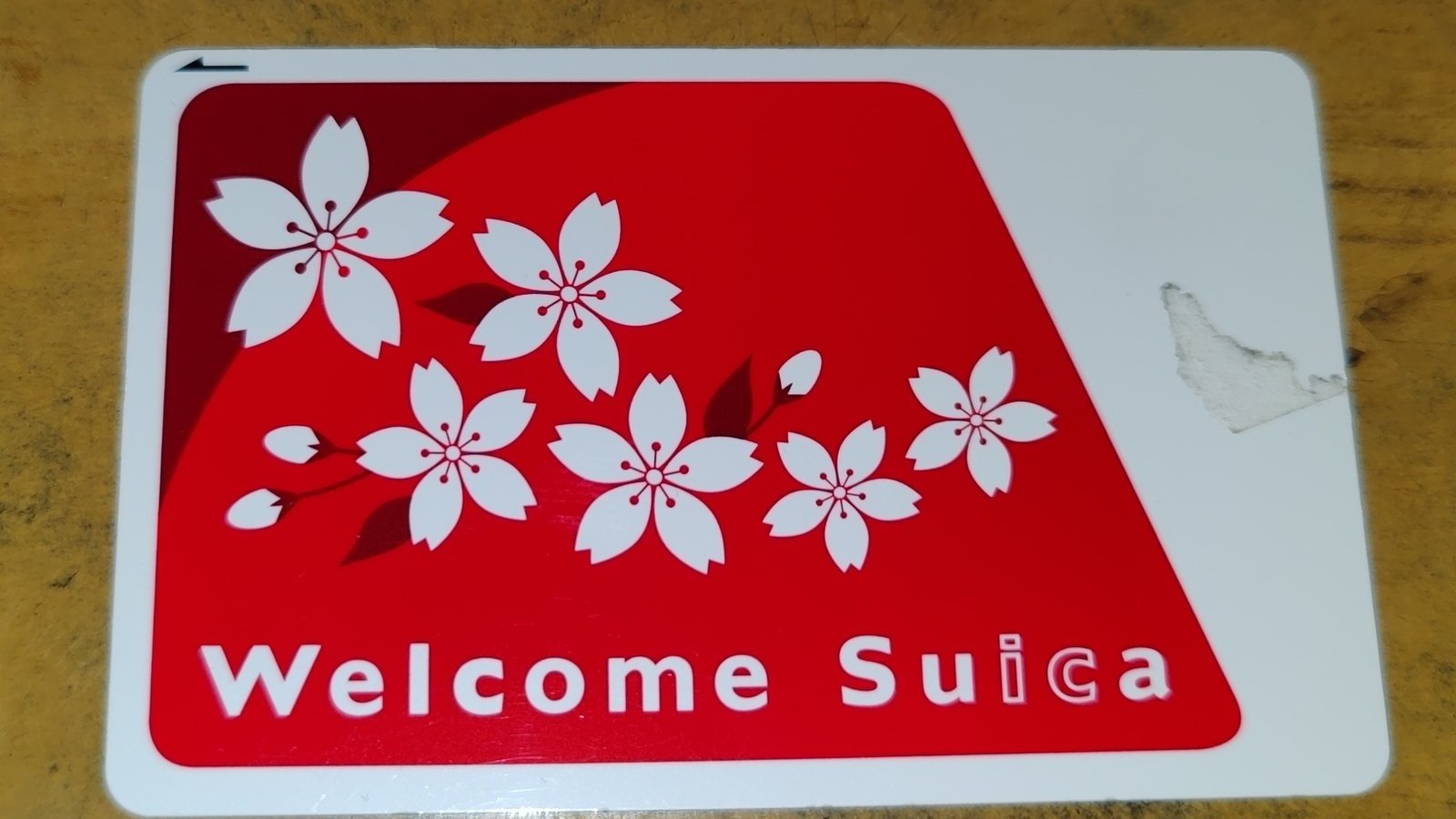
On a first Tokyo trip, start with an IC card and pay per ride (Welcome Suica has no deposit and is valid for 28 days). If you take four or more subway rides in a day, add a 72-hour Tokyo Subway Ticket for 2,000 yen; a JR Pass is never worthwhile if you stay in Tokyo and do not go to Kansai. See what TOURIST PASMO, Suica on iPhone, and the Tokyo Metro day pass do and do not cover, with a decision chart. Prices verified in September 2026.
- Transport
- Budget

GuideTokyo
Tokyo Disneyland and DisneySea Guide: Ticket Prices, Fantasy Springs, Disney Premier Access (DPA), Standby Pass, and Which Park to Choose for Your First Visit
Tokyo Disney one-day Passport prices vary: most weekdays in 9/2026 cost ¥9,900 and weekends ¥10,900. At 14:00 daily, tickets go on sale for the same date two months later. Free Priority Pass is no longer on the official service list; only paid Disney Premier Access (¥1,000–3,500 per person per use) shortens waits. Covers hours, the 25th anniversary, Standby Pass, Entry Request, Fantasy Springs access and first-visit park choice; checked on the official site in 9/2026.
- Itineraries
- Family
Sources
- OpenAI Official Announcement: Confidential submission of draft S-1 to the SEC · Checked:
- EDGAR Full-Text Search API: entityName=OpenAI Query Results · Checked:
- 15 U.S.C. §77f — Section 6 of the Securities Act of 1933 (United States Code) · Checked:
- Enhancement of Emerging Growth Company Accommodations and Simplification of Filer Status for Reporting Companies (91 FR 30086, Full Text) · Checked: