Lifestyle
OpenAI Raises $122 Billion: What the Announcement Promises, and What It Doesn't
On March 31, 2026, OpenAI announced that it had closed a funding round of $122 billion in committed capital at a post-money valuation of $852 billion. Drawing on official announcements from OpenAI, SoftBank and Amazon, this article sets out who put up the money, how the committed capital is being paid in over time, and what the announcement does not promise — for example, whether ChatGPT will get faster or cheaper because of it. It offers no investment judgment. Checked on September 18, 2026.
About 13 min read
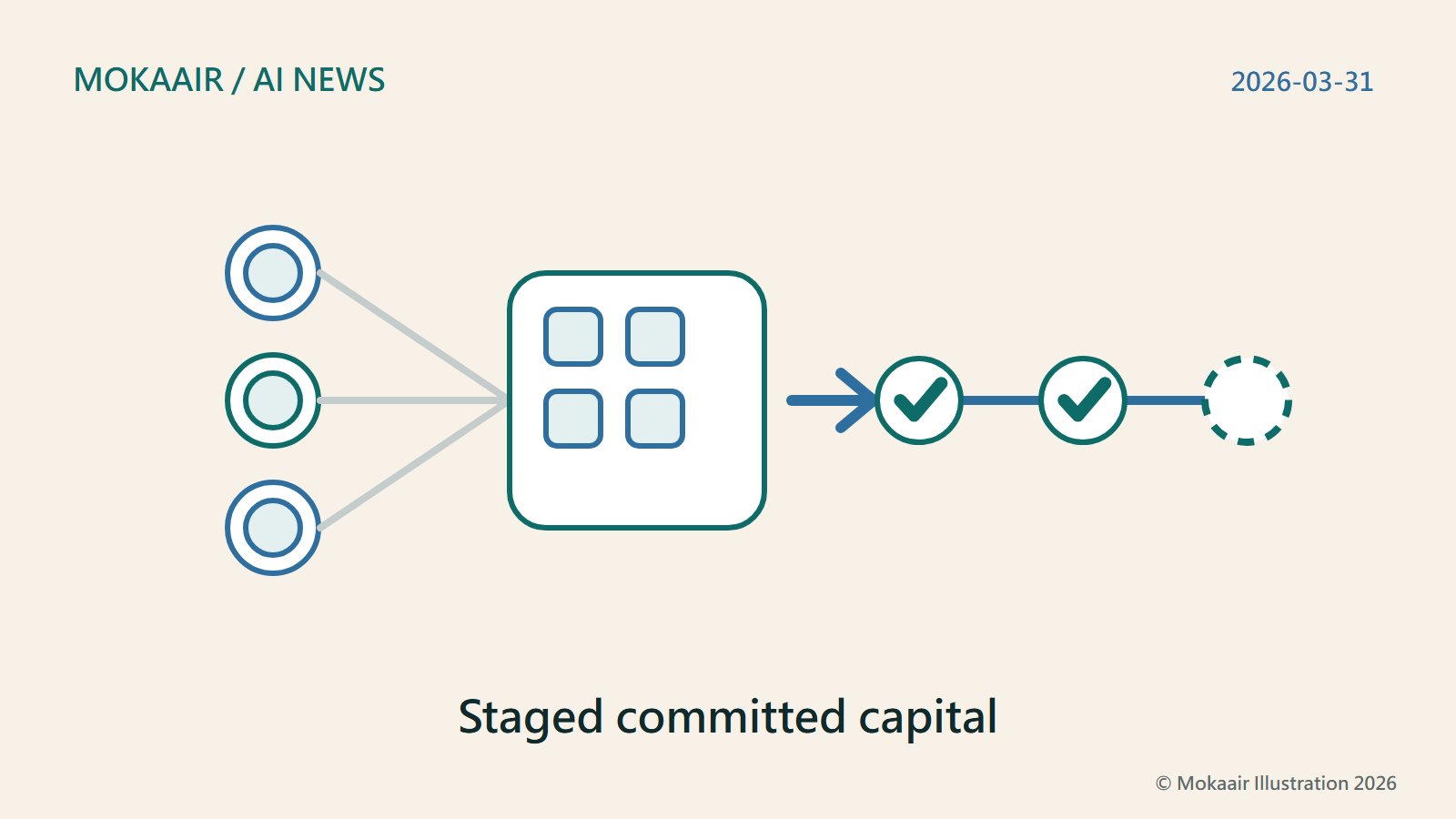
On March 31, 2026, OpenAI announced that it had closed a new funding round of $122 billion in committed capital, at a post-money valuation of $852 billion. This article does not judge whether the money is a good deal or whether anyone should invest in OpenAI; it only sets out, from the announcement's own wording, what OpenAI told users — and what it didn't.
This article was checked on September 18, 2026, reading the full text of OpenAI's official announcement directly, along with the press releases SoftBank and Amazon each published. We have not tested anything ourselves, and we offer no advice on whether to invest in OpenAI; the scale and revenue figures below are the company's own claims, which we have not independently verified, and are labeled throughout as OpenAI says.
What the Announcement Says: The Amount, the Valuation and the Investors
OpenAI's announcement uses the term “committed capital,” not cash received; why that distinction matters becomes clear below, through SoftBank's and Amazon's own announcements.
OpenAI says the round was anchored by strategic partners Amazon, NVIDIA and SoftBank, with continued participation from long-term partner Microsoft; SoftBank co-led alongside a16z, D. E. Shaw Ventures, MGX, TPG, and accounts advised by T. Rowe Price Associates. The announcement gives no dollar figure for any of them — not for NVIDIA, and not for Microsoft either.
The announcement goes on to say there was also participation from “a diverse set of global institutions,” including Altimeter, ARK Invest, funds affiliated with BlackRock, and Blackstone, among others; OpenAI's word is “including,” not a complete list. It also says this was the first time OpenAI opened participation to investors through bank channels, raising more than $3 billion from individual investors; the same day, it also announced that OpenAI would be included in several exchange-traded funds managed by ARK Invest, though the announcement names no specific fund or ticker.
OpenAI's Own Numbers: Users, Subscribers and Revenue
OpenAI's announcement says ChatGPT is “the overwhelming leader in consumer AI,” with more than 900 million weekly active users and over 50 million subscribers. It also says OpenAI was the fastest technology platform to reach 10 million users and the fastest to reach 100 million users, and will “soon” be the fastest to reach 1 billion weekly active users — that is a claim about speed, not about being first to get there, and the announcement gives no date for it.
On revenue, the announcement says: ChatGPT reached $1 billion in revenue within a year of launch, was generating $1 billion per quarter by the end of 2024, and is now generating $2 billion per month. OpenAI also says its revenue is now growing four times faster than “the companies who defined the Internet and mobile eras, including Alphabet and Meta” — and “including” is the key word: the two are examples, not the entire comparison set, so this article does not render it as “four times faster than Alphabet and Meta.”
The announcement lists several other comparisons: ChatGPT has 6x the monthly web visits and mobile sessions of the next-largest AI app, total time spent on AI is 4x the next-largest app and also 4x all other apps combined; search usage has “nearly tripled in a year,” and its ads pilot reached more than $100 million in annualized revenue in under six weeks. Enterprise now makes up more than 40% of revenue, and the announcement says it is on track to reach parity with consumer by the end of 2026; its APIs now process more than 15 billion tokens a minute, and Codex has over 2 million weekly users, up 5x in the past three months. The announcement does not explain how any of these figures were measured; they are set out in the table below for comparison.
| Metric | Number OpenAI Reports | Note |
|---|---|---|
| ChatGPT weekly active users | Over 900 million | OpenAI says it will soon be the fastest to reach 1 billion |
| Subscribers | Over 50 million | OpenAI does not define how this is counted |
| Monthly revenue | $2 billion | OpenAI does not state the end date of this measurement period |
| Share of revenue from enterprise | More than 40% | OpenAI says it expects parity with consumer by the end of 2026 |
| Codex weekly users | Over 2 million | OpenAI says this is up 5x within three months |
$122 Billion Isn't Paid In All at Once: The Tranche Schedule
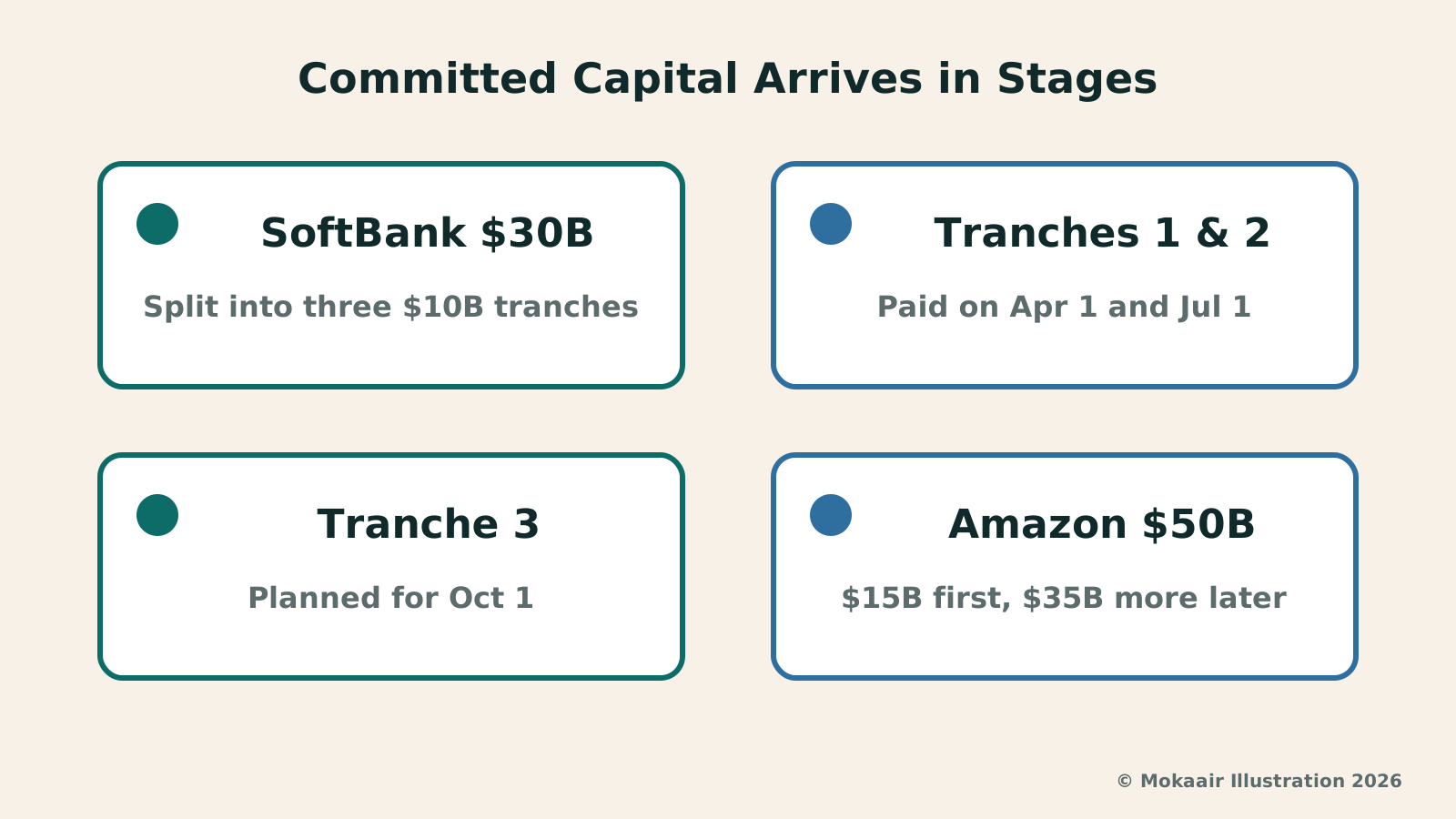
“Committed capital” and “cash already received” are two different things, and SoftBank's own announcement illustrates the gap. According to a press release SoftBank published on February 27, 2026, its committed $30 billion is split into three $10 billion tranches, scheduled to close on April 1, July 1 and October 1, 2026 (all Japan time), with the whole investment subject to customary closing conditions, and the closing dates for the second and third tranches subject to possible acceleration if OpenAI's shares are publicly listed. That same release also lists this round's pre-money valuation as $730 billion.
SoftBank's July 1 announcement states that the second tranche, $10 billion, was executed that day (Japan time), and its references list an announcement dated April 1, 2026 whose title states that the first follow-on investment had already been executed; for the third tranche, $10 billion, that announcement's own wording is that SoftBank “plans to” complete it on October 1. As of this article's check date of September 18, 2026, that date had not yet arrived, and none of the documents cited in this article record an early closing.
Amazon's $50 billion is also staged: according to Amazon's press release, this investment starts with an initial $15 billion, and the remaining $35 billion is to be invested “in the coming months when certain conditions are met” — the release does not say what those conditions are. That release was published on February 27, 2026, a little over a month before OpenAI's funding announcement, against a backdrop in which the two companies also settled cloud and chip cooperation, including expanding an existing contract by $100 billion over eight years.
Compute and Infrastructure: What the Announcement Promises, and What It Doesn't
The announcement does not say how the money will be allocated; it says only that the round “gives us the resources to continue to lead at the scale this moment demands,” and devotes a separate section to why compute is a strategic advantage. It lists OpenAI's current infrastructure portfolio: cloud through Microsoft, Oracle, AWS, CoreWeave and Google Cloud; silicon through NVIDIA, AMD, AWS Trainium, Cerebras, and its own chip developed with Broadcom; and data centers through partnerships with Oracle, SBE and SoftBank. OpenAI says NVIDIA “remains the foundation of our infrastructure,” and that this round deepens that partnership.
But nowhere in the announcement is there a sentence promising that ChatGPT will get faster or cheaper, or that message or context limits will rise; the closest thing is a general argument — that new generations of infrastructure train more capable models, and that algorithmic and hardware progress also lowers the cost of serving each token. That is OpenAI's own inference, with no timetable or figures attached. Here is an example designed by the editors: a paying ChatGPT user in Taiwan should not expect faster replies or a higher usage limit the next time they log in just because of this news — the announcement makes no such promise.
The announcement also briefly mentions what OpenAI has shipped during this period, including GPT-5.4, which had just launched at the time, expanding Codex into an agentic tool for software development, and moving into areas like health, scientific research and commerce — but it does not tie any of this directly to the funding amount, and this article does not repeat those details.
What's Next: The Superapp, and Questions Still Unanswered
The announcement devotes an entire section to the “superapp” OpenAI says it is building: integrating ChatGPT, Codex, browsing and its broader agentic capabilities into a single agent-first experience. OpenAI says that as models get more capable, what limits users is no longer intelligence itself but usability; a unified interface, it says, lets gains in capability translate directly into user adoption. The announcement gives no name, price, launch date or region for this superapp, and does not say whether the existing ChatGPT and Codex will be merged or kept separate.
An IPO is the question readers most easily jump to, but the word “IPO” or “listing” does not appear anywhere in the announcement. Of the four documents cited in this article, only SoftBank's mentions a listing: the securities it is acquiring are preferred shares, whose terms state they will automatically convert to common shares upon an IPO or related listing transaction, and the closing dates for the second and third tranches are also subject to possible acceleration if there is a listing — that is a mechanical term of the securities themselves, not a sign that a listing is scheduled, and this article makes no prediction. As for the S-1, none of these four documents mentions it; this site has a separate article on that, linked below.
Taken together, this announcement is definite about the amount, the valuation and the investors; what remains uncertain is how quickly these commitments will actually be fulfilled, when the superapp will arrive, and whether the experience of actually using ChatGPT will change because of any of it.
Frequently asked questions
Has all of the $122 billion actually been paid in?
The announcement doesn't say. OpenAI's own term is “committed capital,” not cash received, and it does not state how much of that has actually come in. Take SoftBank as an example: its committed $30 billion is split into three $10 billion tranches, scheduled to close on April 1, July 1 and October 1, 2026 (Japan time), subject to customary closing conditions; SoftBank's July 1 announcement states the second tranche was executed that day, and its references list an April 1, 2026 announcement whose title states the first tranche had already been executed, while the third tranche is described with the word “plans to,” and as of this article's check date of September 18, 2026, that scheduled date had not yet arrived. Amazon's $50 billion is likewise staged, starting with an initial $15 billion, with the remaining $35 billion to be invested “in the coming months when certain conditions are met”; Amazon does not say what those conditions are.
Will this money make ChatGPT faster, cheaper, or raise usage limits?
The announcement doesn't say that. Nowhere in it is there a sentence promising that response speed, message limits, context length or price will change because of this; there is only a general statement that new generations of infrastructure train more capable models, and that progress in algorithms and hardware lowers the cost of serving each token. That is OpenAI's own claim, and the announcement attaches no timetable or figures to it.
What is the “superapp” OpenAI mentions, and when will it launch?
OpenAI's announcement says it is building a “superapp” that integrates ChatGPT, Codex, browsing and its broader agentic capabilities, aiming for a single, agent-first experience. The announcement gives no name, price, launch date or region for it, and does not say whether the existing ChatGPT and Codex will be merged or kept as they are.
Why doesn't the article say how much NVIDIA or Microsoft put in?
Because none of the four documents this article cites gives that figure. OpenAI's announcement says only that the round was anchored by Amazon, NVIDIA and SoftBank, with continued participation from Microsoft, and lists no dollar amount for any of them anywhere in the text. The only amounts that can be written down are SoftBank's and Amazon's, because those two each published their own announcements. Individual figures circulating in the media are not included here.
Does this funding round have anything to do with users in Taiwan?
As checked against the four documents this article cites, current to September 18, 2026, OpenAI's announcement never mentions Taiwan, does not break its user numbers down by market, and does not say which countries' investors the bank channels were open to; it says only that this was the first time it opened participation to investors through bank channels, raising more than $3 billion from individual investors. This article is not investment information and does not explain any way to participate.
Where can I track this myself going forward?
OpenAI's announcement sits under the “Company” category on its own website; SoftBank's announcements executing its first two tranches were both published on the press-release page of the SoftBank Group website, with titles that state which tranche each one is; Amazon's announcement about this partnership was published in Amazon's newsroom. As of this article's check date of September 18, 2026, none of these four documents shows SoftBank's third tranche as executed (the scheduled date of October 1 had not yet arrived), and none gives a further update on Amazon's remaining $35 billion.
2026 AI News Roundup: Highlights and Daily Life Applications from January to September2026 AI News Roundup: Highlights and Daily Life Applications from January to SeptemberOrganizing key AI news stories month by month from January to September 2026, linking to full analyses in five languages. Covering models, work tools, creation, costs, and transparency, explaining backgrounds, uses, and limits.Read the full article
OpenAI Confidentially Submits a Draft S-1: What the One-Line Announcement Doesn't SayOpenAI Confidentially Submits a Draft S-1: What the One-Line Announcement Doesn't SayOn June 8, 2026, OpenAI confirmed it had confidentially submitted a draft S-1 to the SEC, with no decision yet on timing. Based on OpenAI's announcement, the Securities Act of 1933's confidential-submission rules, and a May 2026 SEC proposed rule, this article explains what the announcement does and does not represent, and confirms by full-text search that, as of the check date, no public registration statement under OpenAI's filer name could be found.Read the full article
Lifestyle
OpenAI Confidentially Submits a Draft S-1: What the One-Line Announcement Doesn't Say
On June 8, 2026, OpenAI confirmed it had confidentially submitted a draft S-1 to the SEC, with no decision yet on timing. Based on OpenAI's announcement, the Securities Act of 1933's confidential-submission rules, and a May 2026 SEC proposed rule, this article explains what the announcement does and does not represent, and confirms by full-text search that, as of the check date, no public registration statement under OpenAI's filer name could be found.
Lifestyle
OpenAI and Broadcom Unveil the Jalapeño Chip: The Official Stage, Division of Labor, and What's Not Yet Announced
On June 24, 2026, OpenAI and Broadcom jointly unveiled the custom inference chip Jalapeño, calling it OpenAI's first Intelligence Processor. Based on both companies' official articles, this piece explains that the chip is still at the engineering-sample and lab-testing stage, with tape-out completed in nine months, that deployment timing and performance figures remain vendor statements, and why this should be treated separately from the 10-gigawatt deal announced in 2025.
Lifestyle
OpenAI Announces It Will Acquire Astral: What’s Next for Open Source Tools uv, Ruff, and ty
On March 19, 2026, OpenAI and developer-tools company Astral each published their own announcement on the same day: OpenAI said it will acquire Astral, and Astral said it will join OpenAI’s Codex team. Drawing on both official announcements, Astral’s official homepage, and uv’s page on PyPI, this article lays out the state of the open source tools uv, Ruff, and ty as of the day we checked, and how the official announcements describe the conditions for closing this deal.
Lifestyle
NVIDIA launches DGX Spark 64GB: on sale October 23 from $4,999, two units can be linked into 128GB
On October 2, 2026, NVIDIA announced a more affordable 64GB memory version of its DGX Spark personal AI computer, available from October 23 through six makers including Acer and ASUS. It is aimed mainly at developers and researchers who want to run AI models on their own machines. Below we summarize the specs NVIDIA published, its claims about linking two units, and what it means for general readers.
Articles that cite this one
Latest travel guides

GuideTokyo
Where to Stay in Tokyo: Comparing Shinjuku, Ueno, Tokyo Station, Shibuya, Asakusa, Ikebukuro, and Ginza, Plus Airport Access, Accommodation Tax, and Luggage Delivery
Where should you stay in Tokyo? Compare Shinjuku, Ueno, Tokyo Station, Shibuya, Asakusa, Ikebukuro, and Ginza by the same criteria: access from Narita and Haneda, transit routes, nearby attractions, neighborhood character, and who each area suits. Includes a comparison table, a Yamanote Line diagram, Tokyo’s accommodation tax as verified in 2026/9 (changing to 3% in 2027/4), and Airport TA-Q-BIN luggage shipping rules.
- Budget
- Hotels
GuideTokyo
How to Choose Tokyo Transit Passes: Are Suica, Welcome Suica, the Tokyo Subway Ticket, and the JR Pass Worth It?
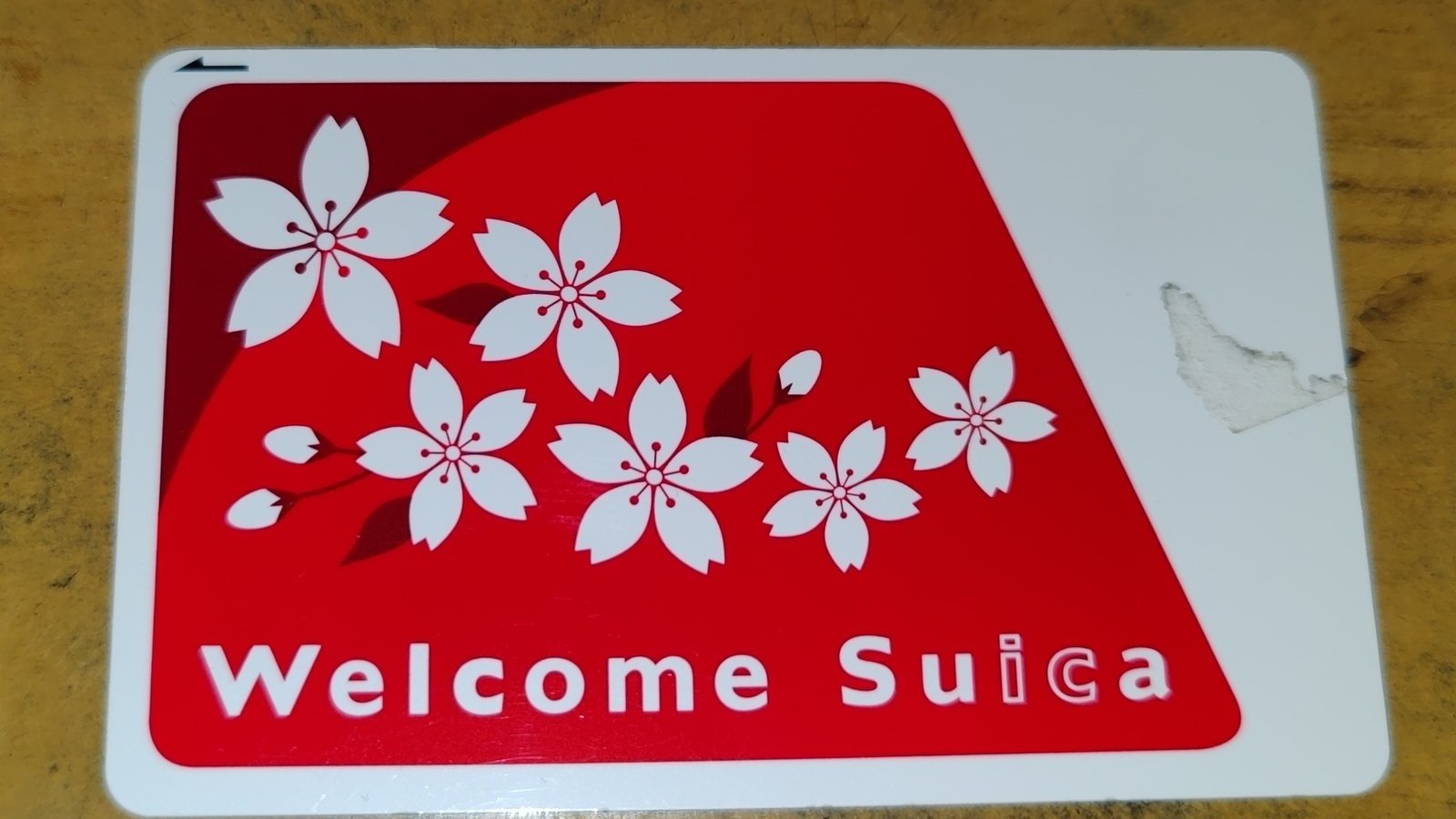
On a first Tokyo trip, start with an IC card and pay per ride (Welcome Suica has no deposit and is valid for 28 days). If you take four or more subway rides in a day, add a 72-hour Tokyo Subway Ticket for 2,000 yen; a JR Pass is never worthwhile if you stay in Tokyo and do not go to Kansai. See what TOURIST PASMO, Suica on iPhone, and the Tokyo Metro day pass do and do not cover, with a decision chart. Prices verified in September 2026.
- Transport
- Budget

GuideTokyo
Tokyo Disneyland and DisneySea Guide: Ticket Prices, Fantasy Springs, Disney Premier Access (DPA), Standby Pass, and Which Park to Choose for Your First Visit
Tokyo Disney one-day Passport prices vary: most weekdays in 9/2026 cost ¥9,900 and weekends ¥10,900. At 14:00 daily, tickets go on sale for the same date two months later. Free Priority Pass is no longer on the official service list; only paid Disney Premier Access (¥1,000–3,500 per person per use) shortens waits. Covers hours, the 25th anniversary, Standby Pass, Entry Request, Fantasy Springs access and first-visit park choice; checked on the official site in 9/2026.
- Itineraries
- Family