Lifestyle
NVIDIA launches DGX Spark 64GB: on sale October 23 from $4,999, two units can be linked into 128GB
On October 2, 2026, NVIDIA announced a more affordable 64GB memory version of its DGX Spark personal AI computer, available from October 23 through six makers including Acer and ASUS. It is aimed mainly at developers and researchers who want to run AI models on their own machines. Below we summarize the specs NVIDIA published, its claims about linking two units, and what it means for general readers.
About 5 min read
What NVIDIA announced
On October 2, 2026, NVIDIA announced on its official blog that DGX Spark, its compact personal AI supercomputer, will get a new configuration with 64GB of unified memory (unified memory means the processor and the AI compute chip share the same pool of memory; the larger it is, the larger the AI models it can usually load). According to NVIDIA, this configuration is available only through manufacturing partners, including Acer, ASUS, Dell, Gigabyte, HP and MSI, launching from Friday, October 23, with prices starting at $4,999.
NVIDIA says the 64GB version keeps the same GB10 Grace Blackwell Superchip, DGX OS operating system and full NVIDIA AI software stack (a complete set of preinstalled AI development software) as the 128GB model, and can fully run models of up to 100 billion parameters on the device without relying on the cloud. "Parameters" are a common measure of AI model size; the higher the number, the larger the model usually is and the more memory it needs. NVIDIA positions DGX Spark as a local AI platform covering agents (AI programs that can carry out multi-step tasks automatically), inference (having a trained model actually generate responses), fine-tuning (further adjusting a model with your own data), data science and edge development.
Single unit vs. two-unit cluster: the differences NVIDIA published
A "cluster" means connecting several machines so they work as one. NVIDIA says every DGX Spark has a built-in ConnectX-7 network card, and two units can be connected directly with a QSFP cable (a type of high-speed network cable). The cluster assistant in the NVIDIA Sync app detects connected devices, validates the setup and configures networking; each node runs the same software stack, so no reconfiguration is needed when scaling from one unit to two.
| Item | Single DGX Spark 64GB | Two-unit 64GB cluster |
|---|---|---|
| Memory | 64GB unified memory | Combined to 128GB |
| Maximum model size (NVIDIA's claim) | Up to 100 billion parameters | Up to 200 billion parameters |
| Memory bandwidth | Baseline | Double |
| Performance (NVIDIA's Qwen 3.8 27B test) | Baseline | Up to 1.7x |
| Connection | Built-in ConnectX-7 network card | Direct QSFP cable, configured via Sync cluster assistant |
Software support and upcoming tools
- Out-of-the-box support: NVIDIA says it supports NVIDIA Agent Toolkit, CUDA-X AI libraries, Nemotron open models, and software for running models such as Ollama, vLLM and PyTorch.
- NVIDIA Sync Model Launcher: NVIDIA says it will launch at the end of October, letting users download and launch the Qwen3.8 27B model in a few clicks and configure OpenCode to use it, so developers can start coding in the browser.
- Creative apps: NVIDIA says Blender is among the first major creative application vendors to support the platform, with a prebuilt installer coming soon.
What it means for general readers
This news reflects the trend of "running AI on your own device." The use cases NVIDIA lists include keeping coding or research agents running around the clock, offloading model inference to DGX Spark to free up resources on an everyday computer, and scaling to two units as workloads grow. For developers and researchers who want their data to stay on their own machine, devices like this offer an alternative to the cloud.
However, devices like this are aimed mainly at developers, researchers and AI enthusiasts, not ordinary home computers. Whether a typical user needs one depends on whether they genuinely need to run large models locally; NVIDIA's published figures also remain to be verified by future independent reviews.
Frequently asked questions
When does DGX Spark 64GB launch, and how much does it cost?
According to NVIDIA, it will be available from Friday, October 23 through Acer, ASUS, Dell, Gigabyte, HP and MSI, starting at $4,999.
How does the 64GB version differ from the 128GB version?
NVIDIA says both use the same GB10 Grace Blackwell Superchip, DGX OS and AI software stack; the main difference is memory capacity. The 64GB version can run models of up to 100 billion parameters and is available only through manufacturing partners.
Does linking two units really improve performance?
NVIDIA says two units combine memory to 128GB, supporting models of up to 200 billion parameters with double the memory bandwidth, and in its Qwen 3.8 27B test performance was up to 1.7 times that of a single unit. These are vendor-published figures with no independent verification yet.
How do I get started after buying one?
NVIDIA recommends first downloading supported inference software (llama.cpp, Ollama, vLLM or LM Studio), then downloading local models suited to your work; to scale to two units, connect them via the ConnectX-7 ports and launch the NVIDIA Sync cluster assistant, which configures networking automatically.
Browse the latest news in this topic
Lifestyle
Google Cloud Launches Spanner Queues: Putting Message Queues Inside Database Transactions to Make AI Agents More Reliable
Google Cloud has announced the general availability of Spanner queues, which make message creation part of a database transaction. The aim is to stop AI agents' "state" and "actions" from falling out of sync. This article covers Google Cloud's claims, the main features, and what it means for general readers.
Lifestyle
GPT-6.1 Sol Launches: New Sol Version in the API, Codex and ChatGPT Work, Not in Chat
OpenAI launched GPT-6.1 Sol on September 29, 2026, with the API name gpt-6.1-sol. The launch rollout covers Codex and ChatGPT Work on Plus, Pro, Business, Enterprise and Edu (Enterprise and Edu need an administrator to enable it); Free and Go are not included at launch, and it is not in Chat (checked September 2026).
Lifestyle
Claude Sonnet 5.5 Launches: Same List Price as Sonnet 5, Available in the API, on Cloud Platforms and in Claude.ai
Anthropic launched Claude Sonnet 5.5 on September 28, 2026. API list prices are the same as Sonnet 5 ($2 per million input tokens, $10 per million output tokens). It is available in Claude.ai, the API and several cloud platforms, and higher-risk cybersecurity requests fall back to Sonnet 5 (checked September 2026).
Lifestyle
Claude Code Adds mods: TypeScript Functions in Plugins Change Its Behavior and Interface
On October 1, 2026, Anthropic introduced Claude Code mods: TypeScript or JavaScript functions that ship inside a plugin and run in the Claude Code process, and can rewrite prompts, manage tool calls and draw new interface. Anthropic says they work in the CLI and the desktop app and are not sandboxed; the documentation says v2.1.287 or later is required (checked October 2026).
Latest travel guides

GuideTokyo
Where to Stay in Tokyo: Comparing Shinjuku, Ueno, Tokyo Station, Shibuya, Asakusa, Ikebukuro, and Ginza, Plus Airport Access, Accommodation Tax, and Luggage Delivery
Where should you stay in Tokyo? Compare Shinjuku, Ueno, Tokyo Station, Shibuya, Asakusa, Ikebukuro, and Ginza by the same criteria: access from Narita and Haneda, transit routes, nearby attractions, neighborhood character, and who each area suits. Includes a comparison table, a Yamanote Line diagram, Tokyo’s accommodation tax as verified in 2026/9 (changing to 3% in 2027/4), and Airport TA-Q-BIN luggage shipping rules.
- Budget
- Hotels

GuideTokyo
How to Choose Tokyo Transit Passes: Are Suica, Welcome Suica, the Tokyo Subway Ticket, and the JR Pass Worth It?
On a first Tokyo trip, start with an IC card and pay per ride (Welcome Suica has no deposit and is valid for 28 days). If you take four or more subway rides in a day, add a 72-hour Tokyo Subway Ticket for 2,000 yen; a JR Pass is never worthwhile if you stay in Tokyo and do not go to Kansai. See what TOURIST PASMO, Suica on iPhone, and the Tokyo Metro day pass do and do not cover, with a decision chart. Prices verified in September 2026.
- Transport
- Budget
GuideTokyo
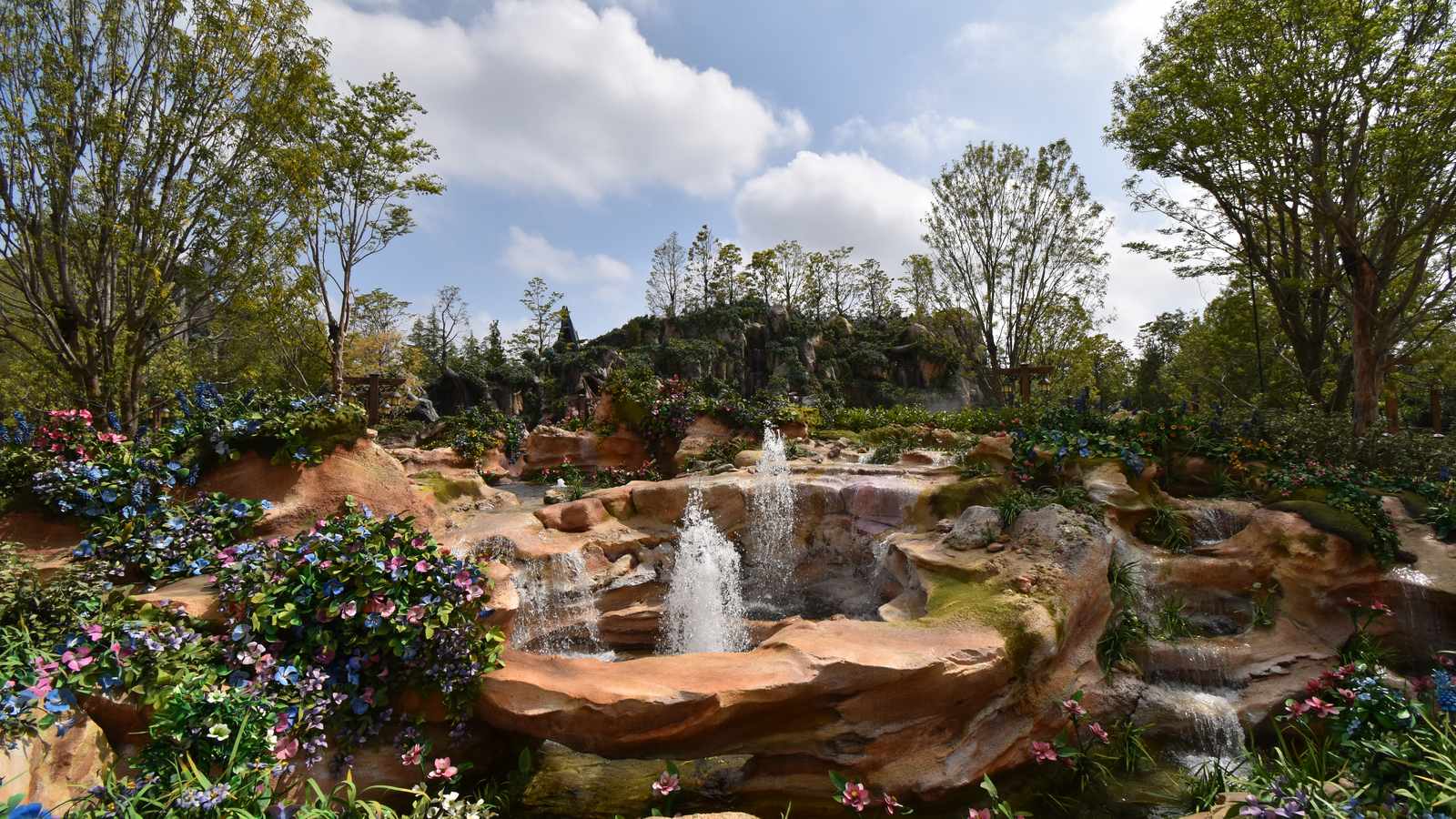
Tokyo Disneyland and DisneySea Guide: Ticket Prices, Fantasy Springs, Disney Premier Access (DPA), Standby Pass, and Which Park to Choose for Your First Visit
Tokyo Disney one-day Passport prices vary: most weekdays in 9/2026 cost ¥9,900 and weekends ¥10,900. At 14:00 daily, tickets go on sale for the same date two months later. Free Priority Pass is no longer on the official service list; only paid Disney Premier Access (¥1,000–3,500 per person per use) shortens waits. Covers hours, the 25th anniversary, Standby Pass, Entry Request, Fantasy Springs access and first-visit park choice; checked on the official site in 9/2026.
- Itineraries
- Family