Lifestyle
ChatGPT Ads Begin Rolling Out in Taiwan: Which Plans Will See Them, How to Control Them, and How Businesses Can Buy
OpenAI announced on September 23, 2026 that ChatGPT Ads have begun rolling out in Taiwan: users on the Free and Go plans may gradually start seeing ads, while ad-free plans such as Plus and Pro are unaffected. Businesses in Taiwan can also place ads on ChatGPT through the Ads Solutions team, agency partners, technology partners, or self-service Ads Manager if eligible (verified September 2026).
About 11 min read
OpenAI announced on September 23, 2026 that ChatGPT Ads began rolling out in Taiwan that day, alongside Indonesia, Malaysia, the Philippines, Singapore, Thailand, and Vietnam. For readers in Taiwan: people on the Free or Go plans may start seeing ads gradually over time, not all at once on the same day; businesses and agencies in Taiwan can now place ads on ChatGPT through OpenAI's Ads Solutions team, agency partners, technology partners, or self-service Ads Manager if eligible.
The list of ad-free plans and the country table for self-service availability are both on the OpenAI Help Center, and those pages get updated; what follows reflects their content as of September 26, 2026. This site has not tested ChatGPT Ads itself, and this is not advice on placing ads or on subscriptions.
What Happened: Taiwan Is One of Seven New Markets in This Asia Expansion
This is ChatGPT Ads expanding into seven more markets across Asia, with Taiwan among them; OpenAI says it is now available in more than 60 countries. The announcement states, “Starting today, ChatGPT Ads will begin rolling out across Indonesia, Malaysia, the Philippines, Singapore, Thailand, Vietnam, and Taiwan.” That is a gradual rollout, not a same-day full launch.
OpenAI says this expansion follows earlier Asia-Pacific launches in Australia, New Zealand, Japan, South Korea, and India. Advertisers can buy through three channels: the Ads Solutions team, agency partners (the announcement gives dentsu, Havas Media, Omnicom Media, Publicis Groupe, and WPP as examples only), and technology partners; eligible businesses can also buy self-service through Ads Manager.
Shopee's Executive Director, Brand and Growth Marketing, said in the announcement that following the launch of ChatGPT Ads in Brazil, the company is extending its collaboration with OpenAI to Southeast Asia and Taiwan; the announcement does not explain what ads this collaboration will actually run, when it will start, or its terms.
Impact on Users in Taiwan: Who Will See Ads and Who Won't
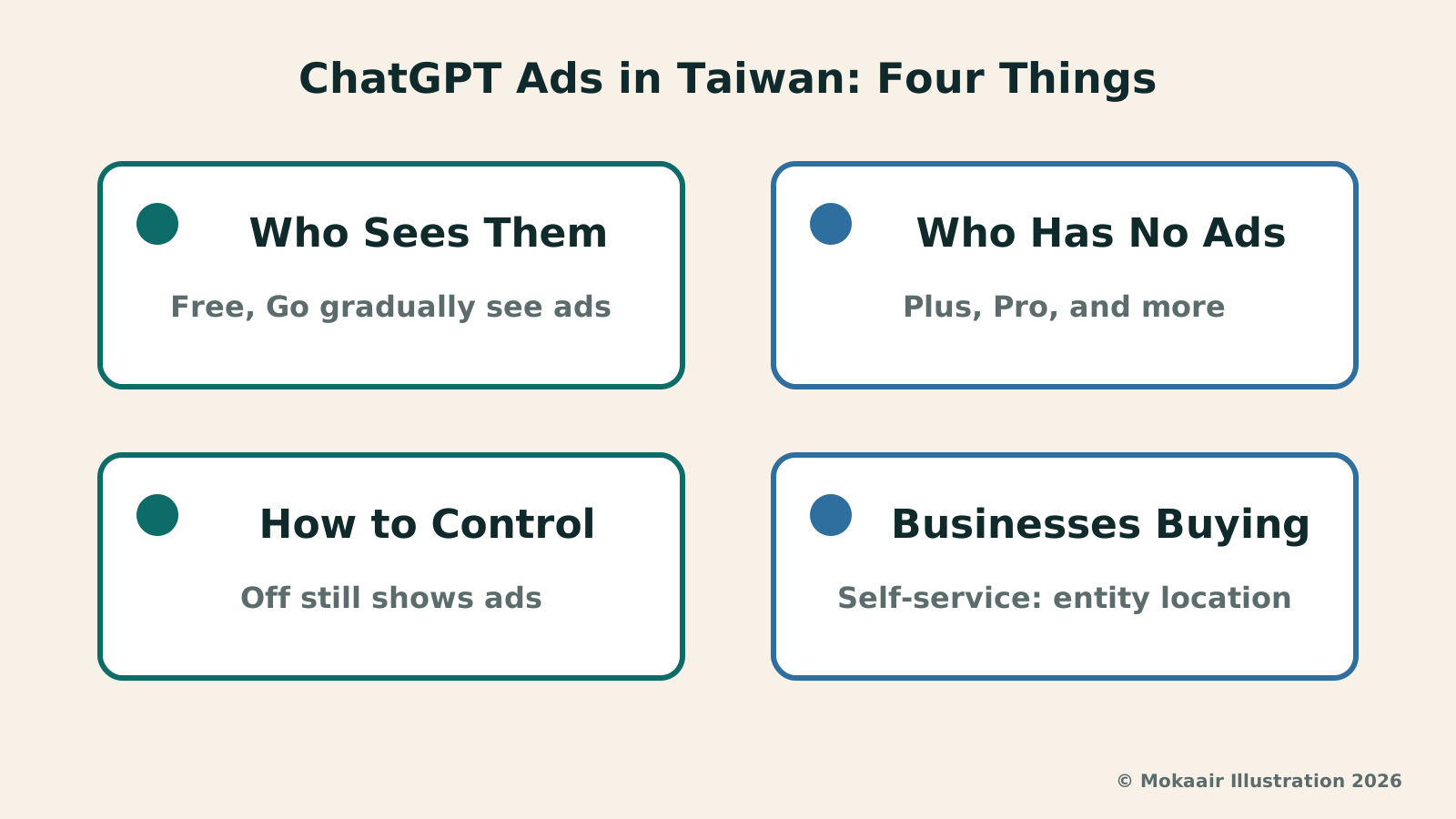
The announcement states that, as in existing markets, ads will only be shown to users on the Free and Go plans, while Plus, Pro, and Enterprise subscriptions remain ad-free. The Help Center's “Ads in ChatGPT” page lists a fuller set: users on the Free and Go plans “may” see ads, while Plus, Pro, Business, Enterprise, and Edu accounts will not have ads — adding Business and Edu beyond the announcement. Go is a paid plan but is still on the list of plans that may show ads; neither page gives a timeline for a full rollout to users in Taiwan.
The Help Center states that ad testing started in the United States on February 9, 2026, and OpenAI is gradually rolling out ads to eligible Free and Go users in select regions; users eligible for the test will see clear in-product information within ChatGPT. Accounts identified as belonging to users under 18 will not see ads, based on account-level age information and age prediction where available.
The Help Center also describes limits on ad placement: ads may appear below the end of a response, clearly labeled as sponsored, and visually separated from the response; Temporary Chats will not show ads, and ads will not appear near sensitive or regulated topics such as personal health, mental health, or politics; during this test, ads also do not appear in the ChatGPT Atlas browser.
| Plan | May Show Ads | Source |
|---|---|---|
| Free | May show ads; gradual rollout, eligible users only | Announcement, Help Center |
| Go | May show ads (a paid plan still on this list) | Announcement, Help Center |
| Plus | Ad-free | Announcement, Help Center |
| Pro | Ad-free | Announcement, Help Center |
| Enterprise | Ad-free | Announcement, Help Center |
| Business, Edu | Ad-free | Help Center |
How Users Can Control Ads: Turning Off Personalization Doesn't Mean No Ads
The Help Center states that ad controls are in Settings (the English version writes Settings > Ad Controls, and elsewhere on the same page, Settings → Ads controls, noting the wording may vary by platform); from there, users can turn off ad personalization, dismiss an ad and share feedback, see why a particular ad was shown, and clear the data used to serve ads.
But turning off personalization does not mean no ads: the Help Center explicitly states that ads will still be shown based on the context of the conversation after that, only without using other conversations, ad history, or topics to choose them. To have truly no ads, the Free plan can switch to the Ads-Free experience, at the cost of lower usage limits and fewer available features — for example, fewer messages, and no access to image generation or deep research. The Help Center states, “Ads-Free is a Free-plan option,” so to use it, Go would first need to switch back to Free, or upgrade to a plan that is inherently ad-free, such as Plus or Pro.
The Help Center also notes that ads and Ads-Free controls “may” only appear in regions where ads are being tested, so users who are not eligible may not see these options; ad controls are available only to Free and Go users in regions where ads are available or will soon be available. After ad data is deleted, it is retained for up to 30 days before being removed from OpenAI's servers.
Impact on Businesses in Taiwan: Self-Service Depends on Where the Legal Entity Is Based
The announcement states that advertisers can buy through three channels: the Ads Solutions team, agency partners, and technology partners; self-service buying is through Ads Manager, available to eligible businesses. The Help Center's “Ads Manager Availability” page states that to use self-service Ads Manager, the legal entity that will advertise and be billed must be based in a country listed as available in the country table; the country table lists Taiwan as available for self-service (Available).
The Help Center also notes that creating an account and gaining self-service eligibility are two different things: whether self-service is usable depends on the company's country; a Coming Soon label or a country not listed on the table means self-service is not yet available, though a business can still register at ads.openai.com and will be notified when it opens. Creating an account before your country is supported will not grant access ahead of time.
Neither the announcement nor the Help Center gives pricing, currency, minimum budgets, or billing methods for advertisers in Taiwan, and neither names any Taiwan-based agency or technology partners; the agency list is an example introduced by “including,” not a complete list.
Numbers and Limits: What OpenAI Self-Reports, and What It Doesn't Say
The figures OpenAI cites in the announcement are all self-reported numbers from the company itself: it says tens of thousands of advertisers are now running ads on ChatGPT, many reaching users across multiple countries at once; the $1 billion annualized revenue run rate (a figure that converts the revenue pace at a given moment into what it would total over a year, not money actually collected over a year) is a number OpenAI announced at the end of August 2026, reached in under 200 days after launch — the September 23 announcement merely recaps it, not a new figure. OpenAI also says that over the next few months it will continue to expand into new markets and roll out new ad formats, optimization tools, and measurement solutions, but gives no specific timeline.
The announcement also makes several statements: that conversations will not be given to advertisers and user data will not be sold; that ads are always clearly labeled and separate from ChatGPT's answers; and that ads do not influence the answers ChatGPT gives. These are all OpenAI's own claims, and this site has no way to verify them; neither the announcement nor the Help Center says anything about the status of personalized ads in Taiwan, and neither mentions any Taiwan regulator, law, or personal-data statute.
To check the latest rules, or for businesses to check whether self-service is available, readers can go directly to the Help Center's “Ads in ChatGPT” and “Ads Manager Availability” pages. Ads Manager itself is the self-service buying tool that launched in May 2026; for the tool's details and billing, see the May roundup linked below.
Frequently asked questions
Will ChatGPT users in Taiwan see ads right now?
Not necessarily. OpenAI's announcement says ads “will begin rolling out,” and the Help Center likewise says ads are gradually rolled out to eligible Free and Go users — not every account will see them on the same day. If your account is eligible for the test, you will see clear in-product information within ChatGPT.
Which plans have no ads at all?
The announcement names Plus, Pro, and Enterprise as ad-free; the Help Center page lists a fuller set, saying Plus, Pro, Business, Enterprise, and Edu accounts will not have ads. Note that Go, though a paid plan, is still on the list of plans that may show ads.
If I turn off ad personalization, will I stop seeing ads?
No. The Help Center explicitly states that after turning off personalization, ads will still be shown based on the context of the current conversation, just without using other conversations, ad history, or topics to choose them. To have truly no ads, the Free plan can switch to the Ads-Free experience, though that comes with usage limits such as fewer messages.
How can businesses in Taiwan advertise on ChatGPT?
The announcement names three channels: OpenAI's Ads Solutions team, agency partners, and technology partners; eligible businesses can also use self-service Ads Manager. The Help Center states that for self-service, the legal entity that will advertise and be billed must be based in a country listed as available on the country table, which lists Taiwan as available.
Is the $1 billion annualized revenue run rate a new figure from this announcement?
No. This is a figure OpenAI announced at the end of August 2026, saying ChatGPT Ads reached $1 billion in annualized revenue run rate (a figure that converts the revenue pace at that moment into what it would total over a year) in under 200 days after launch; the September 23 announcement only recaps this figure and is not a newly announced result.
Is it a verified fact that OpenAI won't give conversations to advertisers or let ads influence answers?
No, it is not a verified fact — it is OpenAI's own statement in the announcement. The company says it will not give user conversations to advertisers or sell data, that ads are always clearly labeled and separate from answers, and that ads do not influence the answers ChatGPT gives; this site has no way to verify these claims.
2026 AI News Roundup: Highlights and Daily Life Applications from January to September2026 AI News Roundup: Highlights and Daily Life Applications from January to SeptemberOrganizing key AI news stories month by month from January to September 2026, linking to full analyses in five languages. Covering models, work tools, creation, costs, and transparency, explaining backgrounds, uses, and limits.Read the full article
ChatGPT Ads Open Up to Self-Serve Buying: The Tools, Billing, and Targeting from OpenAI's May AnnouncementChatGPT Ads Open Up to Self-Serve Buying: The Tools, Billing, and Targeting from OpenAI's May AnnouncementOn May 5, 2026, OpenAI announced it was expanding how ChatGPT ads can be bought, adding a beta self-serve ad management tool, CPC bidding, and more measurement tools. Based on the announcement and OpenAI's developer documentation, this article covers the ad account, campaign, ad group, and ad structure, how the three campaign objectives are billed, bidding strategies, and region, platform, and context hints targeting, and notes how the documentation differs from the May 5 announcement.Read the full article
Lifestyle
Claude Opus 5.5 Launches: List Price Cut 20%, Paid Plans’ Five-Hour Limit Raised, 40% Is Anthropic’s Cost Estimate
On September 22, 2026, Anthropic introduced Claude Opus 5.5, the first model in the new Claude 5.5 family; the announcement lists no region restrictions. This article separates three easily confused numbers — the 40% cost estimate and the 20% and 60% official price cuts — and lays out which paid plans get the five-hour limit increase and how model switching works (checked September 2026).
Lifestyle
GPT-6 Sol and Luna Launch: API Price Cuts, Available in Codex, Not Yet in Chat
OpenAI launched GPT-6 Sol and Luna in the early hours of September 23, 2026 Taipei time: Plus, Pro, Business, Enterprise, and Edu can use them in ChatGPT Work and Codex, and Free and Go can use Luna in the desktop app; Chat doesn't have them yet. API pricing is 50% cheaper than GPT-5.6 promotional pricing (verified September 2026).
Lifestyle
Google Vids Opens Free Gemini Omni 1.1 Video Generation: Who Can Use It, How to Read the Quota, and What to Know First
In the early hours of September 24, 2026, Taipei time (September 23, 2026, US time), Google let any Google account generate video for free in desktop Google Vids; its two official help pages disagree on the monthly quota, and neither the announcement nor the help pages say whether there is an age limit or whether Chinese-language prompts work (verified September 2026).
Lifestyle
NVIDIA launches DGX Spark 64GB: on sale October 23 from $4,999, two units can be linked into 128GB
On October 2, 2026, NVIDIA announced a more affordable 64GB memory version of its DGX Spark personal AI computer, available from October 23 through six makers including Acer and ASUS. It is aimed mainly at developers and researchers who want to run AI models on their own machines. Below we summarize the specs NVIDIA published, its claims about linking two units, and what it means for general readers.
Articles that cite this one
Latest travel guides

GuideTokyo
Where to Stay in Tokyo: Comparing Shinjuku, Ueno, Tokyo Station, Shibuya, Asakusa, Ikebukuro, and Ginza, Plus Airport Access, Accommodation Tax, and Luggage Delivery
Where should you stay in Tokyo? Compare Shinjuku, Ueno, Tokyo Station, Shibuya, Asakusa, Ikebukuro, and Ginza by the same criteria: access from Narita and Haneda, transit routes, nearby attractions, neighborhood character, and who each area suits. Includes a comparison table, a Yamanote Line diagram, Tokyo’s accommodation tax as verified in 2026/9 (changing to 3% in 2027/4), and Airport TA-Q-BIN luggage shipping rules.
- Budget
- Hotels
GuideTokyo
How to Choose Tokyo Transit Passes: Are Suica, Welcome Suica, the Tokyo Subway Ticket, and the JR Pass Worth It?
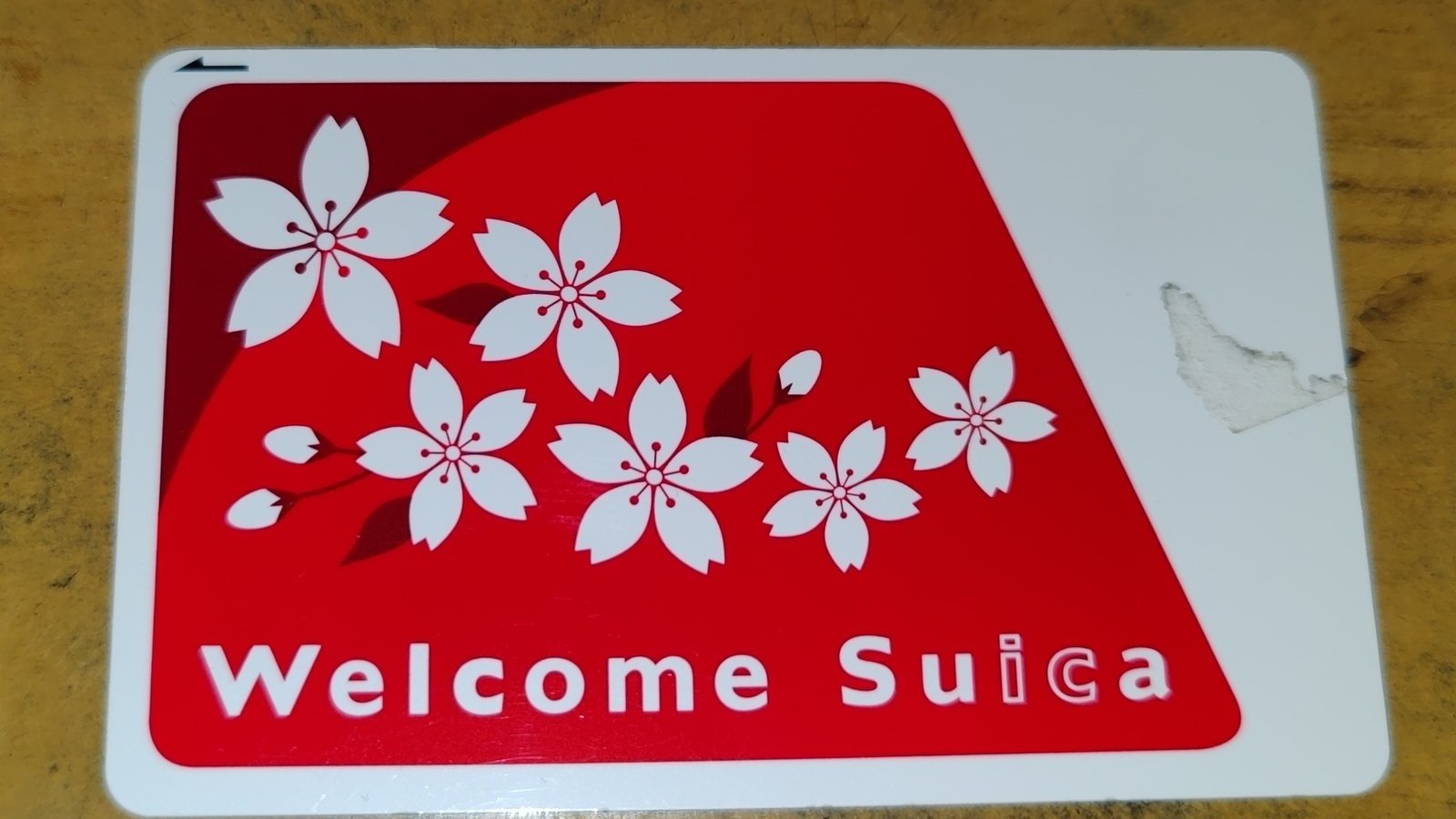
On a first Tokyo trip, start with an IC card and pay per ride (Welcome Suica has no deposit and is valid for 28 days). If you take four or more subway rides in a day, add a 72-hour Tokyo Subway Ticket for 2,000 yen; a JR Pass is never worthwhile if you stay in Tokyo and do not go to Kansai. See what TOURIST PASMO, Suica on iPhone, and the Tokyo Metro day pass do and do not cover, with a decision chart. Prices verified in September 2026.
- Transport
- Budget

GuideTokyo
Tokyo Disneyland and DisneySea Guide: Ticket Prices, Fantasy Springs, Disney Premier Access (DPA), Standby Pass, and Which Park to Choose for Your First Visit
Tokyo Disney one-day Passport prices vary: most weekdays in 9/2026 cost ¥9,900 and weekends ¥10,900. At 14:00 daily, tickets go on sale for the same date two months later. Free Priority Pass is no longer on the official service list; only paid Disney Premier Access (¥1,000–3,500 per person per use) shortens waits. Covers hours, the 25th anniversary, Standby Pass, Entry Request, Fantasy Springs access and first-visit park choice; checked on the official site in 9/2026.
- Itineraries
- Family
Sources
- ChatGPT Ads expands to Southeast Asia and Taiwan · Checked:
- Ads Manager Availability (OpenAI Help Center) · Checked:
- Ads in ChatGPT (OpenAI Help Center) · Checked:
- A milestone in expanding access to AI · Checked: