Lifestyle
NVIDIA Adds CUDA-Q Logical to Its Open Source CUDA-Q Platform: A Resource Estimator, Not a Quantum Computer
On September 14, 2026, NVIDIA announced CUDA-Q Logical, an orchestration layer for its open-source CUDA-Q platform that helps researchers estimate the hardware a fault-tolerant quantum application would need, not a new quantum computer. Based on NVIDIA's press release and technical documentation, this article explains what the tool can and cannot do, where the two sources differ, and QUOPS, the cross-platform benchmark built by Sandia National Laboratories. Checked September 17, 2026.
About 11 min read
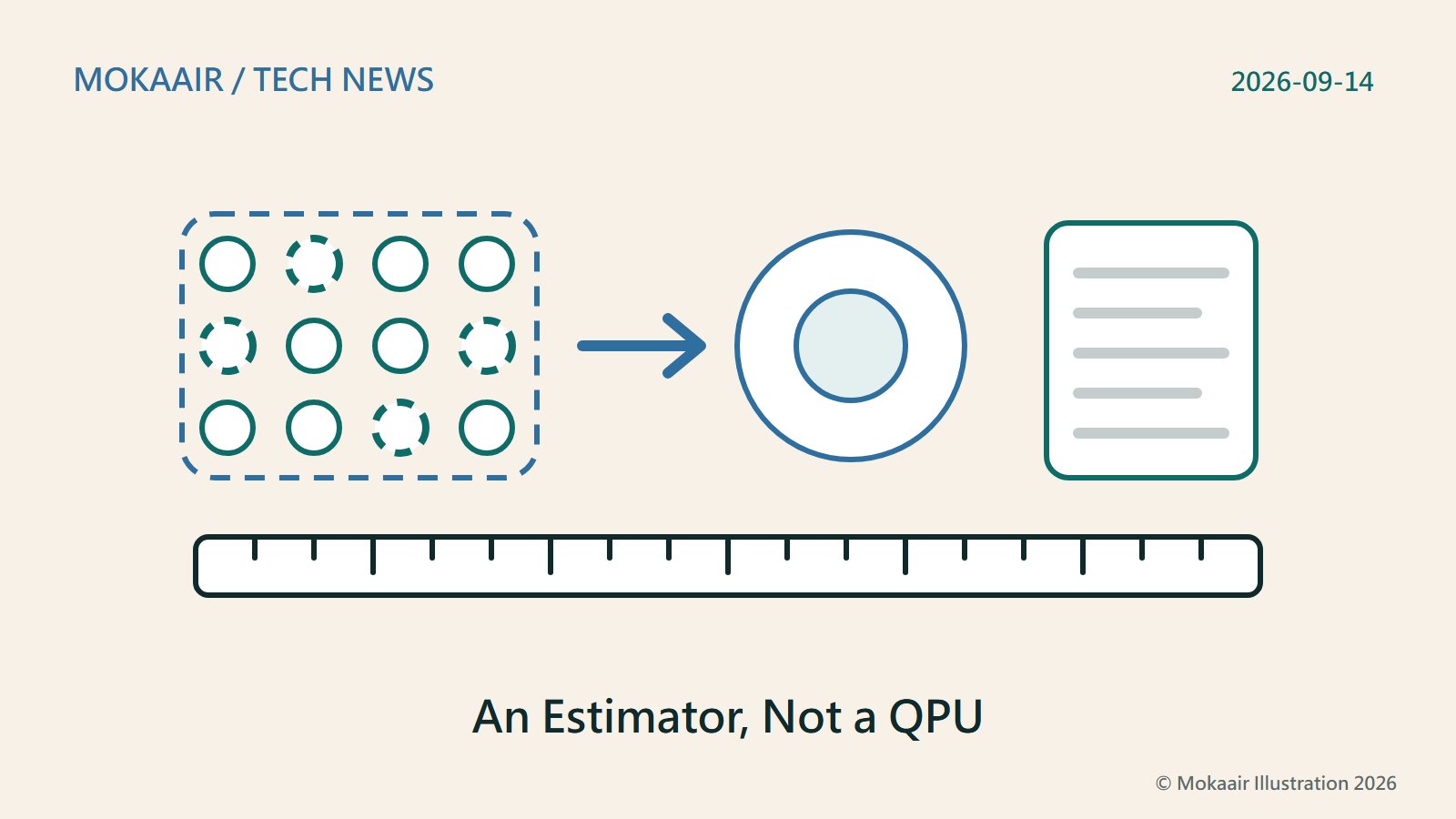
On September 14, 2026, NVIDIA announced CUDA-Q Logical, a new addition to its open-source CUDA-Q platform. It is an orchestration layer meant to help researchers design fault-tolerant quantum computing applications and estimate how much hardware they would need. NVIDIA described the update as an expansion of its existing platform, and no new quantum computer appears anywhere in the announcement. The same announcement also introduced something else: QUOPS, a cross-platform benchmark developed by Sandia National Laboratories, whose reference implementation is available in NVIDIA CUDA-Q.
This article was checked on September 17, 2026, against the full text of the NVIDIA Newsroom press release and three pages of the CUDA-Q technical documentation: the CUDA-Q Logical overview page, the capabilities and status page, and the release notes page. This site has not installed or operated the software, and does not offer purchasing, upgrade or comparison advice; every claim below is marked as coming from either the press release or the documentation.
What NVIDIA Announced: A New Layer on an Existing Platform, Not a New Machine
NVIDIA's own description is that this was “an expansion of the NVIDIA CUDA-Q™ open source platform with CUDA-Q Logical, an orchestration layer that provides a programmable, verifiable approach to developing useful applications for fault-tolerant quantum computers.” In other words, CUDA-Q Logical is a new capability added to the existing CUDA-Q platform, which existed before this announcement; NVIDIA does not say anywhere in the announcement that it has released a new quantum computer.
NVIDIA explains that developing applications for fault-tolerant systems is “a tedious, time-consuming codesign challenge: A change to an algorithm, error-correction code, hardware architecture or other QPU component can significantly change the resources needed to run any given application.” With CUDA-Q Logical, NVIDIA says, “researchers can now design and orchestrate the many components required for fault-tolerant quantum computing applications, easily switching between options to identify optimal system configurations for performance with logical qubits.” Timothy Costa, vice president and general manager of quantum at NVIDIA, said quantum computing “is maturing into an era of logical qubits,” and that the addition of CUDA-Q Logical is “drastically shortening the timeline to useful quantum-GPU supercomputing” — without attaching a specific year or timeframe.
NVIDIA says CUDA-Q Logical is already being used by QPU makers and labs including Fermi National Accelerator Laboratory (Fermilab), Infleqtion, IQM Quantum Computers, QCDesign, Quantum Motion and Sandia National Laboratories. The press release's own text uses the word “including,” which means this is not a complete list, and it does not say how many organizations in total are using the tool. The press release's own text is also missing a comma between QCDesign and Quantum Motion; in the original, Quantum Motion is a hyperlink to that company's own website, so this article lists the two separately to avoid the misreading that they are one company.
Why “Logical Qubits” Matter: What Fault Tolerance Means
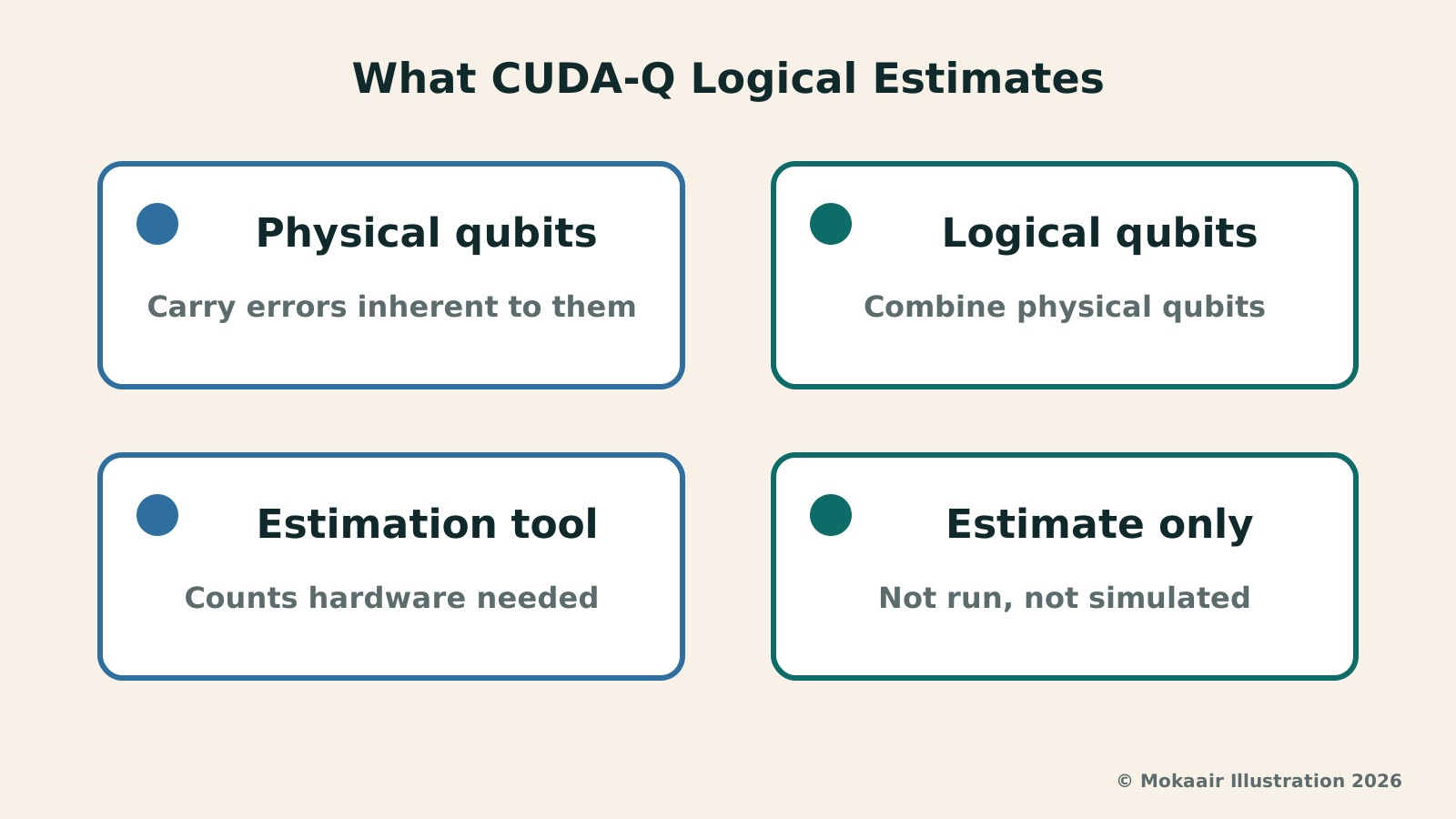
NVIDIA explains that fault-tolerant quantum processors with logical qubits are key to making quantum computing genuinely useful: they let systems “overcome the errors inherent in physical qubits so they can execute the larger computations needed for practical applications such as drug discovery, financial modeling and materials development.” NVIDIA introduces these three fields with “such as,” meaning applications are not limited to them. In simple terms, the approach combines multiple error-prone physical qubits, using quantum error correction to assemble a more reliable “logical” qubit.
The documentation explains that the difficulty lies in codesign: changing the error-correction code, changing the hardware architecture, or even changing the decoding method, can all change how many qubits and how much runtime the same computation needs. What CUDA-Q Logical does is let researchers keep the same computation fixed while changing only these system choices, so they can compare results directly and check the assumptions behind each combination.
| Comparison | Physical Qubits | Logical Qubits |
|---|---|---|
| Trait | Carries errors inherent to itself | Formed by combining multiple physical qubits |
| Role | Historically the main measure of progress | Uses error correction to overcome physical qubits' errors |
| What CUDA-Q Logical does | Estimates how many are needed and how long it takes | Keeps the computation fixed, then compares different approaches |
What the Tool Actually Does: Estimating, Not Building Hardware
NVIDIA's most concrete example is Iceberg Quantum, which used CUDA-Q Logical to model its own fault-tolerant architecture for Diraq's qubits, showing that 1,000 logical qubits could be created with just 150,000 physical qubits — roughly 10x fewer than Diraq's previous estimates. This is a modeling result: the press release does not say these qubits have been built as hardware, and the comparison is against Diraq's own earlier estimate, not against another company's machine.
The other example comes from Fermilab. NVIDIA describes this as the lab's “early work”: researchers used CUDA-Q Logical to validate prior results and evaluate physical qubits, runtimes and other resource requirements across different error-correction approaches and quantum hardware. Anna Grassellino, chief technology officer at Fermilab, said that getting to fault-tolerant quantum computing “will require researchers to codesign algorithm, error correction, architectures and hardware together”; using CUDA-Q Logical, her team explored combinations of these resources “in just three weeks,” compared with what building specialized infrastructure “would have typically taken about five months” — her own words describe this as a comparative estimate, not a single timed measurement.
The documentation explains that in this preview, users can start from a CUDA-Q kernel or author a portable logical program directly; configure error-correction codes, gadgets and placement, and distillation protocols; generate resource estimates; and emit realized programs for simulation and further analysis in tools such as Stim. The actions the documentation lists stop at “generating estimates” and “emitting programs” — they do not include “running” them.
QUOPS: A Different Yardstick, Not NVIDIA's Own Benchmark
NVIDIA explains in the announcement that progress in quantum computing has historically been measured primarily through advances in physical qubits — increasing qubit counts, improving fidelity and extending coherence. QUOPS is meant to offer a different yardstick: NVIDIA describes it as “a new, independent cross-platform benchmark developed by Sandia National Laboratories that measures the progress quantum computing systems are making toward utility-scale applications,” and it is not tied to any particular hardware architecture.
QUOPS was developed by Sandia National Laboratories, not by NVIDIA itself; the announcement's body text says “a QUOPS reference implementation is available in NVIDIA CUDA-Q.” Timothy Proctor, co-lead of Sandia's Quantum Performance Laboratory, said that he and other quantum computing stakeholders have to be able to track and forecast the growth of quantum computers' abilities, and that QUOPS was created to do exactly that. NVIDIA says Sandia shared early results in a preprint posted ahead of IEEE Quantum Week, reporting initial QUOPS benchmarks for QPUs from Google, IBM and Quantinuum; the announcement does not include any scores or rankings.
Where the Announcement and the Documentation Disagree
Reading the press release and the documentation side by side reveals a gap. The press release has only one sentence describing the tool's availability: “CUDA-Q Logical is now available through GitHub,” with no mention of price, plan or region, and the word “preview” does not appear anywhere in it. The documentation is different: the overview page opens with an admonition box titled “Preview release,” stating that “cudaq-logical is in preview. Its APIs, behavior, and documentation may change substantially in upcoming versions.” The release notes page states that CUDA-Q 0.16.0 integrates CUDA-Q Logical version 0.1.1.
The documentation states the tool's boundaries clearly: it defines CUDA-Q Logical as “a resource-estimation toolkit for fault-tolerant quantum computing,” and states explicitly that “it remains a compiler and estimation artifact: CUDA-Q Logical does not submit a physical schedule to hardware or provide a runtime execution service for it,” and that “nothing in the package consumes or executes physical simulations.” The documentation also states that CUDA-Q Logical does not label detectors and observables, generate detector error models, or handle sampling and decoding; those steps begin only after the emitted Stim output, inside the Stim ecosystem. None of these boundaries are written in the press release.
The documentation also notes that the accompanying example code is released under the Apache License 2.0, an open-source license — a name that likewise does not appear in the press release. The press release's own forward-looking statements list “expectations with respect to quantum computing” as the first item — NVIDIA itself classifies these statements as non-historical, with no guarantee of future results. None of the sources checked for this article mention Taiwan, or give any timeline for when fault-tolerant quantum computers will mature or become widespread.
Frequently asked questions
Is CUDA-Q Logical a quantum computer?
No. NVIDIA's technical documentation defines it as a resource-estimation toolkit for fault-tolerant quantum computing, used to estimate how much hardware resource a given computation needs; the documentation also states that it does not submit a physical schedule to hardware for execution, and the package itself does not execute physical simulations. Nowhere in this announcement does NVIDIA say it has built, sold or demonstrated a fault-tolerant quantum computer.
Is this a brand-new product from NVIDIA?
It is not a brand-new product line; it is a new layer added to the existing open-source CUDA-Q platform. NVIDIA describes CUDA-Q Logical as an orchestration layer that lets researchers design, evaluate and switch between different error-correction methods and system-architecture combinations for fault-tolerant quantum computing applications; the CUDA-Q platform itself already existed before this announcement.
NVIDIA mentions that “1,000 logical qubits can be created with just 150,000 physical qubits” — does that mean this hardware already exists?
No. NVIDIA explains this is an estimate that Iceberg Quantum obtained by using CUDA-Q Logical to model its own fault-tolerant architecture for Diraq's qubits. The comparison is against Diraq's own earlier estimate, not against any machine that has actually been built, and not against another company's hardware.
Is QUOPS a benchmark that NVIDIA created?
No. NVIDIA states in the announcement that QUOPS is an independent cross-platform benchmark developed by Sandia National Laboratories; the announcement's own text describes NVIDIA's role as making a QUOPS reference implementation available in NVIDIA CUDA-Q. A preprint Sandia posted ahead of IEEE Quantum Week reported initial QUOPS results for quantum processors from Google, IBM and Quantinuum, but the announcement does not include any scores or rankings.
Is CUDA-Q Logical a finished release, or still in testing?
As of the technical documentation this article checked on September 17, 2026, it is labeled a preview release; NVIDIA itself states that the API, behavior and documentation content may change substantially in later versions, and the release notes page states that CUDA-Q 0.16.0 integrates CUDA-Q Logical version 0.1.1. This status does not appear in the press release, which only says the tool is now available through GitHub.
How could users or companies in Taiwan get access?
Neither NVIDIA's press release nor its technical documentation mentions price, regional restrictions or an application process; the press release only says it can be obtained through GitHub, and the documentation notes that the accompanying examples are released under the Apache License 2.0, an open-source license. None of the sources checked for this article mention Taiwan in any way, or say when fault-tolerant quantum computers will mature or become widespread.
2026 Tech News Roundup: Key Points on Hardware, Platforms, Telecom, and Regulation2026 Tech News Roundup: Key Points on Hardware, Platforms, Telecom, and RegulationThis site's 2026 tech-news explainers in five groups — hardware, platforms, computing infrastructure, Taiwan policy, EU regulation: iPhone Duo and September hardware, M6/M5 Ultra, Snapdragon 8 Elite Gen 6, Project Zenith, Pixel Drop, App Store subscriptions, WordPress and Synology patches, NVIDIA, 6G, the Taiwan–Matsu cables, the sovereign AI corpus, the Cyber Resilience Act, the KIDS Act and Apple's EU terms. No purchase advice; vendor claims attributed; official sources and check dates.Read the full article
NVIDIA's AI Infra Summit Power Efficiency Talk: What's New With Vera Rubin and DSXNVIDIA's AI Infra Summit Power Efficiency Talk: What's New With Vera Rubin and DSXOn September 15, 2026, at the AI Infra Summit in Santa Clara, California, NVIDIA presented the Vera Rubin platform and DSX data-center power-management software, saying the metric for AI infrastructure is shifting from peak performance to tokens produced per megawatt. Based on NVIDIA's blog posts from that day and its January and August press releases, this article checks what was actually new, which numbers are measured, which NVIDIA labels as projections, and what remains unstated.Read the full article
Lifestyle
NVIDIA's AI Infra Summit Power Efficiency Talk: What's New With Vera Rubin and DSX
On September 15, 2026, at the AI Infra Summit in Santa Clara, California, NVIDIA presented the Vera Rubin platform and DSX data-center power-management software, saying the metric for AI infrastructure is shifting from peak performance to tokens produced per megawatt. Based on NVIDIA's blog posts from that day and its January and August press releases, this article checks what was actually new, which numbers are measured, which NVIDIA labels as projections, and what remains unstated.
Lifestyle
NVIDIA Invests US$3.5 Billion in MediaTek: What the Partnership Announcement and the Convertible Bond Filing Each Say
On August 31, 2026, NVIDIA and MediaTek announced a deepened collaboration in AI infrastructure, local AI computing and automotive, and NVIDIA invested $3.5 billion in convertible bonds issued by MediaTek. Based on the official press releases and MediaTek's pricing filing with Taiwan's Market Observation Post System, this article covers what the releases say, what terms the filing adds, and what remains unaddressed. Checked September 17, 2026.
Lifestyle
Cloudflare launches Traces in public beta: site operators can follow every step a request takes through the platform on one timeline
On October 2, 2026, Cloudflare announced the public beta of Cloudflare Traces. Website operators and developers using Cloudflare can see a request pass through security rules, caching, routing and the origin server on a single timeline, making it easier to find why a request was blocked or slowed. New pricing takes effect on December 1, 2026. Information comes from the official Cloudflare blog.
Lifestyle
Cloudflare launches Web Search API via AI Gateway, requiring search partners to follow its crawler rules
On October 2, 2026, Cloudflare announced a Web Search API that lets AI agents query live web information through AI Gateway. The first partners are Ceramic.ai, Exa and Linkup. Cloudflare says these partners' crawlers must meet its Verified bots requirements and cite sources. This matters both to developers building AI applications and to website owners whose content may be crawled.
Articles that cite this one
Latest travel guides

GuideTokyo
Where to Stay in Tokyo: Comparing Shinjuku, Ueno, Tokyo Station, Shibuya, Asakusa, Ikebukuro, and Ginza, Plus Airport Access, Accommodation Tax, and Luggage Delivery
Where should you stay in Tokyo? Compare Shinjuku, Ueno, Tokyo Station, Shibuya, Asakusa, Ikebukuro, and Ginza by the same criteria: access from Narita and Haneda, transit routes, nearby attractions, neighborhood character, and who each area suits. Includes a comparison table, a Yamanote Line diagram, Tokyo’s accommodation tax as verified in 2026/9 (changing to 3% in 2027/4), and Airport TA-Q-BIN luggage shipping rules.
- Budget
- Hotels

GuideTokyo
How to Choose Tokyo Transit Passes: Are Suica, Welcome Suica, the Tokyo Subway Ticket, and the JR Pass Worth It?
On a first Tokyo trip, start with an IC card and pay per ride (Welcome Suica has no deposit and is valid for 28 days). If you take four or more subway rides in a day, add a 72-hour Tokyo Subway Ticket for 2,000 yen; a JR Pass is never worthwhile if you stay in Tokyo and do not go to Kansai. See what TOURIST PASMO, Suica on iPhone, and the Tokyo Metro day pass do and do not cover, with a decision chart. Prices verified in September 2026.
- Transport
- Budget

GuideTokyo
Tokyo Disneyland and DisneySea Guide: Ticket Prices, Fantasy Springs, Disney Premier Access (DPA), Standby Pass, and Which Park to Choose for Your First Visit
Tokyo Disney one-day Passport prices vary: most weekdays in 9/2026 cost ¥9,900 and weekends ¥10,900. At 14:00 daily, tickets go on sale for the same date two months later. Free Priority Pass is no longer on the official service list; only paid Disney Premier Access (¥1,000–3,500 per person per use) shortens waits. Covers hours, the 25th anniversary, Standby Pass, Entry Request, Fantasy Springs access and first-visit park choice; checked on the official site in 9/2026.
- Itineraries
- Family
Sources
- NVIDIA Newsroom press release: NVIDIA Expands Open Source CUDA-Q Platform for Fault-Tolerant Quantum Computing · Checked:
- NVIDIA CUDA-Q documentation: CUDA-Q Logical overview page (version 0.16.0) · Checked:
- NVIDIA CUDA-Q documentation: Capabilities and status (version 0.16.0) · Checked:
- NVIDIA CUDA-Q documentation: CUDA-Q Releases page · Checked: