Lifestyle
US Sixth Circuit Rules Kalshi Sports-Event Contracts Are Not Federally Regulated "Swaps" and Fall Under State Gambling Laws
CoinDesk reports that on September 25, 2026, the US Sixth Circuit Court of Appeals ruled that prediction market Kalshi's sports-event contracts are not "swaps" under federal law, so they fall under state gambling rules rather than federal CFTC oversight. The ruling bears on who regulates prediction markets and deepens a split among appeals courts, which CoinDesk believes should prompt the US Supreme Court to step in.
About 6 min read

Key terms
- Prediction market: a platform that lets users buy and sell contracts on the outcome of an event (such as an election or a sports game). Kalshi is one such platform.
- Swap: a category of financial contract under US federal law. If a contract is deemed to fall into this category, it is regulated by federal agencies.
- CFTC: the US Commodity Futures Trading Commission, the federal agency that regulates products such as futures and swaps.
- Circuit court of appeals: an appellate court in the US federal court system, organized into regional "circuits," ranking above district courts and below the Supreme Court.
- Circuit split: when different circuit courts of appeals reach different conclusions on the same legal question.
Background: the regulatory tug-of-war between prediction markets and states
Read the full description
Sources are collected, independently checked, then reviewed by Jev.
CoinDesk reports that prediction markets grew rapidly after the 2024 US election, and since then state governments have sought to bring prediction markets offering sports-related contracts under state regulatory frameworks. The states cite three reasons. First, these platforms compete with state-regulated gambling operators and offer the same products. Second, for many states, federally regulated platforms do not pay state taxes yet still compete with state-regulated operators. Third, prediction markets are often open to people aged 18 and over, while gambling operators in most states accept only customers aged 21 and over.
The Sixth Circuit's reasoning
CoinDesk reports that this ruling covered two lawsuits Kalshi filed separately against regulators in Ohio and Tennessee. Kalshi sought injunctions, that is, court orders barring the states from bringing actions against it. The federal district court in Ohio denied Kalshi's request, while the federal district court in Tennessee granted it. A three-judge panel of the Sixth Circuit agreed that Kalshi had the right to bring these lawsuits, but disagreed that its sports contracts are federally regulated swaps.
Quoting the opinion, CoinDesk reports the court wrote: "While we agree with Kalshi that its sports-event contracts are conditioned on the occurrence of 'event[s],' we conclude that Kalshi’s contracts do not depend on events that are 'associated with a potential financial, economic, or commercial consequence' within the meaning of the statute." In other words, the court accepted that Kalshi's sports-event contracts are conditioned on whether an "event" occurs, but found that these are not events with a potential financial, economic, or commercial consequence as the statute means.
The opinion used the New York Giants winning the Super Bowl as an example of how the wording depends on how an "event" is defined. If the event is "the Giants win," then a win means "the event has occurred." If the event is actually "the game itself," then the Giants winning is merely the game's outcome. The court found that the statutory text does not clearly require excluding "outcomes" from the definition of an event, so it declined to read such a limitation into the statute.
Why this ruling could head to the Supreme Court
CoinDesk reports that before this, the Third Circuit ruled that the CFTC has jurisdiction over prediction markets, while the Eighth Circuit ruled that sports-related contracts are not swaps. The Sixth Circuit's conclusion aligns with the Eighth Circuit, creating a circuit split among appeals courts. CoinDesk believes such a split should prompt the US Supreme Court to take up the matter; the Third Circuit case has already been appealed to the Supreme Court.
| Circuit court of appeals | Swap or not | Regulatory authority | Notes |
|---|---|---|---|
| Third Circuit | Not stated in the report | Found the CFTC has jurisdiction over prediction markets | Case has been appealed to the US Supreme Court |
| Eighth Circuit | Found sports-related contracts are not swaps | Not detailed in the report | Conclusion consistent with the Sixth Circuit |
| Sixth Circuit | Found Kalshi's sports-event contracts are not swaps | Subject to state gambling regulations, not CFTC rules | Addressed two lawsuits in Ohio and Tennessee |
Frequently asked questions
What did the US Sixth Circuit Court of Appeals rule?
CoinDesk reports that on September 25, 2026, the Sixth Circuit ruled that Kalshi's sports-event contracts are not swaps under federal law. The contracts are therefore subject to state gambling regulations rather than the rules of the federal Commodity Futures Trading Commission (CFTC).
Why do states want to regulate prediction markets?
CoinDesk reports that states argue prediction markets offering sports contracts compete directly with state-regulated gambling operators and offer the same products. In addition, federally regulated platforms do not pay state taxes, and prediction markets are often open to people aged 18 and over, while gambling operators in most states accept only customers aged 21 and over.
Does this ruling mean Kalshi must stop its services?
CoinDesk's report does not say whether Kalshi will stop offering services in any particular state. The ruling is an appeals court decision, not a final Supreme Court ruling. CoinDesk believes the split among appeals courts should prompt the Supreme Court to step in.
How have other circuit courts of appeals viewed the same question?
CoinDesk reports that the Third Circuit ruled the CFTC has jurisdiction over prediction markets, while the Eighth Circuit ruled sports-related contracts are not swaps. The Sixth Circuit's conclusion aligns with the Eighth Circuit, creating what is known as a circuit split. The Third Circuit case has been appealed to the Supreme Court.
Browse the latest news in this topic
Lifestyle
Brazil's Petrobras tests Cardano blockchain to track claims about cleaner jet fuel and diesel
According to CoinDesk, Brazil's state-owned energy company Petrobras is testing the Cardano blockchain in two research projects: one to stop the same emissions cut from sustainable aviation fuel being counted twice, the other to record the history of its partly renewable Diesel R. Both are still research work, with no timeline for wider use.
Lifestyle
Cboe and S&P Dow Jones Indices extend their S&P 500 options deal to 2051 and leave the door open to tokenized options
According to CoinDesk, exchange operator Cboe and index provider S&P Dow Jones Indices have extended Cboe's exclusive right to offer S&P 500 options by 25 years, to 2051. The deal says they may explore blockchain-based 'tokenized' options, but no product, timeline or details were announced. Here is what that means and what it does not.
Lifestyle
SEC Charges Two Groups of Entities Allegedly Behind Crypto Frauds Using WhatsApp and "AI Trading" Claims
On September 29, 2026, the US SEC charged two groups of entities, Cryptoaiml and TSAI, alleging they defrauded hundreds of individual investors, many in the US. The SEC says they falsely claimed to be SEC-regulated and used AI trading signals and bots as bait in schemes totaling at least $15 million. Here is what the SEC alleges and the warning signs readers can watch for.
Lifestyle
Ethereum's Glamsterdam upgrade will go live on the Sepolia test network on October 6; no mainnet date yet
The Ethereum Foundation says its Glamsterdam upgrade, which changes how blocks are built and how fees are counted, is scheduled for the Sepolia test network on October 6, 2026. Test-network node operators and app developers need to prepare. No mainnet date is set, and the Foundation says ordinary users and ETH holders need not act.
Latest travel guides
GuideTokyo
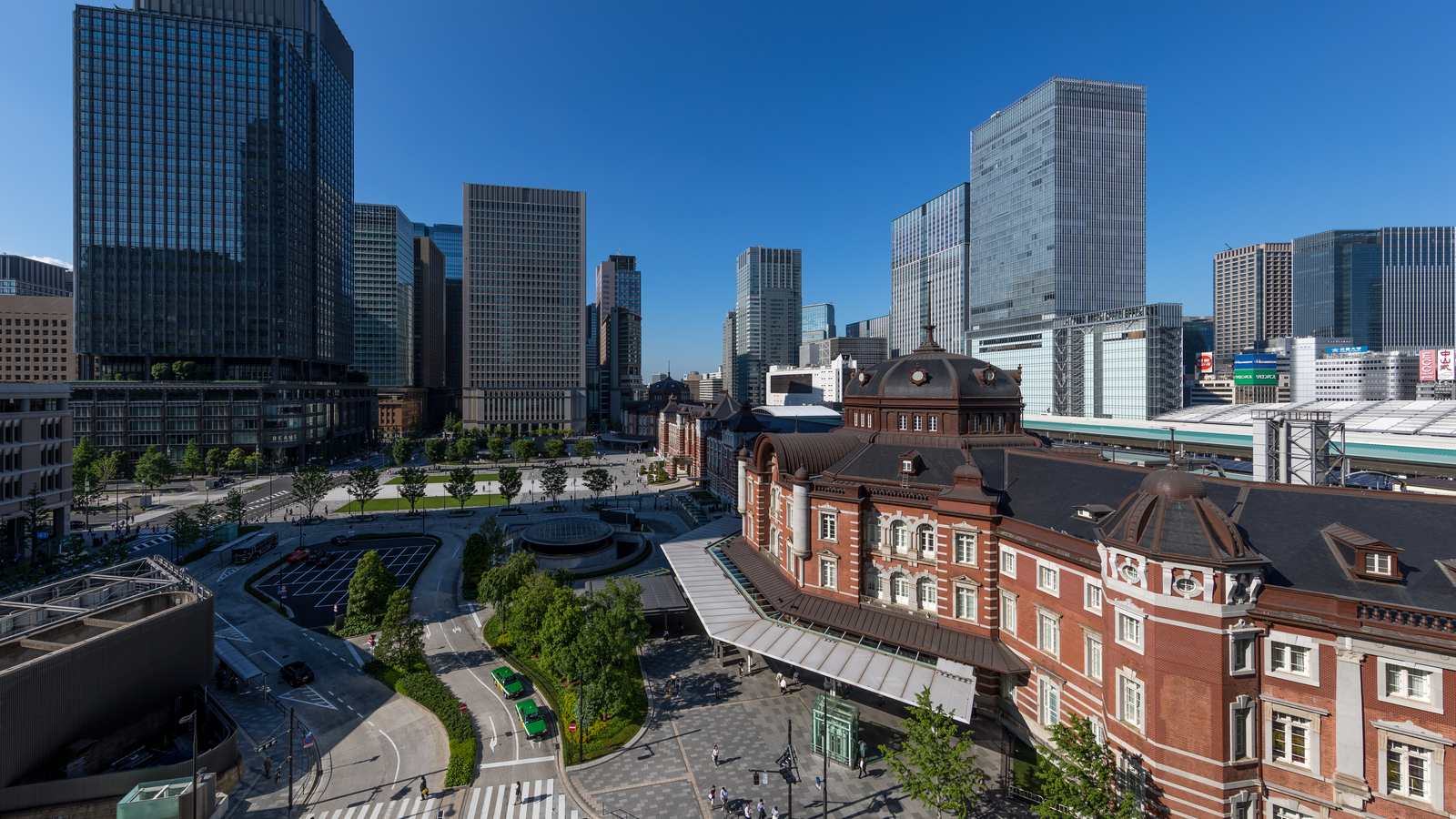
Where to Stay in Tokyo: Comparing Shinjuku, Ueno, Tokyo Station, Shibuya, Asakusa, Ikebukuro, and Ginza, Plus Airport Access, Accommodation Tax, and Luggage Delivery
Where should you stay in Tokyo? Compare Shinjuku, Ueno, Tokyo Station, Shibuya, Asakusa, Ikebukuro, and Ginza by the same criteria: access from Narita and Haneda, transit routes, nearby attractions, neighborhood character, and who each area suits. Includes a comparison table, a Yamanote Line diagram, Tokyo’s accommodation tax as verified in 2026/9 (changing to 3% in 2027/4), and Airport TA-Q-BIN luggage shipping rules.
- Budget
- Hotels

GuideTokyo
How to Choose Tokyo Transit Passes: Are Suica, Welcome Suica, the Tokyo Subway Ticket, and the JR Pass Worth It?
On a first Tokyo trip, start with an IC card and pay per ride (Welcome Suica has no deposit and is valid for 28 days). If you take four or more subway rides in a day, add a 72-hour Tokyo Subway Ticket for 2,000 yen; a JR Pass is never worthwhile if you stay in Tokyo and do not go to Kansai. See what TOURIST PASMO, Suica on iPhone, and the Tokyo Metro day pass do and do not cover, with a decision chart. Prices verified in September 2026.
- Transport
- Budget

GuideTokyo
Tokyo Disneyland and DisneySea Guide: Ticket Prices, Fantasy Springs, Disney Premier Access (DPA), Standby Pass, and Which Park to Choose for Your First Visit
Tokyo Disney one-day Passport prices vary: most weekdays in 9/2026 cost ¥9,900 and weekends ¥10,900. At 14:00 daily, tickets go on sale for the same date two months later. Free Priority Pass is no longer on the official service list; only paid Disney Premier Access (¥1,000–3,500 per person per use) shortens waits. Covers hours, the 25th anniversary, Standby Pass, Entry Request, Fantasy Springs access and first-visit park choice; checked on the official site in 9/2026.
- Itineraries
- Family