Lifestyle
Ethereum's Glamsterdam upgrade will go live on the Sepolia test network on October 6; no mainnet date yet
The Ethereum Foundation says its Glamsterdam upgrade, which changes how blocks are built and how fees are counted, is scheduled for the Sepolia test network on October 6, 2026. Test-network node operators and app developers need to prepare. No mainnet date is set, and the Foundation says ordinary users and ETH holders need not act.
About 7 min read
What happened
On September 17, 2026, the Ethereum Foundation Blog published an announcement under the Protocol byline. It says the Glamsterdam network upgrade follows the Fusaka upgrade and advances Ethereum's L1 scaling roadmap. L1, or layer 1, is Ethereum's base network itself. Glamsterdam is scheduled to activate on Sepolia at epoch 353,024, slot 11,296,768, which is 13:53:36 UTC on October 6, 2026. Epochs and slots are the units of time Ethereum uses to schedule blocks. Sepolia is a test network: it runs the same software as Ethereum's live network, known as mainnet, so changes can be tried out before they reach real users. The Foundation said activation times for Hoodi, another network, and for mainnet have not been decided and will be announced once client teams decide. This announcement does not schedule a mainnet upgrade.
According to the announcement, Glamsterdam combines the Amsterdam upgrade to the execution layer, the part of Ethereum that runs transactions, with the Gloas upgrade to the consensus layer, the part that agrees on which blocks are valid. EIP-7773 tracks the upgrade as a whole and lists 18 EIPs scheduled for inclusion. An EIP, or Ethereum Improvement Proposal, is the formal written specification of a single change.
Read the full description
Sources are collected, independently checked, then reviewed by Jev.
Two core changes: ePBS and block-level access lists
Enshrined proposer-builder separation (EIP-7732)
Two roles are involved in making each block. A proposer puts a block forward for the network. A builder assembles the block's contents, which the protocol calls the execution payload. According to the Ethereum Foundation, EIP-7732 writes this division of labor directly into the consensus protocol. The proposer first includes the builder's commitment to an execution payload, and the builder reveals the payload afterward. The protocol itself handles payment to the proposer, which reduces reliance on trusted middleware, the outside software that has brokered this exchange. The Foundation also said the change separates consensus validation from execution validation. This gives validators, the participants who check and vote on blocks, more time to validate the execution payload. A new "payload timeliness committee" attests to whether the builder revealed the payload on time and whether the corresponding blob data is available.
Block-level access lists (EIP-7928)
According to the announcement, EIP-7928 introduces mandatory block-level access lists. These record the accounts and storage locations accessed within a block, along with post-transaction state changes. The Foundation said this lets clients, the software that runs an Ethereum node, read state in parallel, validate transactions in parallel and compute the state root more efficiently. Put simply, nodes can handle more work at once instead of queuing items one by one.
| Item | What the announcement says | Mainly affects |
|---|---|---|
| ePBS (EIP-7732) | Proposing and building separated within the protocol; protocol handles payment | Validators, block-building infrastructure teams |
| Block-level access lists (EIP-7928) | Records accessed locations; supports parallel reads and validation | Client developers, node operators |
| Gas pricing (EIP-8037, EIP-8038, etc.) | Raises and separately meters state-creation costs; updates state-access costs | Smart contract and application developers |
| Other developer improvements | ETH transfer logs, slot number opcode, higher contract size limit, etc. | Developers |
| Consensus-layer adjustments | Excludes proposals from slashed validators; raises exit and consolidation churn | Validators |
Who needs to do what
In the announcement's FAQ, the Ethereum Foundation said mainnet users and ETH holders do not need to take any action because of this announcement. Mainnet activation will be covered in a separate announcement. Node operators on Hoodi or mainnet likewise need not act on this Sepolia announcement. Sepolia is a test network, and this activation is a testing step before the upgrade goes to mainnet.
For developers, the impact is more direct. The Foundation recommends testing contracts and gas estimation against the new rules. It notes that contracts relying on fixed gas stipends, hardcoded gas limits or assumptions about remaining gas may need changes. The Foundation also said the Ethereum Bug Bounty Program, which rewards people who report security flaws, is now active for the Glamsterdam specifications and EIPs. Client implementations become eligible once their releases are added to the client release tables in the announcement.
- Sepolia node operators: according to the announcement, must update both execution-layer and consensus-layer clients before 13:53:36 UTC on October 6, 2026.
- Sepolia stakers: according to the announcement, must update both the beacon node and the validator client, and review the new ePBS duties.
- Application developers: according to the announcement, should test whether contracts and gas estimation are affected by the new pricing.
- General users and ETH holders: according to the announcement, no action is needed at this time.
Sepolia client releases
| Layer | Client | Release listed in announcement |
|---|---|---|
| Consensus | Lodestar | 1.49.0 |
| Consensus | Prysm | 7.2.0 |
| Consensus | Teku | 26.9.1 |
| Execution | Besu | 26.9.0 |
| Execution | Erigon | 3.7.0 |
| Execution | go-ethereum | 1.17.6 |
| Execution | Nethermind | 2.0.0 |
| Execution | Reth | 2.7.0 |
The announcement also notes that Prysm 7.2.0 supports the Sepolia fork but defaults to a 60M gas limit after activation. Validators who want to propose blocks with a 200M gas limit must set it explicitly via version 2 proposer settings or the keymanager API. The Foundation further recommends using only releases whose release notes explicitly confirm support for this Sepolia activation.
Frequently asked questions
When does Glamsterdam activate on Sepolia?
According to the Ethereum Foundation announcement, it is scheduled to activate at 13:53:36 UTC on October 6, 2026, at epoch 353,024, slot 11,296,768.
When will mainnet upgrade?
The Ethereum Foundation said activation times for Hoodi and mainnet have not been decided and will be announced once client teams decide. This announcement does not schedule a mainnet upgrade.
I hold ETH or use mainnet. Do I need to do anything?
According to the Ethereum Foundation's FAQ, mainnet users and ETH holders do not need to take any action, and mainnet activation will be announced separately.
What happens if a node is not updated?
The Foundation said network upgrades require node operators to explicitly opt in by updating their software. Nodes that do not support the new rules will be unable to follow the upgraded network after activation.
What does ePBS change?
According to the announcement, under ePBS the protocol handles payments between proposers and builders. This reduces reliance on trusted middleware and gives validators more time to validate, with the aim of supporting higher L1 throughput. The Foundation says mainnet users and ETH holders do not need to take any action for now.
I build apps on Ethereum. What should I check?
The Foundation recommends testing contracts and gas estimation against the new rules. Contracts that rely on fixed gas stipends, hardcoded gas limits or assumptions about remaining gas may need changes.
Browse the latest news in this topic
Lifestyle
Brazil's Petrobras tests Cardano blockchain to track claims about cleaner jet fuel and diesel
According to CoinDesk, Brazil's state-owned energy company Petrobras is testing the Cardano blockchain in two research projects: one to stop the same emissions cut from sustainable aviation fuel being counted twice, the other to record the history of its partly renewable Diesel R. Both are still research work, with no timeline for wider use.
Lifestyle
Cboe and S&P Dow Jones Indices extend their S&P 500 options deal to 2051 and leave the door open to tokenized options
According to CoinDesk, exchange operator Cboe and index provider S&P Dow Jones Indices have extended Cboe's exclusive right to offer S&P 500 options by 25 years, to 2051. The deal says they may explore blockchain-based 'tokenized' options, but no product, timeline or details were announced. Here is what that means and what it does not.
Lifestyle
SEC Charges Two Groups of Entities Allegedly Behind Crypto Frauds Using WhatsApp and "AI Trading" Claims
On September 29, 2026, the US SEC charged two groups of entities, Cryptoaiml and TSAI, alleging they defrauded hundreds of individual investors, many in the US. The SEC says they falsely claimed to be SEC-regulated and used AI trading signals and bots as bait in schemes totaling at least $15 million. Here is what the SEC alleges and the warning signs readers can watch for.
Lifestyle
Researchers Forge RSA Signatures From a Hardware Vault Without Extracting the Key: What It Means for Crypto Assets
According to Decrypt, a UC San Diego and INRIA team forged signatures for a 1,024-bit RSA key inside a hardware security module without extracting the key. This article covers the key points, what is affected, and why Bitcoin and Ethereum signatures fall outside the paper's scope.
Latest travel guides

GuideTokyo
Where to Stay in Tokyo: Comparing Shinjuku, Ueno, Tokyo Station, Shibuya, Asakusa, Ikebukuro, and Ginza, Plus Airport Access, Accommodation Tax, and Luggage Delivery
Where should you stay in Tokyo? Compare Shinjuku, Ueno, Tokyo Station, Shibuya, Asakusa, Ikebukuro, and Ginza by the same criteria: access from Narita and Haneda, transit routes, nearby attractions, neighborhood character, and who each area suits. Includes a comparison table, a Yamanote Line diagram, Tokyo’s accommodation tax as verified in 2026/9 (changing to 3% in 2027/4), and Airport TA-Q-BIN luggage shipping rules.
- Budget
- Hotels
GuideTokyo
How to Choose Tokyo Transit Passes: Are Suica, Welcome Suica, the Tokyo Subway Ticket, and the JR Pass Worth It?
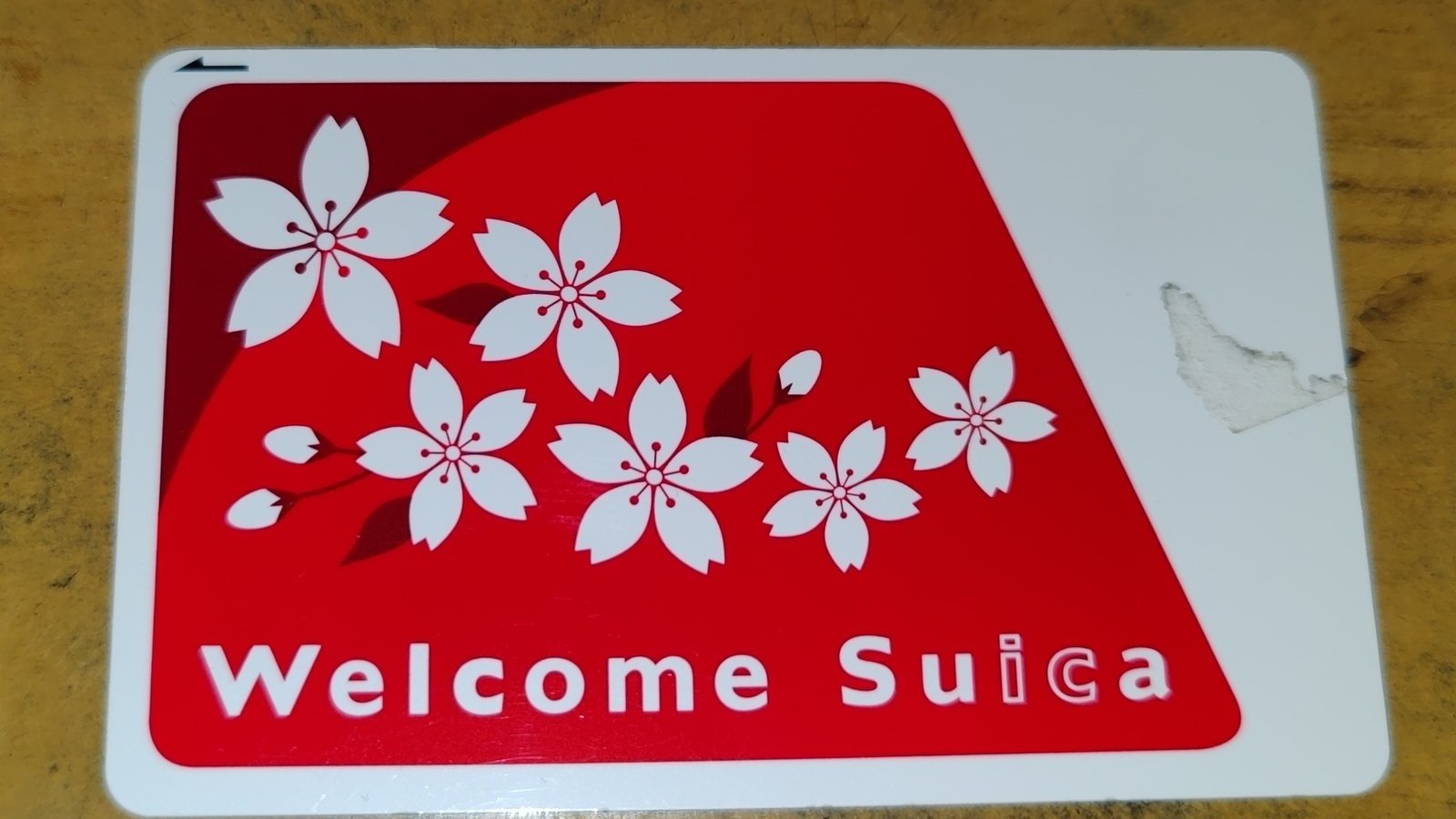
On a first Tokyo trip, start with an IC card and pay per ride (Welcome Suica has no deposit and is valid for 28 days). If you take four or more subway rides in a day, add a 72-hour Tokyo Subway Ticket for 2,000 yen; a JR Pass is never worthwhile if you stay in Tokyo and do not go to Kansai. See what TOURIST PASMO, Suica on iPhone, and the Tokyo Metro day pass do and do not cover, with a decision chart. Prices verified in September 2026.
- Transport
- Budget

GuideTokyo
Tokyo Disneyland and DisneySea Guide: Ticket Prices, Fantasy Springs, Disney Premier Access (DPA), Standby Pass, and Which Park to Choose for Your First Visit
Tokyo Disney one-day Passport prices vary: most weekdays in 9/2026 cost ¥9,900 and weekends ¥10,900. At 14:00 daily, tickets go on sale for the same date two months later. Free Priority Pass is no longer on the official service list; only paid Disney Premier Access (¥1,000–3,500 per person per use) shortens waits. Covers hours, the 25th anniversary, Standby Pass, Entry Request, Fantasy Springs access and first-visit park choice; checked on the official site in 9/2026.
- Itineraries
- Family