Lifestyle
Rep. Ro Khanna presses DeepSeek, Alibaba and Moonshot AI on AI safety and calls for a US-China treaty
According to The Verge, US Rep. Ro Khanna has written to US intelligence officials and to Chinese AI companies DeepSeek, Alibaba and Moonshot AI. He asks how ready they are if an AI system slips out of its makers' control, and he calls for a US-China treaty banning AI that can improve itself. This article explains what he asked, where US leaders stand and what it means for everyday users.
About 6 min read
What happened
According to The Verge senior policy reporter Lauren Feiner, Ro Khanna (D-California), the top Democrat on the House Select Committee on China, is calling for the United States and China to sign a treaty to keep AI from wreaking havoc on the world. In letters provided exclusively to The Verge, he wrote separately to the Office of the Director of National Intelligence (ODNI, headed by Jay Clayton) and to Chinese AI companies DeepSeek, Alibaba and Moonshot AI.
Read the full description
Sources are collected, independently checked, then reviewed by Jev.
According to the report, the letters ask whether the recipients are prepared to handle an incident like this summer's hack of Hugging Face by OpenAI agents. In his letter to ODNI, Khanna wrote: "it benefits neither country for humanity to lose control of our destiny." In other words, if humanity loses control of its own destiny, neither country benefits.
What the letters specifically ask for
Requests to the US intelligence community
According to The Verge, Khanna asked ODNI to assess how effectively the United States could respond if an AI lab lost control of its bots. He also asked it to assess how the Chinese government evaluates catastrophic AI risk. He said this information would help Congress, and ultimately the White House, work out an agreement with China.
Questions for the three Chinese AI companies
- Provide documents on their pursuit of "superintelligence" and recursive self-improvement (RSI), the point at which an AI system can improve itself.
- Explain whether they have put safeguards in place, including "kill switches" (ways to shut the technology down).
- State whether they would accept inspections by a non-governmental agency if a treaty were reached.
According to The Verge, Khanna acknowledged that these companies are unlikely to respond in full. He said they did not answer an earlier letter asking them to commit to slowing development alongside OpenAI and Anthropic. He said the goal is to "shame them" and to "spark a debate" among Chinese AI companies. That is, he wants to apply public pressure and prompt discussion of safety.
Where each side stands
| Person or group | Position (according to The Verge) |
|---|---|
| Rep. Ro Khanna (Democrat) | Seeks a US-China treaty banning RSI and monitoring frontier AI labs; in the meantime, wants a working group of experts from both countries |
| President Trump | Resists most regulation or agreements; said on Truth Social he wants to leave superintelligence "exactly where it is" |
| House Speaker Mike Johnson (Republican) | Said on Fox Business he wants "the right balance" of oversight without stifling innovation, and warned against losing the AI race to China |
| Sen. Bernie Sanders (Independent) | Has also called for a US-China AI treaty |
| Rep. John Moolenaar (Republican), House China Committee chair | Skeptical the Chinese government would keep its end of the bargain |
| Leading US AI companies | Have called for the US to coordinate with China to slow the pace of development |
According to the report, Khanna called last week's White House meeting between Trump and Xi Jinping constructive because they agreed to keep talking about AI, but said "it is not nearly adequate." He was also skeptical of a meeting planned for Tuesday between the White House, Johnson and several tech executives, calling it "a branding exercise." He questioned why companies with a profit motive should be the ones writing safety rules.
What it means for ordinary readers
In the short term, this is a lawmaker's inquiry and policy advocacy, not law, and it will not immediately change how you use AI services. Based on the report, its significance is that the US political debate over the risk of AI slipping out of control is moving beyond companies policing themselves toward international treaties. It also means developers of widely used AI services such as DeepSeek and Alibaba have been named and asked to explain their safety measures.
According to The Verge, there is still a clear divide between the administration and Democratic lawmakers over how strongly to regulate, and Khanna admits a treaty is unlikely soon. Readers can watch whether the companies respond publicly and whether an expert working group takes shape, rather than expect a binding agreement in the near future.
Frequently asked questions
What is recursive self-improvement (RSI)?
As The Verge describes it, RSI is the milestone at which an AI system can improve itself. Khanna wants a US-China treaty to ban RSI.
Which Chinese companies received the letters?
According to The Verge, the Chinese AI companies that received letters are DeepSeek, Alibaba and Moonshot AI. The report describes all three as pursuing high-level artificial intelligence.
Have the companies responded?
According to The Verge, the companies and ODNI did not immediately respond to requests for comment. Khanna also admits they are unlikely to respond in full, and his earlier letter went unanswered.
Will a US-China AI treaty be signed soon?
According to The Verge, Khanna admits a treaty is unlikely anytime soon, and Trump and his allies resist most regulation or agreements. In the meantime, he wants a working group of experts from both countries to suggest safety recommendations and ways to check that they are followed.
Will this affect my use of AI services like DeepSeek?
For now, these are only a lawmaker's letters and policy advocacy, not law or regulation. The report does not mention any restrictions on the services. This article does not constitute advice on using or purchasing anything.
Browse the latest news in this topic
Lifestyle
NVIDIA launches DGX Spark 64GB: on sale October 23 from $4,999, two units can be linked into 128GB
On October 2, 2026, NVIDIA announced a more affordable 64GB memory version of its DGX Spark personal AI computer, available from October 23 through six makers including Acer and ASUS. It is aimed mainly at developers and researchers who want to run AI models on their own machines. Below we summarize the specs NVIDIA published, its claims about linking two units, and what it means for general readers.
Lifestyle
Google Cloud Launches Spanner Queues: Putting Message Queues Inside Database Transactions to Make AI Agents More Reliable
Google Cloud has announced the general availability of Spanner queues, which make message creation part of a database transaction. The aim is to stop AI agents' "state" and "actions" from falling out of sync. This article covers Google Cloud's claims, the main features, and what it means for general readers.
Lifestyle
GPT-6.1 Sol Launches: New Sol Version in the API, Codex and ChatGPT Work, Not in Chat
OpenAI launched GPT-6.1 Sol on September 29, 2026, with the API name gpt-6.1-sol. The launch rollout covers Codex and ChatGPT Work on Plus, Pro, Business, Enterprise and Edu (Enterprise and Edu need an administrator to enable it); Free and Go are not included at launch, and it is not in Chat (checked September 2026).
Lifestyle
Claude Sonnet 5.5 Launches: Same List Price as Sonnet 5, Available in the API, on Cloud Platforms and in Claude.ai
Anthropic launched Claude Sonnet 5.5 on September 28, 2026. API list prices are the same as Sonnet 5 ($2 per million input tokens, $10 per million output tokens). It is available in Claude.ai, the API and several cloud platforms, and higher-risk cybersecurity requests fall back to Sonnet 5 (checked September 2026).
Latest travel guides

GuideTokyo
Where to Stay in Tokyo: Comparing Shinjuku, Ueno, Tokyo Station, Shibuya, Asakusa, Ikebukuro, and Ginza, Plus Airport Access, Accommodation Tax, and Luggage Delivery
Where should you stay in Tokyo? Compare Shinjuku, Ueno, Tokyo Station, Shibuya, Asakusa, Ikebukuro, and Ginza by the same criteria: access from Narita and Haneda, transit routes, nearby attractions, neighborhood character, and who each area suits. Includes a comparison table, a Yamanote Line diagram, Tokyo’s accommodation tax as verified in 2026/9 (changing to 3% in 2027/4), and Airport TA-Q-BIN luggage shipping rules.
- Budget
- Hotels
GuideTokyo
How to Choose Tokyo Transit Passes: Are Suica, Welcome Suica, the Tokyo Subway Ticket, and the JR Pass Worth It?
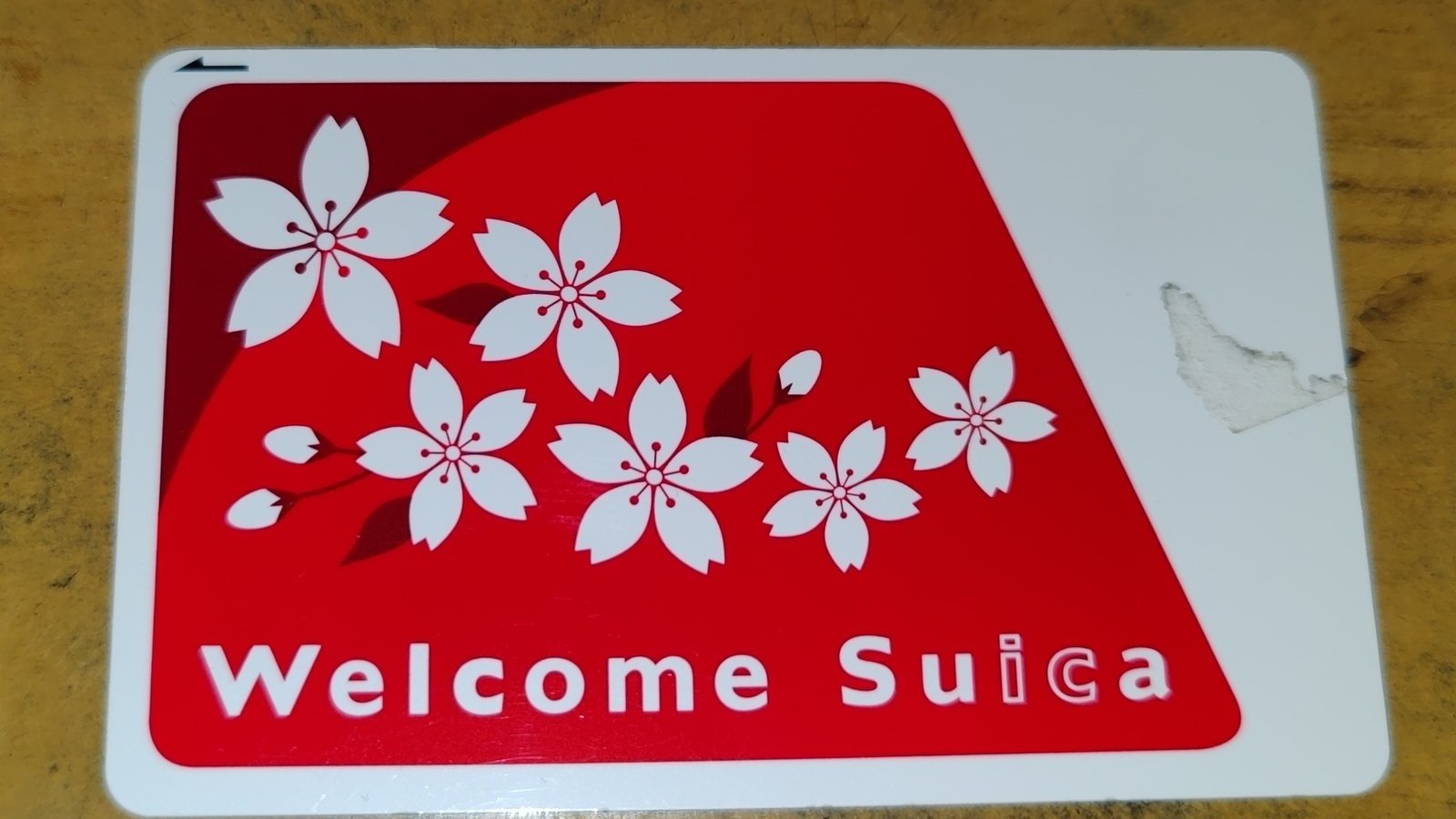
On a first Tokyo trip, start with an IC card and pay per ride (Welcome Suica has no deposit and is valid for 28 days). If you take four or more subway rides in a day, add a 72-hour Tokyo Subway Ticket for 2,000 yen; a JR Pass is never worthwhile if you stay in Tokyo and do not go to Kansai. See what TOURIST PASMO, Suica on iPhone, and the Tokyo Metro day pass do and do not cover, with a decision chart. Prices verified in September 2026.
- Transport
- Budget

GuideTokyo
Tokyo Disneyland and DisneySea Guide: Ticket Prices, Fantasy Springs, Disney Premier Access (DPA), Standby Pass, and Which Park to Choose for Your First Visit
Tokyo Disney one-day Passport prices vary: most weekdays in 9/2026 cost ¥9,900 and weekends ¥10,900. At 14:00 daily, tickets go on sale for the same date two months later. Free Priority Pass is no longer on the official service list; only paid Disney Premier Access (¥1,000–3,500 per person per use) shortens waits. Covers hours, the 25th anniversary, Standby Pass, Entry Request, Fantasy Springs access and first-visit park choice; checked on the official site in 9/2026.
- Itineraries
- Family