Lifestyle
Gemini Personal Intelligence: Where Does Convenience Come from After AI Connects Emails and Photos?
Reviewing Google's 2026 beta launch of Gemini Personal Intelligence, analyzing personalization mechanisms across email and photo integration, potential misinterpretation risks, and key review principles.
Updated: About 8 min read
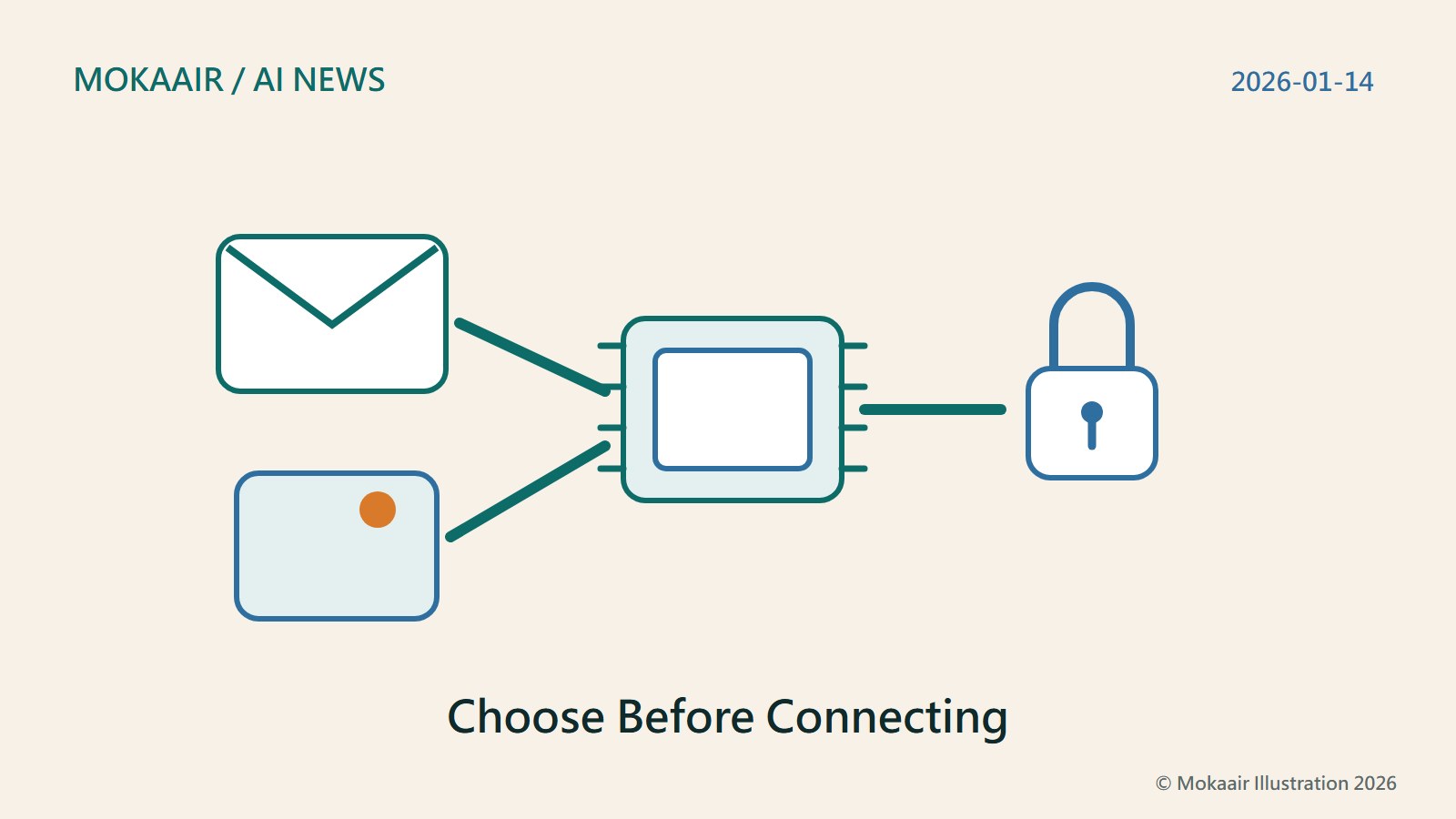
Event date: 2026-01-14; Verification date: 2026-09-14. On January 14, Gemini Personal Intelligence launched in beta in the United States, initially available to eligible personal Google AI Pro / Ultra accounts.
Users choose whether to connect Gmail, Photos, YouTube, and Search; enhanced personalization is off by default, allowing users to select sources or turn it off. Google states that it does not directly train on Gmail inboxes or Photos libraries, but limited prompts and responses may be used to improve features; this cannot be rephrased as all data not being used for training. Officials acknowledge that unrelated data may mistakenly be linked or over-personalized. Another announcement on January 22 expanded Personal Intelligence to AI Mode in Search. The following daily life and work scenarios are editor-designed examples for readers to verify on their own, not actual product tests by this site.
Connecting Footprints and Reshaping Context in Family Trip Planning
Imagine preparing for a family vacation: the user wants to compile past preferences to select a destination. If the system is permitted to read past flight confirmation emails and travel photo albums, the model can quickly surface accommodation patterns and preferred activities from a family island visit years ago. This context integration eliminates the tedious process of searching through attachments across tens of thousands of emails, transforming dormant everyday records into a structured list of inspiration and demonstrating the time-saving advantages of a personalized assistant.
However, historical footprints do not equate to current actual needs. A quadruple family room booked in the past may not fit this year's space configuration with accompanying elders or children who have grown up; high-budget spending shown in older emails might also not align with current financial considerations. If the user does not actively define the current departure date, travel companions, and budget cap in the prompt, the model might mistake past spending fragments for present commitments, or even assemble an unrealistic travel package.
To ensure plans reflect reality, a clear current baseline must be provided before initiating this type of integrated analysis. Explicitly inform the algorithm of the clear constraints for this trip, and ask the system to cite the year of older emails or photo records behind each recommendation. Only by actively calibrating time and context can users extract useful insights from vast past memories, avoiding disruption to new plans caused by the system arbitrarily applying expired preferences.
Trade-offs in Data Boundaries and Detailed Interpretation of Training Policies
Official explanations state that Gmail inboxes or Photos libraries are not directly used for training, which is a specific data usage clarification; it is not equivalent to endpoint isolation, zero processing, or a guarantee against any leakage. When reading privacy information, one should understand separately how data is connected, how it is used to answer, and which prompts and responses might be used to improve functionality, rather than compressing different steps into a blanket statement of 'no data is used at all.'
However, users must never simplify this into 'no data is used for training at all.' Official documentation also points out that limited user-entered prompts and system-generated responses may still be used to improve model features. In other words, even if original emails are not incorporated into the training corpus, private itineraries or key summaries excerpted in questions still carry the possibility of being processed by product iteration mechanisms—an awareness essential to understanding modern generative architectures.
Under these rules, users should cultivate the habit of tiered management, avoiding actively pasting national ID numbers, financial accounts, or highly confidential personal medical details into prompts. When summarizing for daily tasks, one should also review whether input content contains unnecessary sensitive fields. Only by grasping the difference between data at the processing tier and the training tier can users enjoy automated organization services while maintaining an appropriate personal security baseline according to officially published terms of service.
| Data Source | Primary Integration Use | Potential Misinterpretation Scenarios & Verification Points |
|---|---|---|
| Gmail | Extract past booking codes, ticket vouchers, and itinerary summaries | May mistake proxy bookings for personal itineraries; verify passenger names and departure years |
| Photos | Review visited travel spots, dining preferences, and activity choices | Prone to treating one-time activities as regular habits; verify current physical fitness and member roster |
| YouTube | Assist in inferring personal interest topics and leisure preferences | Brief views may be amplified into long-term preferences; inspect whether recommended topics are overly narrowed |
| Search | Connect recent search histories to maintain research context | May fold queries conducted for others into personal context; periodically audit historical search records |
Account Attributes and Permission Separation Strategies for Search Entry Points
Facing cross-ecosystem integration, the primary task is clarifying the essential differences between different Google accounts. This test primarily targets eligible personal paid subscription accounts, meaning enterprise or school-managed work accounts operate under entirely different data governance frameworks and must not be conflated. When testing related functions, users must confirm which profile is currently logged in and ensure work inboxes containing business secrets are not mistakenly linked to the personalization test scope.
Furthermore, following the January 22 expansion of this capability to Search's AI Mode, the boundary between daily search habits and deep conversational entry points has become even more subtle. In typical search contexts, users may only seek objective public information, such as public transit schedules or weather trends; if the system unpromptedly blends in scattered information from personal inboxes, it could disrupt objective results or even expose personal schedules on public screens.
If you use both work and personal accounts simultaneously, clearly named browser profiles can reduce login confusion, allowing you to confirm accounts and linked sources before asking questions. If you wish to use only public data for a particular query, verify personalization settings and response citations at the corresponding entry point. Disabling an enhanced feature does not mean the entire search service is free of other personalization mechanisms; therefore, refer to actual sources and interface descriptions.
Risks of Over-Personalization and Verification Procedures for Mislinked Information
When the system connects multiple sources, the most common mistake is 'erroneously linking unrelated data.' For instance, an inbox might hold both a flight confirmation booked on behalf of a friend and a business trip notice for oneself; if the algorithm fails to properly identify the recipient's role versus the actual traveler, it might blend the two, generating a chronologically jumbled and logically confused personal itinerary that causes cognitive mix-ups and frustration.
Another potential risk is 'over-personalization.' The algorithm might disproportionately amplify an occasional YouTube viewing history or photos taken during a unique event, stereotyping a single, temporary random action into an unshakable long-term preference. When the system assumes an intense fixation on a specific topic, suggested recommendations rapidly narrow, even screening out diverse new options and forming an invisible, closed algorithmic echo chamber.
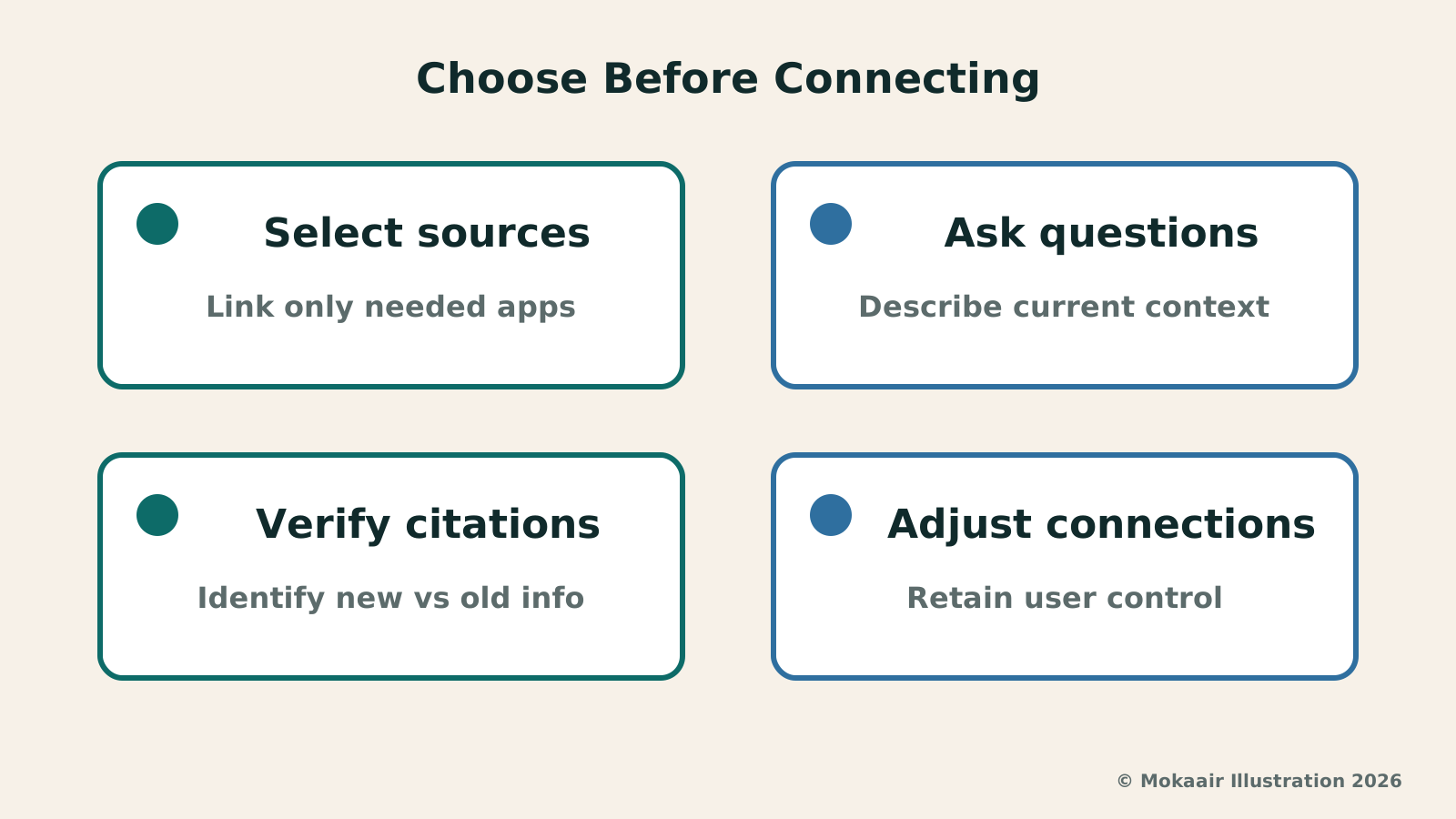
To guard against such algorithmic biases, establishing a standard acceptance verification workflow is essential. Whenever the model provides an integrated analysis, users should request that the system tag its information sources and verify key data points one by one. Checklists should include: whether a preference originates from outdated records, whether proxy bookings were mistaken for personal needs, and whether the analysis extrapolates excessively. Only through rigorous fact-checking can the algorithm be precisely corrected before hallucinations emerge.
Practicing User Autonomy and the Mindset of Selective Connection
In the face of increasingly deep cross-platform automation, a user's most valuable asset is 'the right to choose connections.' Since this architecture sets enhanced personalization to off by default and allows users to freely select individual sources such as Gmail, Photos, YouTube, or Search, the optimal strategy is never to turn on everything at once. Instead, adopt the principle of least privilege based on the specific task at hand, dynamically deciding which channels offer genuine integration value.
For example, if merely arranging a business trip that requires tracking hotel booking codes, enabling email access alone is more than sufficient, with no need to open photo libraries for the system to scan private life images. Likewise, to explore diverse new perspectives in search, detaching past watch history in a timely manner broadens and objectifies retrieval horizons. Flexibly toggling service switches is essential for maintaining a tidy digital life.
The initial rollout announcement described test arrangements in the United States in January, which cannot be used to claim that access remains limited to the same cohort in September. Readers in Taiwan or other regions wishing to verify their current eligibility should check their accounts, plan tiers, and the latest official updates. This article preserves the context of the early-year event so you can understand how personalized data is used to assist responses, without mistaking that period's rollout list for a permanent boundary of access.
2026 AI News Roundup: Highlights and Daily Life Applications from January to September2026 AI News Roundup: Highlights and Daily Life Applications from January to SeptemberOrganizing key AI news stories month by month from January to September 2026, linking to full analyses in five languages. Covering models, work tools, creation, costs, and transparency, explaining backgrounds, uses, and limits.Read the full article
Claude Opus 4.6 and Long Context: Reading Vast Data In, Retrieving It Accurately OutClaude Opus 4.6 and Long Context: Reading Vast Data In, Retrieving It Accurately OutAnalyzing application boundaries of long-context models for massive document sorting. Using a condo management committee's multi-year quotes as an example, we examine token metrics, grouped querying, and manual spot-check workflows.Read the full article
Lifestyle
NVIDIA launches DGX Spark 64GB: on sale October 23 from $4,999, two units can be linked into 128GB
On October 2, 2026, NVIDIA announced a more affordable 64GB memory version of its DGX Spark personal AI computer, available from October 23 through six makers including Acer and ASUS. It is aimed mainly at developers and researchers who want to run AI models on their own machines. Below we summarize the specs NVIDIA published, its claims about linking two units, and what it means for general readers.
Lifestyle
Google Cloud Launches Spanner Queues: Putting Message Queues Inside Database Transactions to Make AI Agents More Reliable
Google Cloud has announced the general availability of Spanner queues, which make message creation part of a database transaction. The aim is to stop AI agents' "state" and "actions" from falling out of sync. This article covers Google Cloud's claims, the main features, and what it means for general readers.
Lifestyle
GPT-6.1 Sol Launches: New Sol Version in the API, Codex and ChatGPT Work, Not in Chat
OpenAI launched GPT-6.1 Sol on September 29, 2026, with the API name gpt-6.1-sol. The launch rollout covers Codex and ChatGPT Work on Plus, Pro, Business, Enterprise and Edu (Enterprise and Edu need an administrator to enable it); Free and Go are not included at launch, and it is not in Chat (checked September 2026).
Lifestyle
Claude Sonnet 5.5 Launches: Same List Price as Sonnet 5, Available in the API, on Cloud Platforms and in Claude.ai
Anthropic launched Claude Sonnet 5.5 on September 28, 2026. API list prices are the same as Sonnet 5 ($2 per million input tokens, $10 per million output tokens). It is available in Claude.ai, the API and several cloud platforms, and higher-risk cybersecurity requests fall back to Sonnet 5 (checked September 2026).
Articles that cite this one
Latest travel guides

GuideTokyo
Where to Stay in Tokyo: Comparing Shinjuku, Ueno, Tokyo Station, Shibuya, Asakusa, Ikebukuro, and Ginza, Plus Airport Access, Accommodation Tax, and Luggage Delivery
Where should you stay in Tokyo? Compare Shinjuku, Ueno, Tokyo Station, Shibuya, Asakusa, Ikebukuro, and Ginza by the same criteria: access from Narita and Haneda, transit routes, nearby attractions, neighborhood character, and who each area suits. Includes a comparison table, a Yamanote Line diagram, Tokyo’s accommodation tax as verified in 2026/9 (changing to 3% in 2027/4), and Airport TA-Q-BIN luggage shipping rules.
- Budget
- Hotels

GuideTokyo
How to Choose Tokyo Transit Passes: Are Suica, Welcome Suica, the Tokyo Subway Ticket, and the JR Pass Worth It?
On a first Tokyo trip, start with an IC card and pay per ride (Welcome Suica has no deposit and is valid for 28 days). If you take four or more subway rides in a day, add a 72-hour Tokyo Subway Ticket for 2,000 yen; a JR Pass is never worthwhile if you stay in Tokyo and do not go to Kansai. See what TOURIST PASMO, Suica on iPhone, and the Tokyo Metro day pass do and do not cover, with a decision chart. Prices verified in September 2026.
- Transport
- Budget

GuideTokyo
Tokyo Disneyland and DisneySea Guide: Ticket Prices, Fantasy Springs, Disney Premier Access (DPA), Standby Pass, and Which Park to Choose for Your First Visit
Tokyo Disney one-day Passport prices vary: most weekdays in 9/2026 cost ¥9,900 and weekends ¥10,900. At 14:00 daily, tickets go on sale for the same date two months later. Free Priority Pass is no longer on the official service list; only paid Disney Premier Access (¥1,000–3,500 per person per use) shortens waits. Covers hours, the 25th anniversary, Standby Pass, Entry Request, Fantasy Springs access and first-visit park choice; checked on the official site in 9/2026.
- Itineraries
- Family
Sources
- Google: Gemini Personal Intelligence · Checked:
- Google: Personal Intelligence in Search · Checked: