Lifestyle
Apple Announces New EU App Business Terms: A 5% Core Technology Commission, and Alternative Payments Alongside Apple In-App Purchase
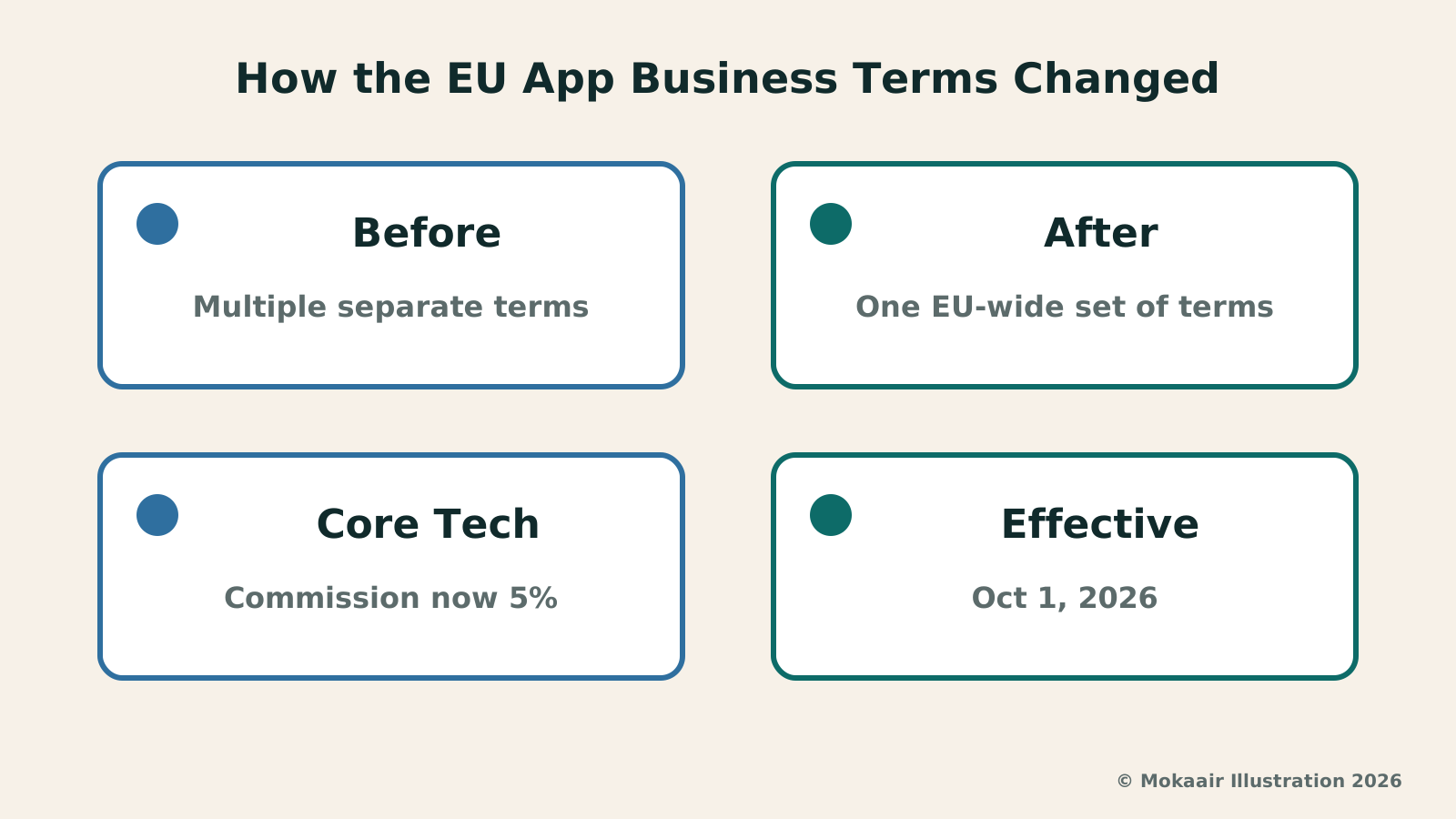
On August 18, 2026, Apple announced new EU App Store business terms: the Core Technology Fee becomes a 5% Core Technology Commission, commissions run 26%/20%/15% by payment method, and apps may offer Apple In-App Purchase alongside alternative payments. Primary updates take effect October 1, 2026, for EU storefronts only. Checked against Apple's own announcements and support pages on September 17, 2026.
About 14 min read
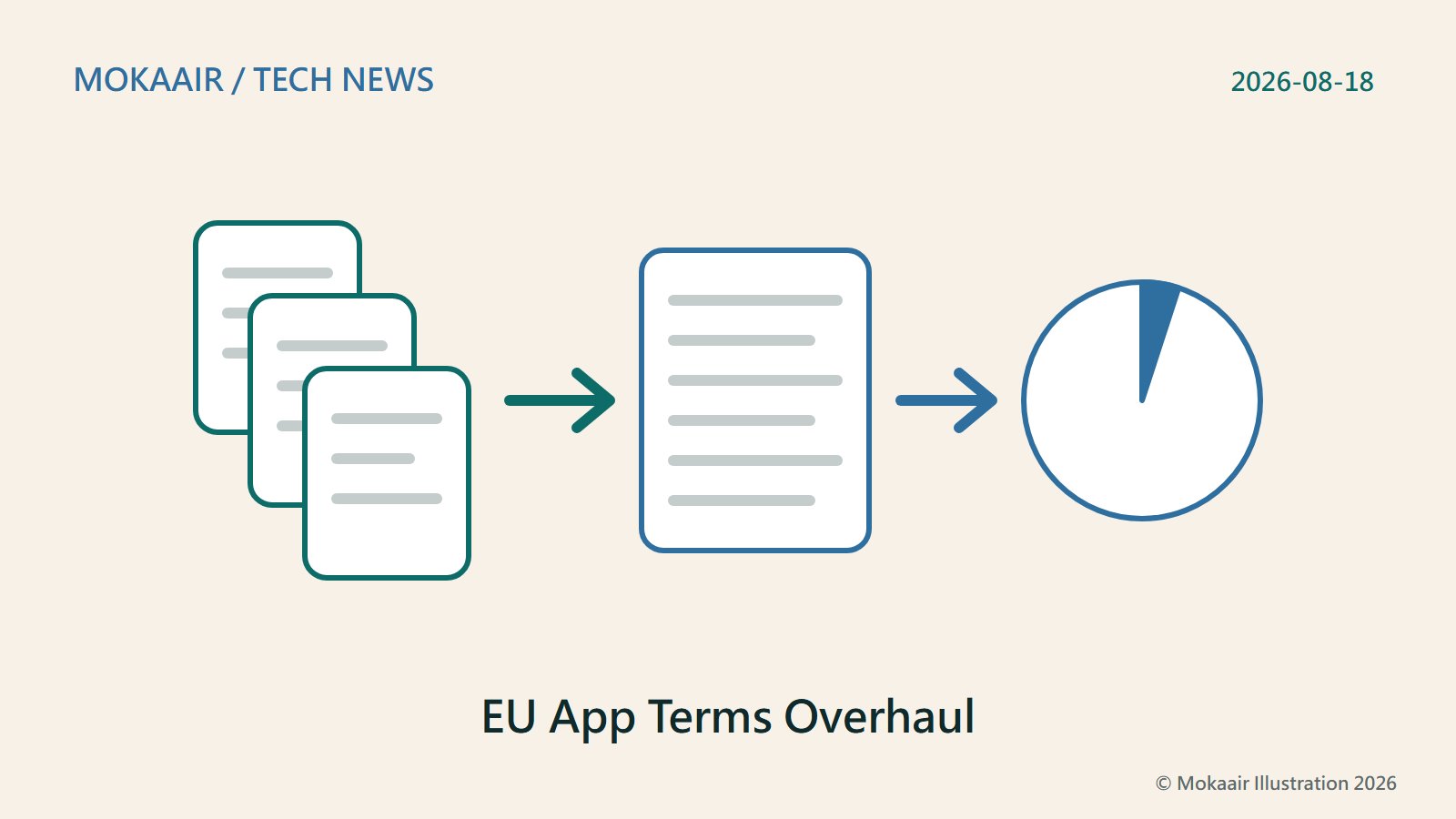
On August 18, 2026, Apple published announcements the same day on Apple Developer News and Apple Newsroom, adjusting its business terms for apps in the European Union. Apple says the change follows close collaboration with the European Commission and moves every developer that distributes apps in the EU onto a single set of terms. The Core Technology Fee, previously a per-install fee charged only to developers who achieve extraordinary scale, is replaced by the Core Technology Commission -- a 5% commission on digital transactions in apps distributed outside the App Store -- and the new terms also eliminate the Initial Acquisition Fee and the Store Services Fee.
This article was checked on September 17, 2026, against the full text of the Apple Developer News announcement, the matching Apple Newsroom announcement, and two Apple Developer support pages -- the business-terms overview page and the payment-options page. This site has not actually applied for alternative payments or alternative-marketplace eligibility, and has not tested the payment flow itself; what follows does not compare the merits of the different options or recommend whether to change any payment setting, and only summarizes the conditions and deadlines the official pages state.
What Apple announced, and when it takes effect
Apple's own wording is that "Some key updates ... include" four items: adjusting commission rates across the App Store, alternative payments, and alternatively distributed apps; allowing apps to offer alternative payment options alongside Apple In-App Purchase, which had not previously been permitted in the EU; adding child-safety protections for alternative payments; and expanding the qualifications for developers to operate alternative app marketplaces and distribute apps over the web. Developers can review and agree to the updated terms in the Apple Developer Program License Agreement starting the day of the announcement, and these updates take effect on October 1, 2026.
The structured data on the Apple Newsroom announcement shows the page was last modified on August 27, 2026, nine days after the August 18 publication date, and Apple does not say what changed; this article cites the version read on September 17, 2026.
The full text of both Apple announcements never uses the words Digital Markets Act (DMA), gatekeeper, or fine -- they describe the changes only as the result of close collaboration with the European Commission, and Apple says the adjustments resolve its disagreements with the Commission over business terms and alternative distribution. Apple's support page mentions the Digital Markets Act in two other passages, one recapping updates made since 2024 and one about the interoperability request process developers can use; neither is given as the reason for this change. All four sources cited in this article are Apple's own pages, and this article has no primary account from the Commission about this change.
Four commission rates, two lower tiers
The new terms set three rates by payment method. Apple In-App Purchase carries a 26% commission, dropping to 15% for developers in the App Store Small Business Program, Mini Apps Partner Program, or Video Partner Program, and for auto-renewable subscriptions after their first year. Alternative payment processing in the app carries a 20% commission, dropping to 10% for that same group. An out-of-app offer that uses an actionable link to take the user out of the app carries a separate store services commission of 15% (the support page notes this excludes the same program participants and auto-renewable subscriptions after their first year), dropping to 10% for that same group; both of these two rates count only purchases completed within 7 days of the link tap.
For alternative app marketplaces themselves, and for iOS and iPadOS apps distributed through an alternative marketplace or via Web Distribution, Apple charges a 5% Core Technology Commission instead. Apple lists three categories of transactions this covers: sales of digital goods and services within these apps; fees paid to access or download the alternative marketplace or these apps, including subscription fees for accessing content or a catalog; and purchases made through an actionable link that opens in a browser to a website, again counting only purchases completed within 7 days. A small marketplace operator is exempt from this commission on its marketplace's download fees or subscription fees if its global revenue was under EUR 10 million in the last 12 months and its marketplace's cumulative lifetime revenue from download or subscription fees is under EUR 1 million.
| Commission | Standard rate | Lower rate or waiver |
|---|---|---|
| App Store: Apple In-App Purchase | 26% | 15%: Small Business/Mini Apps/Video Partner Program participants, and auto-renewable subscriptions after their first year |
| App Store: alternative payment processing in the app | 20% | 10%: the same group |
| Store services: out-of-app offer with an actionable link (to a website, an alternative marketplace, or another app; only within 7 days of the tap) | 15% (excludes the group above) | 10%: the same group |
| Core Technology Commission (alternative marketplaces themselves, and alternatively distributed iOS/iPadOS apps) | 5% | Waived: a small marketplace operator's download and subscription fees, if both revenue thresholds are met |
What users will see: disclosures and child-safety protections
Apple says that once a developer selects its payment options -- Apple In-App Purchase, alternative payment processing in the app, an out-of-app offer with an actionable link, or a combination -- it must keep that choice unchanged across all EU storefronts for 12 months. For the latter two options, the app must use the ExternalPurchaseCustomLink API to show a system-provided disclosure sheet when the user taps the button, explaining that they will be transacting with the developer and not Apple; the user can choose not to see it again. The App Store product page will also show an informational banner and a disclosure in the Information section, and the download confirmation will carry an "External Purchases" notation.
Apple also explains that once alternative payments are used, features like Report a Problem and Family Sharing will not reflect those transactions, and purchase history and subscription management will only show transactions made through Apple In-App Purchase; Apple says it has no way to help with refunds, record lookups, or subscription management for transactions made this way.
The child-safety rules are worded differently on Newsroom and on the support pages. Newsroom states that Kids Category apps will not include links to websites to complete transactions, that for users under 18 who use alternative payments or link out to a website a parental gate is required, and that for users under 13, apps cannot link out to websites for transactions. The support pages state instead that a Kids Category app's alternative-payment flow must sit behind a parental gate and must not offer out-of-app offers to buy on a website; that users under 13 need a parental gate for alternative payments and may not be offered out-of-app offers at all; and that users 13 to 17 need a parental gate for both. Apple further explains that where a storefront sets the age of parental consent above 13, the same protections apply at that higher age instead -- for example, some storefronts use "under 16" and "16 to 17."
Who can operate an alternative marketplace or distribute apps over the web
Eligibility to operate an alternative marketplace or distribute apps via Web Distribution widens starting October 1, 2026; the support page says meeting any one of these criteria qualifies a developer: a moderate financial-stability bar as scored by Dun & Bradstreet; being publicly traded or owned by a publicly traded company; having received venture funding from an established investment institution; having completed a financial audit by a qualified accountant; being a government entity, an educational institution, or a nonprofit approved for a fee waiver; providing a stand-by letter of credit of USD 1,000,000 (or the local-currency equivalent); or having one million "first annual installs" worldwide. Apple's Newsroom announcement lists five of these and omits the letter-of-credit and installs criteria, and its nonprofit criterion does not specify "approved for a fee waiver." Apple explains that companies are no longer required to have a legal entity or be established in the EU to operate an alternative marketplace or use Web Distribution.
The scope by platform needs to be kept separate: the EU business terms as a whole cover iOS, iPadOS, macOS, tvOS, visionOS, and watchOS apps listed on EU storefronts, while alternative marketplaces and Web Distribution are iOS and iPadOS only. The region codes listed on the alternative-payments entitlement page, 29 of them by this article's own count, include Iceland and Norway -- neither an EU member state, which shows that "EU" here is really a list of storefronts. Using this entitlement requires a device updated to at least iOS 26.2, iPadOS 26.2, or macOS, tvOS, visionOS, or watchOS 26.6.
Apple explains that Web Distribution is available only in the EU, has no marketplace operator vetting apps behind it, and lacks the ongoing oversight Apple applies to the App Store; whichever channel is used, every alternatively distributed app must still pass Notarization, which Apple describes as a baseline review focused on basic functionality and protection from serious threats.
How Taiwan-based readers can check the current status themselves
For all of these new rules, Apple states the scope as apps listed on EU storefronts, and the child-safety section is tiered by the user's age and the storefront's own rules. As of this article's check on September 17, 2026, none of these four pages says whether Taiwan or any other region will adopt the same business terms. A reader who wants to know whether an app they use is affected should look at which storefront that app is sold on, not at where they themselves are located.
To check the latest status directly, readers can go to the Apple Developer News announcement itself (id gmws0jgp) and the two support pages. All three pages are updated over time, and the version checked for this article is current as of September 17, 2026. One note on terminology: all four sources for this article are Apple's own English-language pages, so terms such as the Core Technology Commission are quoted here exactly as Apple writes them.
Frequently asked questions
Is this change related to the Digital Markets Act?
The full text of both Apple announcements never mentions the Digital Markets Act (DMA), gatekeeper, or any fine -- they describe the changes only as the result of close collaboration with the European Commission, and say the changes resolve Apple's disagreements with the Commission over business terms and alternative distribution. Apple's support page does mention the Digital Markets Act in two passages, but both describe changes made since 2024 and the interoperability request process, not the reason for this business-terms update. All four sources for this article are Apple's own pages; it has no primary statement from the European Commission about this change, so it does not attribute any position to the Commission.
Did App Store commissions go up or down?
This article could not find what the EU commission rates were before this change, so it cannot say whether they went up or down; it can only summarize the numbers in the new terms: 26% for Apple In-App Purchase (15% for qualifying developers), 20% for alternative payment processing in the app (10% for qualifying developers), 15% for out-of-app offers with an actionable link (10% for qualifying developers, counting only purchases completed within 7 days of the tap), and a 5% Core Technology Commission for alternative marketplaces themselves and for iOS and iPadOS apps distributed through an alternative marketplace or via Web Distribution.
Does eliminating the "Store Services Fee" mean developers no longer pay Apple anything?
No. What Apple eliminated is the line item called the Store Services Fee, but a purchase offer with an actionable link that takes the user out of the app to a website, an alternative marketplace, or another app still carries a 15% commission (10% for qualifying developers), which Apple now calls the store services commission, counting only purchases completed within 7 days of the tap. What was eliminated is one fee name under the old system, not the commission on all out-of-app transactions.
Are apps or users in Taiwan affected?
Based on the official pages as checked for this article through September 17, 2026, the scope of this business-terms change is apps listed on EU storefronts, and what matters is which storefront the app is sold on, not where the user or developer is physically located. Apple does not say on these pages whether Taiwan or any other region will adopt the same business terms.
After using alternative payments, are refunds or purchase-history lookups affected?
Apple explains that once alternative payments are chosen, features like Report a Problem and Family Sharing will not reflect those transactions, and the App Store's purchase history and subscription management will only show transactions made through Apple In-App Purchase; Apple says it has no way to help with refunds, purchase-history lookups, or subscription management for transactions completed through alternative payments. This is Apple's own description of that trade-off, and this site has not tested it separately.
What new protections apply to minors?
Per Apple's support pages: a Kids Category app must put its alternative-payment purchase flow behind a parental gate and may not offer out-of-app purchase offers to buy on a website; users under 13 must pass a parental gate for alternative-payment purchases and may not be offered out-of-app purchase offers at all; and users 13 to 17 need a parental gate for both alternative payments in the app and out-of-app purchase offers. Apple also explains that where a storefront sets the age of parental consent above 13, that higher age applies instead -- for example, some storefronts use "under 16" and "16 to 17." Apple does not list which storefronts on this page, and instead directs developers to the region-specific rules page for managing an Apple Account.
2026 Tech News Roundup: Key Points on Hardware, Platforms, Telecom, and Regulation2026 Tech News Roundup: Key Points on Hardware, Platforms, Telecom, and RegulationThis site's 2026 tech-news explainers in five groups — hardware, platforms, computing infrastructure, Taiwan policy, EU regulation: iPhone Duo and September hardware, M6/M5 Ultra, Snapdragon 8 Elite Gen 6, Project Zenith, Pixel Drop, App Store subscriptions, WordPress and Synology patches, NVIDIA, 6G, the Taiwan–Matsu cables, the sovereign AI corpus, the Cyber Resilience Act, the KIDS Act and Apple's EU terms. No purchase advice; vendor claims attributed; official sources and check dates.Read the full article
EU Cyber Resilience Act Reporting Obligations Begin September 11: Who Must Report, How FastEU Cyber Resilience Act Reporting Obligations Begin September 11: Who Must Report, How FastOn September 11, 2026, the reporting obligations under Article 14 of the EU's Cyber Resilience Act took effect, and ENISA launched its Single Reporting Platform. Based on the European Commission's reporting page, ENISA's press release and FAQ, and the Regulation's text in the Official Journal, this article explains how fast manufacturers must report, where reports go, which obligations already apply, which wait until December 2027, and the fine ceiling in Article 64.Read the full article
Lifestyle
EU Cyber Resilience Act Reporting Obligations Begin September 11: Who Must Report, How Fast
On September 11, 2026, the reporting obligations under Article 14 of the EU's Cyber Resilience Act took effect, and ENISA launched its Single Reporting Platform. Based on the European Commission's reporting page, ENISA's press release and FAQ, and the Regulation's text in the Official Journal, this article explains how fast manufacturers must report, where reports go, which obligations already apply, which wait until December 2027, and the fine ceiling in Article 64.
Lifestyle
Cloudflare launches Traces in public beta: site operators can follow every step a request takes through the platform on one timeline
On October 2, 2026, Cloudflare announced the public beta of Cloudflare Traces. Website operators and developers using Cloudflare can see a request pass through security rules, caching, routing and the origin server on a single timeline, making it easier to find why a request was blocked or slowed. New pricing takes effect on December 1, 2026. Information comes from the official Cloudflare blog.
Lifestyle
Cloudflare launches Web Search API via AI Gateway, requiring search partners to follow its crawler rules
On October 2, 2026, Cloudflare announced a Web Search API that lets AI agents query live web information through AI Gateway. The first partners are Ceramic.ai, Exa and Linkup. Cloudflare says these partners' crawlers must meet its Verified bots requirements and cite sources. This matters both to developers building AI applications and to website owners whose content may be crawled.
Lifestyle
Cloudflare open-sources Streamline: a demo of using its cloud services to add graphics to live streams and burn subtitles into videos
On October 2, 2026, Cloudflare launched and open-sourced Streamline, a developer playground showing how developers can combine Stream, Workers, Containers and Durable Objects to build their own video processing pipelines, such as adding graphics to live streams in real time or adding subtitles to videos. This article explains what it is, how it works, its limitations, and what it means for viewers and developers.
Articles that cite this one
Latest travel guides

GuideTokyo
Where to Stay in Tokyo: Comparing Shinjuku, Ueno, Tokyo Station, Shibuya, Asakusa, Ikebukuro, and Ginza, Plus Airport Access, Accommodation Tax, and Luggage Delivery
Where should you stay in Tokyo? Compare Shinjuku, Ueno, Tokyo Station, Shibuya, Asakusa, Ikebukuro, and Ginza by the same criteria: access from Narita and Haneda, transit routes, nearby attractions, neighborhood character, and who each area suits. Includes a comparison table, a Yamanote Line diagram, Tokyo’s accommodation tax as verified in 2026/9 (changing to 3% in 2027/4), and Airport TA-Q-BIN luggage shipping rules.
- Budget
- Hotels
GuideTokyo
How to Choose Tokyo Transit Passes: Are Suica, Welcome Suica, the Tokyo Subway Ticket, and the JR Pass Worth It?
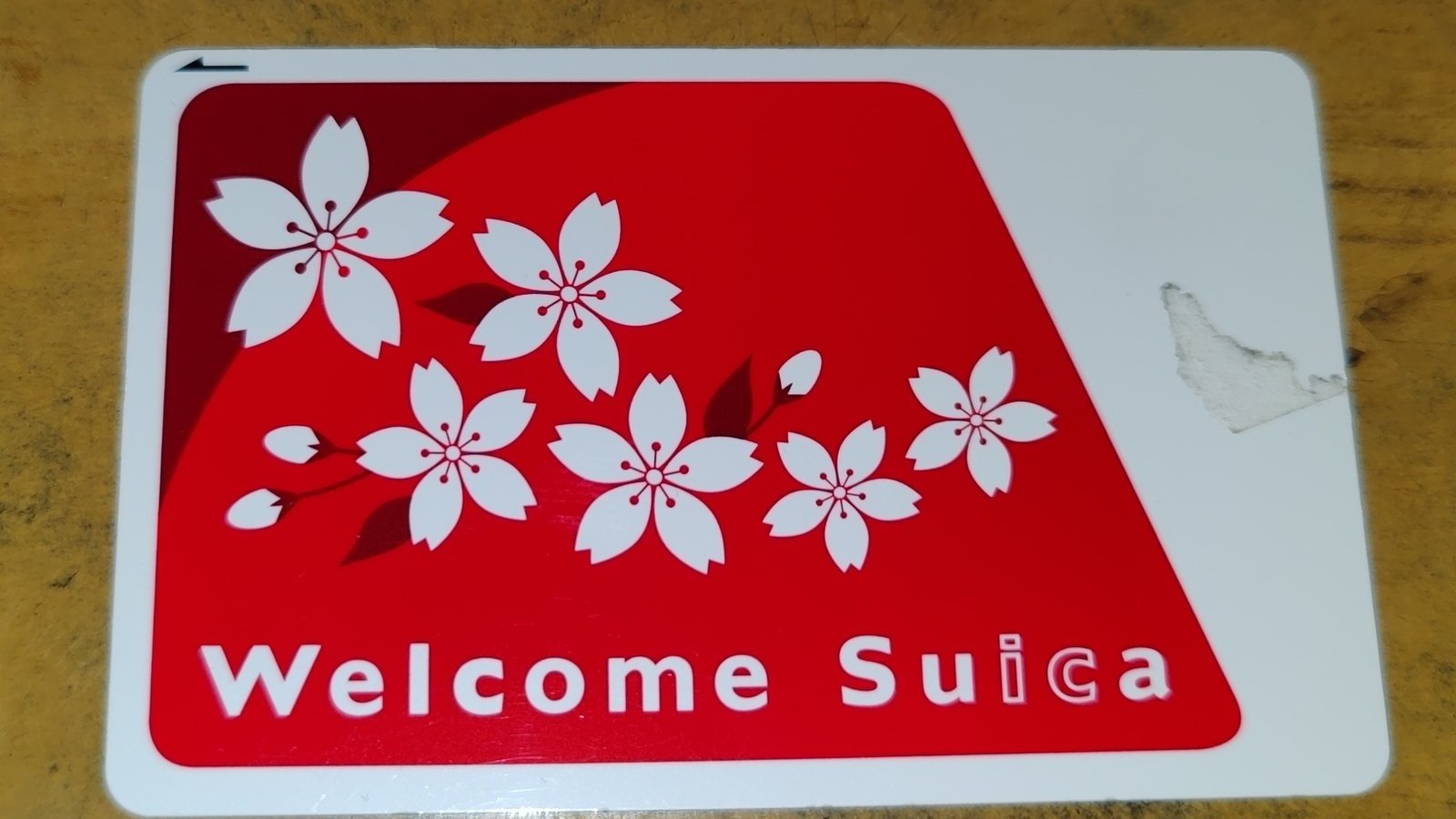
On a first Tokyo trip, start with an IC card and pay per ride (Welcome Suica has no deposit and is valid for 28 days). If you take four or more subway rides in a day, add a 72-hour Tokyo Subway Ticket for 2,000 yen; a JR Pass is never worthwhile if you stay in Tokyo and do not go to Kansai. See what TOURIST PASMO, Suica on iPhone, and the Tokyo Metro day pass do and do not cover, with a decision chart. Prices verified in September 2026.
- Transport
- Budget

GuideTokyo
Tokyo Disneyland and DisneySea Guide: Ticket Prices, Fantasy Springs, Disney Premier Access (DPA), Standby Pass, and Which Park to Choose for Your First Visit
Tokyo Disney one-day Passport prices vary: most weekdays in 9/2026 cost ¥9,900 and weekends ¥10,900. At 14:00 daily, tickets go on sale for the same date two months later. Free Priority Pass is no longer on the official service list; only paid Disney Premier Access (¥1,000–3,500 per person per use) shortens waits. Covers hours, the 25th anniversary, Standby Pass, Entry Request, Fantasy Springs access and first-visit park choice; checked on the official site in 9/2026.
- Itineraries
- Family
Sources
- Changes for apps in the European Union · Checked:
- Apple announces changes for apps in the European Union · Checked:
- Changes for apps in the European Union · Checked:
- Payment options on the App Store in the EU · Checked: