Lifestyle
Apple Adjusts EU App Tracking Transparency Prompt: Five Countries Get the New Version, a Renamed Setting, Yearly Reprompts
On September 16, 2026, Apple announced that the EU's App Tracking Transparency prompt will get an alternative version: from iOS 27.2 and iPadOS 27.2, Germany, France, Italy, Poland, and Romania can only use it, and the EU device setting has been renamed. Developers can now ask again a year after a user's last response. Based on Apple's announcement and support page, this article covers what changed, what did not, and what the announcement does not mention, including Taiwan.
About 12 min read
On September 16, 2026, Apple posted an update on the Apple Developer News page: the App Tracking Transparency (ATT) system prompt in the European Union will get an alternative version. Apple describes these changes as part of "agreements with select European competition authorities," but does not name any authority, and does not say which law this update is based on.
This article was checked on September 18, 2026, against the full text of this Apple Developer News announcement and the "User privacy and data use - App Store" support page it links to. This site has not installed the new system software and does not describe the on-screen interface, and offers no instructions for evading tracking or countering advertising. Every rule below is what Apple's official pages currently state; the actual screens and effective dates follow whatever version Apple publishes when the time comes.
What Apple Told Developers on September 16
The announcement is posted on the Apple Developer News page, titled "Updates to App Tracking Transparency in the European Union," and the page is dated September 16, 2026. The announcement itself is a single paragraph that ends with a link to the "User privacy and data use - App Store" support page; the details of the change are written in that page's section on the European Union, not in the announcement itself. Both of this article's sources are these two pages.
The change centers on the prompt itself: beginning with iOS 27.2 and iPadOS 27.2, developers will have the option to use an alternative version of the App Tracking Transparency system prompt. Neither page gives a rollout date for iOS 27.2 or iPadOS 27.2, and this change is written only for these two systems -- neither page says whether macOS, tvOS, watchOS, or visionOS will follow suit. A version number is not a date, and that is worth stating up front.
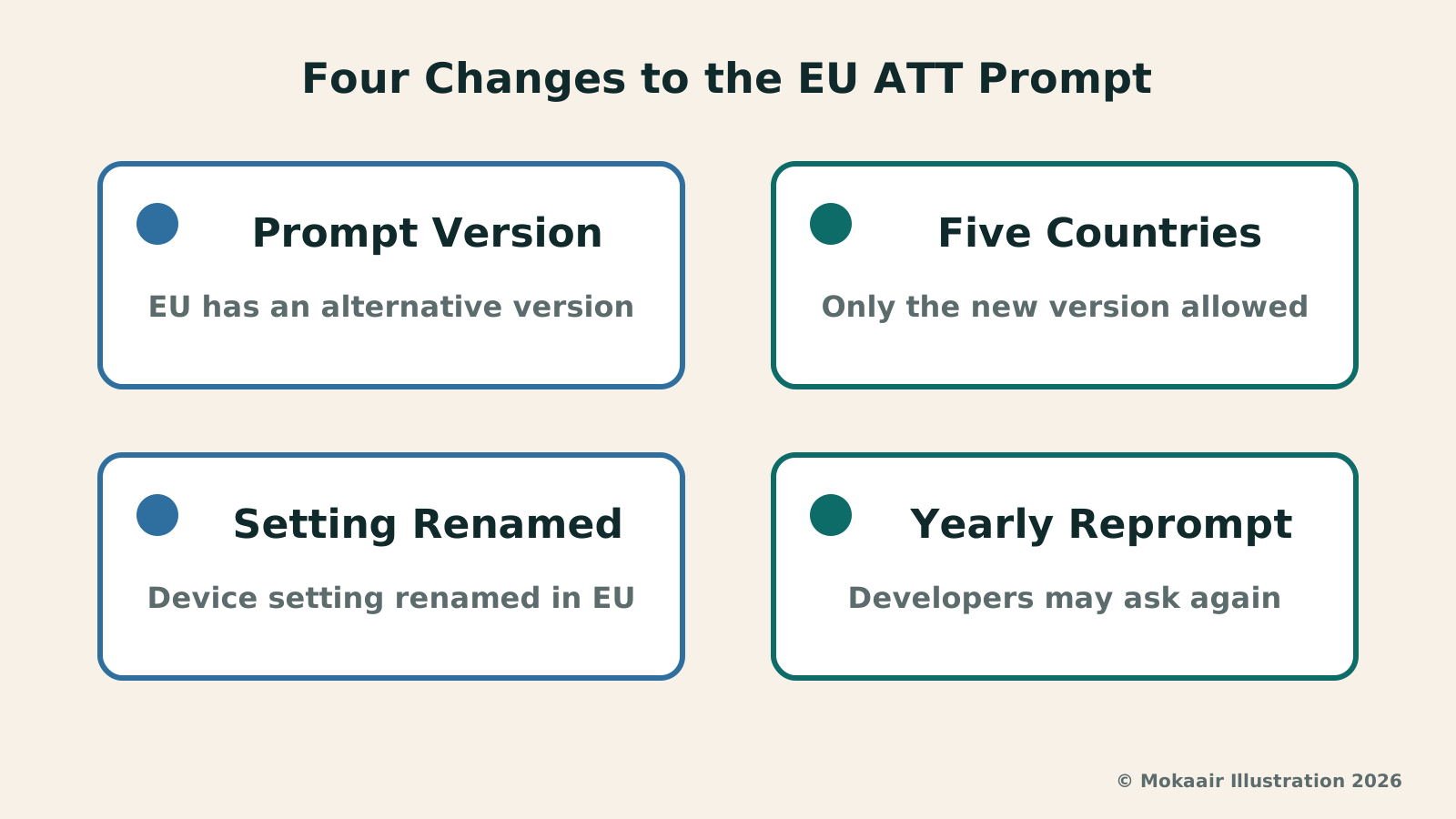
The change actually comes in two parts: first, the prompt itself has an alternative version in the EU, one that is the only version available in five countries; second, EU developers can show the prompt again a year after a user's last response, whether that response was to accept or reject. The two parts are independent of each other, and the next two sections cover them separately.
The Alternative Prompt, and How Five Countries Differ
Apple explains that the alternative prompt has "modified formatting and language," and gives developers the option to add a text button labeled "Additional Information." The button lets developers surface more detail about their request -- that is, linking user or device data collected from their own app with data collected from other companies' apps, websites, or offline channels, for targeted advertising or advertising measurement, or sharing user or device data with a data broker. Apple does not spell out the prompt's full wording in text; the support page embeds a screenshot next to this passage, and this article does not describe the on-screen interface.
The same page's FAQ adds two more points: EU developers can also use this button to offer more granular consent options in order to comply with local privacy laws or other applicable legal requirements, but whatever appears behind the button is entirely the developer's own responsibility. And until the user grants permission in the prompt, developers still cannot obtain the device's advertising identifier, or otherwise collect and use the app's user or device data as described in the prompt. In other words, one more button does not mean one more way around the prompt.
Apple states that "due to legal requirements," developers in five countries -- Germany, France, Italy, Poland, and Romania -- can only use the alternative prompt, with no option to keep the current version; in EU countries outside these five, switching to the alternative version is the developer's own choice. Apple again does not name which law, or say why these five countries.
One thing worth noting: when permission is required has not changed. Apple states in the same passage that "the requirements for when you must seek permission to track users will remain the same" -- what changes is only what the prompt looks like and what words it uses to ask, not the threshold for whether to ask at all.
| Item | Outside the EU | Other EU countries | Germany, France, Italy, Poland, Romania |
|---|---|---|---|
| Prompt version | Current version | Current or alternative version | Alternative version only |
| "Additional Information" button | Not applicable | Developers may add it | Developers may add it |
| Device setting name | Allow Apps to Request to Track | Renamed, see article | Renamed, see article |
| Reprompt after a year | Not mentioned on the official pages | Developers may | Developers may |
A Renamed Setting, and Reprompting After a Year
The second change is in a device setting. Apple states that users can turn off a setting so they will not be asked again; that setting is currently named "Allow Apps to Request to Track," and Apple says it has been renamed to "Allow Apps to Request to Link Your Activity Across Companies" in the EU.
The same passage also states a flexibility given only in the EU: developers can, via the same system prompt, ask again a year after the user's last choice in that app, regardless of whether the user originally chose to accept or reject. Apple's own wording is "you can reprompt" -- that is permission granted to the developer, not a prediction that the user will definitely be asked again; and if the user has turned off the device setting mentioned above, they will not be asked again. The support page does not say whether this kind of reprompting is allowed outside the EU.
Apple also lists four technical documents for developers, two of them marked as new: one is the new authorization-request method that pairs with the Additional Information button, and one is a usage-description field that pairs with Markdown formatting; the other two are the existing authorization-request method and usage-description field. The two "new" labels mean the alternative prompt corresponds to a new set of programming interfaces.
What Has Not Changed
The first thing that has not changed was already mentioned in the previous section: the rule for when user permission is required stays the same. Apple explains, on the same page, that starting with iOS 14.5, iPadOS 14.5, and tvOS 14.5, developers who want to track users or access a device's advertising identifier need to obtain the user's permission through the App Tracking Transparency framework; that starting point has nothing to do with this EU change, and the EU's alternative prompt is still asking about the same thing, just in a different way.
The second thing that has not changed is what happens after a user declines. Apple states that unless the user grants permission, the device's advertising identifier value will be all zeros, and developers may not track the user in the way described above; this statement does not distinguish between the EU and other regions, and the announcement does not say it has changed.
The third thing that has not changed is the App Store review guidelines. The support page's FAQ states that under App Review Guidelines 5.1.2(i), an app may not gate functionality on agreeing to be tracked, and may not offer an incentive in exchange for consent; and under App Review Guidelines 5.1.1 (iv), apps must respect the user's permission settings and not attempt to manipulate, trick, or force people to consent to unnecessary data access. The September 16 announcement does not mention either guideline.
What Apple Has Not Said, Including Whether It Mentions Taiwan
This Apple announcement does not name any "European competition authority," and does not say which law this update is based on -- it only cites "legal requirements" for why the five countries can only use the alternative prompt. The support page's FAQ does name EU privacy laws -- it cites ePrivacy and GDPR as examples -- but that is in the context of developers using the new button to comply with local privacy laws, not as the basis Apple gives for this update. This article therefore does not guess which authority or which law.
The pages also do not spell out the alternative prompt's full wording in text, only stating "modified formatting and language" and the label on one button; neither page gives any figures on changes in consent or refusal rates. Apple has not published any, and we have not tested this ourselves, so there is no way to compare how the old and new versions affect advertising or user choices.
As for Taiwan: neither page contains the word "Taiwan," and the description of the change is limited to the European Union. As checked through September 18, 2026, both pages this article read are in English only. This can only be read as the official announcement not covering Taiwan and not addressing Taiwan specifically -- it cannot be read as saying whether or not the same change will come to Taiwan. That is something Apple has not written, and this article does not answer on Apple's behalf.
Frequently asked questions
What is the tracking prompt actually asking?
Apple's explanation is that the prompt asks whether the user will let this app link the user or device data it has collected with data collected from other companies' apps, websites, or offline channels, for targeted advertising or advertising measurement, or share user or device data with a data broker. This definition is written in the support page's general section, not in the EU-specific section; what this update changes is the prompt's formatting, wording, and timing, not this definition itself.
What happens if I tap Don't Allow?
The device's advertising identifier value becomes all zeros, and developers may not track the user in the way Apple defines; the support page states this rule without distinguishing the EU from other regions, and this announcement does not say it has changed. Also, under Apple's review guidelines, an app may not gate functionality on agreeing to be tracked, or use an incentive or inducement in exchange for consent.
How does the EU's alternative prompt differ from the current version?
Apple's own words are "modified formatting and language," and developers can choose to add a text button labeled "Additional Information" to further explain the request, or, in the EU, to offer more granular consent options. Apple does not spell out the full wording in text; the support page only embeds a screenshot next to that passage, and this article does not describe the on-screen interface.
Which five countries can only use the alternative prompt?
Germany, France, Italy, Poland, and Romania. Apple says this is "due to legal requirements," but does not name which law.
Will I keep being asked repeatedly in the EU?
What Apple gives developers is permission that they "can" show the prompt again a year after the user's last response, whether that response was accept or reject -- it is not a guarantee that the user will definitely be asked again. If you turn off the tracking-request toggle in your device settings (its English name is Allow Apps to Request to Track, which Apple says has been renamed in the EU), you will not be asked again.
Will users in Taiwan see this alternative prompt?
This Apple announcement covers only the EU; neither page contains the word "Taiwan," and neither explains whether "apps distributed in the EU" is determined by storefront, device region, or some other method. This only means the official announcement does not cover Taiwan -- it is not Apple saying whether or not the same change will come to Taiwan.
2026 Tech News Roundup: Key Points on Hardware, Platforms, Telecom, and Regulation2026 Tech News Roundup: Key Points on Hardware, Platforms, Telecom, and RegulationThis site's 2026 tech-news explainers in five groups — hardware, platforms, computing infrastructure, Taiwan policy, EU regulation: iPhone Duo and September hardware, M6/M5 Ultra, Snapdragon 8 Elite Gen 6, Project Zenith, Pixel Drop, App Store subscriptions, WordPress and Synology patches, NVIDIA, 6G, the Taiwan–Matsu cables, the sovereign AI corpus, the Cyber Resilience Act, the KIDS Act and Apple's EU terms. No purchase advice; vendor claims attributed; official sources and check dates.Read the full article
Apple Announces New EU App Business Terms: A 5% Core Technology Commission, and Alternative Payments Alongside Apple In-App PurchaseApple Announces New EU App Business Terms: A 5% Core Technology Commission, and Alternative Payments Alongside Apple In-App PurchaseOn August 18, 2026, Apple announced new EU App Store business terms: the Core Technology Fee becomes a 5% Core Technology Commission, commissions run 26%/20%/15% by payment method, and apps may offer Apple In-App Purchase alongside alternative payments. Primary updates take effect October 1, 2026, for EU storefronts only. Checked against Apple's own announcements and support pages on September 17, 2026.Read the full article
Lifestyle
Apple Announces New EU App Business Terms: A 5% Core Technology Commission, and Alternative Payments Alongside Apple In-App Purchase
On August 18, 2026, Apple announced new EU App Store business terms: the Core Technology Fee becomes a 5% Core Technology Commission, commissions run 26%/20%/15% by payment method, and apps may offer Apple In-App Purchase alongside alternative payments. Primary updates take effect October 1, 2026, for EU storefronts only. Checked against Apple's own announcements and support pages on September 17, 2026.
Lifestyle
New App Store Subscription Rules: Bundles Cap at Five Developers, Multiseat Purchases On by Default, Volume Purchasing Arrives October 22
On September 16, 2026, Apple announced App Store subscription changes for iOS 27: subscriptions can combine into one purchase as a Bundle or Suite with up to five developers; multiseat purchases have defaulted on in App Store Connect since the announcement, Volume Purchasing launches October 22, and Group Purchases is only previewed for this winter. Apple names no region and does not mention Taiwan; checked and compiled September 18, 2026.
Lifestyle
European Commission Adopts KIDS Act Proposal: No Social Accounts Under 13, Own Account at 15
On September 17, 2026, the European Commission adopted the EU KIDS Act proposal, barring social platforms from letting children under 13 hold accounts and setting 15 as the minimum age to open one. This article uses the Commission's press release, FAQ and proposal summary to lay out the age tiers, design duties, age-verification methods and penalty thresholds, and notes this is still a proposal before the European Parliament and Council, with no stated date of entry into force.
Lifestyle
Cloudflare launches Traces in public beta: site operators can follow every step a request takes through the platform on one timeline
On October 2, 2026, Cloudflare announced the public beta of Cloudflare Traces. Website operators and developers using Cloudflare can see a request pass through security rules, caching, routing and the origin server on a single timeline, making it easier to find why a request was blocked or slowed. New pricing takes effect on December 1, 2026. Information comes from the official Cloudflare blog.
Articles that cite this one
Latest travel guides

GuideTokyo
Where to Stay in Tokyo: Comparing Shinjuku, Ueno, Tokyo Station, Shibuya, Asakusa, Ikebukuro, and Ginza, Plus Airport Access, Accommodation Tax, and Luggage Delivery
Where should you stay in Tokyo? Compare Shinjuku, Ueno, Tokyo Station, Shibuya, Asakusa, Ikebukuro, and Ginza by the same criteria: access from Narita and Haneda, transit routes, nearby attractions, neighborhood character, and who each area suits. Includes a comparison table, a Yamanote Line diagram, Tokyo’s accommodation tax as verified in 2026/9 (changing to 3% in 2027/4), and Airport TA-Q-BIN luggage shipping rules.
- Budget
- Hotels
GuideTokyo
How to Choose Tokyo Transit Passes: Are Suica, Welcome Suica, the Tokyo Subway Ticket, and the JR Pass Worth It?
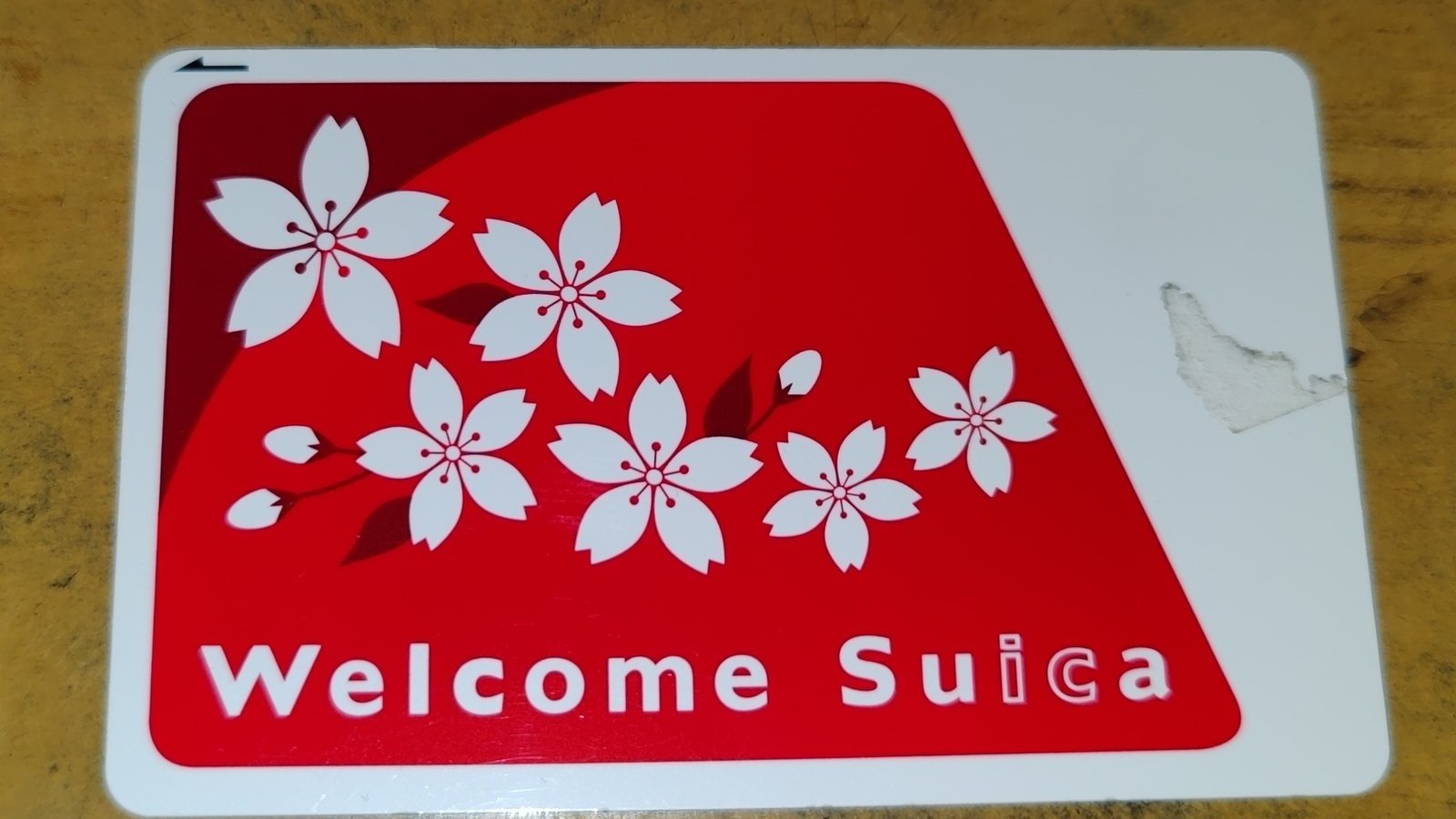
On a first Tokyo trip, start with an IC card and pay per ride (Welcome Suica has no deposit and is valid for 28 days). If you take four or more subway rides in a day, add a 72-hour Tokyo Subway Ticket for 2,000 yen; a JR Pass is never worthwhile if you stay in Tokyo and do not go to Kansai. See what TOURIST PASMO, Suica on iPhone, and the Tokyo Metro day pass do and do not cover, with a decision chart. Prices verified in September 2026.
- Transport
- Budget

GuideTokyo
Tokyo Disneyland and DisneySea Guide: Ticket Prices, Fantasy Springs, Disney Premier Access (DPA), Standby Pass, and Which Park to Choose for Your First Visit
Tokyo Disney one-day Passport prices vary: most weekdays in 9/2026 cost ¥9,900 and weekends ¥10,900. At 14:00 daily, tickets go on sale for the same date two months later. Free Priority Pass is no longer on the official service list; only paid Disney Premier Access (¥1,000–3,500 per person per use) shortens waits. Covers hours, the 25th anniversary, Standby Pass, Entry Request, Fantasy Springs access and first-visit park choice; checked on the official site in 9/2026.
- Itineraries
- Family