Lifestyle
Meta Muse Spark Debuts: How In-App AI Assistants Reshape Search and Inquiry
Analyzing the practical boundaries of Muse Spark, Meta Superintelligence Labs' native multimodal reasoning model, in social contexts, focusing on outdoor gear organization, discerning information sources, and understanding privacy permissions.
Updated: About 8 min read
Event date: 2026-04-08; Verification date: 2026-09-14. On April 8, Meta Superintelligence Labs unveiled Muse Spark, a native multimodal reasoning model that supports tool use.
It debuted on the Meta AI app and website, with an API available in a private preview for select users; it is not an open-weights release. A May 12 update stated it is gradually expanding to Meta social products and smart glasses, with the first wave on glasses restricted to the United States and Canada. Official demos showcased visual understanding and personalized assistance; features, countries, and product entry points may still vary. The following everyday and work scenarios are editor-designed examples for readers to verify on their own and do not constitute hands-on product testing by this publication.
Visual Clue Recognition and Gear Specification Verification
When browsing social media hiking posts, many people are drawn to the sophisticated outdoor gear shown in photos and hope to quickly compile a complete gear list. Even though native multimodal models demonstrated visual understanding potential in official demonstrations—such as circling and recognizing the outlines of tents or backpacks—users should still treat recognition results merely as preliminary clues. Shooting angles, filter shadows, and minor revisions within the same product line can lead to model discrepancies; algorithmic labels must never be directly regarded as exact purchasing specifications.
In a practical organization workflow, the reasonable approach is to take recognized names and features and verify specific figures against brand catalogs or specialized forums. Taking lightweight tents as an example, visually similar models may be categorized as four-season wind-resistant tents or standard three-season tents due to differences in coating materials and pole strength, with substantial disparities in weather resistance and weight between the two. Only by manually cross-referencing hydrostatic head ratings and packed dimensions can one ensure that gear meets the genuine safety standards required for the planned itinerary.
The analytical scope of a visual assistant is inherently and strictly constrained by photo resolution and the viewing angle of the shooting environment. If gear photos have undergone heavy color grading or are backlit, the material characteristics inferred by the model are even more prone to unexpected deviations. Using image recognition as an auxiliary starting point for keyword searches—rather than an endorsement for final purchasing decisions—enables one to enjoy the convenience of digital technology while effectively preventing outdoor activity risks arising from misjudging gear performance.
Analyzing the Boundaries of Mixed Content Sources on Social Media
When looking for gear recommendations in social media feeds, users often encounter a highly mixed information stream comprising creators' original reviews, supplemental explanations from smart assistants, and system-promoted sponsored content. A creator's personal experience typically reflects preferences tailored to specific climate adaptations and individual physical conditioning; for example, the streamlined gear recommended by ultralight alpine hikers may lack an adequate warmth margin of error for beginners, meaning it cannot be blindly adopted as is.
The supplementary checklists provided by smart assistants in these moments are essentially generalized frameworks compiled from multimodal reasoning and public corpora, which can help fill in easily overlooked basics such as emergency blankets or water purification filters. However, this text is neither an endorsement tested under harsh field conditions nor a customized recommendation tailored to an individual user's physique. Users must clearly differentiate between text reflecting the original author's firsthand experiences and text representing algorithmic conventional tips.
Commercial sponsorships and promotional links across social platforms represent another dimension that requires careful notation. The ranking mechanisms for algorithmically recommended or post-associated products are frequently influenced by business partnerships and are not necessarily the best fit for one's current budget or route characteristics. Keeping categorized notes that clearly separate personal impressions, model-assisted summaries, and commercial promotions helps sift through cluttered social feeds to establish safe and practically valuable decision bases.
| Data Type or Entry Point | Applicable Scenarios and Key Characteristics | Limitations and Verification Priorities |
|---|---|---|
| Public Social Media Post Images | Provides initial visual contours and gear clues, aiding in rapid recognition of item appearances and names | Subject to angles and filters; requires cross-checking against brand catalogs and actual weatherproofing specs |
| User-Supplied Conditions | Users proactively input trip duration, weather forecasts, and elevations to guide the reasoning framework | Check provided content and entry settings first; do not infer private message access from model name alone |
| Smart Assistant Supplementary Advice | Lists basic gear according to standard hiking safety guidelines to cover routinely overlooked items | Constitutes an algorithmically generated framework, not field-tested endorsement; requires manual review |
| Hardware-Specific Expansion Entry Points | Phased rollouts across apps and wearables, offering different forms of interactive assistance | Glasses initially limited to US and Canada; rollout progress varies across countries and accounts |
Defining Data Boundaries and Understanding Privacy Permissions
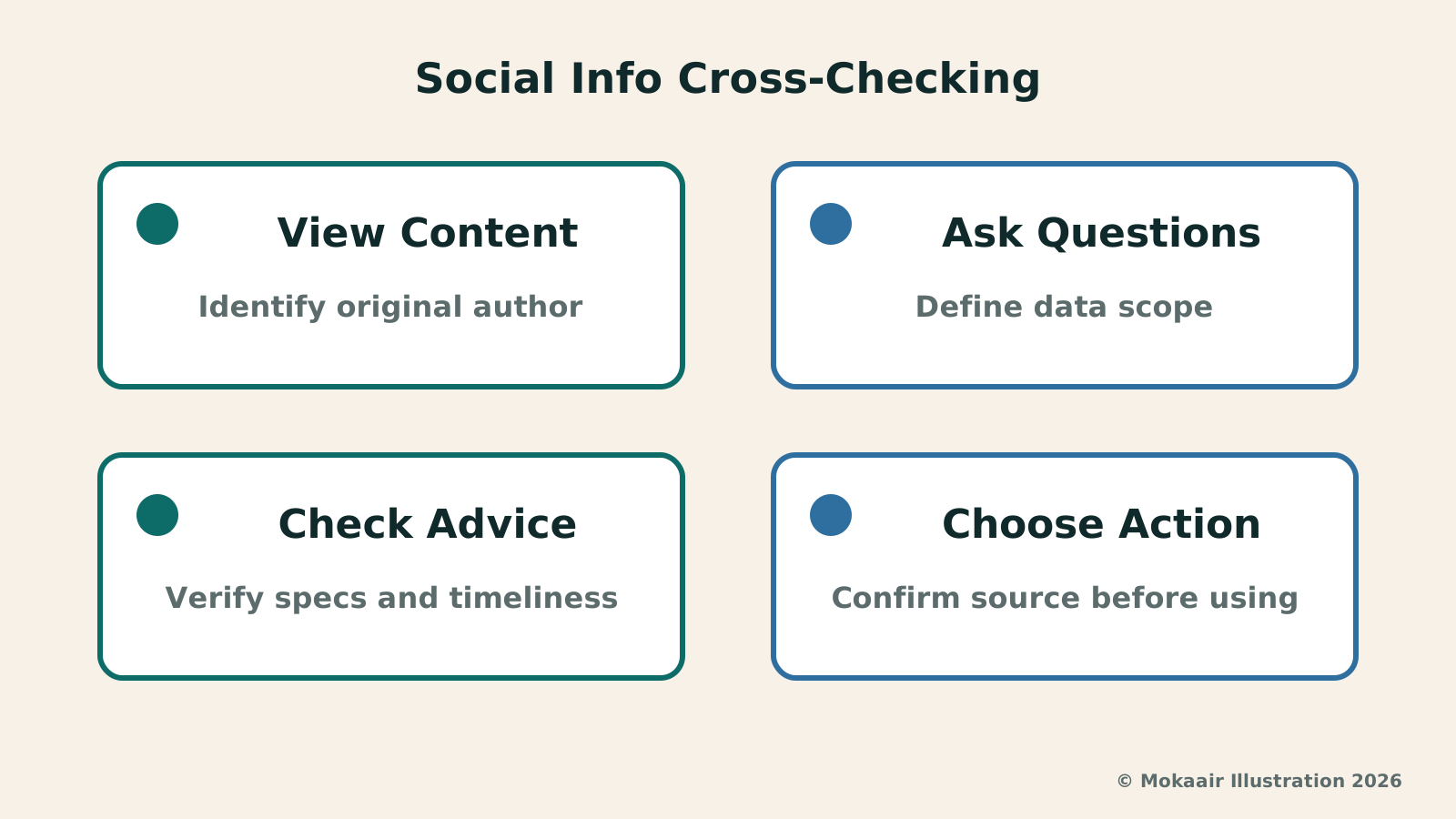
A model release in itself does not prove what private messages it can read, nor does it prove that all private messages will never be processed by relevant features. The data scope depends on the product used, links, settings, and the content shared in that instance. When compiling social media posts, one can start primarily with self-selected public materials, ensure inputs do not inadvertently include unwanted chat logs or personal information, and then review the data documentation for that specific entry point.
The quality of an assistant's responses hinges fundamentally on the materials currently provided by the user and the definition of the prompt. If one wishes to compile a packing plan for a specific route, rather than expecting the system to speculate on its own, it is better to proactively provide the trip duration, projected elevations, and recent rainfall forecasts. By manually setting clear context for inquiries, one ensures that personal private information is not overshared while allowing the model to leverage its reasoning strengths under well-defined constraints to offer a targeted gear framework.
Furthermore, public social posts are highly time-sensitive; past trail logs may have become invalid due to geological hazards, forest road closures, or dried-up water sources. Directly asking an assistant to synthesize unverified, outdated public posts can easily yield erroneous guidance detached from reality. During the prompting workflow, restricting reference materials to the latest published public reports and having team members personally perform secondary checks is the proper way to maintain both the efficiency of social data utilization and the safety line in the wilderness.
Cross-Device Expansion Progress and Regional Availability Review
According to the official update released on May 12, 2026, Muse Spark's reasoning and tool capabilities are gradually expanding to Meta's social software and smart glasses. However, the expansion process exhibits distinct phased limitations across geographic regions and hardware categories; for instance, the initial wave on glasses is rolled out only to the US and Canadian markets. Users in Taiwan cannot directly assume that all local accounts have already obtained complete access points and feature authorizations.
Different hardware devices may be suited to different modes of interaction. Voice interaction on smart glasses, mobile screens, and reading long tables on web pages represent distinct usage scenarios; one cannot assume from the model's name that all three offer identical tools. Before choosing an entry point, users can first consider whether they need immediate verbal prompts or want to save a checklist that can be verified item by item, and then verify whether their actual account provides the corresponding functionality.
Validation and Risk Balancing in Outdoor Planning Workflows
When incorporating multimodal models into outdoor preparation workflows, one should establish verification checkpoints grounded in a fault-tolerant mindset. In the first phase, users can proactively input the planned itinerary and refer to recognized gear concepts, allowing the assistant to help quickly format an initial checklist draft. Entering the second phase, expedition leaders and team members must verify the gear's thermal ratings, first-aid efficacy, and wind/rain resistance levels one by one, based on road condition warnings from official forestry management agencies, campsite water source distributions, and meteorological station forecasts.
Collaborative workflows that rely on automated reasoning must strike a balance between output speed and on-the-ground safety. While rapid compilation may potentially save time spent on manual searching and typing, it can also easily cause users to overlook potential threats from extreme weather amidst numerous listed items. The ultimate responsibility for outdoor risk decisions always rests with users themselves. Treating intelligent models as tools to assist in drafting initial notes, while enforcing rigorous human empirical verification as the threshold for clearance, ensures both efficiency and safety discipline.
2026 AI News Roundup: Highlights and Daily Life Applications from January to September2026 AI News Roundup: Highlights and Daily Life Applications from January to SeptemberOrganizing key AI news stories month by month from January to September 2026, linking to full analyses in five languages. Covering models, work tools, creation, costs, and transparency, explaining backgrounds, uses, and limits.Read the full article
ChatGPT Images 2.0: Thinking Enters Image Generation, Demanding Clearer Design NeedsChatGPT Images 2.0: Thinking Enters Image Generation, Demanding Clearer Design NeedsReviewing the visual planning mechanisms established by the 2026 ChatGPT Images 2.0 release, exploring how brick-and-mortar bookstores can structure prompts, proofread Traditional Chinese details, and implement authenticity verification for promotional posters.Read the full article
Lifestyle
NVIDIA launches DGX Spark 64GB: on sale October 23 from $4,999, two units can be linked into 128GB
On October 2, 2026, NVIDIA announced a more affordable 64GB memory version of its DGX Spark personal AI computer, available from October 23 through six makers including Acer and ASUS. It is aimed mainly at developers and researchers who want to run AI models on their own machines. Below we summarize the specs NVIDIA published, its claims about linking two units, and what it means for general readers.
Lifestyle
Google Cloud Launches Spanner Queues: Putting Message Queues Inside Database Transactions to Make AI Agents More Reliable
Google Cloud has announced the general availability of Spanner queues, which make message creation part of a database transaction. The aim is to stop AI agents' "state" and "actions" from falling out of sync. This article covers Google Cloud's claims, the main features, and what it means for general readers.
Lifestyle
GPT-6.1 Sol Launches: New Sol Version in the API, Codex and ChatGPT Work, Not in Chat
OpenAI launched GPT-6.1 Sol on September 29, 2026, with the API name gpt-6.1-sol. The launch rollout covers Codex and ChatGPT Work on Plus, Pro, Business, Enterprise and Edu (Enterprise and Edu need an administrator to enable it); Free and Go are not included at launch, and it is not in Chat (checked September 2026).
Lifestyle
Claude Sonnet 5.5 Launches: Same List Price as Sonnet 5, Available in the API, on Cloud Platforms and in Claude.ai
Anthropic launched Claude Sonnet 5.5 on September 28, 2026. API list prices are the same as Sonnet 5 ($2 per million input tokens, $10 per million output tokens). It is available in Claude.ai, the API and several cloud platforms, and higher-risk cybersecurity requests fall back to Sonnet 5 (checked September 2026).
Articles that cite this one
Latest travel guides

GuideTokyo
Where to Stay in Tokyo: Comparing Shinjuku, Ueno, Tokyo Station, Shibuya, Asakusa, Ikebukuro, and Ginza, Plus Airport Access, Accommodation Tax, and Luggage Delivery
Where should you stay in Tokyo? Compare Shinjuku, Ueno, Tokyo Station, Shibuya, Asakusa, Ikebukuro, and Ginza by the same criteria: access from Narita and Haneda, transit routes, nearby attractions, neighborhood character, and who each area suits. Includes a comparison table, a Yamanote Line diagram, Tokyo’s accommodation tax as verified in 2026/9 (changing to 3% in 2027/4), and Airport TA-Q-BIN luggage shipping rules.
- Budget
- Hotels
GuideTokyo
How to Choose Tokyo Transit Passes: Are Suica, Welcome Suica, the Tokyo Subway Ticket, and the JR Pass Worth It?
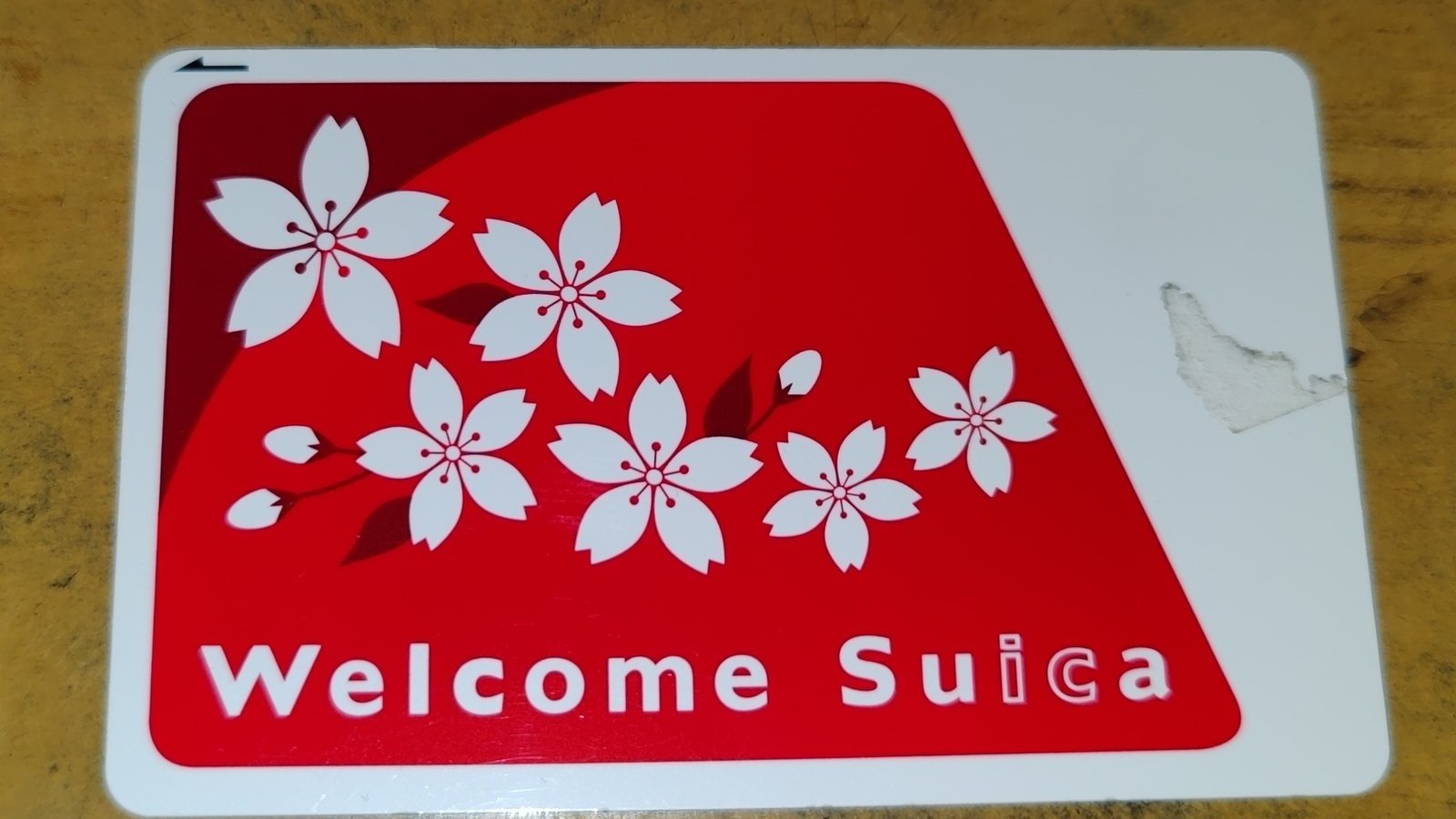
On a first Tokyo trip, start with an IC card and pay per ride (Welcome Suica has no deposit and is valid for 28 days). If you take four or more subway rides in a day, add a 72-hour Tokyo Subway Ticket for 2,000 yen; a JR Pass is never worthwhile if you stay in Tokyo and do not go to Kansai. See what TOURIST PASMO, Suica on iPhone, and the Tokyo Metro day pass do and do not cover, with a decision chart. Prices verified in September 2026.
- Transport
- Budget

GuideTokyo
Tokyo Disneyland and DisneySea Guide: Ticket Prices, Fantasy Springs, Disney Premier Access (DPA), Standby Pass, and Which Park to Choose for Your First Visit
Tokyo Disney one-day Passport prices vary: most weekdays in 9/2026 cost ¥9,900 and weekends ¥10,900. At 14:00 daily, tickets go on sale for the same date two months later. Free Priority Pass is no longer on the official service list; only paid Disney Premier Access (¥1,000–3,500 per person per use) shortens waits. Covers hours, the 25th anniversary, Standby Pass, Entry Request, Fantasy Springs access and first-visit park choice; checked on the official site in 9/2026.
- Itineraries
- Family
Sources
- Meta: Official Muse Spark Announcement · Checked:
- Meta AI: Muse Spark Technical Introduction · Checked: