Lifestyle
ChatGPT Images 2.0: Thinking Enters Image Generation, Demanding Clearer Design Needs
Reviewing the visual planning mechanisms established by the 2026 ChatGPT Images 2.0 release, exploring how brick-and-mortar bookstores can structure prompts, proofread Traditional Chinese details, and implement authenticity verification for promotional posters.
Updated: About 7 min read
Event date: 2026-04-21; Verification date: 2026-09-14. On April 21, ChatGPT Images 2.0 was released, with official announcements emphasizing text details, world knowledge, and instruction following.
It introduced images with thinking, allowing planning and tool use prior to generation, with the system card describing capabilities such as web data retrieval and generating multiple images from a single prompt. At initial launch, Images 2.0 was available to all ChatGPT plans; the thinking feature was subject to paid plan and Thinking/Pro entry requirements. A separate Images 2.5 announcement was made in September; this article is an analysis of the April event and does not treat 2.0 as the latest version. The lifestyle and work scenarios below are editorial design examples for readers to verify on their own, not hands-on product tests by this site.
Structured Requirements and Prompt Strategies for Layering Information
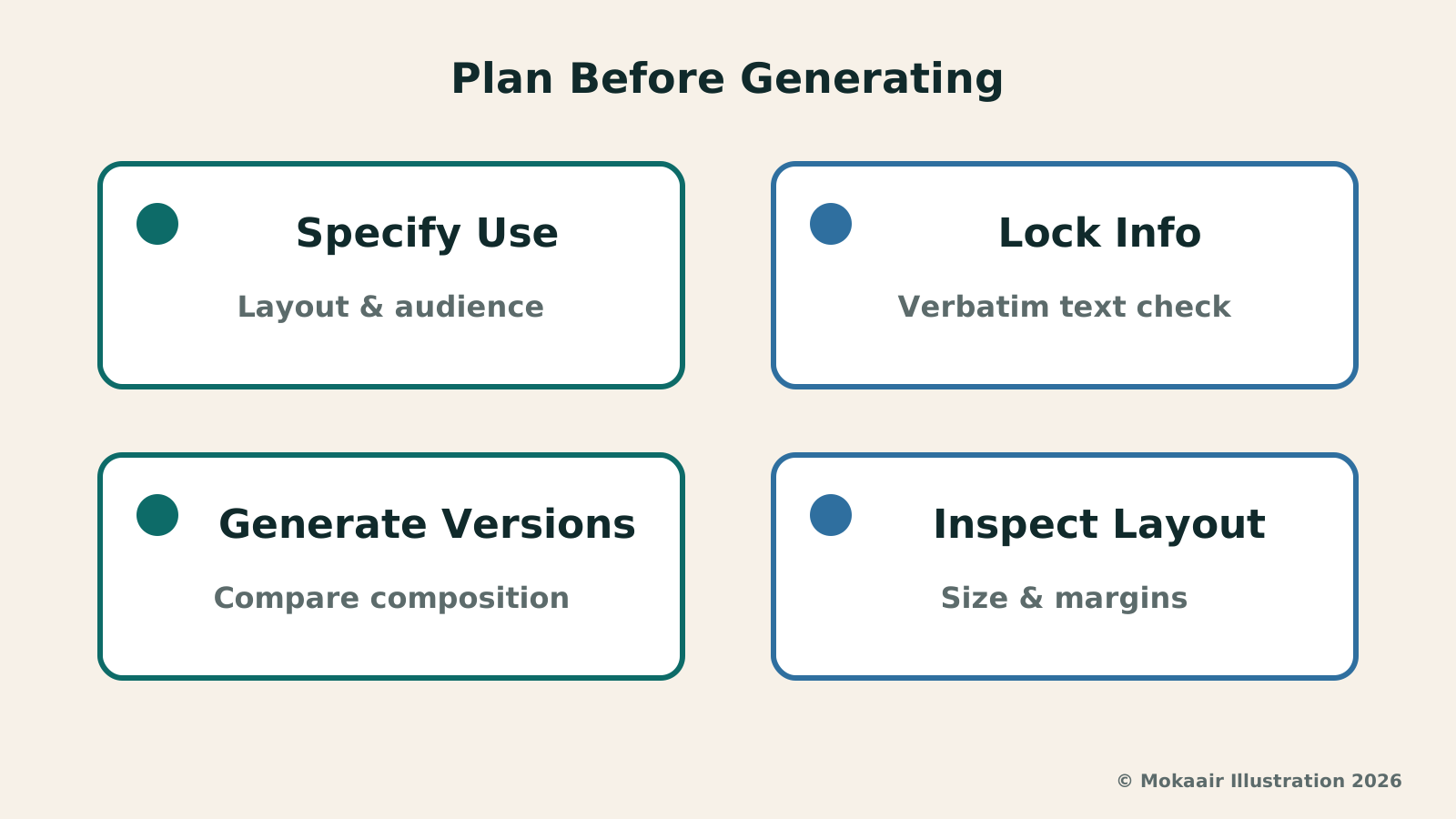
In practical design scenarios, the most common mistake is mixing visual artistic atmosphere with factual event information in the same paragraph of text. Taking a Taiwanese brick-and-mortar bookstore organizing a weekend themed book club as an example, the organizers need to clearly separate spatial sensory descriptions such as 'Japanese wood tones and warm natural light' from strictly factual elements that cannot afford errors, such as 'the bookstore's full name, exact event date, and store address.' Delivering style guidance and strict textual information in separate layers effectively reduces the chance of the model confusing compositional intent.
Clear visual hierarchy helps the model grasp image weight and visual flow. Bookstore staff should first provide the standardized Traditional Chinese title of the featured book and clearly specify the hierarchy of text elements on the poster, such as centering and enlarging the event title while placing the date and location in a secondary lower section. Delivering prompts in structured, bulleted formats is far more readable than lengthy piles of adjectives, allowing the system to reserve appropriate display space for key text when drafting layout sketches.
Beyond layout weight, providing the real-world audience context of the in-person event in advance also assists the model in establishing a more suitable atmosphere. The bookstore can elaborate on the reading focus and interaction style of the book club, such as an in-depth philosophical discussion or a relaxed weekend group reading, enabling the model to avoid unsuitable noisy illustrations or overly intricate patterns when planning visual elements. Breaking down information into three modular components—background style, core text, and event positioning—makes the prompt content more rigorous and easier to maintain or modify.
Benefits and Trade-offs of the Thinking and Planning Mechanism
Official descriptions define the thinking capability as planning and using tools before generation, which allows users the opportunity to convey requirements more thoroughly. However, demonstrations in the release announcement do not guarantee that every image will correctly interpret space, text, or world knowledge. Taking bookstore posters as an example, organizers should still supply verified event details and check whether the output introduces unprovided dates, figures, or endorsement quotes.
Tasks requiring more processing steps may involve more waiting and retries; actual differences depend on the access entry point, data, and the specific task at hand. A bookstore can first produce a small proof, noting which text must be retyped and which layout requires adjustments, before determining whether this approach saves time. One should not treat a paid entry point or thinking mode as an absolute guarantee of more rational composition or reduced proofreading.
| Poster Design Stage | System Planning and Generation Factors | Manual Verification and Proofreading Priorities |
|---|---|---|
| Factual Event Information | Separate store name, date, and address from artistic style for independent input | Proofread Traditional Chinese strokes, calendar accuracy, and punctuation character by character |
| Themed Book Title | Set main text centered and enlarged, assigning hierarchical visual weight | Verify complete closure of title text; overlay with vector typography if necessary |
| Physical Print Specifications | Require safety margins on edges to satisfy trimming and bleed requirements | Check edge margins and visual symbol consistency across multi-format extensions |
| Factual Copywriting Endorsements | Prevent the model from inventing celebrity quotes or unauthorized sponsor logos | Remove fictional endorsements; verify authentic physical store and registration channels |
The Reality of Proofreading Chinese Glyphs and Punctuation
Although Images 2.0 specifically touts enhanced text details, a rigorous review posture remains essential when applied to Taiwanese Traditional Chinese in practice. Chinese characters possess complex stroke structures and radical balance; generative models still inevitably produce non-standard glyphs with distorted skeletons, merged strokes, or missing strokes when handling high-stroke-count characters. Furthermore, centering and spacing conventions for Chinese punctuation marks—such as quotation marks, book title marks, or dashes—remain vulnerable areas that pure image generation struggles to master completely.
When conducting acceptance checks on reading club posters, teams must implement a character-by-character verification routine. The checklist should verify whether the bookstore name contains homophone errors, whether book titles are spelled correctly, whether Arabic numeral dates match the actual calendar, and whether event punctuation marks are properly paired and closed. For any promotional material intended for physical display or social media announcements, model-generated Traditional Chinese glyphs must never be directly treated as final art; they must undergo strict manual visual verification to prevent erroneous promotional information or reading confusion.
In the face of Traditional Chinese generation uncertainties, teams can adopt a flexible division of labor in production. If the model-generated title glyphs achieve the desired aesthetic and are completely accurate, they can be retained directly; however, if minor flaws appear in body addresses or speaker bios, the safest approach is to use the generated output as a background and overlay standardized Traditional Chinese typography using vector layout software. This hybrid workflow leverages the compositional creativity of generative tools while making text far easier to verify character by character.
Physical Collateral Layout and Margin Trimming Considerations
Visual requirements for physical printed posters differ fundamentally from digital screen viewing; prompts must reserve ample whitespace and border margins. If a bookstore plans to print standard G-quarto posters or display boards, it must specify safe margins around the edges early in generation to prevent vital text and primary subjects from being cropped during printing, binding, or trimming. Directing the model to maintain clean borders and extend ambient textures outward is a crucial technical consideration for ensuring digital images translate smoothly into physical prints.
When adapting a campaign across a series of promotional assets, maintaining consistency across multiple variations is also a key verification focus. When generating multiple visuals from a single prompt, each draft must be compared for coherence in color palette, lighting angles, and visual motifs. If the promotional campaign includes vertical entrance posters, horizontal social media banners, and event leaflets, one should verify whether core visual symbols remain harmonious across different dimensions, preventing localized proportion distortions from undermining the bookstore's overall brand recognition.
Avoiding Fabricated Endorsements and Verifying Event Authenticity
When generating scenes depicting books and reading environments, the system sometimes automatically fabricates highly convincing celebrity recommendation blurb quotes, fictional publishing reviews, or invented sponsor logos. In creating public promotional materials, independent bookstores must adhere strictly to content authenticity principles, rigorously eliminating all hallucinated endorsement blurbs and never appropriating real authors or uninvited public figures as promotional endorsements without authorization, thereby avoiding disruption to partners and preventing potential legal or integrity controversies.
The final collateral verification process must align closely with the real-world conditions of physical operations. Audit items include confirming that the printed store address matches navigation landmarks, registration channels and contact methods are accessible, and the book club date aligns perfectly with operational hours on that day. Manual verification remains the final line of defense when introducing generative tools into practice; only by pairing the compositional assistance of technology with rigorous human fact-checking can reliable, professional-grade promotional collateral be produced.
2026 AI News Roundup: Highlights and Daily Life Applications from January to September2026 AI News Roundup: Highlights and Daily Life Applications from January to SeptemberOrganizing key AI news stories month by month from January to September 2026, linking to full analyses in five languages. Covering models, work tools, creation, costs, and transparency, explaining backgrounds, uses, and limits.Read the full article
GPT-5.5 Moves Toward Multi-Step Work: Turning Vague Needs into Verifiable DeliverablesGPT-5.5 Moves Toward Multi-Step Work: Turning Vague Needs into Verifiable DeliverablesReviewing the context of OpenAI's GPT-5.5 release in 2026, exploring how teams break down vague long-horizon tasks into verifiable deliverables while establishing clear human checkpoints and quality metrics.Read the full article
Lifestyle
NVIDIA launches DGX Spark 64GB: on sale October 23 from $4,999, two units can be linked into 128GB
On October 2, 2026, NVIDIA announced a more affordable 64GB memory version of its DGX Spark personal AI computer, available from October 23 through six makers including Acer and ASUS. It is aimed mainly at developers and researchers who want to run AI models on their own machines. Below we summarize the specs NVIDIA published, its claims about linking two units, and what it means for general readers.
Lifestyle
Google Cloud Launches Spanner Queues: Putting Message Queues Inside Database Transactions to Make AI Agents More Reliable
Google Cloud has announced the general availability of Spanner queues, which make message creation part of a database transaction. The aim is to stop AI agents' "state" and "actions" from falling out of sync. This article covers Google Cloud's claims, the main features, and what it means for general readers.
Lifestyle
GPT-6.1 Sol Launches: New Sol Version in the API, Codex and ChatGPT Work, Not in Chat
OpenAI launched GPT-6.1 Sol on September 29, 2026, with the API name gpt-6.1-sol. The launch rollout covers Codex and ChatGPT Work on Plus, Pro, Business, Enterprise and Edu (Enterprise and Edu need an administrator to enable it); Free and Go are not included at launch, and it is not in Chat (checked September 2026).
Lifestyle
Claude Sonnet 5.5 Launches: Same List Price as Sonnet 5, Available in the API, on Cloud Platforms and in Claude.ai
Anthropic launched Claude Sonnet 5.5 on September 28, 2026. API list prices are the same as Sonnet 5 ($2 per million input tokens, $10 per million output tokens). It is available in Claude.ai, the API and several cloud platforms, and higher-risk cybersecurity requests fall back to Sonnet 5 (checked September 2026).
Articles that cite this one
Latest travel guides

GuideTokyo
Where to Stay in Tokyo: Comparing Shinjuku, Ueno, Tokyo Station, Shibuya, Asakusa, Ikebukuro, and Ginza, Plus Airport Access, Accommodation Tax, and Luggage Delivery
Where should you stay in Tokyo? Compare Shinjuku, Ueno, Tokyo Station, Shibuya, Asakusa, Ikebukuro, and Ginza by the same criteria: access from Narita and Haneda, transit routes, nearby attractions, neighborhood character, and who each area suits. Includes a comparison table, a Yamanote Line diagram, Tokyo’s accommodation tax as verified in 2026/9 (changing to 3% in 2027/4), and Airport TA-Q-BIN luggage shipping rules.
- Budget
- Hotels
GuideTokyo
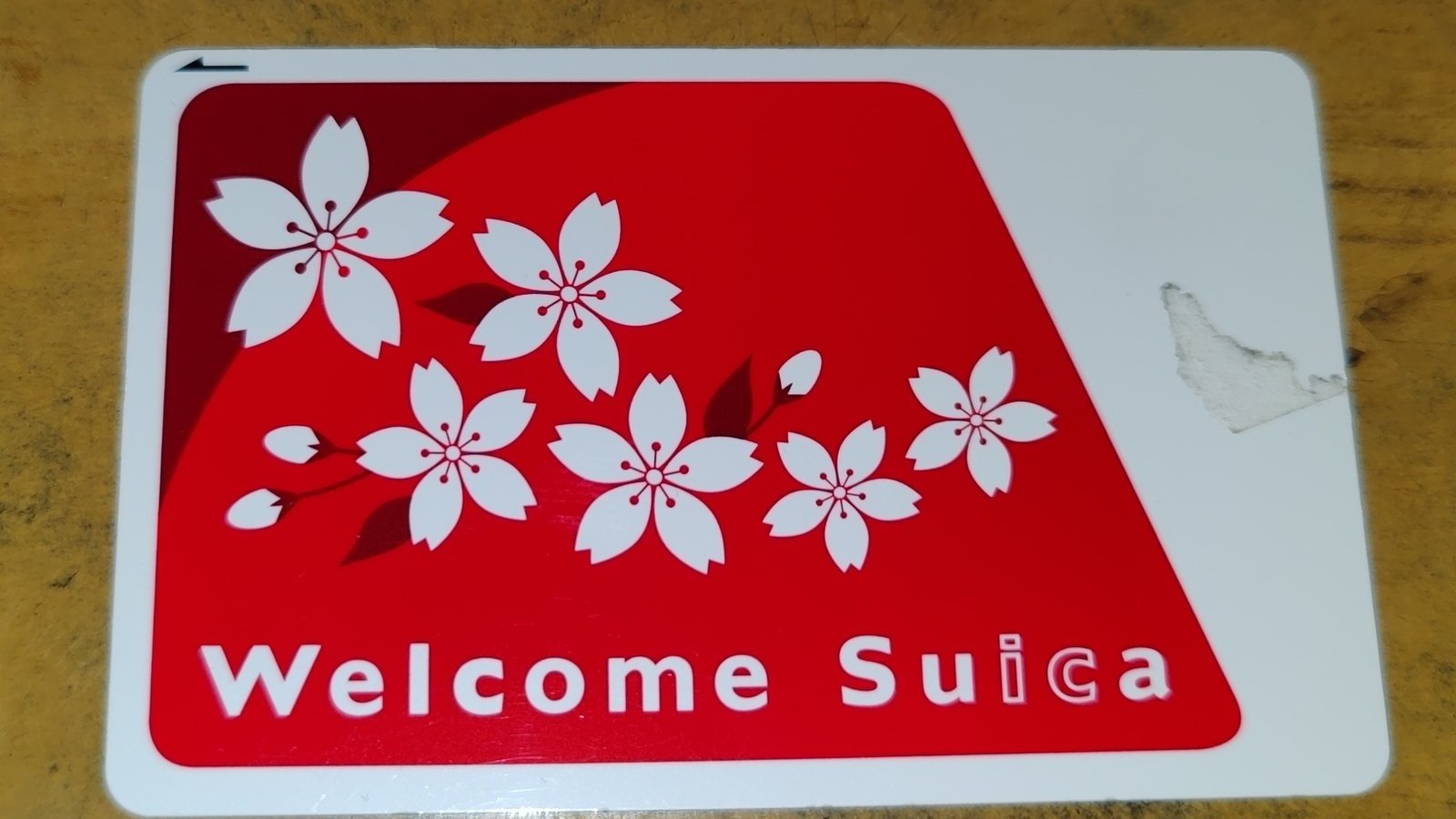
How to Choose Tokyo Transit Passes: Are Suica, Welcome Suica, the Tokyo Subway Ticket, and the JR Pass Worth It?
On a first Tokyo trip, start with an IC card and pay per ride (Welcome Suica has no deposit and is valid for 28 days). If you take four or more subway rides in a day, add a 72-hour Tokyo Subway Ticket for 2,000 yen; a JR Pass is never worthwhile if you stay in Tokyo and do not go to Kansai. See what TOURIST PASMO, Suica on iPhone, and the Tokyo Metro day pass do and do not cover, with a decision chart. Prices verified in September 2026.
- Transport
- Budget

GuideTokyo
Tokyo Disneyland and DisneySea Guide: Ticket Prices, Fantasy Springs, Disney Premier Access (DPA), Standby Pass, and Which Park to Choose for Your First Visit
Tokyo Disney one-day Passport prices vary: most weekdays in 9/2026 cost ¥9,900 and weekends ¥10,900. At 14:00 daily, tickets go on sale for the same date two months later. Free Priority Pass is no longer on the official service list; only paid Disney Premier Access (¥1,000–3,500 per person per use) shortens waits. Covers hours, the 25th anniversary, Standby Pass, Entry Request, Fantasy Springs access and first-visit park choice; checked on the official site in 9/2026.
- Itineraries
- Family
Sources
- OpenAI: ChatGPT Images 2.0 · Checked:
- OpenAI: Images 2.0 System Card · Checked: