Lifestyle
Gemini 3.6 Flash and Flash-Lite: How to Divide Fast Model Tasks
Reviewing Google's July 2026 launch of Gemini 3.6 Flash and 3.5 Flash-Lite: analyzing fast vs. slow model task allocation, spot-checks, and cost control for bulk data.
Updated: About 6 min read
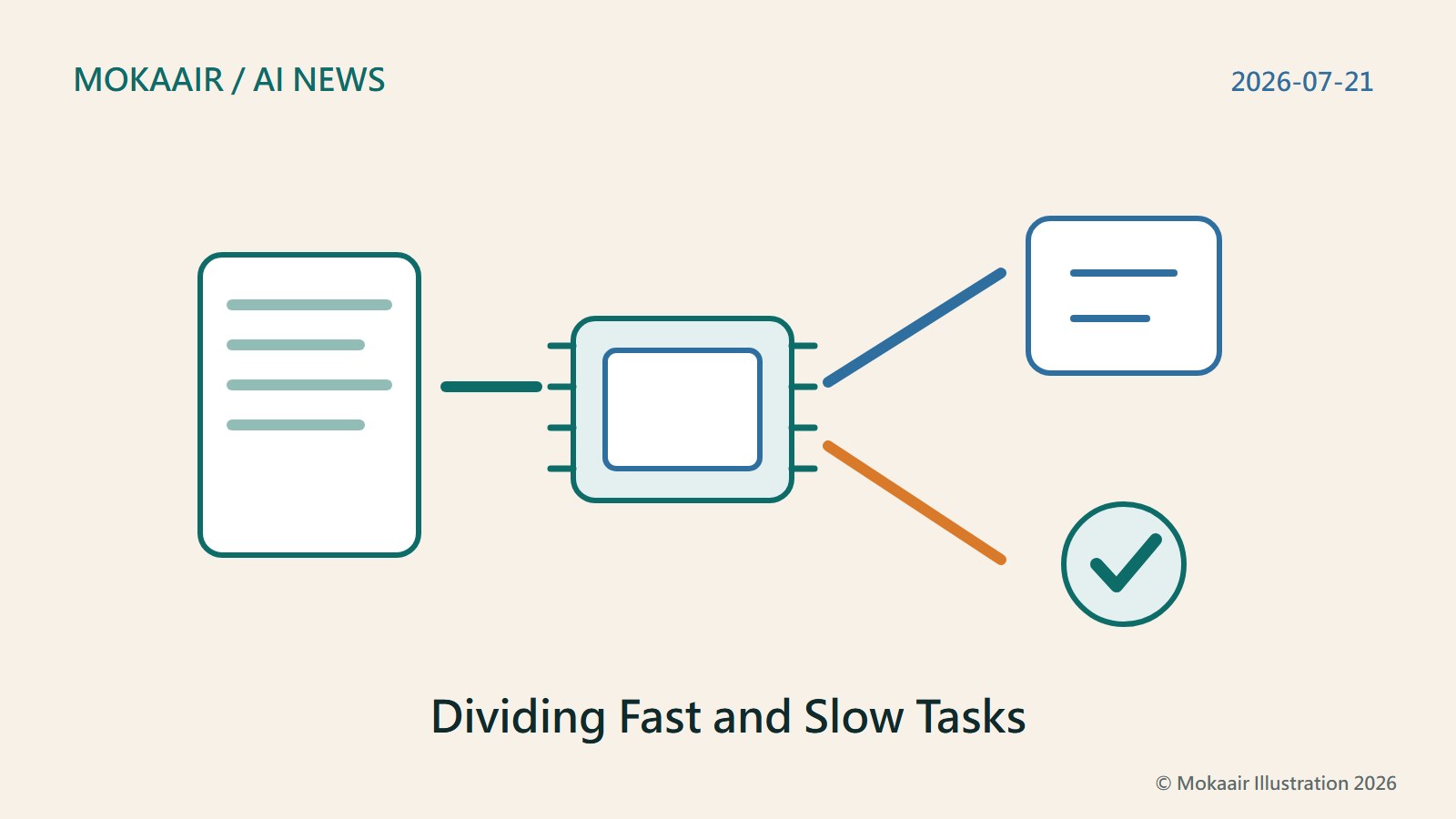
Event date: 2026-07-21; Verification date: 2026-09-14. On July 21, Google announced Gemini 3.6 Flash, 3.5 Flash-Lite, and 3.5 Flash Cyber, emphasizing overall efficiency, high-volume low-latency tasks, and defensive cybersecurity respectively.
The announcement listed 3.6 Flash API pricing at $1.50 per million input tokens and $7.50 per million output tokens, and Flash-Lite at $0.30 and $2.50; these are as-announced USD pay-as-you-go API rates, not monthly subscription fees. Cyber's defensive use case and access eligibility cannot be assumed to allow arbitrary switching from standard accounts; performance comparisons reflect Google's published claims. The July Gemini Drop confirmed that new Flash models entered the Gemini app; September later saw 3.8 Flash, but this article is a historical analysis of the July task allocation strategy. The following daily life and work scenarios are editorially designed examples for readers to test themselves, not product benchmark tests conducted by this site.
Primary Cleaning and Field Extraction for Bulk Form Data
When organizing a large-scale charity market, organizers often receive registration forms from hundreds of vendors containing stall names, products sold, electrical power specifications, and contact phone numbers. Many application forms are submitted in unstructured plain text, such as mixing addresses and booth requirements together in a single remarks field. Calling an expensive flagship model for every record causes the overall budget to escalate rapidly, and using it for large volumes of predictable formatting is an over-engineered approach.
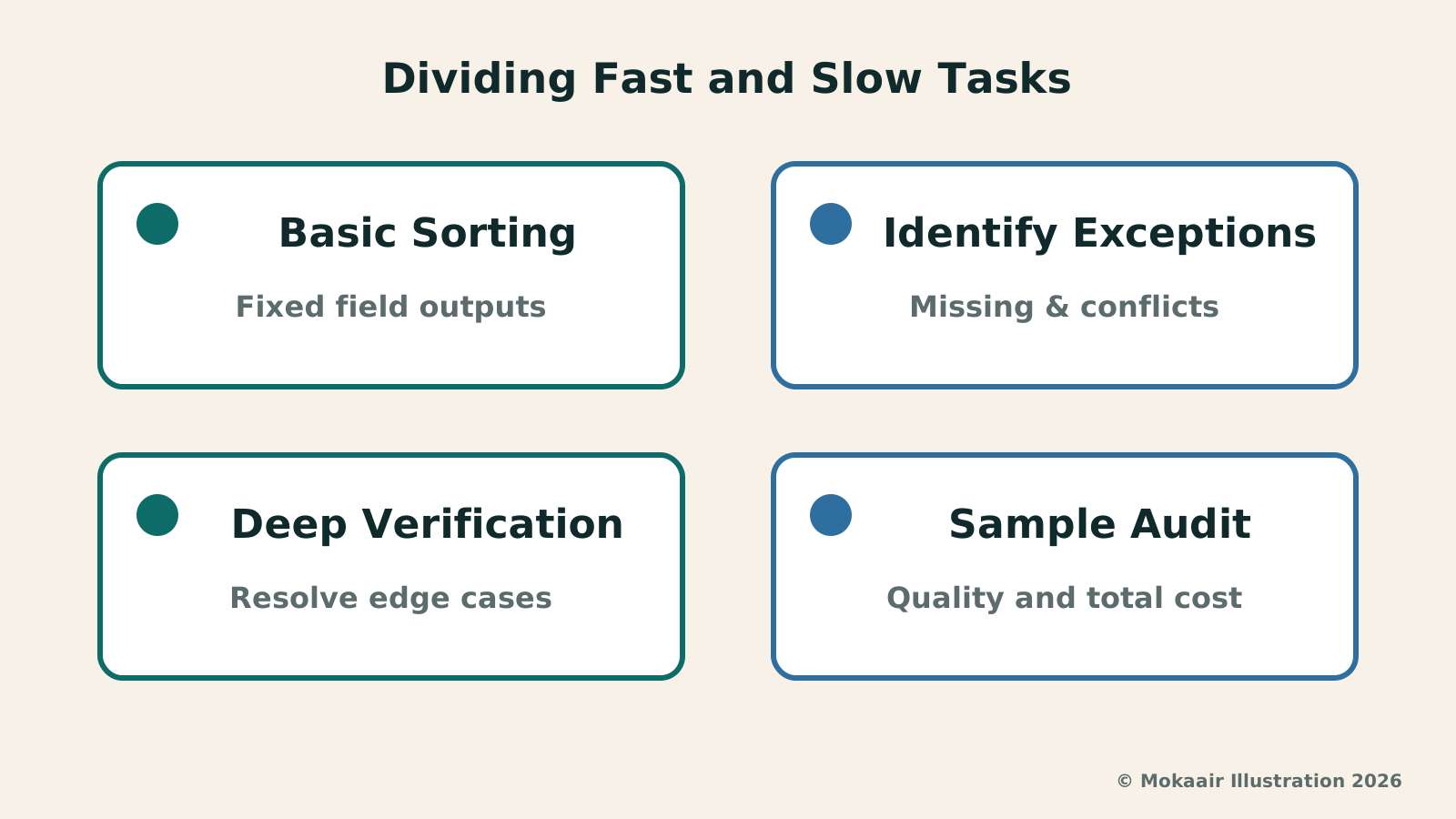
You can first pick a batch of records and test 3.5 Flash-Lite to extract stall names and basic specifications to check if it meets speed and cost requirements. Each output should retain the original text snippet to facilitate checking for missed words or misplaced units. This is merely an illustrative task-division approach and does not imply that this model has established reliable results on such market registration data; whether it is worth adopting must be judged through your own sample tests and retry costs.
Anomaly Tagging and Hierarchical Escalation of Spec Conflicts
The trickiest issue in organizing unstructured data is often conflicting specifications or ambiguous phrasing. For example, some vendor booths check the option for no extra electricity needed, yet state in the description that they need to plug in two high-power ovens; or a submitted contact address might omit the city or administrative district. While lightweight models can quickly parse regular formats, their accuracy is prone to limitations when handling deep semantic contradictions, requiring clear fault-tolerance mechanisms.
Under this framework, the system should configure simple confidence assessment rules: once a field is missing, values fall outside reasonable bounds, or multiple discrepancies appear, the lightweight model is only responsible for tagging the record as pending review and packaging the complete context string. At that point, the system routes these filtered edge cases to Gemini 3.6 Flash, which offers more comprehensive reasoning capabilities, allowing the stronger all-around model to interpret contextual intent or export the item directly into a manual review queue.
| Task Scenario | Recommended Model or Node | Core Checklist & Fallback Options |
|---|---|---|
| High-volume text specification extraction and basic classification | Gemini 3.5 Flash-Lite | Monitor formatting pass rates and missing characters; retain original source snippets for each record. |
| Semantic field conflicts and cross-table reconciliation | Gemini 3.6 Flash | Check contextual conflict detection; escalate to human review if ambiguity persists. |
| Threat detection and defensive code analysis | Gemini 3.5 Flash Cyber | Verify access eligibility; routine web security remains handled by existing tools and security staff. |
| Final verification before publishing vendor roster | Project staff sampling combined with validation scripts | Focus on cross-checking voltage figures, phone number digits, and physical stall assignments. |
Quality Sampling Inspection Beyond Simple Latency Metrics
Speed is one factor in evaluating fast models. Characters processed per second describe throughput, which is not the same as how long one request takes. In a market vendor roster, dropping a phone digit, recording 110V as 220V, or omitting an address floor could cause contact or setup errors. Teams should check that key fields are complete and record the time spent on retries and corrections. Comparing the same dataset helps reveal whether higher speed also produces usable results, rather than simply more output.
Therefore, acceptance procedures cannot depend solely on whether an automated script finishes running; teams must institute a regular random sampling protocol. Project staff should extract a proportion of the generated structured data and cross-reference it against original submissions field by field, paying close attention to numeric digit counts, special characters, and complete address strings. Only when field accuracy is held within defined benchmarks while tracking anomalous retry rates can the pipeline's total cost of ownership be reliably assessed.
Sampling should include both standard records and tagged exceptions to avoid reviewing only the neatest outputs. If simple filtering removes critical points of confusion at the start, the stronger downstream model has no opportunity to verify them. Retaining original data and execution logs is essential to determine whether the task division is genuinely saving effort or merely concealing errors more deeply.
Access Authorization and Usage Considerations at Security Boundaries
As large events incorporate more digital systems, registration forms may contain sensitive personal data or even online payment vouchers. In July, Google simultaneously introduced the defensively specialized 3.5 Flash Cyber, whose benchmark performances reflect official claims focused on threat identification and code review. However, in enterprise architecture planning, teams must realize that defensive cybersecurity models carry strict access eligibility requirements; one cannot assume that standard accounts can arbitrarily invoke them from a management console.
For most non-profit organizations or small-to-medium projects, data processing security for events should center on enforcing the principle of least privilege and transport encryption. If specialized defensive security models are unavailable, systems should use standard input filtering to guard against malicious script injection and de-identify personal identity records before they enter large models, rather than expecting a single general-purpose model to handle all system security defense tasks on its own.
Transitioning from Monolithic Processing to Tiered Collaboration
Separating routine sorting from exception handling is the workflow design insight drawn from this release. Teams can compare the differences between a single-model approach and a two-stage process to evaluate whether the classification stage drops difficult cases and whether routing them onward actually reduces human labor. Adding task division introduces operational and maintenance overhead, so multi-model setups are unnecessary for every small task; when data volumes are modest, a single tool paired with manual verification may be more straightforward.
In real-world deployments, teams must monitor ongoing model generational updates and pricing adjustments. Even as subsequent iterations are rolled out, the tiered pipeline—filtering high-volume items through ultra-fast lightweight nodes, addressing edge cases with robust general nodes, and backing it up with strict human sampling—remains sound. Clarifying tool boundaries and establishing rigorous acceptance metrics is the only reliable way to balance cost and quality.
2026 AI News Roundup: Highlights and Daily Life Applications from January to September2026 AI News Roundup: Highlights and Daily Life Applications from January to SeptemberOrganizing key AI news stories month by month from January to September 2026, linking to full analyses in five languages. Covering models, work tools, creation, costs, and transparency, explaining backgrounds, uses, and limits.Read the full article
Claude Opus 5 Released: What Changes Matter Most for Everyday Work Users?Claude Opus 5 Released: What Changes Matter Most for Everyday Work Users?Anthropic released Claude Opus 5 on July 24, 2026, focusing on coding, knowledge work, and multi-step tasks. From the everyday office worker's perspective—document organization, proposal revisions, and task handoffs—this article covers the announced capability shifts, how to distinguish vendor benchmarks from real-world results, and how to set up data boundaries, acceptance criteria, and manual checkpoints before switching plans.Read the full article
Lifestyle
NVIDIA launches DGX Spark 64GB: on sale October 23 from $4,999, two units can be linked into 128GB
On October 2, 2026, NVIDIA announced a more affordable 64GB memory version of its DGX Spark personal AI computer, available from October 23 through six makers including Acer and ASUS. It is aimed mainly at developers and researchers who want to run AI models on their own machines. Below we summarize the specs NVIDIA published, its claims about linking two units, and what it means for general readers.
Lifestyle
Google Cloud Launches Spanner Queues: Putting Message Queues Inside Database Transactions to Make AI Agents More Reliable
Google Cloud has announced the general availability of Spanner queues, which make message creation part of a database transaction. The aim is to stop AI agents' "state" and "actions" from falling out of sync. This article covers Google Cloud's claims, the main features, and what it means for general readers.
Lifestyle
GPT-6.1 Sol Launches: New Sol Version in the API, Codex and ChatGPT Work, Not in Chat
OpenAI launched GPT-6.1 Sol on September 29, 2026, with the API name gpt-6.1-sol. The launch rollout covers Codex and ChatGPT Work on Plus, Pro, Business, Enterprise and Edu (Enterprise and Edu need an administrator to enable it); Free and Go are not included at launch, and it is not in Chat (checked September 2026).
Lifestyle
Claude Sonnet 5.5 Launches: Same List Price as Sonnet 5, Available in the API, on Cloud Platforms and in Claude.ai
Anthropic launched Claude Sonnet 5.5 on September 28, 2026. API list prices are the same as Sonnet 5 ($2 per million input tokens, $10 per million output tokens). It is available in Claude.ai, the API and several cloud platforms, and higher-risk cybersecurity requests fall back to Sonnet 5 (checked September 2026).
Articles that cite this one
Latest travel guides

GuideTokyo
Where to Stay in Tokyo: Comparing Shinjuku, Ueno, Tokyo Station, Shibuya, Asakusa, Ikebukuro, and Ginza, Plus Airport Access, Accommodation Tax, and Luggage Delivery
Where should you stay in Tokyo? Compare Shinjuku, Ueno, Tokyo Station, Shibuya, Asakusa, Ikebukuro, and Ginza by the same criteria: access from Narita and Haneda, transit routes, nearby attractions, neighborhood character, and who each area suits. Includes a comparison table, a Yamanote Line diagram, Tokyo’s accommodation tax as verified in 2026/9 (changing to 3% in 2027/4), and Airport TA-Q-BIN luggage shipping rules.
- Budget
- Hotels

GuideTokyo
How to Choose Tokyo Transit Passes: Are Suica, Welcome Suica, the Tokyo Subway Ticket, and the JR Pass Worth It?
On a first Tokyo trip, start with an IC card and pay per ride (Welcome Suica has no deposit and is valid for 28 days). If you take four or more subway rides in a day, add a 72-hour Tokyo Subway Ticket for 2,000 yen; a JR Pass is never worthwhile if you stay in Tokyo and do not go to Kansai. See what TOURIST PASMO, Suica on iPhone, and the Tokyo Metro day pass do and do not cover, with a decision chart. Prices verified in September 2026.
- Transport
- Budget

GuideTokyo
Tokyo Disneyland and DisneySea Guide: Ticket Prices, Fantasy Springs, Disney Premier Access (DPA), Standby Pass, and Which Park to Choose for Your First Visit
Tokyo Disney one-day Passport prices vary: most weekdays in 9/2026 cost ¥9,900 and weekends ¥10,900. At 14:00 daily, tickets go on sale for the same date two months later. Free Priority Pass is no longer on the official service list; only paid Disney Premier Access (¥1,000–3,500 per person per use) shortens waits. Covers hours, the 25th anniversary, Standby Pass, Entry Request, Fantasy Springs access and first-visit park choice; checked on the official site in 9/2026.
- Itineraries
- Family
Sources
- Google: 3.6 Flash, 3.5 Flash-Lite, and Cyber · Checked:
- Google: July 2026 Gemini Drop · Checked: