Lifestyle
EU AI Transparency Rules Take Effect: How Are Chatbots and Generated Content Labeled?
The European Commission announced that new transparency requirements under the AI Act apply as of August 2, 2026. This article explains chatbot identity disclosure, visible deepfake labeling, and machine-readable marks in plain language, clarifies the roles of providers versus deployers, and advises Taiwan creators on keeping production logs, verifying content, and checking platform rules without misconstruing EU laws as local obligations.
Updated: About 7 min read
The European Commission announced on July 31, 2026, that a new set of AI transparency requirements applies starting August 2. The rules include letting people know when they are interacting with an AI system and identifying certain content that is generated or manipulated by AI. This news is worth noting for general readers, as the customer service chats, synthetic audiovisual media, and informational labels you encounter may gradually change in how they are presented.
Verified on September 14, 2026, this article focuses on the fundamental concepts of these transparency rules. It discusses an EU regulatory framework that cannot be directly applied as a universal obligation for everyone using AI in Taiwan. For creators, actual obligations still depend on service roles, content categories, target markets, and publishing platforms. Below, we first untangle frequently conflated labeling methods, followed by editorial practices you can adopt independently.
The First Form of Disclosure: Who You Are Interacting With
The EU announcement highlights identity disclosure for interactive systems such as chatbots. For readers, the key is not merely seeing an AI icon on the interface, but understanding the nature of the entity during interaction. When an automated agent responds like a human, you should still pay attention to service descriptions, entry points to escalate to a human representative, and whether your issue has been confirmed by an authorized person.
For example, regarding return windows or order refunds, explanations provided by a chatbot are fundamentally different from formal merchant approval. Even if a page clearly identifies AI, you still need to obtain a traceable handling record. This serves as practical reading advice, not a claim that transparency rules will establish an identical handling process across all consumer disputes.
If you set up a customer service assistant for your own website, you can start by checking where visitors learn that it is an AI, under what conditions it escalates to a human, and how the system responds when it cannot confirm details. These are practical design aspects you can review, which help readers understand the service much more effectively than merely appending a vague sentence to the end of a privacy policy.
Visible Labeling and Machine-Readable Marks Operate on Different Levels
The official announcement also mentions that deepfake images, video, or audio require labeling, while generated or manipulated content additionally involves machine-readable marks. The former focuses on helping viewers understand the nature of what they see; the latter enables technical systems to identify provenance information. While their objectives overlap, a snippet of visible text cannot substitute for all technical requirements.
For general readers, visible labels can be treated as contextual background. For instance, if an illustrative image of a scenic spot indicates it was made with AI, the shop signs, streets, or weather in the scene should not be taken as an on-site record. Even if it looks remarkably realistic, evaluating travel information still requires real photographs, official announcements, or other verifiable data.
For creators, editorial advice is to preserve raw outputs, post-production files, and provenance metadata provided by tools, rather than deliberately erasing details that explain how the content was produced just for visual neatness. Which technical markers must be preserved and how file conversions should be handled must be verified against tool documentation and applicable regulations, rather than judged solely by visible corner text.
| Scenario | What to Distinguish | Editorial Advice |
|---|---|---|
| AI Customer Service | System identity and handling authority | Keep human support entry points |
| Synthetic Media | Authentic footage vs. generated scenes | Use clear labels readers understand |
| Technical Markers | System-readable provenance metadata | Keep raw files and check tool docs |
| Cross-border Distribution | Roles, markets, and content types | Verify applicable rules item by item |
Providers, Deployers, and Readers Have Different Concerns
Guidelines released by the European Commission in July explain that those who provide AI systems and those who actually deploy and use them face different transparency obligations. Providers must address system-level design; deployers may need to disclose circumstances to people exposed to the content. One must not assume that because a provider included a technical mark, the user has no further compliance duties to verify.
The guideline summary also highlights scenarios involving public interest where AI-generated content lacks human review or editorial control. This does not mean that merely clicking a "checked" button automatically makes all requirements disappear. The actual scope and exceptions must still be evaluated against the complete guidelines and specific distribution channels; this article does not replace case-by-case legal assessments.
As a reader, you do not need to study every technical marker before evaluating information. More direct questions are: who is responsible for the content, where the data comes from, whether key facts cite sources, and who can be contacted if an error is found. Provenance labels provide clues, but they cannot guarantee accuracy, nor does the absence of a label prove human originality.
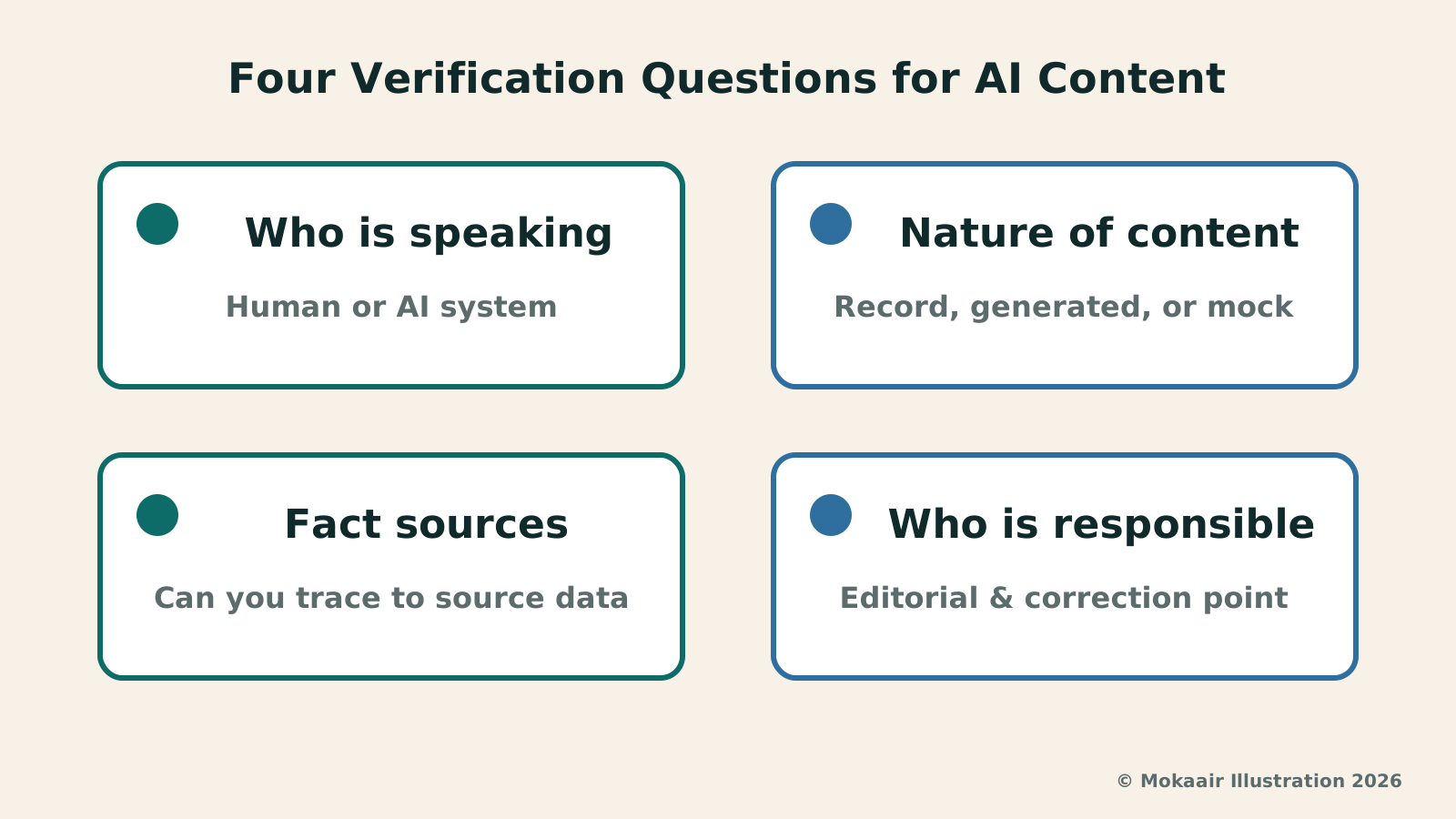
Read the full description
Identity, nature, sources, and responsible party provide distinct clues.
Taiwan Creators Can First Organize Their Publishing Workflows
If you use AI to assist in producing content, you can start by keeping an internal log: which tool was used, which assets originated from you, which passages or images were generated, and who gave final approval. This log helps colleagues take over tasks and enables you to reconstruct the production process if revisions are needed or inquiries arise later.
Before publishing, choose clear disclosures based on the nature of the content. Concept illustrations can state they are used to convey ideas, while simulated scenarios should avoid misleading people into believing they are genuine interviews or on-site recordings. Do not hide AI production notes in unrelated places, and do not leave readers guessing whether a scene is fictional.
If your service targets the EU market, or if you manage overseas platforms for clients, you should include applicable rules as specific checklist items. First determine your role and content type, then consult official guidelines and platform requirements, seeking professional advice when necessary. Clearly specifying your target market is far more verifiable than making vague claims of "complying with global AI regulations."
Beyond Transparency, Content Quality Remains Essential
An article labeled with AI disclosures can still cite incorrect information; an image labeled as an illustration can still mislead readers about proportions or spatial relationships. Editorial advice is to separate source verification from production disclosures into two distinct tasks: first confirm whether content is reliable, then clearly disclose how it was created.
Therefore, this regulatory update can encourage a practical reading habit: first identify who is speaking, then determine whether the content is a record, a simulation, or advice, and finally cross-check the facts influencing your decisions. For websites and creators, transparent production records and traceable verification workflows are what make labels truly useful.
If content is corrected later, it is also recommended to record the date and reason for the correction, clarifying which facts or visuals were modified. Readers need to know not only that tools participated in production, but also which version they are viewing. Such editorial records help maintain transparency without asserting that any fixed format satisfies all legal requirements.
ChatGPT Images 2.5: Image Generation, Inpainting, and Sketch UpdatesChatGPT Images 2.5: Image Generation, Inpainting, and Sketch UpdatesOpenAI released ChatGPT Images 2.5 on September 8, 2026, highlighting detailed images, targeted edits, Sketch, templates and image comments. This guide covers asset preparation, preserving unchanged areas and checking details in posters, travel photos and social images. It separates consumer tools from API models and vendor claims about speed and availability from hands-on tests.Read the full article
Lyria 3.5 Joins Gemini: New Options for AI Music CreationLyria 3.5 Joins Gemini: New Options for AI Music CreationGoogle announced on September 4, 2026, that Lyria 3.5 is coming to the Gemini App and API, offering vocals, instrumentals, style templates, and flexible track lengths. Starting with birthday songs, travel video scores, and simple creative projects, this guide explains how to write usable prompts, compare versions, evaluate vocals and rhythm, and why generation capability doesn't automatically mean commercial or material clearance.Read the full article
Lifestyle
NVIDIA launches DGX Spark 64GB: on sale October 23 from $4,999, two units can be linked into 128GB
On October 2, 2026, NVIDIA announced a more affordable 64GB memory version of its DGX Spark personal AI computer, available from October 23 through six makers including Acer and ASUS. It is aimed mainly at developers and researchers who want to run AI models on their own machines. Below we summarize the specs NVIDIA published, its claims about linking two units, and what it means for general readers.
Lifestyle
Google Cloud Launches Spanner Queues: Putting Message Queues Inside Database Transactions to Make AI Agents More Reliable
Google Cloud has announced the general availability of Spanner queues, which make message creation part of a database transaction. The aim is to stop AI agents' "state" and "actions" from falling out of sync. This article covers Google Cloud's claims, the main features, and what it means for general readers.
Lifestyle
GPT-6.1 Sol Launches: New Sol Version in the API, Codex and ChatGPT Work, Not in Chat
OpenAI launched GPT-6.1 Sol on September 29, 2026, with the API name gpt-6.1-sol. The launch rollout covers Codex and ChatGPT Work on Plus, Pro, Business, Enterprise and Edu (Enterprise and Edu need an administrator to enable it); Free and Go are not included at launch, and it is not in Chat (checked September 2026).
Lifestyle
Claude Sonnet 5.5 Launches: Same List Price as Sonnet 5, Available in the API, on Cloud Platforms and in Claude.ai
Anthropic launched Claude Sonnet 5.5 on September 28, 2026. API list prices are the same as Sonnet 5 ($2 per million input tokens, $10 per million output tokens). It is available in Claude.ai, the API and several cloud platforms, and higher-risk cybersecurity requests fall back to Sonnet 5 (checked September 2026).
Articles that cite this one
Latest travel guides

GuideTokyo
Where to Stay in Tokyo: Comparing Shinjuku, Ueno, Tokyo Station, Shibuya, Asakusa, Ikebukuro, and Ginza, Plus Airport Access, Accommodation Tax, and Luggage Delivery
Where should you stay in Tokyo? Compare Shinjuku, Ueno, Tokyo Station, Shibuya, Asakusa, Ikebukuro, and Ginza by the same criteria: access from Narita and Haneda, transit routes, nearby attractions, neighborhood character, and who each area suits. Includes a comparison table, a Yamanote Line diagram, Tokyo’s accommodation tax as verified in 2026/9 (changing to 3% in 2027/4), and Airport TA-Q-BIN luggage shipping rules.
- Budget
- Hotels
GuideTokyo
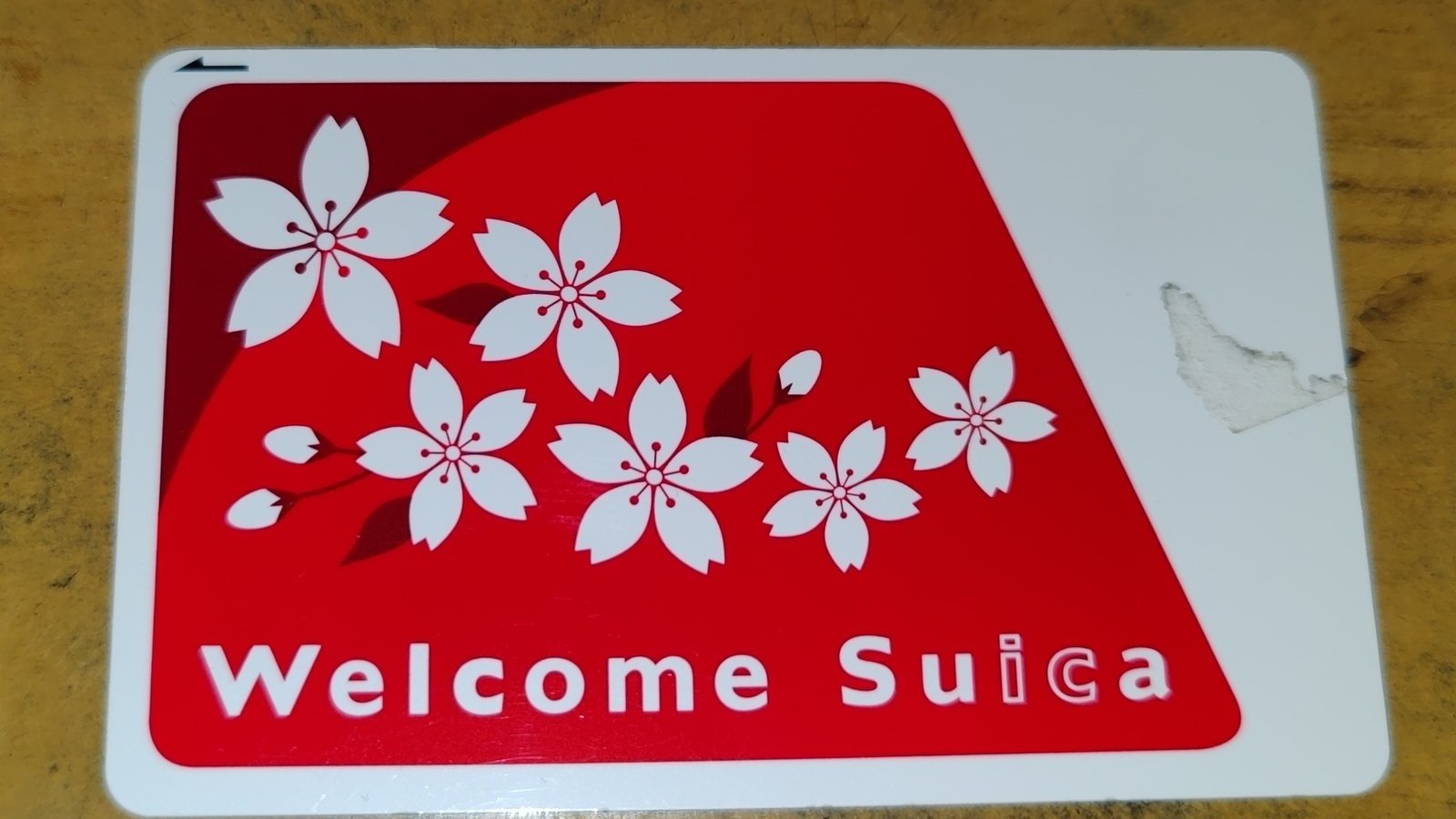
How to Choose Tokyo Transit Passes: Are Suica, Welcome Suica, the Tokyo Subway Ticket, and the JR Pass Worth It?
On a first Tokyo trip, start with an IC card and pay per ride (Welcome Suica has no deposit and is valid for 28 days). If you take four or more subway rides in a day, add a 72-hour Tokyo Subway Ticket for 2,000 yen; a JR Pass is never worthwhile if you stay in Tokyo and do not go to Kansai. See what TOURIST PASMO, Suica on iPhone, and the Tokyo Metro day pass do and do not cover, with a decision chart. Prices verified in September 2026.
- Transport
- Budget

GuideTokyo
Tokyo Disneyland and DisneySea Guide: Ticket Prices, Fantasy Springs, Disney Premier Access (DPA), Standby Pass, and Which Park to Choose for Your First Visit
Tokyo Disney one-day Passport prices vary: most weekdays in 9/2026 cost ¥9,900 and weekends ¥10,900. At 14:00 daily, tickets go on sale for the same date two months later. Free Priority Pass is no longer on the official service list; only paid Disney Premier Access (¥1,000–3,500 per person per use) shortens waits. Covers hours, the 25th anniversary, Standby Pass, Entry Request, Fantasy Springs access and first-visit park choice; checked on the official site in 9/2026.
- Itineraries
- Family