GuideTokyo
Tokyo Museums on a Rainy Day: Choose Ueno or Roppongi and Check Permanent and Special Exhibitions Separately
Turn your rainy-day backup from a last-minute search for a shopping mall into a day built around exhibitions you enjoy. Choose Ueno or Roppongi first, then check closing days, special-exhibition tickets, and actual walking routes to make your indoor itinerary workable.
About 7 min read
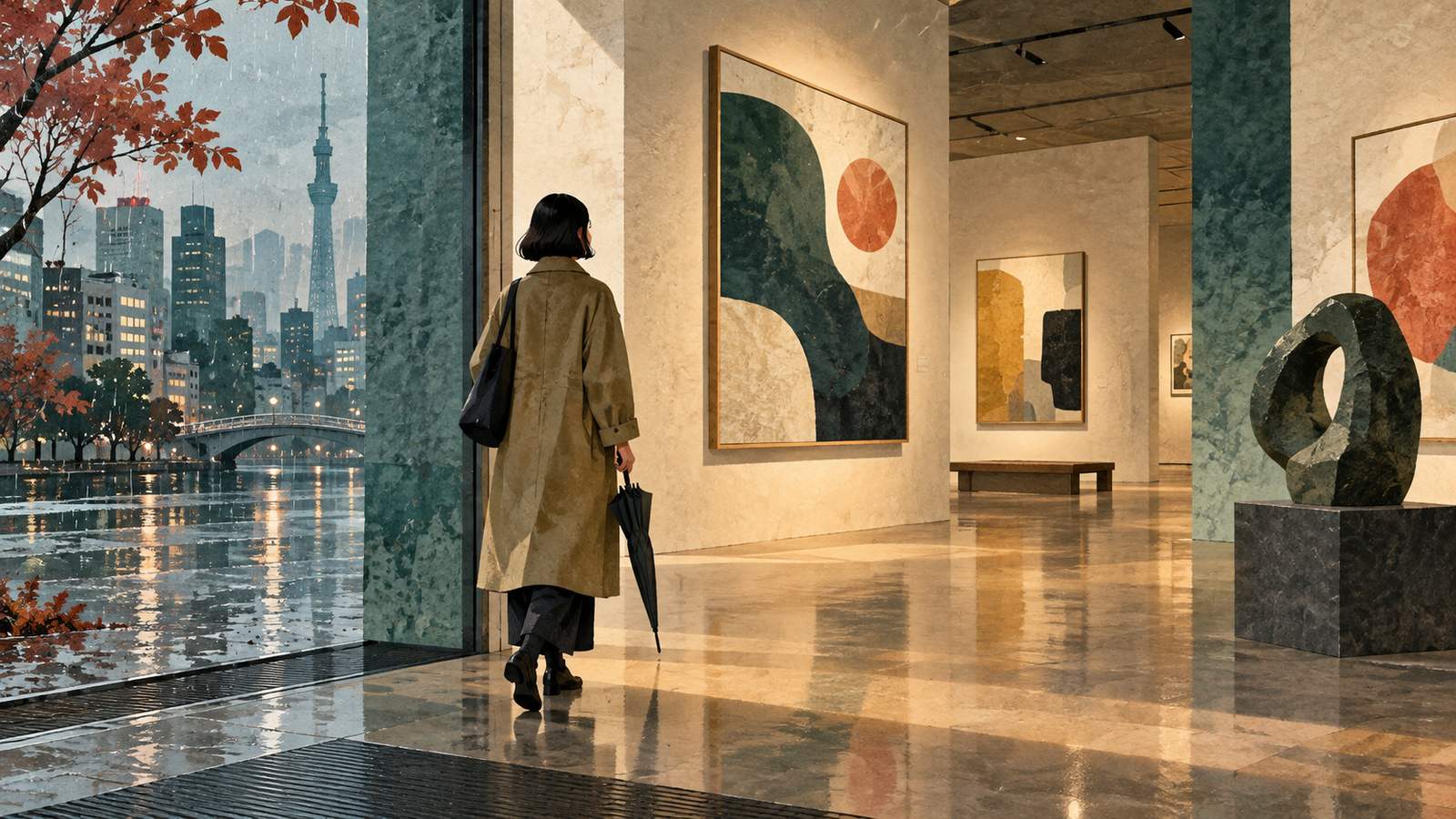
Rain in Tokyo does not mean spending the whole day in underground shopping arcades. Museums and art museums are good places to slow down, but an indoor venue does not mean the entire route from the station to the galleries is sheltered. This article focuses on choosing exhibitions, handling tickets, and reducing travel in the rain, without repeating a complete multi-day Tokyo itinerary. The sequence below is an editorial suggestion, not a fixed timetable; consult each museum's official website for exhibition and ticketing details.
Choose one museum cluster instead of racing between famous museums across the city
GO TOKYO lists Ueno and Roppongi as areas with multiple art museums and other museums to choose from. Ueno is a good place to choose a theme from Japanese art, artifacts, Western art, or natural science; in Roppongi, you can choose according to current exhibitions. Do not dash across the city just because your travel companions have saved a few photos from different museums. On rainy days, transfers, folding umbrellas, storing belongings, and queuing add up, often draining more energy than the journey times on a map suggest.
Before heading out, each person should choose one thing they really want to see, then look for common ground. For example, if someone wants to see artifacts and someone else likes architecture, you can choose one museum to explore in depth and leave a nearby walk as an optional extra. If there is no overlap at all, you can visit exhibitions separately and agree to meet in the same area, without squeezing two large museums into rushed visits. Book lunch after choosing the area, so the dining location does not spread the day's route out again.
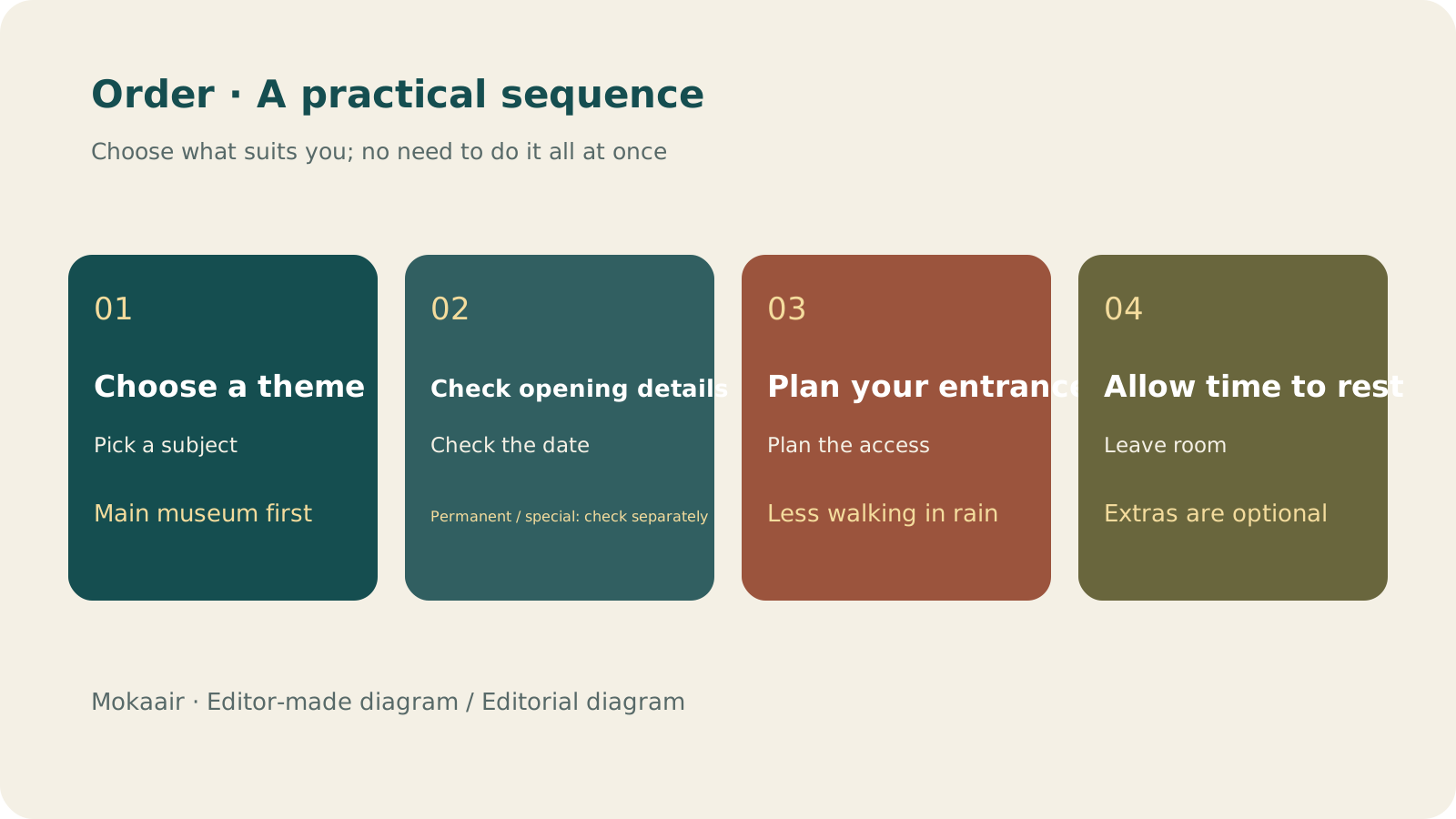
Read the full description
Check in order: choose exhibition interests, confirm opening details, plan your entrance route, and allow time for rest. Compiled by the editors; not a map or measured timing.
Understand permanent-collection and special-exhibition tickets separately
Review the museum's current exhibition pages and visitor information, checking exhibition dates, closing days, admission procedures, ticket sales cutoffs, and whether timed entry applies separately. An open permanent collection does not mean a particular special exhibition is also open; check the ticket terms to see whether it includes other galleries. Outdated ticket prices and closing information shown by search engines should only help you find the official website, not serve directly as the basis for that day's budget.
| Interest | Where to research first | Recheck before booking |
|---|---|---|
| Japanese artifacts and art | Japanese art and historical collections in Ueno | Museum opening details and separate special-exhibition tickets |
| Western art | Western art exhibitions in Ueno | Whether the works you want to see are on display |
| Natural science | Science museums in Ueno | Conditions for interactive exhibits and special exhibitions |
| Contemporary exhibitions | Current exhibitions in Roppongi | Gaps between exhibitions and timed-entry slots |
If a popular special exhibition has no suitable time slots, choose the permanent collection instead or save it for another day; do not buy admission codes of unknown origin from unidentified accounts. When traveling with older adults or young children, also check seating, elevators, and rules on what you may bring inside. Whether large luggage can be stored, where umbrellas go, and whether strollers can enter different galleries all depend on that museum's rules. Do not assume one museum's practices apply to another.
Shorten exposed walking sections instead of assuming you can avoid all rain
After choosing your main museum, use its official directions page to confirm the nearest station exit and the correct entrance, then check whether the walk crosses a park, stairs, or an open plaza. The closest exit on the map may not be the best one for strollers or wheelchairs. Have a bag for rain gear, a small quick-drying towel, and somewhere to put a wet umbrella ready, so you do not drip water into your bag or the galleries when you reach the entrance. These preparations make getting around easier; they do not mean any equipment can make travel in severe weather safe.
You can structure the day as “main museum—lunch and rest—second option in the same area.” Finish the main museum before deciding whether to add more; there is no need to buy a full day's worth of tickets at the outset. If the rain gets heavier, transport is disrupted, or your companions are tired, return to your accommodation. If the weather improves, add a short walk through a park or neighborhood. Keeping outdoor activities optional prevents your rainy-day backup from becoming another checklist you must complete.
Keep track of questions: they are more useful than photographing an entire wall of text
Pick up visitor guides when you enter, then choose a few works that resonate with you and take your time. Check each gallery's photography rules before taking pictures; permission to photograph does not mean you can use flash or block other visitors. Note a work's title and one question to make further reading easier when you get home. If you purchase an audio guide, first check its language and which exhibitions it covers; if you need to use your own phone, check your headphones and battery level too.
Build a rainy half-day around one main museum and a break
Ueno can serve as a planning example: first learn about the area through official tourism information, then choose a museum you truly want to visit and check its official website for opening details, exhibitions, and admission arrangements on your intended date. Multiple cultural venues in one area do not necessarily share a ticket or the same closing day. When choosing a museum, first ask whether its subject suits your companions' interests, then consider the walk in the rain from the station to the entrance. Do not set the pace of the entire day based only on social media photos.
Once you have planned your main museum visit, keep a nearby place where you can sit down for a meal or a rest as an option, and check whether it requires a separate reservation. If the rain eases after the exhibition, add a short walk; if it continues, head straight back. This backup plan does not rely on a second museum still having availability, making last-minute changes easier. When bringing children or older adults, check information on restrooms, elevators, and rest areas first, rather than measuring the richness of your itinerary by the number of galleries.
Before entering, handle umbrellas, wet outerwear, and bags according to the museum's rules to avoid dripping water or touching exhibits. Check the museum's information in advance to see whether large luggage can be stored and whether size limits apply; do not assume every cultural venue has available lockers. Rules on photography, filming, and touching may differ between galleries. Seeing other people holding phones does not mean every work can be photographed; follow signs and staff guidance.
If an exhibition has a lot of content, first choose a few questions you want to explore in depth. Reading an introduction before looking at the works is usually more memorable than rushing through every room. When leaving, note the subjects that interested you most and your information sources, then read further after returning to your accommodation. A rainy-day itinerary need not be a reduced version of your sunny-day plan; it can also be an opportunity to focus your attention on one thing.
- Choose a theme first, then the area and museum.
- Check current exhibitions instead of looking only at the museum's name.
- Save ticket, storage, and entrance information together.
- Keep the second museum flexible; resting is not a waste of your trip.
Add a rainy-day backup to your multi-day Tokyo itinerary
Tokyo attractions beyond Ueno and Roppongi
Guide
Tokyo Disneyland and DisneySea Guide: Ticket Prices, Fantasy Springs, Disney Premier Access (DPA), Standby Pass, and Which Park to Choose for Your First Visit
Tokyo Disney one-day Passport prices vary: most weekdays in 9/2026 cost ¥9,900 and weekends ¥10,900. At 14:00 daily, tickets go on sale for the same date two months later. Free Priority Pass is no longer on the official service list; only paid Disney Premier Access (¥1,000–3,500 per person per use) shortens waits. Covers hours, the 25th anniversary, Standby Pass, Entry Request, Fantasy Springs access and first-visit park choice; checked on the official site in 9/2026.
Guide
Otaru day trip from Sapporo: JR, Sankaku Market, the canal, Mt. Tengu and Yoichi
JR Rapid Airport reaches Otaru from Sapporo in as little as 32 minutes for ¥800, roughly every 30 minutes by day. Walk from Otaru Station through Sankaku Market, the canal and Sakaimachi Street to Minami-Otaru. Add a canal cruise (40 minutes; ¥1,800 by day, ¥2,000 at night), Mt. Tengu (¥2,000 winter return), or Nikka's Yoichi Distillery (book the free tour). Includes the 6–13 February 2027 Snow Light Path, luggage storage and the 23:08 last train. Fares and times were checked in September 2026.
Guide
Three days in Sapporo: New Chitose Airport, an Otaru day trip, and winter clothing
JR Rapid Airport reaches Sapporo from New Chitose Airport in as little as 37 minutes for ¥1,230. This three-day itinerary covers Odori Park, the Clock Tower, Tanukikoji and Susukino on Day 1; Otaru Canal and Sakaimachi Street on Day 2; and Mt. Moiwa or Shiroi Koibito Park before the airport on Day 3. It also covers the announced 2027 Snow Festival dates, winter clothing and traction. Fares and opening hours were checked in September 2026.
Guide
Singapore four-day, three-night itinerary: Gardens by the Bay and Supertree light show, Chinatown and Kampong Glam, hawker-centre etiquette, Night Safari or Sentosa
A first-timer’s four-day, three-night Singapore itinerary, with one district per day and no backtracking: Day 1 the Gardens by the Bay conservatories and Garden Rhapsody; Day 2 Sri Mariamman Temple in Chinatown and hawker-centre tray-return rules; Day 3 either Bird Paradise plus Night Safari or Sentosa; Day 4 Sultan Mosque, Little India, Orchard Road and Jewel Rain Vortex. Compare where to stay, non-resident admission and opening hours. Official sites checked in September 2026.