GuideSingapore
Your First Singapore Hawker Centre Visit: Finding Seats, Ordering and Returning Trays
A hawker centre is not a single restaurant with one counter. Check how each stall takes orders and where to collect food, divide up buying main dishes and drinks, then return trays according to the on-site sorting signs for an easy first meal.
About 7 min read
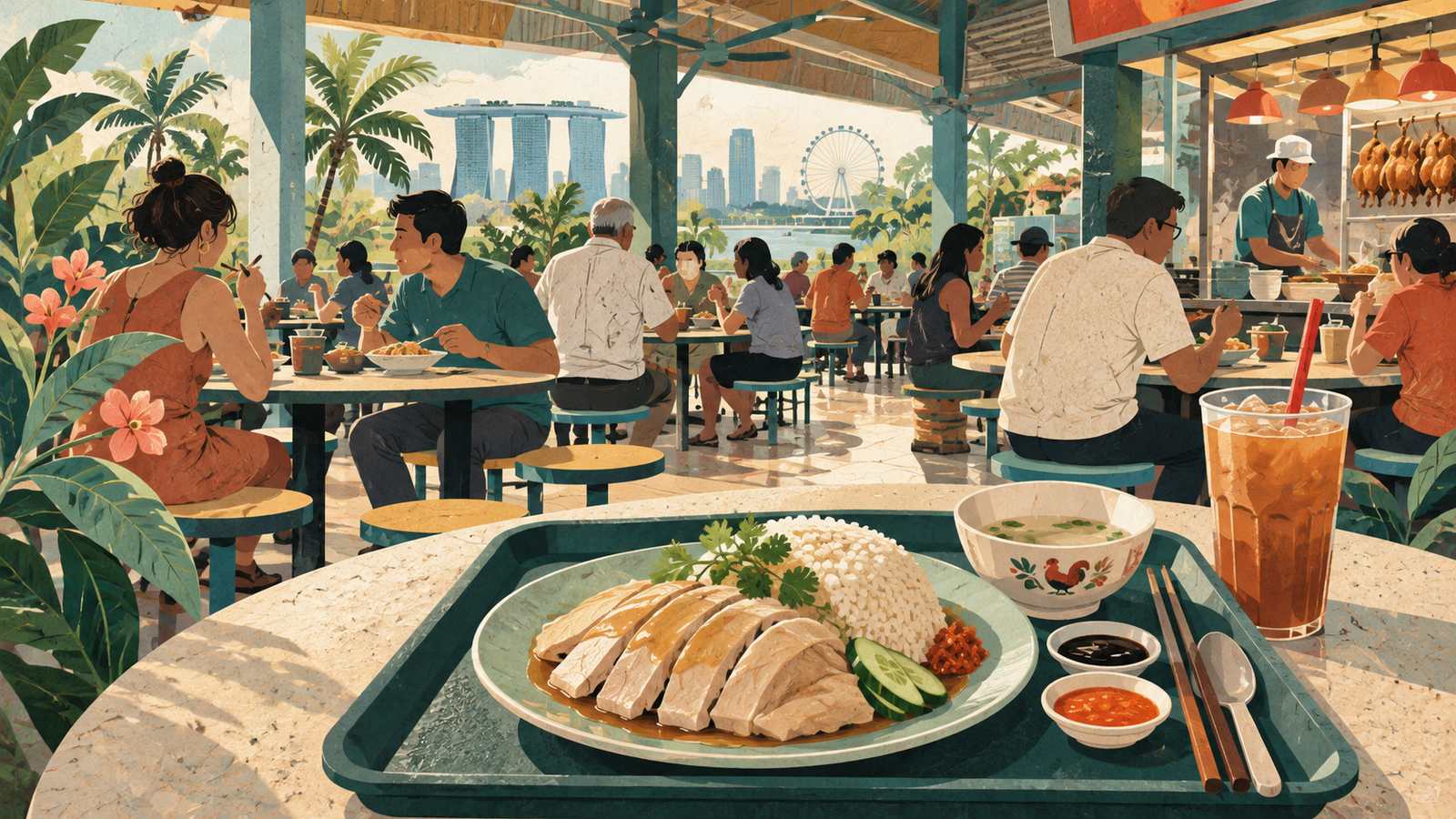
Walk into a Singapore hawker centre and the sheer choice can leave you unsure which stall to try first. For first-time visitors, understanding the space and ordering process is more helpful than immediately joining the longest queue. This article does not rank famous stalls or claim which is cheapest. Instead, it breaks a meal down into finding seats, confirming your order, paying and collecting food, and clearing your table, so you can eat with less stress.
Treat it as a shared dining space, rather than a single restaurant
The National Environment Agency's introduction to Singapore's hawker culture highlights people from different backgrounds gathering to eat at hawker centres, and the role of diverse food traditions in everyday life. In practice, stalls may set their own hours and close when sold out, while ordering and payment may also be handled separately. An open building does not mean the stall you want to visit is open. After saving the centre's name on your phone, also check whether your chosen stall is open that day.
Take a quick walk around on arrival to locate drinking water, handwashing facilities, return points, and entrances and exits before deciding what to eat. In a group, you can agree that one person will stay with the seats while others split up to buy main dishes and drinks. Note the table number or a nearby stall. Avoid everyone joining the same long queue and then being unable to find the meeting point. If there are belongings on a table, ask whether it is occupied. Do not move a stranger's bag or use important identity documents to reserve seats.
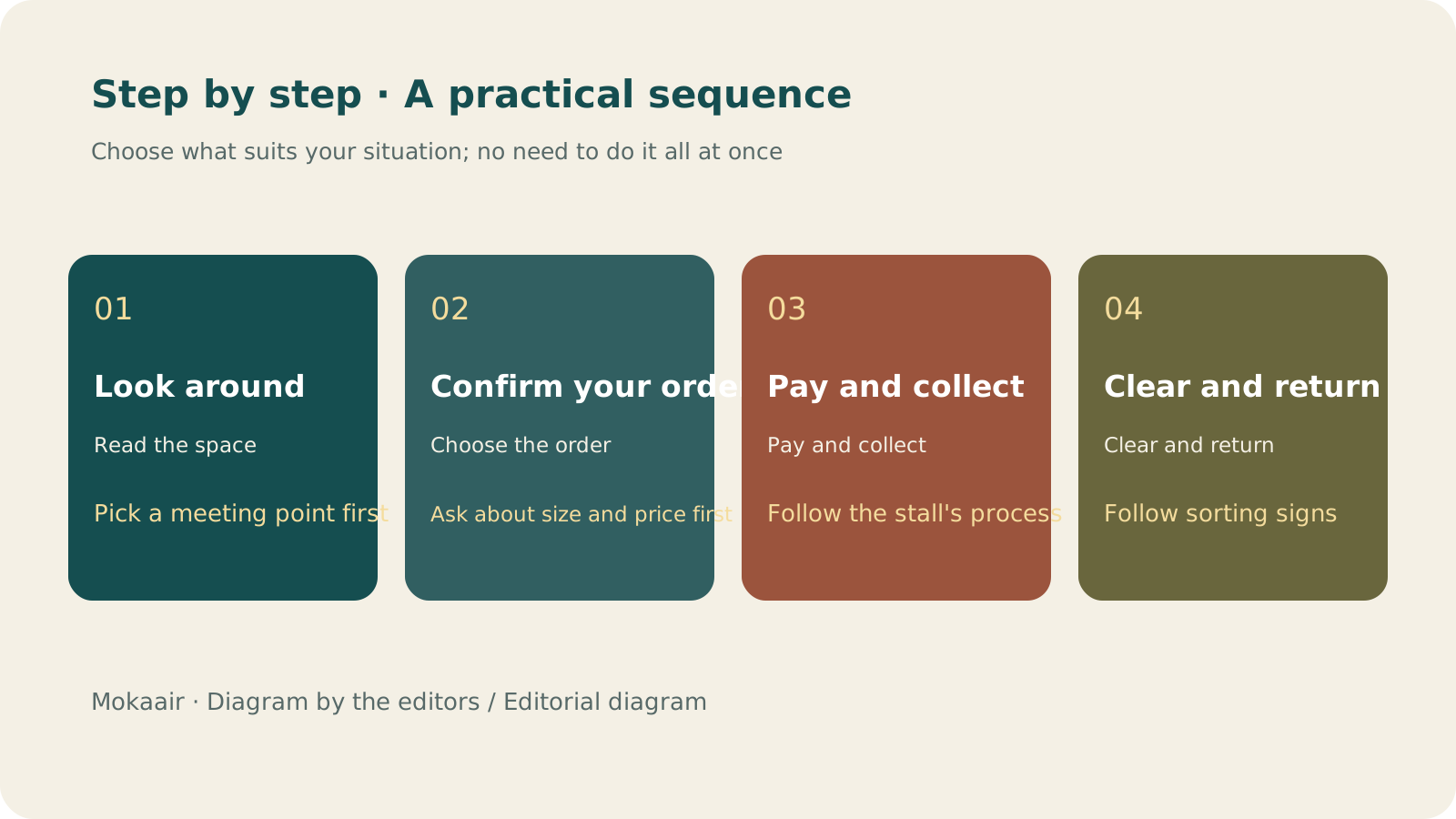
Read the full description
Check in order: look around, confirm your order, pay and collect, then clear and return. Compiled by the editors; not a map or measured timing.
Confirm portions, prices and collection arrangements before ordering
Menu prices may depend on portion size, extras or ingredient combinations. First indicate the dish you want, then ask which additions cost extra. Everything shown in a meal photo may not be included in the listed price. If you do not eat spicy food or have dietary restrictions, check with the stallholder before buying: you cannot identify every seasoning and ingredient by appearance alone. This article does not use a single fixed amount to represent average spending across all hawker centres.
| Meal stage | What to ask or check first | Problems this can reduce |
|---|---|---|
| Ordering a main dish | Portions, additions and prices | Discovering only at collection that additions cost extra |
| Buying drinks | Cup options, sugar and ice levels, and payment | Flavour or size that does not meet expectations |
| Paying | Accepted methods and whether change is available | Reaching the front of the queue and finding you cannot pay |
| Collecting food | Whether to wait nearby or listen for your number | Missing the call after walking away |
| Clearing up | Return areas and sorting signs | Putting tableware in the wrong place |
Follow each stall's payment signs, and do not assume every stall accepts international credit cards or the payment tools on your phone. Keep a workable backup. Ask first if prices are unclear, and pay after ordering. Use a tray to carry your food, keep soups and hot drinks stable, and avoid turning abruptly in crowds. If you are bringing children, finding seats first and carrying meals over one at a time makes it easier to look after them than carrying everything at once.
Want to try several dishes? Start small, then decide whether to order more
For the first round, choose a main dish and a drink, then decide after sitting down whether you want other snacks. Before everyone buys a completely different dish, check whether everyone is willing to share and whether suitable utensils are available. This is a way to reduce food waste, not a requirement to share food with unfamiliar travel companions. If food culture interests you, focus on ingredients and cooking methods as well, rather than only remembering the stall names that appear most often online.
Ask the stall directly whether leftovers can be packed to take away, whether containers are provided and whether they cost extra. If you will spend a long time outdoors afterwards, also consider the conditions in which you will carry the food. Do not stock up on meals you will not eat straight away just because buying more seems like better value. If a queue is very long, try another nearby option. Your dining experience should not depend solely on getting one particular dish.
After eating, leave the table and trays ready for the next diner
NEA's clean-table guidance reminds diners to clear rubbish and return used trays and tableware. Follow on-site signs for return locations and sorting, especially where different types of tableware have separate return areas. Dispose of tissues, packaging and food scraps according to rubbish and recycling signs, and ask staff if a category is unclear. This article does not list fine amounts or suggest that having cleaners is a reason to leave your table uncleared.
On a first visit as a pair, consider ordering in two rounds
If both of you want to try different dishes, each choose a main dish first, then judge by the portions whether to order more. First check each other's flavour preferences and dietary restrictions, and establish which dishes can be shared and whether each person needs a full portion of their own. When ordering, ask clearly about size, extras and prices. If a dish name or photo is unfamiliar, ask about it directly. There is no need to buy too much at once just to keep pace with the queue.
If one person stays with the seats while the other orders, first agree on the exact location and how to contact each other. Arrange seating according to the situation and management's instructions. Do not move belongings you see on tables or occupy several unused seats for a long time. Before collecting food, confirm whether to wait for your number, collect it yourself or follow another process, then return to your seat. If you buy from separate stalls, plan for drinks, utensils and shared space together so you do not both end up carrying trays while searching for each other.
To learn about a dish, start by asking about its ingredients, preparation or how to eat it, but avoid lengthy conversations when the stall is busy. While queuing, do not block neighbouring stalls' entrances or use other diners as the background for your photos. Once the food arrives, assess the portions before deciding whether to buy snacks in a second round. This keeps the pleasure of trying things while making it easier to reduce leftovers.
When finished, handle trays, tableware and rubbish according to the on-site signs. If there are separate return areas, put each item in the correct place. Companions can divide the work: one checks the table and personal belongings while the other returns the tableware. If you want to share your impressions of the flavours, describe what you personally enjoyed, but include the date you checked prices, opening hours and stall status. Do not treat a single visit as a conclusion that will remain valid forever.
- Identify your table and meeting point before splitting up to buy food.
- Confirm payment methods, portions and extras first.
- Stay flexible; you do not need to join every popular stall's queue.
- After eating, return trays and tableware according to the on-site signs.
Four Days and Three Nights in Singapore: The Gardens by Bay Light Show, Chinatown and Kampong Glam, Hawker Centre Etiquette, and Night Safari or SentosaSingapore four-day, three-night itinerary: Gardens by the Bay and Supertree light show, Chinatown and Kampong Glam, hawker-centre etiquette, Night Safari or SentosaA first-timer’s four-day, three-night Singapore itinerary, with one district per day and no backtracking: Day 1 the Gardens by the Bay conservatories and Garden Rhapsody; Day 2 Sri Mariamman Temple in Chinatown and hawker-centre tray-return rules; Day 3 either Bird Paradise plus Night Safari or Sentosa; Day 4 Sultan Mosque, Little India, Orchard Road and Jewel Rain Vortex. Compare where to stay, non-resident admission and opening hours. Official sites checked in September 2026.Read the full article
Changi Airport to Central Singapore Transport Guide: MRT Transfers, Reaching the MRT from T1/T4, Paying for Rides with Taiwan-Issued Cards, and Whether the Tourist Pass Is Worth ItChangi Airport to Singapore city: MRT transfers, terminals T1 and T4, Taiwan-issued cards and Tourist Pass valueFirst-time guide to getting from Changi Airport into Singapore: MRT transfers at Tanah Merah or Expo; reaching the station from T1 and T4; bus, taxi surcharges and airport transfer prices; the SGD 0.60 daily fee when paying with a Taiwan-issued Visa or Mastercard, why JCB is not accepted, whether EZ-Link or the Singapore Tourist Pass pays off, and late-night or return-trip trains. Fares and timings checked with Changi Airport and SimplyGo in September 2026.Read the full article
Fit your meal plans into your Singapore city itinerary
Guide
Otaru day trip from Sapporo: JR, Sankaku Market, the canal, Mt. Tengu and Yoichi
JR Rapid Airport reaches Otaru from Sapporo in as little as 32 minutes for ¥800, roughly every 30 minutes by day. Walk from Otaru Station through Sankaku Market, the canal and Sakaimachi Street to Minami-Otaru. Add a canal cruise (40 minutes; ¥1,800 by day, ¥2,000 at night), Mt. Tengu (¥2,000 winter return), or Nikka's Yoichi Distillery (book the free tour). Includes the 6–13 February 2027 Snow Light Path, luggage storage and the 23:08 last train. Fares and times were checked in September 2026.
Guide
Three days in Sapporo: New Chitose Airport, an Otaru day trip, and winter clothing
JR Rapid Airport reaches Sapporo from New Chitose Airport in as little as 37 minutes for ¥1,230. This three-day itinerary covers Odori Park, the Clock Tower, Tanukikoji and Susukino on Day 1; Otaru Canal and Sakaimachi Street on Day 2; and Mt. Moiwa or Shiroi Koibito Park before the airport on Day 3. It also covers the announced 2027 Snow Festival dates, winter clothing and traction. Fares and opening hours were checked in September 2026.
Guide
Singapore four-day, three-night itinerary: Gardens by the Bay and Supertree light show, Chinatown and Kampong Glam, hawker-centre etiquette, Night Safari or Sentosa
A first-timer’s four-day, three-night Singapore itinerary, with one district per day and no backtracking: Day 1 the Gardens by the Bay conservatories and Garden Rhapsody; Day 2 Sri Mariamman Temple in Chinatown and hawker-centre tray-return rules; Day 3 either Bird Paradise plus Night Safari or Sentosa; Day 4 Sultan Mosque, Little India, Orchard Road and Jewel Rain Vortex. Compare where to stay, non-resident admission and opening hours. Official sites checked in September 2026.
Guide
Hong Kong's Star Ferry and Ding Ding Trams: A Leisurely Day of Harbour Crossings and Hong Kong Island Streets
Take the Star Ferry across the harbour, ride a tram through Hong Kong Island's streets, and walk between them. Understanding the piers, travel directions, and return journey turns everyday transport into comfortable travel experiences.
Articles that cite this one
- Changi Airport to Singapore city: MRT transfers, terminals T1 and T4, Taiwan-issued cards and Tourist Pass value
- Singapore four-day, three-night itinerary: Gardens by the Bay and Supertree light show, Chinatown and Kampong Glam, hawker-centre etiquette, Night Safari or Sentosa
- Choosing What to Visit at Singapore's Gardens by the Bay: Flower Dome, Cloud Forest and Outdoor Gardens
Sources
- NEA: Hawker Culture in Singapore · Checked:
- NEA: Clean Tables Campaign · Checked: