GuideHong Kong
Hong Kong's Star Ferry and Ding Ding Trams: A Leisurely Day of Harbour Crossings and Hong Kong Island Streets
Take the Star Ferry across the harbour, ride a tram through Hong Kong Island's streets, and walk between them. Understanding the piers, travel directions, and return journey turns everyday transport into comfortable travel experiences.
About 8 min read
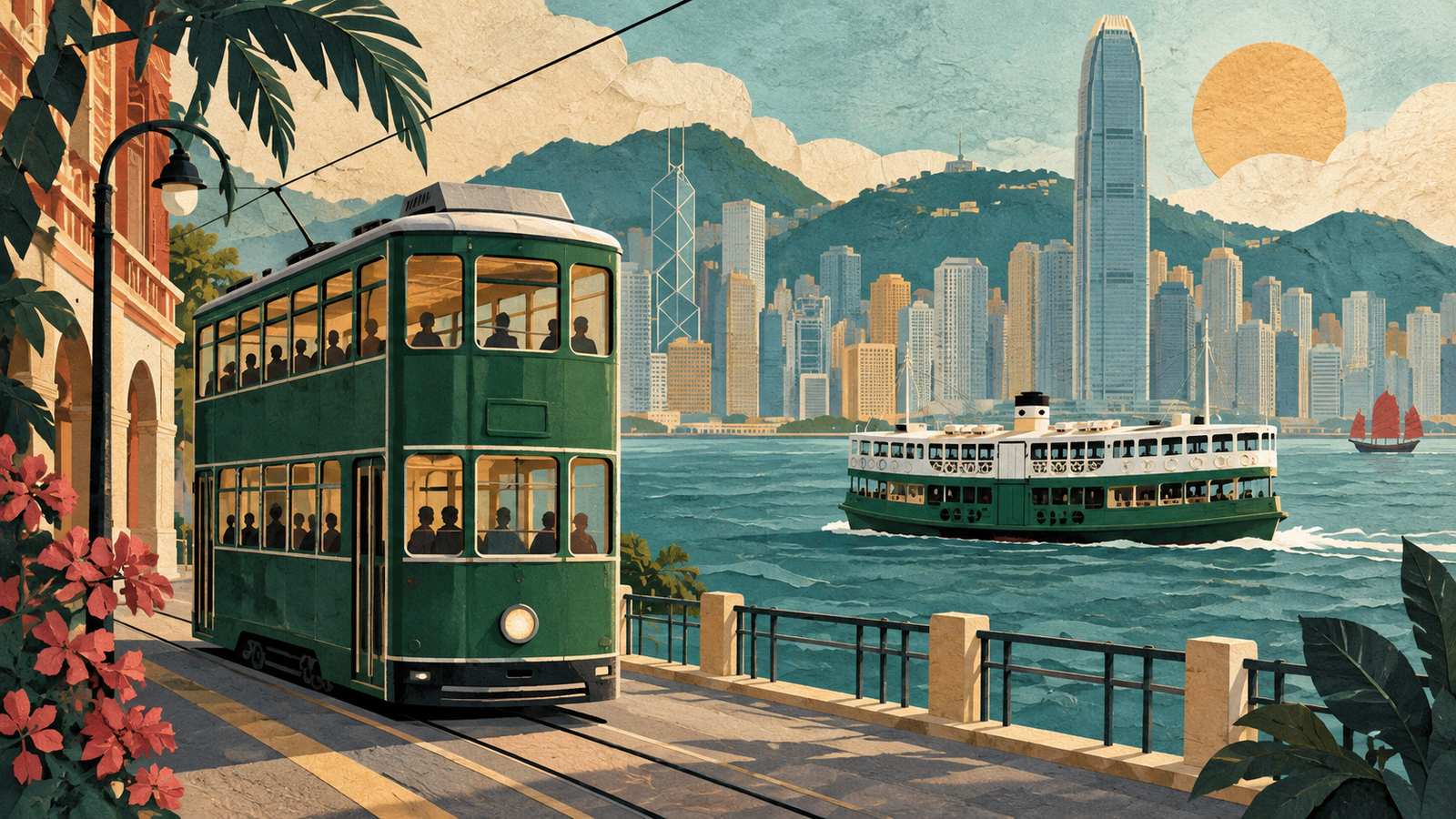
Some journeys in Hong Kong are worth slowing down for. Viewing Victoria Harbour from the water, then riding a tram through Hong Kong Island's streets, reveals the city at a different scale from the MTR. However, these two modes do not offer a seamless transfer on the same platform, and not every tram runs to the same destination. This guide explains how to connect them, without prescribing a checklist of sights you must complete on schedule.
Distinguish the Harbour Crossing from Travel Within Hong Kong Island
The Star Ferry website lists ferry services between Tsim Sha Tsui and Central, and between Tsim Sha Tsui and Wan Chai. Choose your route based on the area you want to visit after disembarking, rather than always choosing Central simply because you have heard of it. Regular ferries and separately ticketed harbour tours are also different services; before buying a ticket, confirm whether you want an everyday harbour crossing or a sightseeing product. Services can be affected by marine traffic, weather, and scheduling, so do not treat published service intervals as a punctuality guarantee.
Hong Kong Tramways operates on Hong Kong Island, and its official schedules page lists different routes and destinations. Trams will not take you across Victoria Harbour; if you are starting in Kowloon, cross the harbour first, then walk to a suitable tram stop. You can divide the day into three parts: the Kowloon waterfront, the ferry, and Hong Kong Island's neighbourhoods. That way, if your companions suddenly want more time enjoying the harbour views, or rain prompts a switch to other transport, everyone knows which part can be replaced.
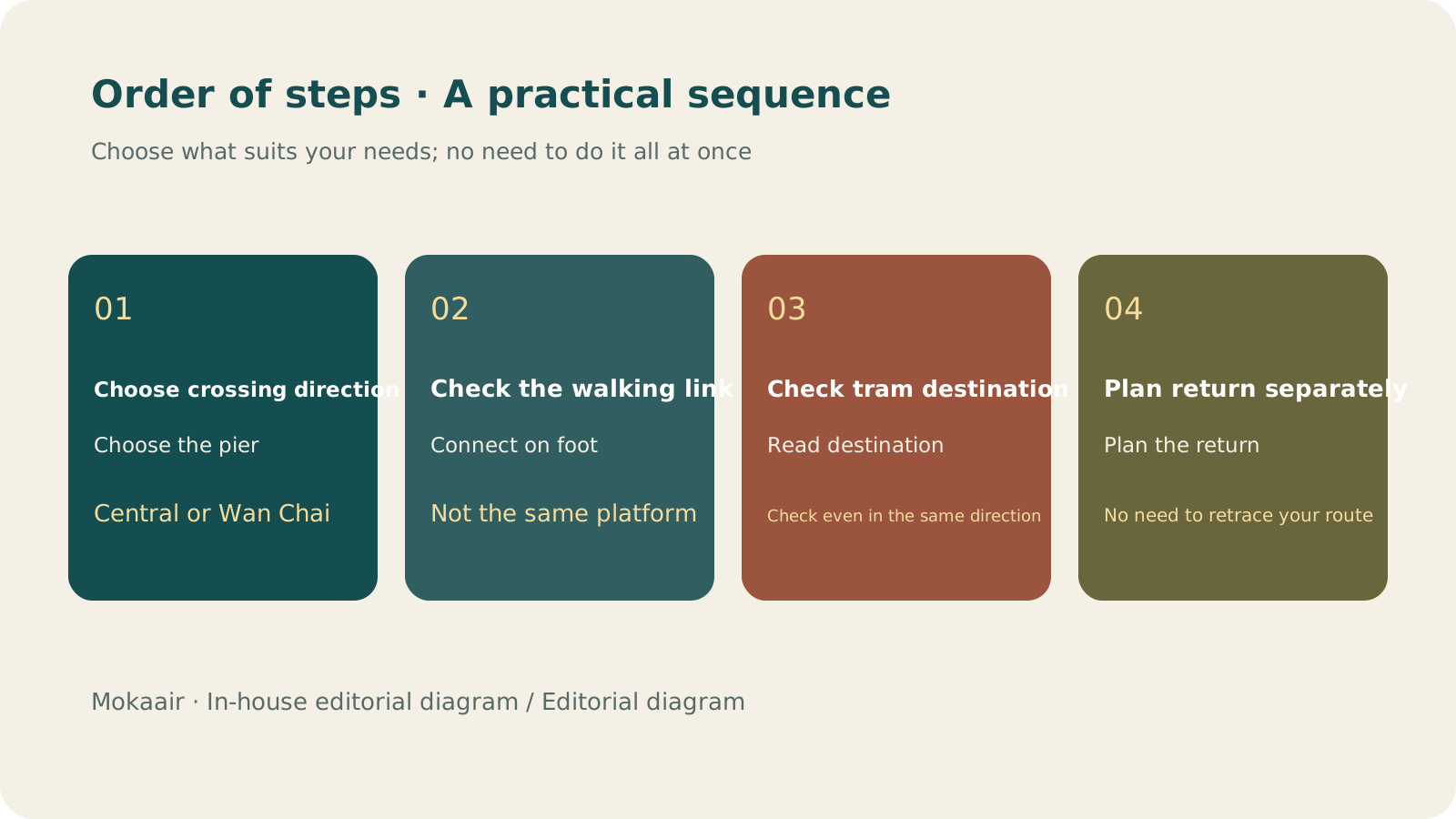
Read the full description
Check in order: choose your harbour-crossing direction, check the walking connection, check the tram's destination, and plan the return separately. Compiled by the editors; not a map or measured journey times.
Disembark at Central or Wan Chai: Choose the Pier for Your Next Stop
If you want to start walking around Central, look into the Central route first; if your main activities are in Wan Chai, look into the Wan Chai route. Separately check walking directions and road crossings between the ferry pier and the tram stop; the sailing time is not the total transfer time. If you have large luggage or a stroller, check the pier's levels, access routes and each operator's baggage rules first. Hong Kong Tramways limits luggage by both weight and volume; if it exceeds either limit, take another form of transport and save the tram experience for a day when you are travelling light.
| Journey segment | Purpose | Check before boarding |
|---|---|---|
| Tsim Sha Tsui—Central ferry | Travel from Kowloon to the Central area | Route, pier, and upper- and lower-deck ticket types |
| Tsim Sha Tsui—Wan Chai ferry | Travel from Kowloon to the Wan Chai area | That day's services and arrival pier |
| Hong Kong Island tram | Enjoy the neighbourhoods along the route at a leisurely pace | Direction and destination displayed on the front |
| MTR or other transport | Travel when pressed for time or adjust your return journey | Exit at your destination and operating information |
Do not try to cover all of Hong Kong Island in one day's tram segment. First choose a stretch of streets you want to see, check the tram's destination and your stop, and extend the ride only if you have time to spare afterward. If you want to go upstairs for the views, first make sure you can manage the stairs inside the tram, and establish steady footing before moving. Even without a seat, you can still use the tram as transport; there is no need to block other passengers while trying to secure a seat with a view.
Prepare Your Direction, Payment, and Alighting Stop
At the tram stop, check the direction carefully and confirm that the arriving tram's destination means it will reach the area where you plan to get off. Travelling in the same direction does not mean every service goes directly there; a route may turn or terminate along the way. Hong Kong Tramways' passenger guidance reminds riders to use the correct fare, Octopus, or designated electronic payment methods. Available methods depend on that day's notices; do not assume any transit card on your phone will work everywhere. Follow the signs on board and staff instructions for the riding procedure.
Once on board, you can use a map to track your approximate location, but save the name of your stop beforehand so you do not have to watch your phone throughout the journey. When taking photos, keep your body and equipment inside the tram, and do not lean against the doors. If you realise you are travelling in the wrong direction, get off at a suitable stop and check again, rather than scrambling through other passengers in a hurry. When boarding or leaving the Star Ferry, queue along the designated routes, and enjoy the views or take photos from places where you will not obstruct other passengers.
Make the Return Journey a Separate Decision
Once you have decided where to have dinner, choose how to return to Kowloon or the area where you are staying. If you want harbour views at night, check return ferry services separately; if you are already tired, you do not need to retrace the daytime route for a "complete experience." Regular ferry journeys differ from nighttime sightseeing cruises. If you have requirements for photography angles, time spent viewing the scenery, or seating, assess the product that actually meets your needs rather than buying tickets based on romantic imagery in promotional copy.
Use the Harbour Crossing as the Dividing Line, and Avoid Treating the Tram as Another Ferry
Suppose you are in Kowloon in the morning and want to walk around Hong Kong Island in the afternoon. First choose the ferry route and pier that suit your next stop, then work out your travel on the island. Do not treat "taking the Star Ferry" as an activity that always brings you to one fixed location; different arrival points mean different walks and onward connections. Mark your accommodation on the map too, and confirm whether you will stay on Hong Kong Island for dinner or need to return to Kowloon. This makes the overall direction of your day easier to understand.
Before boarding, check the route, schedule, and boarding instructions on site, especially whether you are queuing for the correct destination. Follow the rules on board during the crossing, and avoid blocking passageways or boarding and disembarking routes when taking photos. After arriving, move clear of the stream of people leaving the exit before stopping to check your map. Waterfront stretches that look continuous in travel photos may still require detours around roads or buildings to reach the neighbourhoods. Do not estimate transfer times from photographs.
At the tram stop, first confirm the travel direction and the approximate location where you want to get off, then check for a suitable service. The tram is both a visitor experience and everyday local transport. Item 9 of Hong Kong Tramways' Notice to Passengers prohibits luggage weighing more than 7 kg or having a volume of more than 30 L; items the driver considers likely to inconvenience other passengers are also not allowed. With large luggage, check both its weight and volume against the operator's latest rules. If it exceeds either threshold, or you cannot confirm that it is within both, use other transport; ease of boarding alone is not enough. If you only want a short ride, choose a stretch that connects with your walking route. There is no need to detour somewhere you do not need to visit just to stay on board longer.
Choose your return transport based on your current location and official operating information. If the weather, timing, or your companions' energy levels change, you can use a different mode of transport without insisting on retracing your route. Leave a stretch of time free from reservation pressure so you can sit by the waterfront a little longer or return to your accommodation early to rest. This flexibility helps you enjoy the city more than riding the ferry and tram a set number of times. If you have another reservation that evening, give your companions the restaurant address and meeting arrangements in advance. Those who split off to take photos will also know where to meet at the end, without having to share locations again each time.
- First decide which area you want to explore after crossing the harbour, then choose Central or Wan Chai.
- Look up the walk from the pier to the tram stop separately.
- Check both the tram's direction and its destination.
- Confirm fares and last departures using official information for that day.
For a different island pace, read on to A Walking Day on Cheung ChauA Leisurely Day Walking Cheung Chau: Pier, Waterfront and Lanes—Plan Your Return Before Choosing a Side RouteTake a ferry from Hong Kong's urban areas for a change of pace. You do not need to cover all of Cheung Chau. Use the pier as your base, choose the waterfront, lanes or a farther side route to suit the weather and your energy, and keep the return ferry in your plans.Read the full article
A Four-Day, Three-Night Hong Kong Itinerary: Central and Victoria Peak, the Hong Kong Palace Museum and M+ in West Kowloon, Tsim Sha Tsui Night Views, and Ngong Ping 360, with Planning for the MTR and Octopus
Guide
How to Choose Tokyo Transit Passes: Are Suica, Welcome Suica, the Tokyo Subway Ticket, and the JR Pass Worth It?
On a first Tokyo trip, start with an IC card and pay per ride (Welcome Suica has no deposit and is valid for 28 days). If you take four or more subway rides in a day, add a 72-hour Tokyo Subway Ticket for 2,000 yen; a JR Pass is never worthwhile if you stay in Tokyo and do not go to Kansai. See what TOURIST PASMO, Suica on iPhone, and the Tokyo Metro day pass do and do not cover, with a decision chart. Prices verified in September 2026.
Guide
Tokyo Disneyland and DisneySea Guide: Ticket Prices, Fantasy Springs, Disney Premier Access (DPA), Standby Pass, and Which Park to Choose for Your First Visit
Tokyo Disney one-day Passport prices vary: most weekdays in 9/2026 cost ¥9,900 and weekends ¥10,900. At 14:00 daily, tickets go on sale for the same date two months later. Free Priority Pass is no longer on the official service list; only paid Disney Premier Access (¥1,000–3,500 per person per use) shortens waits. Covers hours, the 25th anniversary, Standby Pass, Entry Request, Fantasy Springs access and first-visit park choice; checked on the official site in 9/2026.
Guide
Narita and Haneda Airports to Central Tokyo: How to Choose Skyliner, N'EX, Keikyu, or the Airport Limousine Bus
From Narita to Tokyo: take Keisei Skyliner to Ueno in 36–41 minutes for ¥2,580; for Shinjuku or Tokyo Station, JR N'EX reaches Tokyo in as little as 53 minutes for ¥3,140; choose the TYO-NRT bus for ¥1,500 when budget comes first. From Haneda, Keikyu reaches Shinagawa in 11–14 minutes for ¥330. Includes fares and times for Access Express, Airport Limousine and Tokyo Monorail, plus a stay-area route guide; checked on official sites in 9/2026.
Guide
Taoyuan Airport Departure Guide: A1/A3 In-Town Check-in, Baggage, Liquids and Power Banks at Security, e-Gate Registration, and When to Leave (2026)
Departure-day guide from Taipei or New Taipei: check in online and confirm the terminal; use in-town check-in at A1 (06:00–21:30) or A3 (09:00–16:00), with a three-hour cutoff and different airlines; follow the 100 mL/one-liter liquids rule, the two-power-bank carry-on limit and lighter rules; check e-Gate rules for ROC nationals with household registration in Taiwan using an ROC passport, from age 10 and 120 cm; then calculate when to leave. Verified in September 2026 using Taiwan sources.