GuideHong Kong
A Leisurely Day Walking Cheung Chau: Pier, Waterfront and Lanes—Plan Your Return Before Choosing a Side Route
Take a ferry from Hong Kong's urban areas for a change of pace. You do not need to cover all of Cheung Chau. Use the pier as your base, choose the waterfront, lanes or a farther side route to suit the weather and your energy, and keep the return ferry in your plans.
About 7 min read
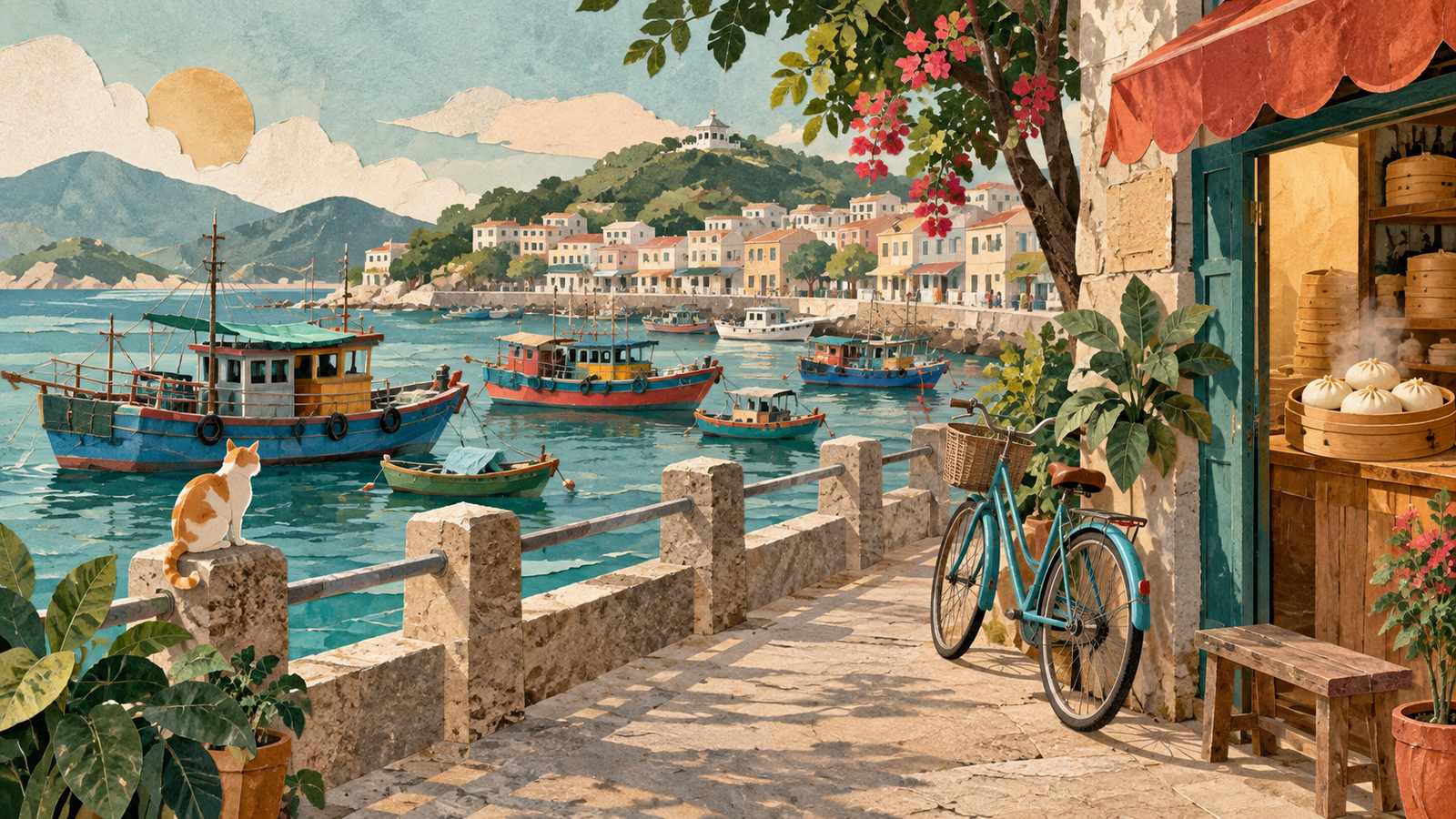
Cheung Chau's appeal goes beyond a particular snack or photo spot on a checklist. Walk from the pier into the lanes, find somewhere to sit, then stroll back to the waterfront, and you have a day quite different from one in the city. On your first visit, planning your return and walking range makes it easier to keep the trip relaxed than trying to circle the island. This article helps you weigh route options; it does not bundle every island attraction into a must-do itinerary.
Leaving from Central: check outbound and return sailings separately
The Hong Kong Tourism Board's transport information for Cheung Chau directs visitors to Central Pier Five and reminds them to check Sun Ferry's actual schedules. Before setting out, check outbound and return sailings for your travel date, along with the differences between ordinary and faster ferries, then decide which sailing to take. Journey times, fares and available space for each service are subject to the operator's announcements. This guide does not reuse fixed journey times or holiday fares from older guides.
Block out a window for your return rather than simply noting the last sailing. Take care of drinking water and toilet needs before boarding. If someone in your group is prone to seasickness, consider sea conditions and their personal condition when deciding whether to go. When bad weather affects sailings, staying in the city and visiting another day is more dependable than betting on services resuming. If you have a return flight you cannot miss that day, an outlying-island trip is not a suitable last-minute addition.
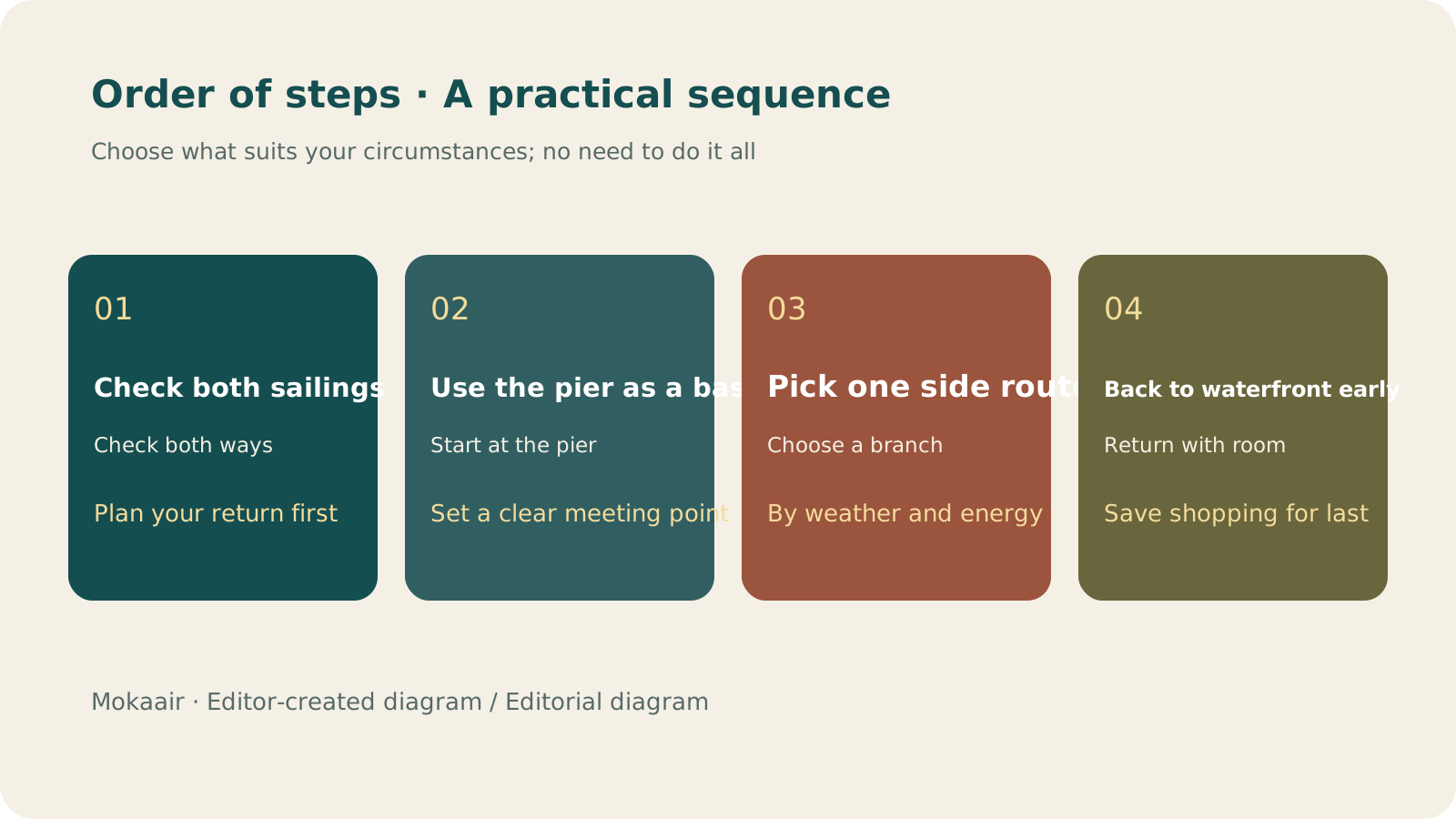
Read the full description
Check in order: outbound and return sailings, the pier as your reference point, one side route, and an early return to the waterfront. Compiled by the editors; not a map or measured travel times.
Use the pier as your starting point and choose one main route
After disembarking, first locate the pier for your return journey, then choose your main activity for the day. For everyday street scenes, focus on the waterfront and nearby lanes; for more natural scenery, research farther coastal stretches or side routes. Do not treat waterfront strolls, caves, climbs and water activities as equally demanding. The island may look small on a map, but slopes, steps, sun exposure and crowds still affect how far you can walk.
| Your preferred pace | What to prioritize | Flexibility to retain |
|---|---|---|
| A relaxed half-day | The pier area, waterfront and lanes | Return early or sit down for a rest |
| A food-focused visit | Browse stalls and shops before choosing a meal | Choose somewhere else if food sells out or queues form |
| Walking a little farther | One well-researched side route | Turn back if the weather or your energy is poor |
| Traveling with someone with mobility needs | Shorter stretches that are easier to manage | Do not assume every passage is step-free |
If people in your group move at different speeds, agree to meet at an easily recognizable spot near the pier, while others choose short side routes independently. Set a meeting time that allows a relaxed return; do not use the last ferry's boarding cutoff as your meeting time. Agreeing before departure on how to regroup if batteries run low or you lose contact is more reliable than constantly sending location updates on the spot. Navigation is only an aid: stop if you encounter private roads, closure notices or restrictions on site.
Do not buy every snack at once; save lunch for what you really want
Walk around first to check the day's offerings, posted prices and queues, then decide whether to have a full meal or snacks at intervals. Either approach works, but avoid buying a whole bag of food and then forcing down a full meal for fear of missing out. Before ordering seafood or ingredients priced by weight, clarify the unit, quantity, cooking fees and total cost. Someone else's bill from a previous visit is no guarantee of today's prices.
These streets are places where residents and shopkeepers work. Avoid blocking doorways while queuing, and ask before photographing people or work inside shops. Watch for bicycles along the way, too; being on an outlying island does not mean you should occupy the entire road. Take your packaging waste to an appropriate disposal point, and do not leave food for wildlife. None of this requires special equipment—just leave space for others as you move around.
Check conditions at farther sights instead of calling them “on the way”
If you want to walk to farther places such as Cheung Po Tsai Cave, separately confirm the entrance, trail conditions, opening status and whether the route suits you. This article's suggestions for easy walks do not imply that any cave is safe to enter. If surfaces are slippery, daylight is fading or you encounter unfamiliar narrow passages, switch to somewhere you can return from more easily. Water activities and climbs also need separate planning; do not add them spontaneously to the end of a stroll.
Build a route you can shorten around the pier, shore and a place to eat
On your first visit to Cheung Chau, use the pier as a shared reference point and choose the direction you most want to explore. If some companions want sea views and others want snacks, start with a shoreline walk that lets you turn back, then return to a more familiar area to eat. That way, a change in weather or energy does not leave you needing to cross the entire island to finish. For farther trails, beaches or stretches over varied terrain, separately check that day's conditions and entrance information before deciding whether to include them.
Once on the island, check the return information and pier location, but do not spend the whole day watching the clock. Decide when to start heading toward the pier, and keep activities along the way optional. Consider how you will carry food or souvenirs before buying them, so you do not end up with both hands full while still wanting a long walk. The streets are also residents' living spaces: leave room for people to pass when stopping for photos, and do not use doorways or work areas as resting places.
To slow the pace, focus on the shopfronts along one street, harbor activity or coastal views instead of collecting every signature snack. Before eating, check the menu and portion sizes, ask about anything unclear, then decide whether to share dishes. If the place you wanted to try is closed, choose a suitable option nearby rather than making the entire island trip revolve around waiting for one shop.
Before returning, organize your belongings and confirm your ferry's destination. If you need to wait for your intended sailing, queue according to the instructions on site. Do not use journey times from someone else's article to assume you will make an evening reservation. There will still be transport and walking after you reach the city, so keep important arrangements as flexible as possible. Making the island trip the day's main activity is easier to manage than squeezing in another event with a fixed admission time afterward. If your companions want to explore separately, agree beforehand on a meeting point near the pier and how to contact each other. Have one person compile the latest ferry information so everyone avoids making decisions from different screenshots.
- Check Sun Ferry's outbound and return services for the day.
- Locate the pier and meeting point as soon as you disembark.
- Choose only one farther side route, and adjust everything else to your energy.
- Do not make the last sailing your only return option.
A leisurely ferry ride without visiting the outlying islands: Star Ferry and tramsHong Kong's Star Ferry and Ding Ding Trams: A Leisurely Day of Harbour Crossings and Hong Kong Island StreetsTake the Star Ferry across the harbour, ride a tram through Hong Kong Island's streets, and walk between them. Understanding the piers, travel directions, and return journey turns everyday transport into comfortable travel experiences.Read the full article
A four-day, three-night Hong Kong itinerary: Central and Victoria Peak, the Hong Kong Palace Museum and M+ in West Kowloon, Tsim Sha Tsui night views, Ngong Ping 360, and planning with the MTR and Octopus
Another day trip starting at the pier: A Macau day trip from Hong Kong: TurboJET, Cotai Water Jet or the Hong Kong–Zhuhai–Macao Bridge bus.
Guide
Tokyo Disneyland and DisneySea Guide: Ticket Prices, Fantasy Springs, Disney Premier Access (DPA), Standby Pass, and Which Park to Choose for Your First Visit
Tokyo Disney one-day Passport prices vary: most weekdays in 9/2026 cost ¥9,900 and weekends ¥10,900. At 14:00 daily, tickets go on sale for the same date two months later. Free Priority Pass is no longer on the official service list; only paid Disney Premier Access (¥1,000–3,500 per person per use) shortens waits. Covers hours, the 25th anniversary, Standby Pass, Entry Request, Fantasy Springs access and first-visit park choice; checked on the official site in 9/2026.
Guide
Otaru day trip from Sapporo: JR, Sankaku Market, the canal, Mt. Tengu and Yoichi
JR Rapid Airport reaches Otaru from Sapporo in as little as 32 minutes for ¥800, roughly every 30 minutes by day. Walk from Otaru Station through Sankaku Market, the canal and Sakaimachi Street to Minami-Otaru. Add a canal cruise (40 minutes; ¥1,800 by day, ¥2,000 at night), Mt. Tengu (¥2,000 winter return), or Nikka's Yoichi Distillery (book the free tour). Includes the 6–13 February 2027 Snow Light Path, luggage storage and the 23:08 last train. Fares and times were checked in September 2026.
Guide
Three days in Sapporo: New Chitose Airport, an Otaru day trip, and winter clothing
JR Rapid Airport reaches Sapporo from New Chitose Airport in as little as 37 minutes for ¥1,230. This three-day itinerary covers Odori Park, the Clock Tower, Tanukikoji and Susukino on Day 1; Otaru Canal and Sakaimachi Street on Day 2; and Mt. Moiwa or Shiroi Koibito Park before the airport on Day 3. It also covers the announced 2027 Snow Festival dates, winter clothing and traction. Fares and opening hours were checked in September 2026.
Guide
Singapore four-day, three-night itinerary: Gardens by the Bay and Supertree light show, Chinatown and Kampong Glam, hawker-centre etiquette, Night Safari or Sentosa
A first-timer’s four-day, three-night Singapore itinerary, with one district per day and no backtracking: Day 1 the Gardens by the Bay conservatories and Garden Rhapsody; Day 2 Sri Mariamman Temple in Chinatown and hawker-centre tray-return rules; Day 3 either Bird Paradise plus Night Safari or Sentosa; Day 4 Sultan Mosque, Little India, Orchard Road and Jewel Rain Vortex. Compare where to stay, non-resident admission and opening hours. Official sites checked in September 2026.