Lifestyle
Taiwan–Matsu No. 4 Submarine Cable and Matsu’s Microwave Stations: moda Says Completion Is Coming Soon, and the State of Matsu’s Communications Backups
On June 23, 2026, moda said the Taiwan–Matsu No. 4 cable and microwave stations in Matsu’s four townships, built with Forward-looking Infrastructure subsidies, are due to be completed soon; once active, there will be 3 cables and at least 2 microwave systems per township. This article traces the cable outages and backups of the first half of 2026 from official notices, plus the official cable list as of September 17, 2026. This site did no on-site testing and gives no travel or carrier advice.
About 15 min read
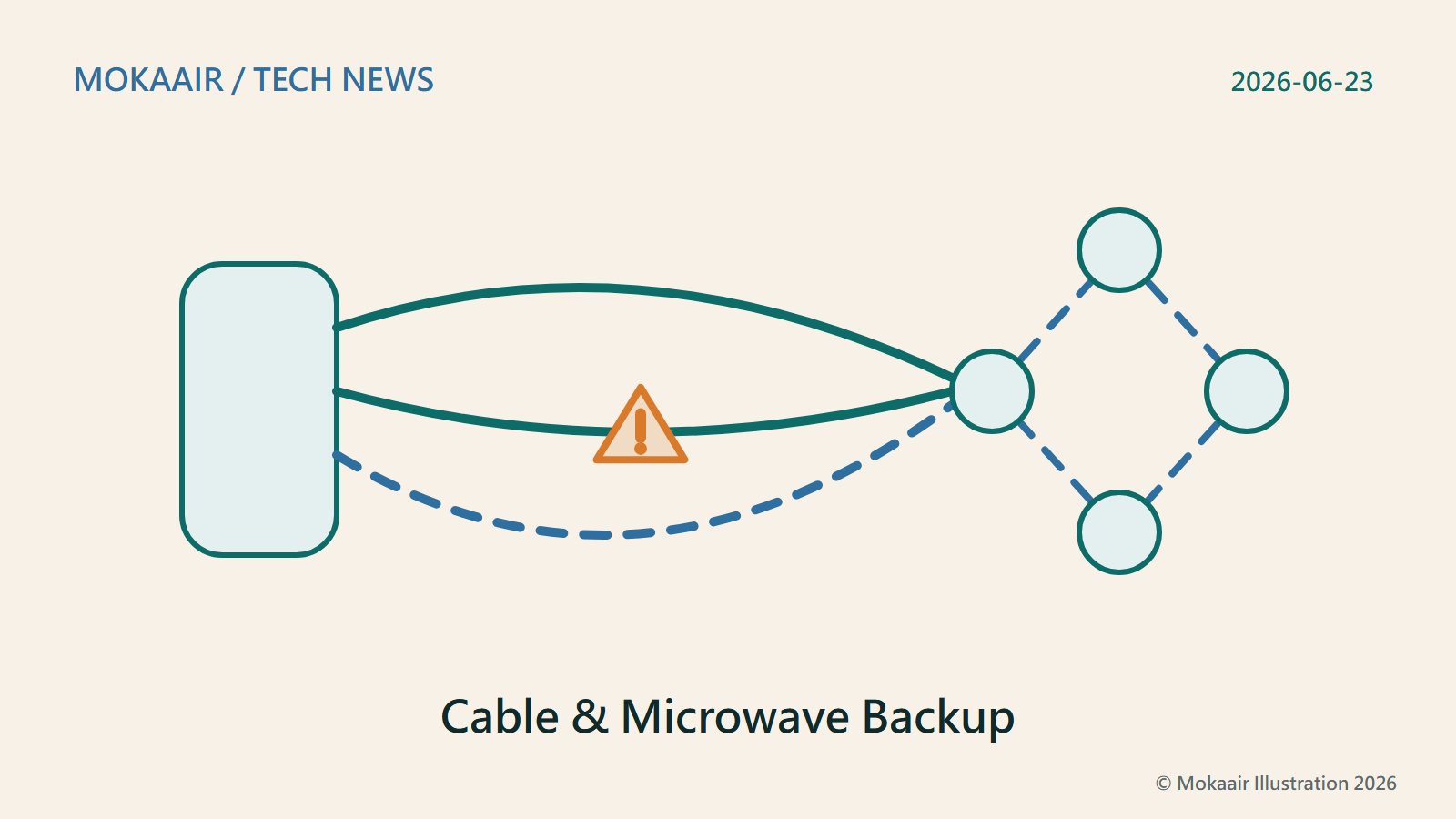
On June 23, 2026, Taiwan’s Ministry of Digital Affairs (moda) issued a press release stating that the “Taiwan–Matsu No. 4” submarine cable (臺馬四號) — built by Chunghwa Telecom with Forward-looking Infrastructure subsidies — and the microwave communication systems linking Matsu’s Dongyin, Beigan, Nangan, and Juguang townships were both “coming to completion soon.” moda explained that construction of the Taiwan–Matsu No. 4 cable had been somewhat delayed by the situation in the Middle East affecting the shipping of materials, but that with Chunghwa Telecom’s continued efforts it is expected to be completed soon; once activated, there will be 3 submarine cables between Taiwan and Matsu, and Beigan, Nangan, Dongyin, and Juguang townships will each have at least 2 microwave systems for outside communication. The same press release also stated that moda Deputy Minister Ning Yeh (葉寧) traveled to Matsu’s Dongyin and Nangan townships on June 16–17, together with the speaker of the Lienchiang County Council, the head of Dongyin Township, and the Ocean Affairs Council’s Coast Guard Administration, among others, to inspect Chunghwa Telecom’s work on the Taiwan–Matsu No. 4 cable and microwave systems in Matsu, as well as improvements to mobile connectivity on the New Taima ferry (新臺馬輪) — this inspection trip took place before the press release was issued, so the two are not the same day.
This article was fact-checked on September 17, 2026, against the full text of two moda press releases, one Chunghwa Telecom cable-fault repair notice posted on its official website, and the content shown that day on moda’s “Latest Submarine Cable Status” page. This site has not tested communication quality in Matsu on the ground, and offers no advice on whether the outlying islands are suitable to visit or which telecom carrier to choose; apart from this article’s own fact-check date, every date, place, and number below can be traced to the original text of these four official documents. Where these four documents do not say something, this article notes that they do not say it, rather than inferring on their behalf or filling the gap with what media outlets or aggregator sites say.
What This Announcement Says: The Taiwan–Matsu No. 4 Cable and Matsu’s Microwave Stations
In its press release, moda places this construction within a broader policy context: through incentives such as Forward-looking Infrastructure subsidies and guidance measures, it has urged the three telecom carriers Chunghwa Telecom, FarEasTone, and Taiwan Mobile to build faster and build more, in order to strengthen mobile coverage and network resilience. moda also said it will keep encouraging carriers, under a policy of “backups upon backups,” to install diverse, heterogeneous backups such as submarine cables and microwave systems at key nodes, and will improve the resilience of outlying-island communication networks by subsidizing carriers’ equipment, refining submarine-cable early-warning systems, speeding up cable-repair mechanisms, and coordinating across agencies.
The press release also mentions a development closer to travelers’ daily lives: after moda guided carriers to make improvements, the New Taima ferry (新臺馬輪), which runs between the Matsu islands, “now has a stable mobile signal.” Deputy Minister Yeh rode the New Taima ferry from Nangan to Dongyin to test this firsthand, and officials describe it as “now able to stream video smoothly” — but that is the Deputy Minister’s own account of his experience, not measured data published by this site or by the government. As for the viewing delays crew members reported, moda explained the cause as limited bandwidth on the ship’s geostationary satellite link, which switching to a mobile network can resolve or substantially improve. moda also said that this year (2026) it is planning to subsidize carriers to extend mobile service to the shipping route between Taiwan and Matsu, but the press release gives no amount, timeline, or participating carriers.
The Complete April 2026 Dongyin Outage: How the Backups Actually Worked
An example of the backup system actually being used occurred before this announcement was issued. moda explained that on the afternoon of April 29, 2026, it received a report from Chunghwa Telecom that the Taiwan–Matsu No. 3 cable (TM3) had again suffered a fiber-core break about 2.64 kilometers off Dongyin, Matsu, causing the complete severance of the Beigan–Dongyin section; the affected area was Dongyin Township, one of Lienchiang County’s four townships, with a population of about 1,500, while Nangan, Beigan, and Juguang townships were unaffected. moda noted that Chunghwa Telecom had already reported partial fiber-core damage at the same location on March 30, 2026, and this time the renewed damage led to a complete break.
As for the cause of the complete break, moda’s press release states that “according to the company’s preliminary assessment, the fault was suspected to have been caused by poor sea conditions that shifted the wreckage of a previously grounded vessel, damaging the cable” — this is Chunghwa Telecom’s own preliminary assessment, relayed by moda, not a confirmed investigative conclusion. After the outage, Chunghwa Telecom activated microwave backup under standard operating procedure, shifting the voice and internet services normally carried over the cable onto it; moda said that mobile phone, voice, and data services in the Dongyin area remained normal at the time, though weather could cause slight delays to some internet service, while cable TV service could not use the microwave backup because it lacked conversion equipment. moda also said that, sea conditions permitting, repairs were expected to be completed by the end of July 2026 — that end-of-July estimate was made on April 29 itself, and none of the four official documents this article cites states when this complete break was ultimately repaired; this article does not fill in that gap either.
| Date | Cable | Event |
|---|---|---|
| 2026-03-30 | Taiwan–Matsu No. 3 (TM3) | Chunghwa Telecom reported partial fiber-core damage |
| 2026-04-29 | Taiwan–Matsu No. 3 (TM3) | Complete break, Beigan–Dongyin section |
| 2026-05-25 | Taiwan–Matsu No. 2 (TDM2) | Chunghwa Telecom announced partial fiber-core restoration |
| 2026-06-23 | Taiwan–Matsu No. 4 | moda says completion is coming soon |
What Chunghwa Telecom’s Own Announcement Says: “Partial Fiber-Core Restoration”
Besides moda’s press releases, Chunghwa Telecom also posts its own announcements about the status of Matsu’s outbound cables in the message section of its official website. The one this article cites has its own URL and date label and can be opened to read directly: the title is “Notice on the Repair of the Taiwan–Matsu No. 2 Cable (TDM2) Fault” (Chinese: 「台馬第二海纜(TDM2)障礙修復說明」), the page is dated 2026/05/25, and the body is a single sentence: “Chunghwa Telecom’s Taiwan–Matsu No. 2 cable (TDM2) completed a partial fiber-core restoration on May 25 and resumed dual-cable operation.” (Chinese: 「中華電信公司台馬第二海纜(TDM2),已於05月25日完成部分芯線搶通並恢復雙海纜運作。」) The abbreviation TDM2 for the Taiwan–Matsu No. 2 cable and TM3 for the Taiwan–Matsu No. 3 cable come from the Chinese full names and English abbreviations paired in the same row of the domestic cable list on moda’s “Latest Submarine Cable Status” page.
The wording in this announcement is “partial” fiber-core restoration — it does not say that all the damaged fiber cores have been fixed, and it does not further state when the remaining fiber cores will be repaired; it likewise does not say when or where the fault on the Taiwan–Matsu No. 2 cable occurred. The June 23 press release does mention that “the Taiwan–Matsu No. 2 and No. 3 cables recently developed faults simultaneously in the Dongyin area,” but it gives no date and does not say whether that is the same fault this announcement repaired; this article does not link the two, nor does it fill in the date of the break. For readers, this means that when a Chunghwa Telecom or moda announcement uses words like “repaired” or “restored,” the safer approach is to open the original announcement directly and check its scope — Chunghwa Telecom’s announcements in its message section are, alongside moda’s press releases, another first-hand source for checking the status of Matsu’s cables.
What These Four Official Documents Do Not Say
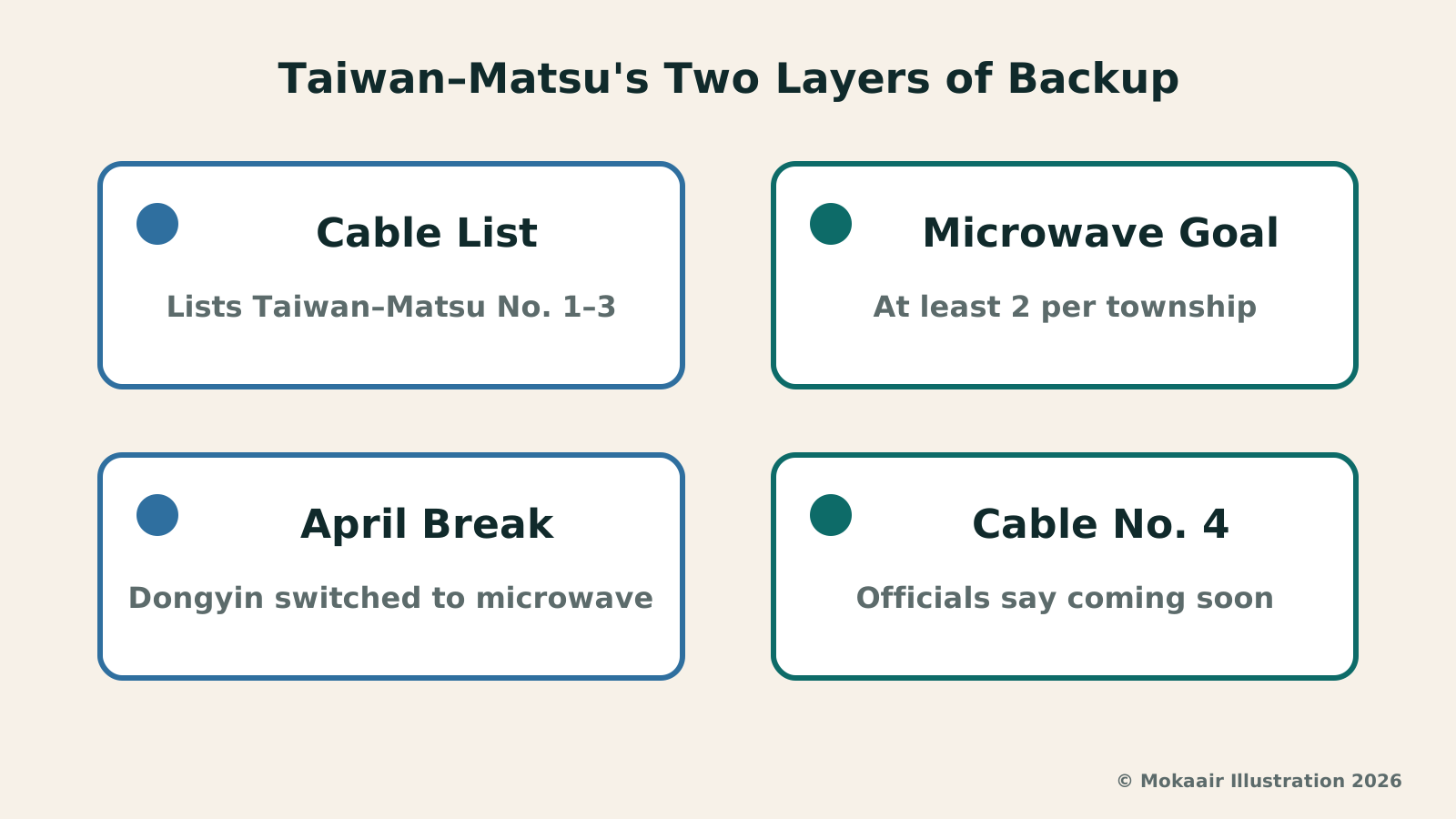
Among the four official documents this article cites, there are still plenty of details about the Taiwan–Matsu No. 4 cable that go unstated: the June 23 press release only says it is “coming to completion soon,” with no specific completion or activation date; the cable’s length, capacity, landing-station location, and contractor, as well as how many microwave units each of Matsu’s four townships actually has and what they cost, are likewise not stated in the press release — it only gives the post-completion floor of “at least 2 per township.” Nor does the statement that “there will be 3 submarine cables between Taiwan and Matsu” once it is activated further explain which 3 cables, or how they relate to the Taiwan–Matsu No. 1, No. 2, and No. 3 cables on the domestic cable list as of the fact-check date — for now, that sentence can only be quoted from the official original; it cannot be inferred further.
As for the funding source for the Taiwan–Matsu No. 4 cable, officials state that it was “built by Chunghwa Telecom with Forward-looking Infrastructure subsidies”; the press release gives no amount and no subsidy ratio. The release’s mention that “the Taiwan–Matsu No. 2 and No. 3 cables recently developed faults simultaneously in the Dongyin area” also does not say what day that happened; this article separately found that the Taiwan–Matsu No. 3 cable suffered a complete break at Dongyin in late April (see the previous section), but moda’s sentence itself does not name which event that was, and this article does not identify it either.
The State of Things as of the Fact-Check Date, and How to Check It Yourself
Under “Key Policies,” moda separately maintains a “Latest Submarine Cable Status” page listing Taiwan’s current international and domestic submarine cables. When this article checked it on September 17, 2026, the page stated: “Taiwan currently has 16 international communication cables and 10 domestic communication cables.” The domestic cable table lists, in order, Taiwan–Kinmen No. 2, Taiwan–Matsu No. 1, Taiwan–Matsu No. 2, Taiwan–Matsu No. 3, Taiwan–Penghu No. 2, Taiwan–Penghu No. 3, Penghu–Kinmen No. 1, Penghu–Kinmen No. 3, Xiaoliuqiu No. 1, and Xiaoliuqiu No. 2 — the Taiwan–Matsu No. 4 cable is not on this list. This page has no fixed “last updated” date to cite, because the date shown in the footer is written in automatically by the page’s script at the moment a user opens it; it can only record “what was shown on the day it was checked,” not some fixed version timestamp, and the list itself will also change as cables are added or removed.
Readers who want to check the latest status can go directly to the “Latest Submarine Cable Status” page under “Key Policies” on moda’s official website, or search moda’s “News Releases” for the newest announcement about the Taiwan–Matsu No. 4 cable; Chunghwa Telecom’s own announcements are in the message section of its official website. None of the four official documents this article cites describes what the actual communications experience between Taiwan and Matsu will be like once the Taiwan–Matsu No. 4 cable is activated, and this article has not conducted any on-site testing either; such details will have to wait for the government or the telecom carrier to publish them.
Frequently asked questions
Has the Taiwan–Matsu No. 4 cable been completed?
None of the four official documents this article cites says the Taiwan–Matsu No. 4 cable has been completed or activated. moda’s press release of June 23, 2026, says the cable is “coming to completion soon,” without giving a specific date; as of the fact-check date (September 17, 2026), the Taiwan–Matsu No. 4 cable was also not among the 10 domestic cables listed on moda’s “Latest Submarine Cable Status” page. This is the status as of the fact-check date, not an official announcement of a delay.
Does Matsu’s outbound network rely on just one submarine cable?
There is microwave backup in addition to the cable. moda’s June 23, 2026 release states that once the Taiwan–Matsu No. 4 cable is activated, there will be 3 cables between Taiwan and Matsu, and Beigan, Nangan, Dongyin, and Juguang townships will each have at least 2 microwave systems for outside communication; and when the Taiwan–Matsu No. 3 cable’s Dongyin section broke completely in April 2026, Chunghwa Telecom did switch traffic to microwave. How many cables currently connect to Matsu is not stated directly in any of the four official documents this article cites; the 10 domestic cables on moda’s “Latest Submarine Cable Status” page include the Taiwan–Matsu No. 1, No. 2, and No. 3 cables, but these documents do not explain how they relate to “3 submarine cables,” and this article does not infer it.
If a cable breaks, does communication in Matsu shut down entirely?
Not necessarily, but it is not without effect either. Take the complete break of the Taiwan–Matsu No. 3 cable’s Beigan–Dongyin section on April 29, 2026, as an example: moda’s press release that day explained that after switching to microwave backup, mobile phone, voice, and data internet service in the Dongyin area remained normal at the time, though weather could cause some internet service to see slight delays, while cable TV service could not use microwave communication because it lacked conversion equipment.
Are cable breaks always caused by deliberate human damage?
Not necessarily — it depends on the official account of each individual event. Take the complete break of the Taiwan–Matsu No. 3 cable on April 29, 2026, as an example: moda relayed Chunghwa Telecom’s account that “the fault was suspected to have been caused by poor sea conditions that shifted the wreckage of a previously grounded vessel, damaging the cable.” This is Chunghwa Telecom’s preliminary assessment, not a confirmed investigative finding, and within the scope of this article’s fact-checking, no subsequent final investigative conclusion was found either.
Are “restoration” and “repair” in Chunghwa Telecom’s announcements the same thing?
Not necessarily. Chunghwa Telecom’s announcement about the Taiwan–Matsu No. 2 cable on May 25, 2026, is titled “Notice on Fault Repair,” yet its body says it “completed a partial fiber-core restoration and resumed dual-cable operation” — the word used is “partial,” and the announcement itself does not state whether every damaged section has been fixed. If readers see the words “restoration” or “repair,” the safer approach is to go directly to the original official announcement to check its scope.
How can an ordinary person check the latest status of Matsu’s submarine cables?
You can go to the “Latest Submarine Cable Status” page under “Key Policies” on moda’s official website to see the current cable list, or check moda’s “News Releases” for the latest announcements; Chunghwa Telecom’s own announcements are in the message section of its official website, and the one this article cites has its own URL and date label. Note that the cable list changes as cables are added or removed — this article describes what was shown on September 17, 2026.
2026 Tech News Roundup: Key Points on Hardware, Platforms, Telecom, and Regulation2026 Tech News Roundup: Key Points on Hardware, Platforms, Telecom, and RegulationThis site's 2026 tech-news explainers in five groups — hardware, platforms, computing infrastructure, Taiwan policy, EU regulation: iPhone Duo and September hardware, M6/M5 Ultra, Snapdragon 8 Elite Gen 6, Project Zenith, Pixel Drop, App Store subscriptions, WordPress and Synology patches, NVIDIA, 6G, the Taiwan–Matsu cables, the sovereign AI corpus, the Cyber Resilience Act, the KIDS Act and Apple's EU terms. No purchase advice; vendor claims attributed; official sources and check dates.Read the full article
moda Hosts International 6G Spectrum Symposium: What Was Discussed, What Remains Undecidedmoda Hosts International 6G Spectrum Symposium: What Was Discussed, What Remains UndecidedOn September 10, 2026, Taiwan's Ministry of Digital Affairs (moda) held the "Spectrum for Tomorrow" International Symposium, inviting ITU-R Study Group 5's chairman and spectrum-policy experts from several countries to discuss 6G's spectrum demand from land-space integration and AI. Using moda's press release, program page, and the Radio Frequency Supply Plan (amended February 2025), this article lays out what was discussed and what the official documents had not yet said as of the check date.Read the full article
Lifestyle
moda Hosts International 6G Spectrum Symposium: What Was Discussed, What Remains Undecided
On September 10, 2026, Taiwan's Ministry of Digital Affairs (moda) held the "Spectrum for Tomorrow" International Symposium, inviting ITU-R Study Group 5's chairman and spectrum-policy experts from several countries to discuss 6G's spectrum demand from land-space integration and AI. Using moda's press release, program page, and the Radio Frequency Supply Plan (amended February 2025), this article lays out what was discussed and what the official documents had not yet said as of the check date.
Lifestyle
Taiwan Sovereign AI Training Corpus Opens Public Call for Content: License Terms and the State of Its Hakka-Language Data
On September 15, 2026, Taiwan's Ministry of Digital Affairs (moda) announced a public call for content for the Taiwan Sovereign AI Training Corpus, inviting publishers and writers to license their works for AI training. Drawing on three moda press releases and the license-terms page of the corpus website, this article covers the scope of the call, the royalty-free terms, the real limits of the "opt-out" option, and what the official documents leave unsaid. Checked September 17, 2026.
Lifestyle
Cloudflare launches Traces in public beta: site operators can follow every step a request takes through the platform on one timeline
On October 2, 2026, Cloudflare announced the public beta of Cloudflare Traces. Website operators and developers using Cloudflare can see a request pass through security rules, caching, routing and the origin server on a single timeline, making it easier to find why a request was blocked or slowed. New pricing takes effect on December 1, 2026. Information comes from the official Cloudflare blog.
Lifestyle
Cloudflare launches Web Search API via AI Gateway, requiring search partners to follow its crawler rules
On October 2, 2026, Cloudflare announced a Web Search API that lets AI agents query live web information through AI Gateway. The first partners are Ceramic.ai, Exa and Linkup. Cloudflare says these partners' crawlers must meet its Verified bots requirements and cite sources. This matters both to developers building AI applications and to website owners whose content may be crawled.
Articles that cite this one
- Chunghwa Telecom Announces Completion of the Taiwan–Matsu Fourth Cable: Nearly NT$1.4 Billion, Triple-Route Backup, and 1.9 Tbps
- moda Hosts International 6G Spectrum Symposium: What Was Discussed, What Remains Undecided
- 2026 Tech News Roundup: Key Points on Hardware, Platforms, Telecom, and Regulation
Latest travel guides

GuideTokyo
Where to Stay in Tokyo: Comparing Shinjuku, Ueno, Tokyo Station, Shibuya, Asakusa, Ikebukuro, and Ginza, Plus Airport Access, Accommodation Tax, and Luggage Delivery
Where should you stay in Tokyo? Compare Shinjuku, Ueno, Tokyo Station, Shibuya, Asakusa, Ikebukuro, and Ginza by the same criteria: access from Narita and Haneda, transit routes, nearby attractions, neighborhood character, and who each area suits. Includes a comparison table, a Yamanote Line diagram, Tokyo’s accommodation tax as verified in 2026/9 (changing to 3% in 2027/4), and Airport TA-Q-BIN luggage shipping rules.
- Budget
- Hotels
GuideTokyo
How to Choose Tokyo Transit Passes: Are Suica, Welcome Suica, the Tokyo Subway Ticket, and the JR Pass Worth It?
On a first Tokyo trip, start with an IC card and pay per ride (Welcome Suica has no deposit and is valid for 28 days). If you take four or more subway rides in a day, add a 72-hour Tokyo Subway Ticket for 2,000 yen; a JR Pass is never worthwhile if you stay in Tokyo and do not go to Kansai. See what TOURIST PASMO, Suica on iPhone, and the Tokyo Metro day pass do and do not cover, with a decision chart. Prices verified in September 2026.
- Transport
- Budget

GuideTokyo
Tokyo Disneyland and DisneySea Guide: Ticket Prices, Fantasy Springs, Disney Premier Access (DPA), Standby Pass, and Which Park to Choose for Your First Visit
Tokyo Disney one-day Passport prices vary: most weekdays in 9/2026 cost ¥9,900 and weekends ¥10,900. At 14:00 daily, tickets go on sale for the same date two months later. Free Priority Pass is no longer on the official service list; only paid Disney Premier Access (¥1,000–3,500 per person per use) shortens waits. Covers hours, the 25th anniversary, Standby Pass, Entry Request, Fantasy Springs access and first-visit park choice; checked on the official site in 9/2026.
- Itineraries
- Family
Sources
- moda Actively Advances Construction of the Taiwan–Matsu No. 4 Cable and Microwave Stations in Matsu’s Four Townships to Strengthen Outlying-Island Communications Resilience · Checked:
- Taiwan–Matsu No. 3 Cable’s Beigan–Dongyin Section Completely Severed; moda Activates Microwave Backup and Speeds Up Repairs · Checked:
- Notice on the Repair of the Taiwan–Matsu No. 2 Cable (TDM2) Fault · Checked:
- Latest Submarine Cable Status · Checked: