Lifestyle
DeepSeek-V4.1-Flash Launches, Mixed Word on V4-Pro: What to Watch When Models Switch
DeepSeek launched V4.1-Flash on September 10, 2026, temporarily routing the old V4-Flash model names to it. The release announcement says V4-Pro would be rerouted from September 14; the change log and pricing page say it stays available after September 14. Using official pages, this article sets out the order of the two statements and the status when checked, and explains how people using DeepSeek indirectly through third-party tools can spot a model switch and read pricing and privacy terms.
Updated: About 9 min read
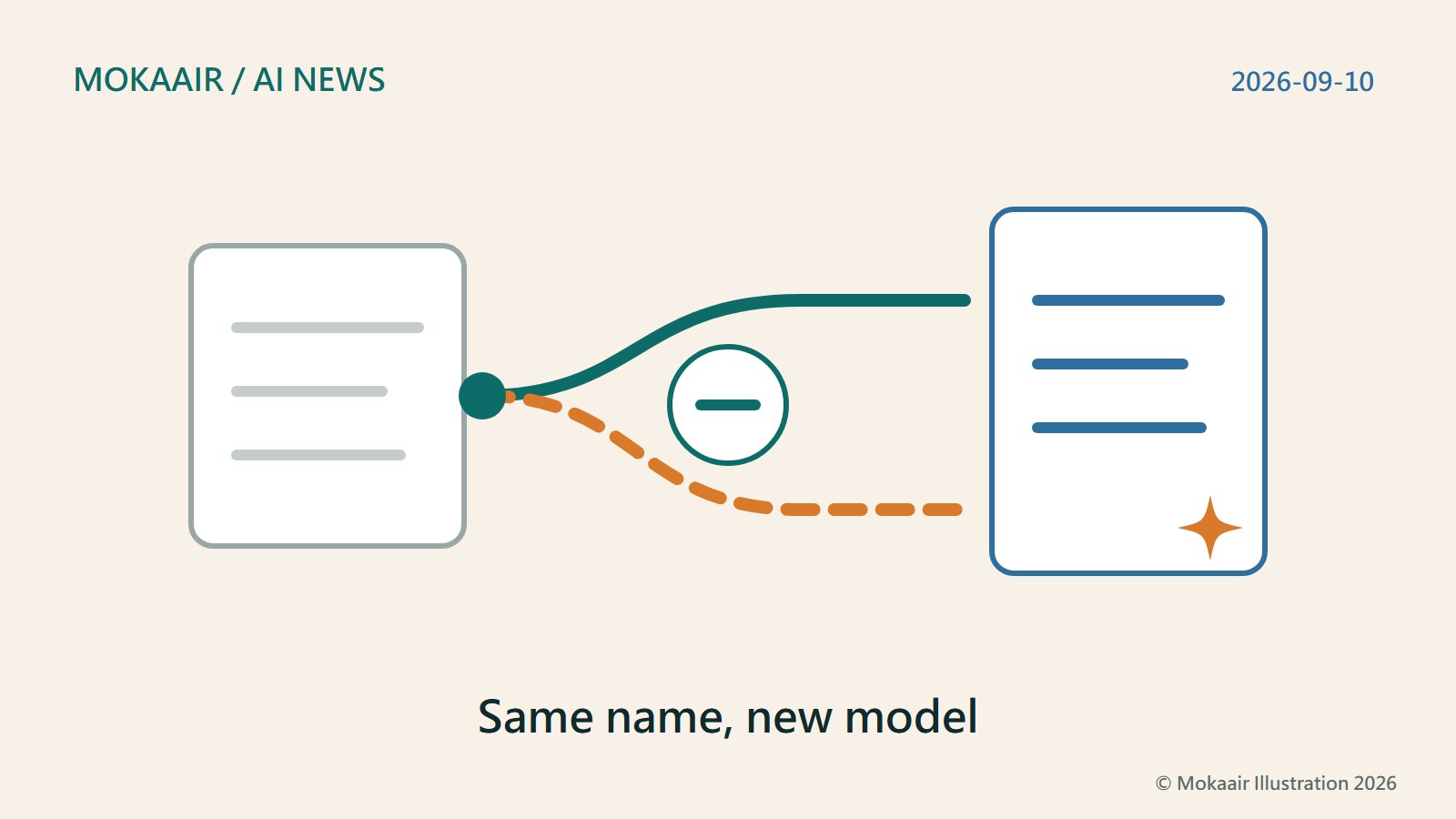
On September 10, 2026, DeepSeek published DeepSeek-V4.1-Flash in its official API documentation, describing it as the smallest model in its new architecture family, with native image understanding; it is called with the model name deepseek-flash. The previous-generation V4-Flash and V4-Flash-Vision-Exp were retired at the same time, and their old names are temporarily routed to the new model. The announcement also said that requests to V4-Pro would be rerouted to V4.1-Flash starting September 14, but at the time of checking, DeepSeek's official change log and pricing page said V4-Pro would continue to be offered after September 14.
This article was checked on September 15, 2026. The announcement describes changes to the API; these official pages do not say which model the DeepSeek app and web version currently use, and this article makes no assumption about it. This site has not called or benchmarked the model, so the capability and benchmark claims here are DeepSeek's own statements, and the everyday and work scenarios are examples designed by the editors.
What the V4.1-Flash Announcement Says
DeepSeek says V4.1-Flash is a mixture-of-experts (MoE) model with 552B parameters built on a new Causal Encoder-Decoder architecture. It activates 8B parameters when reading input and 16B when generating output, which the company describes as asymmetric between input and output. The announcement also says a new pre-training approach, combined with larger-scale reinforcement learning post-training, lets it beat flagship models including DeepSeek-V4-Pro on benchmarks. That is the vendor's claim: the comparison table in the model card also shows items where it trails models from other companies, and this site has not rerun any tests.
The other headline is caching. When a model handles a long conversation, it temporarily stores intermediate computation data, known as the KV cache. The announcement says that compared with the previous generation, V4.1-Flash cuts the KV cache's HBM requirement to one quarter and its SSD requirement to one eighth, and that the more efficient architecture is the reason API prices have been lowered.
On the weights, the announcement links to the official Hugging Face page. The model card states that the repository and model weights are licensed under the MIT License, that the model supports a context of up to one million tokens, and that it can take images and text directly and output text. Being downloadable does not mean an ordinary computer can run it: the inference example linked from the model card runs with an 8-way model-parallel setup. The release announcement separately invites organizations planning large-scale deployments with 2,000 GPUs plus a storage cluster to contact DeepSeek.
Old Names Rerouted and the Future of V4-Pro: Two Statements in Sequence
The first statement comes from the September 10 release announcement. It says multiple tests showed V4.1-Flash beating V4-Pro on performance, cost, speed, and total time taken, so DeepSeek planned to retire V4-Pro: starting at UTC 04:00 on September 14, 2026 (12 noon Taiwan time), all deepseek-v4-pro requests would be handled by V4.1-Flash and billed at V4.1-Flash prices until V4.1-Pro is released.
The second statement appears in the change log and on the pricing page. On the day of checking, the September 10 entry in the change log and a note on the pricing page said that in response to user demand, DeepSeek had decided to keep offering the V4-Pro API service after September 14, 2026, with billing unchanged, and that any changes would be announced separately. On the pricing page, the version listed for deepseek-v4-pro is DeepSeek-V4-Pro-0813. The wording “decided to keep offering” suggests a decision made after the rerouting plan, but the pages carry no date, and the news list in the API documentation has no separate announcement.
When checked on September 15, both the English and Simplified Chinese versions of the release announcement still carried the original text about rerouting starting September 14. Someone who reads only the announcement may think V4-Pro has already been replaced. According to the change log and pricing page, deepseek-v4-pro continues to be offered after September 14, while the two old V4-Flash names are served by V4.1-Flash and billed at Flash prices.
| Model name | Model actually serving | Pricing |
|---|---|---|
| deepseek-flash | DeepSeek-V4.1-Flash | Flash pricing |
| deepseek-v4-flash | V4.1-Flash (original model retired) | Flash pricing |
| deepseek-v4-flash-vision-exp | V4.1-Flash (original model retired) | Flash pricing |
| deepseek-v4-pro | DeepSeek-V4-Pro-0813 | Billing unchanged |
Why People Who Never Call the API Directly Are Affected Too
Most readers in Taiwan will never call the DeepSeek API themselves, but they may still be using it indirectly. Some translation extensions, writing apps, and internal company Q&A tools put a DeepSeek model name in their settings and forward users' input to it; DeepSeek's announcement also names WorkBuddy (including CodeBuddy) and OpenCode as fully supporting V4.1-Flash. When a provider routes an old name to a new model, nothing in the tool's settings has to change, yet the model answering behind the scenes is already a different one.
This release is a clear example: the name deepseek-v4-flash says V4, but the model actually serving it is V4.1-Flash. The change log also records that when V4 launched on April 24, the two old names deepseek-chat and deepseek-reasoner pointed during the transition to the non-thinking and thinking modes of deepseek-v4-flash, respectively, and that they were scheduled to be discontinued on July 24, 2026.
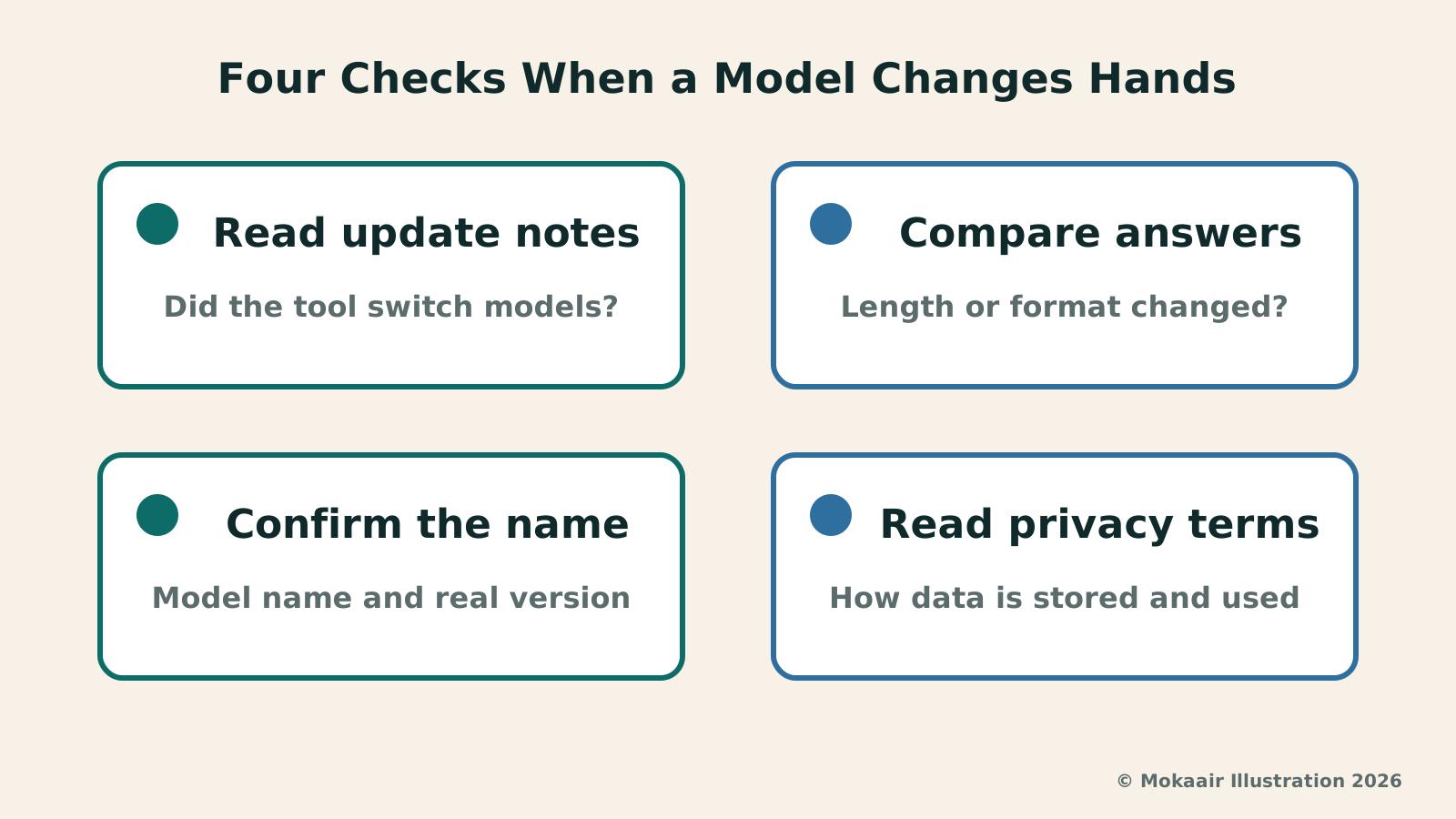
Take a scenario designed by the editors: an office worker uses an internal company summarizer every day to tidy up meeting notes, and after September 10 notices that the summaries are longer and broken into sections differently. A good first step is to check the tool's update notes or ask an administrator whether the backend connects to DeepSeek and which model name is configured. A sudden change in answer style, length, output format, or image-reading ability is a signal worth asking about. It does not necessarily mean things got worse, but if the output goes into formal documents, it is wise to spot-check samples again.
Pricing, Peak Hours, and What a Fixed Version Means
API pricing gets only a brief mention here. According to the pricing page, during peak hours deepseek-flash costs US$0.3 per million input tokens (cache miss) and US$1.2 per million output tokens; for deepseek-v4-pro the figures are US$1.32 and US$3.96. Off-peak prices are half the peak rate, and peak hours run from UTC 01:00 to 04:00 and from 06:00 to 10:00, Monday through Friday, which is 9 a.m. to 12 noon and 2 p.m. to 6 p.m. Taiwan time. The announcement says the new prices took effect at UTC 04:00 on September 10.
When an old name is routed to a new model, the bill changes as well. The pricing page says requests using the old V4-Flash names are billed at Flash prices. Had V4-Pro been rerouted as originally planned, the pricing page figures mean people using V4-Pro would have paid less, but their answers would have come from a different model. Features differ too: the pricing page marks deepseek-flash as supporting image understanding and deepseek-v4-pro as not supporting it. For people paying a monthly fee for a third-party tool, whether the plan price changes as a result depends on each tool's own documentation.
A fixed version means a tool specifies a model version that will not be quietly swapped out, which makes its behavior more predictable. DeepSeek's pricing page lists model names and actual versions separately, but does not say whether a dated version name can be used in calls; the August 13 change log entry also says that sticking with the name deepseek-v4-pro gets you the latest version. People who manage their own tools can record the model name, version, and date checked, and review the change log regularly.
Terms to Read Yourself Before Using a Chinese Company's Service
When you use DeepSeek through its official API or app, what you type is sent to DeepSeek's service for processing. For how data is stored, where it is kept, and whether it is used to improve the service, read DeepSeek's official privacy policy and terms of service; this article does not interpret them for you. Before a company sends internal data to any outside AI service, whatever country the provider is based in, it should first confirm that its own data policies allow it.
Indirect use calls for one more layer of questions. A third-party tool may connect directly to DeepSeek's official API, or it may use a model hosted on another cloud platform, and different terms apply to each. Look in the tool's help pages or privacy policy for sections on things like “model providers” or “data transfer.” Until you find an answer, do not paste in national ID numbers, customer lists, or unpublished contracts.
Open weights offer another option: the model card uses the MIT License, so organizations can deploy the model in their own environment without sending data to DeepSeek's API. Self-hosting, however, means taking on the hardware, operations, and data management, trade-offs this site has already covered in its article on Qwen3.5 open weights.
2026 AI News Roundup: Highlights and Daily Life Applications from January to September2026 AI News Roundup: Highlights and Daily Life Applications from January to SeptemberOrganizing key AI news stories month by month from January to September 2026, linking to full analyses in five languages. Covering models, work tools, creation, costs, and transparency, explaining backgrounds, uses, and limits.Read the full article
Qwen3.5 Open Weights: What Is the Difference Between a Downloadable Model and Running It on Your Own PC?Qwen3.5 Open Weights: What Is the Difference Between a Downloadable Model and Running It on Your Own PC?Reviewing the Qwen3.5-397B-A17B open-weight model released on 2026-02-16 to clarify differences between open weights, hardware demands, and cloud hosting, offering practical evaluation guidance for SMEs.Read the full article
Lifestyle
NVIDIA launches DGX Spark 64GB: on sale October 23 from $4,999, two units can be linked into 128GB
On October 2, 2026, NVIDIA announced a more affordable 64GB memory version of its DGX Spark personal AI computer, available from October 23 through six makers including Acer and ASUS. It is aimed mainly at developers and researchers who want to run AI models on their own machines. Below we summarize the specs NVIDIA published, its claims about linking two units, and what it means for general readers.
Lifestyle
Google Cloud Launches Spanner Queues: Putting Message Queues Inside Database Transactions to Make AI Agents More Reliable
Google Cloud has announced the general availability of Spanner queues, which make message creation part of a database transaction. The aim is to stop AI agents' "state" and "actions" from falling out of sync. This article covers Google Cloud's claims, the main features, and what it means for general readers.
Lifestyle
GPT-6.1 Sol Launches: New Sol Version in the API, Codex and ChatGPT Work, Not in Chat
OpenAI launched GPT-6.1 Sol on September 29, 2026, with the API name gpt-6.1-sol. The launch rollout covers Codex and ChatGPT Work on Plus, Pro, Business, Enterprise and Edu (Enterprise and Edu need an administrator to enable it); Free and Go are not included at launch, and it is not in Chat (checked September 2026).
Lifestyle
Claude Sonnet 5.5 Launches: Same List Price as Sonnet 5, Available in the API, on Cloud Platforms and in Claude.ai
Anthropic launched Claude Sonnet 5.5 on September 28, 2026. API list prices are the same as Sonnet 5 ($2 per million input tokens, $10 per million output tokens). It is available in Claude.ai, the API and several cloud platforms, and higher-risk cybersecurity requests fall back to Sonnet 5 (checked September 2026).
Articles that cite this one
Latest travel guides

GuideTokyo
Where to Stay in Tokyo: Comparing Shinjuku, Ueno, Tokyo Station, Shibuya, Asakusa, Ikebukuro, and Ginza, Plus Airport Access, Accommodation Tax, and Luggage Delivery
Where should you stay in Tokyo? Compare Shinjuku, Ueno, Tokyo Station, Shibuya, Asakusa, Ikebukuro, and Ginza by the same criteria: access from Narita and Haneda, transit routes, nearby attractions, neighborhood character, and who each area suits. Includes a comparison table, a Yamanote Line diagram, Tokyo’s accommodation tax as verified in 2026/9 (changing to 3% in 2027/4), and Airport TA-Q-BIN luggage shipping rules.
- Budget
- Hotels

GuideTokyo
How to Choose Tokyo Transit Passes: Are Suica, Welcome Suica, the Tokyo Subway Ticket, and the JR Pass Worth It?
On a first Tokyo trip, start with an IC card and pay per ride (Welcome Suica has no deposit and is valid for 28 days). If you take four or more subway rides in a day, add a 72-hour Tokyo Subway Ticket for 2,000 yen; a JR Pass is never worthwhile if you stay in Tokyo and do not go to Kansai. See what TOURIST PASMO, Suica on iPhone, and the Tokyo Metro day pass do and do not cover, with a decision chart. Prices verified in September 2026.
- Transport
- Budget

GuideTokyo
Tokyo Disneyland and DisneySea Guide: Ticket Prices, Fantasy Springs, Disney Premier Access (DPA), Standby Pass, and Which Park to Choose for Your First Visit
Tokyo Disney one-day Passport prices vary: most weekdays in 9/2026 cost ¥9,900 and weekends ¥10,900. At 14:00 daily, tickets go on sale for the same date two months later. Free Priority Pass is no longer on the official service list; only paid Disney Premier Access (¥1,000–3,500 per person per use) shortens waits. Covers hours, the 25th anniversary, Standby Pass, Entry Request, Fantasy Springs access and first-visit park choice; checked on the official site in 9/2026.
- Itineraries
- Family
Sources
- DeepSeek: DeepSeek-V4.1-Flash Release Announcement · Checked:
- DeepSeek: API Change Log · Checked:
- DeepSeek: Models & Pricing · Checked:
- DeepSeek: DeepSeek-V4.1-Flash Official Model Card (Hugging Face) · Checked: