Guide
Taiwan food guide: what to eat and how to order it, with Chinese names you can point at
Beef noodle soup, xiaolongbao, braised pork rice, oyster omelette, popcorn chicken, bubble tea sugar and ice levels, breakfast shops, douhua, mango ice season and vegetarian labels, plus how tick-sheet ordering, paying, self-serve tea and the receipt lottery work in Taiwan's small eateries.
Updated: About 11 min read
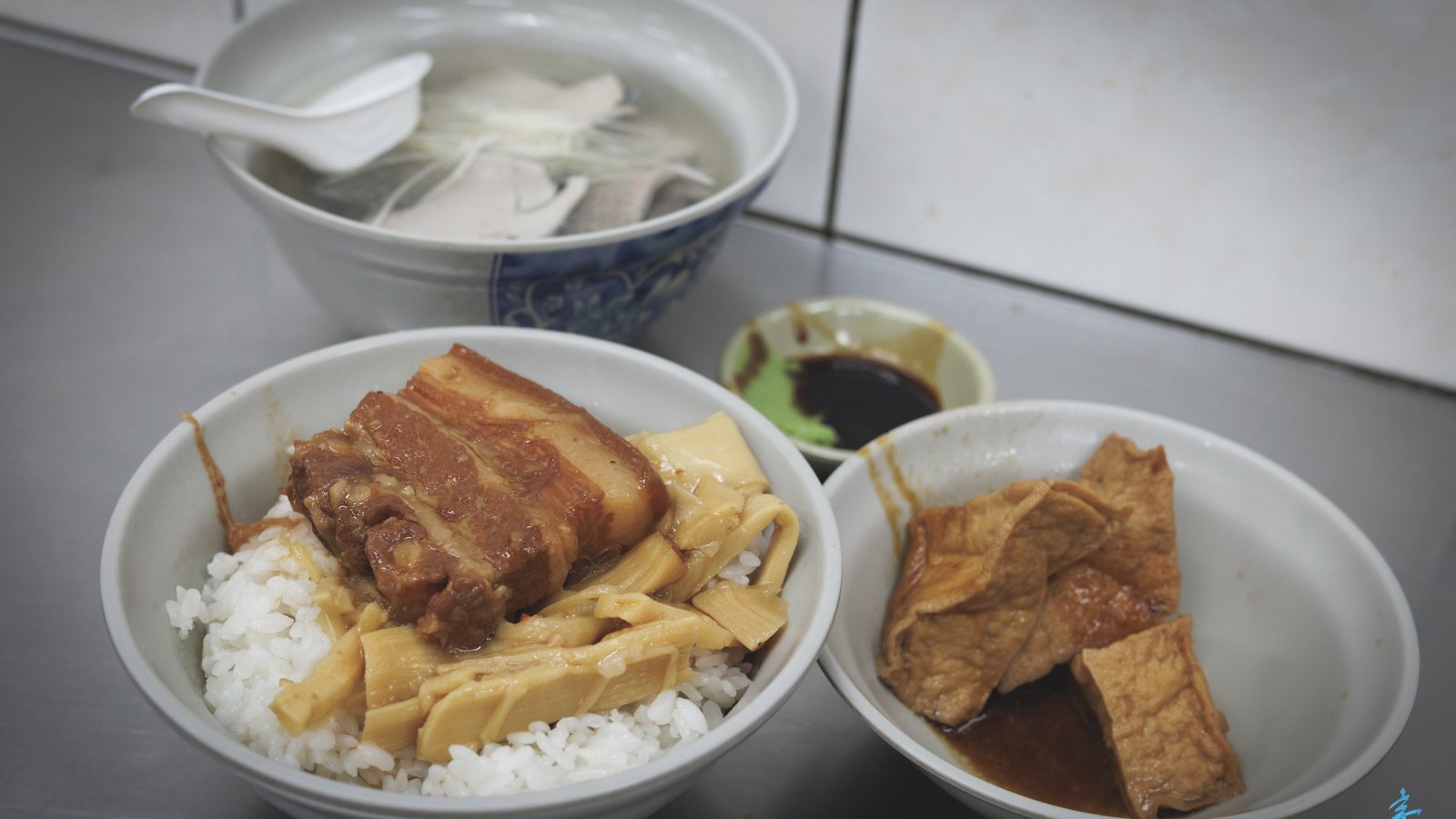
Taiwan's best food is sold in places with no English menu: a beef noodle shop with a paper tick sheet, a breakfast counter that closes before noon, a night market stall that only takes cash. The food is cheap and very good; the only barrier is knowing what to ask for and how the counter works.
This guide gives you the dishes worth your stomach space, each with its Chinese name so you can point at it, the words for sugar and ice at a bubble tea counter, how to read a vegetarian label, and the ordering routine: tick sheet, pay first or after, self-serve tea, receipt. Prices are rough NT$ ranges that vary by shop; we did not verify them and you should treat them as orientation, not quotes.
The must-eat list, with the names to point at
Beef noodle soup 牛肉麵
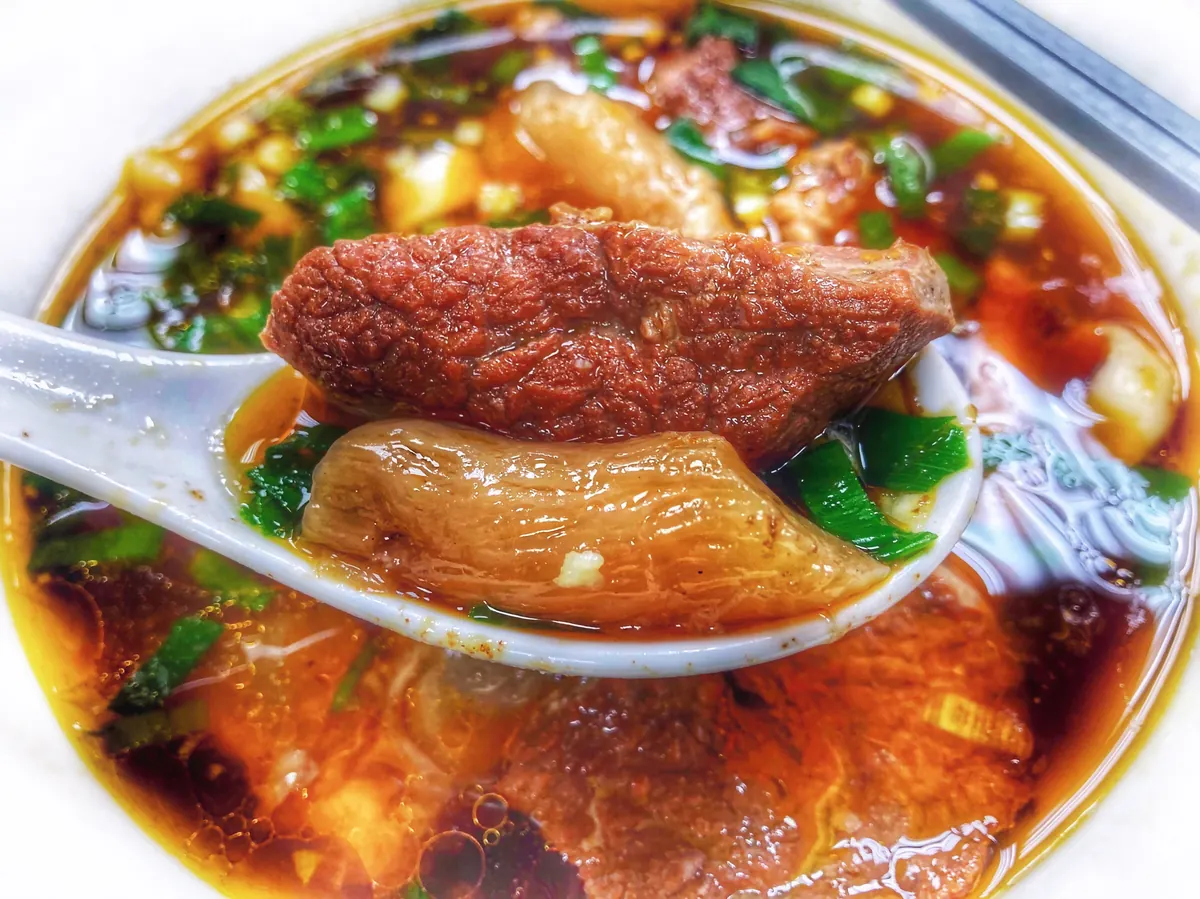
Beef noodle soup (牛肉麵, niu rou mian) is the dish Taipei is proudest of. The Tourism Administration says it was created after 1949 by veterans from mainland China who needed a living, and that the Taiwanese version stir-fries spicy bean paste first, then adds the beef and stock. Two styles: 紅燒 (hong shao, braised in soy sauce and spices, dark and sometimes mildly spicy) and 清燉 (qing dun, clear broth, lighter). Point at 紅燒牛肉麵 or 清燉牛肉麵. Watch the characters: 牛肉麵 has chunks of beef, 牛肉湯麵 is the cheaper beef-broth noodles with almost no meat, and 牛雜 is offal. Pickled mustard greens (酸菜) sit on the counter; add them yourself. Expect roughly NT$150 to NT$300 a bowl depending on the shop.
Xiaolongbao 小籠包
Soup dumplings (小籠包, xiao long bao) are thin-skinned pork dumplings with hot broth sealed inside. Din Tai Fung (鼎泰豐) made them famous worldwide, but every neighbourhood has a dumpling shop that steams them to order. How to eat one: lift it with chopsticks onto your spoon, bite a small hole, drink the soup, then eat the rest. Ask for ginger shreds (薑絲) and dip in black vinegar (醋) with a little soy sauce (醬油). A basket runs roughly NT$100 to NT$300 depending on the shop and the number of pieces; the big chains charge more and add a 10% service charge to the bill.
Braised pork rice 滷肉飯 and oyster omelette 蚵仔煎
Braised pork rice (滷肉飯, lu rou fan) is minced pork belly stewed in soy sauce and spooned over rice. The Tourism Administration ranks it among the top traditional Taiwanese dishes and notes it was born after the war from cheap cuts. In the south it is often written 肉燥飯 and served with a fattier sauce. A small bowl is roughly NT$30 to NT$60 depending on the shop, so order it with a soup and a plate of greens (燙青菜), and add a braised egg (滷蛋) or fried tofu (油豆腐). Oyster omelette (蚵仔煎, o-a-chian in Taiwanese) is oysters in a sweet-potato-starch batter with egg and greens under a sweet-and-sour sauce; it is a night market staple at roughly NT$70 to NT$100 depending on the stall. If you do not eat oysters, 蝦仁煎 is the shrimp version.
Popcorn chicken 鹹酥雞 and other night market snacks
Taiwanese popcorn chicken (鹹酥雞, xian su ji; also written 鹽酥雞) is bite-size fried chicken tossed with pepper-salt and fried basil. The Tourism Administration traces it to Tainan and the American fried chicken craze of the 1960s. At a fried-snack stall you pick items into a basket (chicken, sweet potato, tempura, green beans, king oyster mushrooms), hand it over, and answer the one question you will be asked: how spicy. Say 不辣 (not spicy), 小辣 (a little), 中辣 (medium) or 大辣 (hot). Also look for pepper buns (胡椒餅), scallion pancakes (蔥抓餅), big sausage wrapped around small sausage (大腸包小腸), oyster vermicelli (蚵仔麵線), stinky tofu (臭豆腐) and grilled squid (烤魷魚). Most stalls take cash only.
Bubble tea 珍珠奶茶: sugar and ice levels
Bubble tea (珍珠奶茶, zhen zhu nai cha) is a Taiwanese invention; the Tourism Administration describes it as the creative successor of foam black tea. At any tea counter you order in three parts: the drink, the sugar level (甜度) and the ice level (冰塊). The cashier will ask for the last two, so decide before you reach the front. Sizes are 中杯 (medium) and 大杯 (large); toppings include 珍珠 (tapioca pearls), 波霸 (big pearls), 椰果 (coconut jelly), 仙草 (grass jelly) and 布丁 (pudding). A cup is roughly NT$40 to NT$80 depending on the shop.
| Sugar level 甜度 | Ice level 冰塊 | What it means |
|---|---|---|
| 正常糖 (full sugar) | 正常冰 (regular ice) | The default and very sweet for most visitors |
| 少糖 (less sugar) | 少冰 (less ice) | One step down; still clearly sweet |
| 半糖 (half sugar) | 微冰 (a little ice) | Where most locals land |
| 微糖 (light sugar) | 去冰 (no ice, still cold) | You taste the tea; no dilution |
| 無糖 (no sugar) | 溫 or 熱 (warm or hot) | Not every drink can be made hot |
Breakfast shops 早餐店: dan bing, fan tuan, soy milk
Taiwan has two kinds of breakfast places and both are cheap. Traditional soy-milk shops (豆漿店) open before dawn and sell soy milk (豆漿, hot or cold; 甜 sweet or 鹹 savoury, the savoury version is a soup with vinegar and dried shrimp), fried dough sticks (油條), sesame flatbread (燒餅), sticky rice rolls (飯糰: rice wrapped around fried dough, pickles and pork floss; say 加蛋 to add an egg) and egg pancakes (蛋餅). Western-style breakfast chains on almost every block sell 蛋餅 with fillings (起司 cheese, 玉米 corn, 火腿 ham, 鮪魚 tuna), toast (吐司), iron-plate noodles (鐵板麵) and milk tea (奶茶). Items run roughly NT$30 to NT$70 depending on the shop; a full breakfast is often under NT$100.
Douhua 豆花 and mango shaved ice 芒果冰
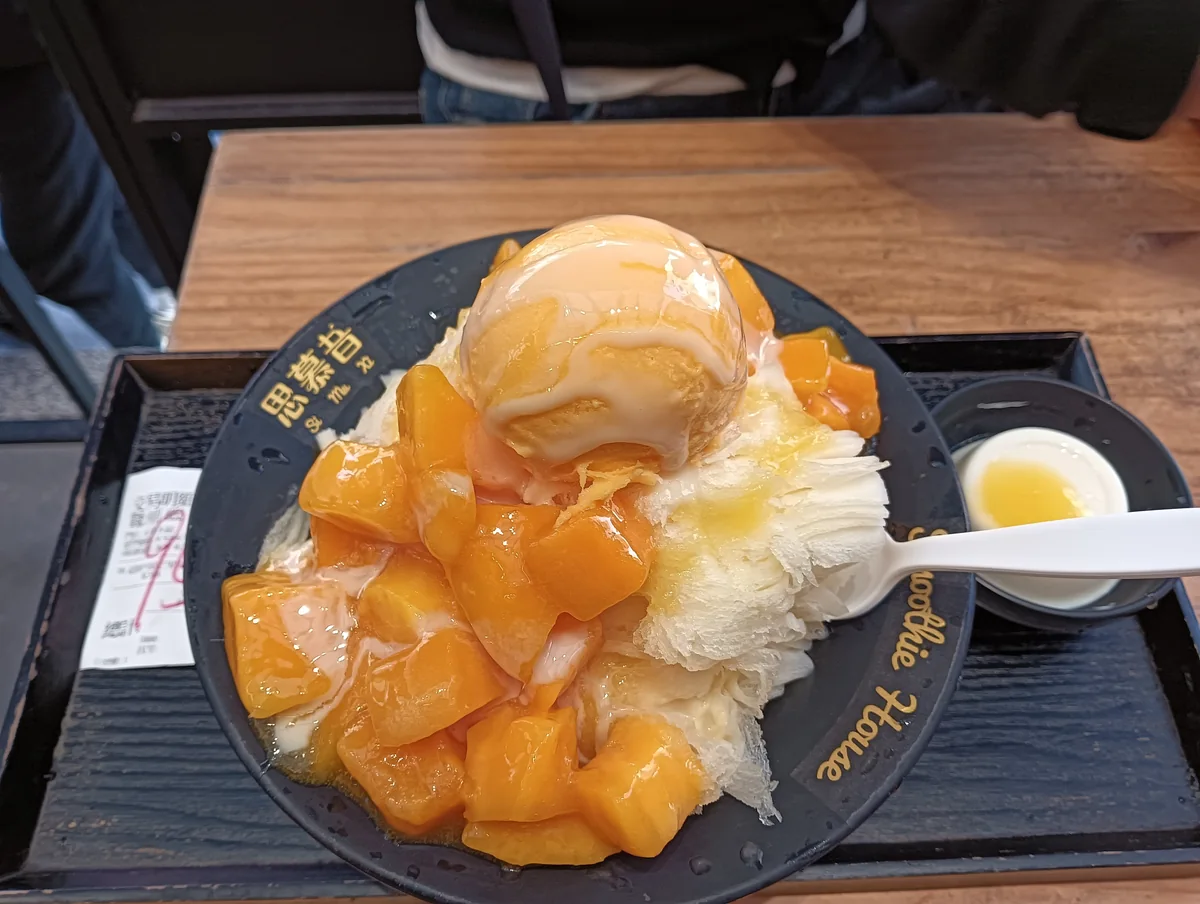
Douhua (豆花) is silky tofu pudding, served warm in winter and iced in summer, with toppings you choose: peanuts (花生), red beans (紅豆), tapioca (粉圓), taro balls (芋圓). Mango shaved ice (芒果冰) is the summer dessert; the Tourism Administration lists the mango season as June to August, and the best shops use fresh 愛文 (Irwin) mangoes. Outside the season shops use frozen fruit or switch to strawberries in winter. 雪花冰 is the fluffier snow ice shaved from a flavoured block. Prices vary widely: roughly NT$40 to NT$80 for douhua, NT$150 to NT$250 for a big mango ice to share, depending on the shop.
Vegetarian 素食: how to read the labels
Taiwan is one of the easiest places in Asia to eat vegetarian. Look for the character 素 (su) on signs: 素食 means vegetarian food, 蔬食 plant-based, and 素食自助餐 is a vegetarian buffet where you fill a plate and pay by weight or by item. Packaged food must carry one of five labels set by the Ministry of Health and Welfare: 全素 or 純素 (fully vegetarian: no egg, no dairy and none of the five pungent plants such as garlic and onion), 蛋素 (with egg), 奶素 (with dairy), 奶蛋素 (egg and dairy) and 植物五辛素 (plant-based but may contain garlic, onion, leek or chives). At an ordinary shop a 素 dish may be cooked in a shared wok, so if that matters to you, stick to places whose sign says 素食.
How ordering works at a small eatery
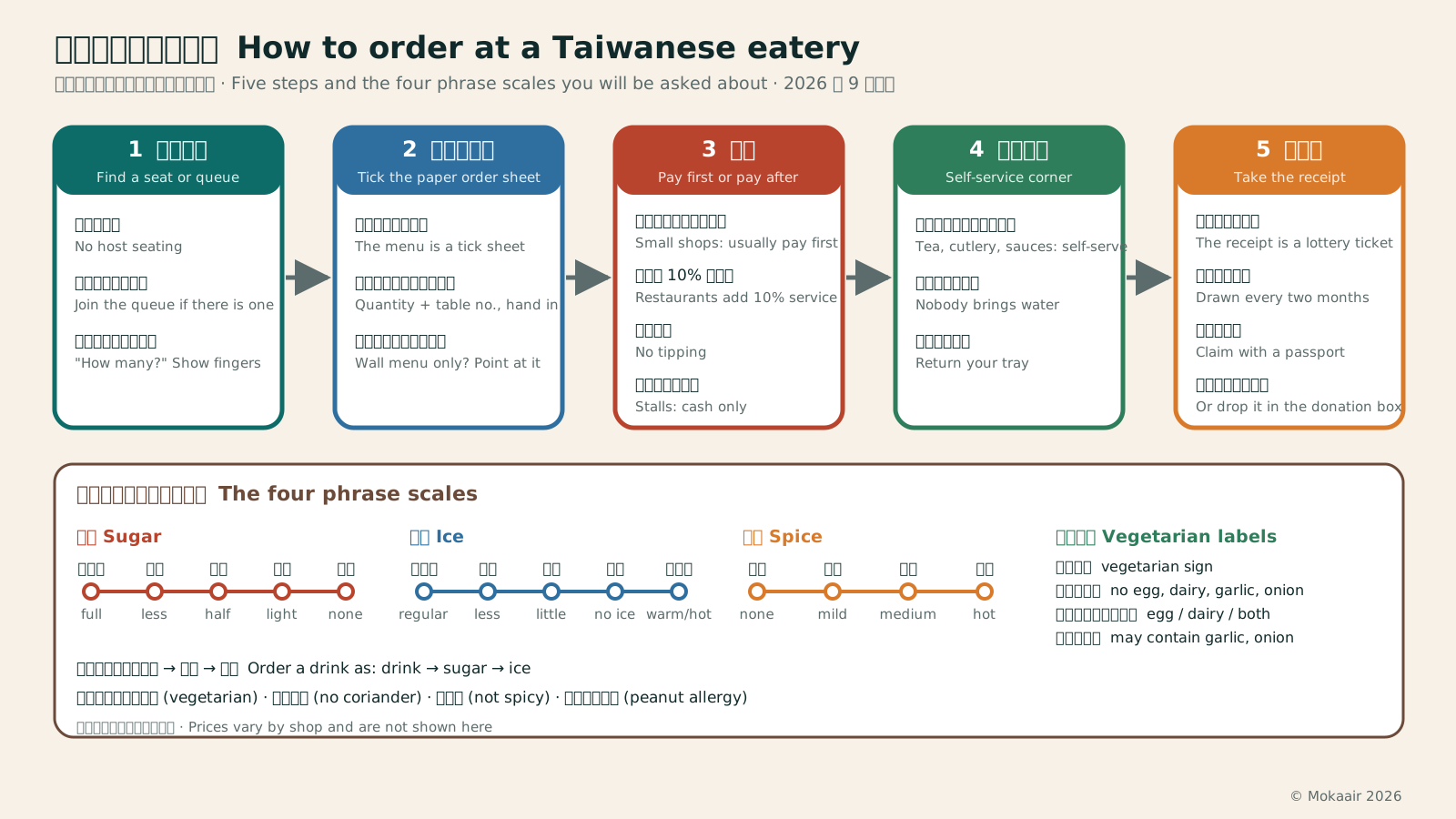
Most noodle shops, rice shops and breakfast counters run on a paper order sheet (菜單) and a pencil, and the counter does not expect you to speak. The routine is the same almost everywhere:
- Walk in and find a seat, or join the queue if there is one. Small shops do not seat you; staff at busy shops may ask 幾位 (how many people). Hold up fingers.
- Take a tick sheet from the table or the counter, write the quantity next to each dish, add your table number (桌號) if the table has one, and hand the sheet to the counter or wait for staff to collect it.
- Pay. At most small shops you pay when you order or when the food arrives (先付, pay first); at others you settle at the counter when you leave (後付). Copy the locals. Restaurants with printed menus and table service bill you at the table and, as the Tourism Administration notes, usually add a 10% service charge.
- Tea or water, chopsticks, spoons and sauces are self-service (自助) from a side counter. If there is a tray-return shelf (回收區), bus your own tray.
- Take your receipt (統一發票). It is also a lottery ticket: the Ministry of Finance draws numbers every two months, prizes run from NT$200 to NT$10,000,000, and foreigners can claim with a passport. Many shops have a donation box (捐發票) if you do not want to keep it.
Read the full description
五個步驟由左到右:一、進店找位或排隊,小店不帶位,被問幾位就用手指比;二、拿紙菜單勾選,寫數量和桌號後交回櫃檯,只有牆上菜單就用指的;三、付款,小店多先付,有些離開時後付,餐廳加 10% 服務費,不用小費,攤位多只收現金;四、茶水、餐具、醬料自助,餐盤放回收區;五、拿統一發票,它是彩券,每兩個月開獎,護照可兌獎,不要就投捐發票箱。下方四組說法:甜度由正常糖、少糖、半糖、微糖到無糖;冰塊由正常冰、少冰、微冰、去冰到溫或熱;辣度由不辣、小辣、中辣到大辣;素食標示有素食、全素或純素、蛋素、奶素、奶蛋素、植物五辛素。Five steps left to right: find a seat or queue; tick the paper order sheet with quantities and table number; pay, usually first at small shops, restaurants add 10% service and there is no tipping; self-serve tea, cutlery and sauces; take the uniform-invoice receipt, which is a lottery ticket drawn every two months and claimable with a passport. Below: sugar scale full to none, ice scale regular to warm or hot, spice scale none to hot, and the vegetarian labels.
One dish per city
| City | Order this | Why |
|---|---|---|
| Taipei 台北 | Beef noodle soup 牛肉麵; xiaolongbao 小籠包 | The capital's signature bowl and its most famous dumpling; Shilin 士林 and Raohe Street 饒河街 night markets for everything else |
| Taichung 台中 | Bubble tea 珍珠奶茶 at Chun Shui Tang 春水堂; sun cakes 太陽餅 | The city tourism site lists pearl milk tea and sun cakes among its signature foods and gifts; Fengjia 逢甲 night market for snacks |
| Tainan 台南 | Beef soup 牛肉湯 for breakfast; danzai noodles 擔仔麵; coffin bread 棺材板 | The old capital eats beef soup at dawn; milkfish 虱目魚, bowl rice cake 碗粿 and eel noodles 鱔魚意麵 are the other local picks |
| Kaohsiung 高雄 | Papaya milk 木瓜牛奶; salt-steamed shrimp 鹽蒸蝦 | Both are the Tourism Administration's picks at Liuhe Night Market 六合夜市, next to Formosa Boulevard MRT station |
Two habits that save money: eat breakfast and lunch where the office workers queue, and order two or three small things rather than one big plate, which is how locals eat and how you taste more. If you have a dietary restriction, write it on your phone in Chinese before you go out; a screen shown at the counter beats any pronunciation.
Point-and-order cheat sheet
| Dish | Point at this | Rough price, varies by shop |
|---|---|---|
| Beef noodle soup | 牛肉麵 (紅燒 braised / 清燉 clear) | NT$150 to NT$300 |
| Soup dumplings | 小籠包 | NT$100 to NT$300 a basket |
| Braised pork rice | 滷肉飯 (south: 肉燥飯) | NT$30 to NT$60 |
| Oyster omelette | 蚵仔煎 | NT$70 to NT$100 |
| Popcorn chicken | 鹹酥雞 / 鹽酥雞 | NT$60 to NT$100 a bag |
| Bubble tea | 珍珠奶茶 | NT$40 to NT$80 |
| Egg pancake | 蛋餅 | NT$30 to NT$60 |
| Sticky rice roll | 飯糰 | NT$40 to NT$70 |
| Soy milk | 豆漿 (甜 sweet / 鹹 savoury) | NT$20 to NT$40 |
| Tofu pudding | 豆花 | NT$40 to NT$80 |
| Mango shaved ice | 芒果冰 / 芒果雪花冰 | NT$150 to NT$250 |
| Vegetarian buffet | 素食自助餐 | NT$80 to NT$150 a plate |
Browse the food directory for Taipei
Guide
Otaru day trip from Sapporo: JR, Sankaku Market, the canal, Mt. Tengu and Yoichi
JR Rapid Airport reaches Otaru from Sapporo in as little as 32 minutes for ¥800, roughly every 30 minutes by day. Walk from Otaru Station through Sankaku Market, the canal and Sakaimachi Street to Minami-Otaru. Add a canal cruise (40 minutes; ¥1,800 by day, ¥2,000 at night), Mt. Tengu (¥2,000 winter return), or Nikka's Yoichi Distillery (book the free tour). Includes the 6–13 February 2027 Snow Light Path, luggage storage and the 23:08 last train. Fares and times were checked in September 2026.
Guide
Three days in Sapporo: New Chitose Airport, an Otaru day trip, and winter clothing
JR Rapid Airport reaches Sapporo from New Chitose Airport in as little as 37 minutes for ¥1,230. This three-day itinerary covers Odori Park, the Clock Tower, Tanukikoji and Susukino on Day 1; Otaru Canal and Sakaimachi Street on Day 2; and Mt. Moiwa or Shiroi Koibito Park before the airport on Day 3. It also covers the announced 2027 Snow Festival dates, winter clothing and traction. Fares and opening hours were checked in September 2026.
Guide
Singapore four-day, three-night itinerary: Gardens by the Bay and Supertree light show, Chinatown and Kampong Glam, hawker-centre etiquette, Night Safari or Sentosa
A first-timer’s four-day, three-night Singapore itinerary, with one district per day and no backtracking: Day 1 the Gardens by the Bay conservatories and Garden Rhapsody; Day 2 Sri Mariamman Temple in Chinatown and hawker-centre tray-return rules; Day 3 either Bird Paradise plus Night Safari or Sentosa; Day 4 Sultan Mosque, Little India, Orchard Road and Jewel Rain Vortex. Compare where to stay, non-resident admission and opening hours. Official sites checked in September 2026.
Guide
Your First Singapore Hawker Centre Visit: Finding Seats, Ordering and Returning Trays
A hawker centre is not a single restaurant with one counter. Check how each stall takes orders and where to collect food, divide up buying main dishes and drinks, then return trays according to the on-site sorting signs for an easy first meal.
Sources
- Tourism Administration: Snacks and drinks 小吃飲品 (Chinese) · Checked:
- Tourism Administration: Taiwan Snacks (English) · Checked:
- Tourism Administration: Gourmet Cuisine (English) · Checked:
- Tourism Administration: Useful Tips (service charge, opening hours) · Checked:
- Tourism Administration: Liuhe Tourist Night Market 六合觀光夜市 · Checked:
- Tourism Administration: Fengjia Night Market 逢甲夜市 · Checked:
- Taichung Tourism: Must-eat foods 台中必吃美食 · Checked:
- Taichung Tourism: Themed food overview 主題美食 · Checked:
- Tainan Tourism: Cuisines · Checked:
- Ministry of Health and Welfare: the five vegetarian labels 素食五標示 · Checked:
- Ministry of Finance: Uniform invoice lottery 統一發票兌獎 · Checked: