Guide
Maps and taxi apps in Korea: Naver Map and Kakao Map routes, k.ride versus Kakao T, payments, Seoul fares and late-night surcharges
Which apps should you install for Korea, and can you book a taxi without a Korean phone number? Learn route searches in Naver Map and Kakao Map; registration, interface languages and payments for k.ride, Kakao T, TADA and TABA; and Seoul’s KRW 4,800 starting fare and late-night surcharges. Checked in September 2026 against the App Store, Kakao Mobility, Korea Tourism Organization, Seoul government and Incheon Airport websites.
About 10 min read
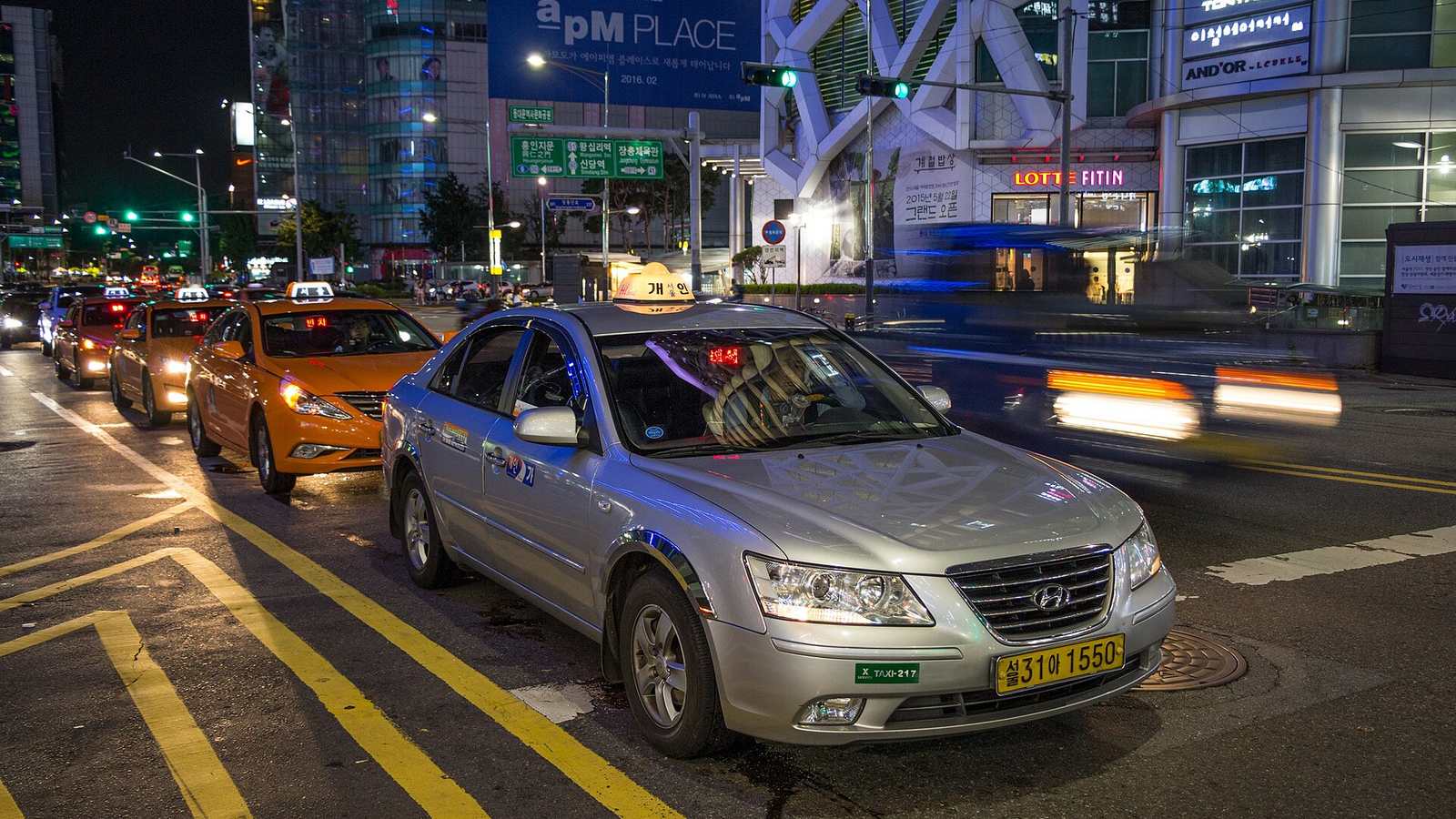
We may earn a commission through these links, at no extra cost to you.
Which apps do you need in Korea? Can you book a taxi without a Korean phone number? Start with Naver Map or Kakao Map for routes. For taxis, install k.ride first if you do not have a Kakao account or are unsure whether verification will work. This guide covers four things: finding routes, choosing a taxi app, paying, and calculating Seoul taxi fares. Information was checked against official websites and the App Store in September 2026.
At a glance: what the six apps do
| App and purpose | Registration requirements | Interface languages | Payment |
|---|---|---|---|
| Naver Map: routes, live bus arrivals and walking navigation | No Korean phone number needed | English, Japanese, Korean and Simplified Chinese; no Traditional Chinese | Not required |
| Kakao Map: routes and live bus arrivals | No Korean phone number needed | English and Korean | Not required |
| k.ride: taxi booking | Phone number plus Google, Apple or email verification; no Kakao account needed | English, Japanese, Simplified Chinese and Traditional Chinese | Register an overseas-issued card in the app; some overseas mobile payment services are also supported |
| Kakao T: taxi booking | Kakao account | Korean, English and Japanese | Automatic payment, or pay the driver directly with cash, credit card or T-money |
| TADA: backup option | International phone numbers accepted | Korean and English | Credit card |
| TABA: backup option | Phone number or Google or Apple account | English, Japanese, Chinese, Thai and Russian | Automatic payment with a registered card |
Both k.ride and Kakao T are Kakao Mobility services. Install a separate translation app such as Papago if needed; translation apps are outside this guide’s scope.
Three things to arrange in Taiwan before departure
- Arrange mobile data: booking taxis and checking live arrivals both require internet access, and the connection can drop on the subway. See the Korea connectivity guide for whether to buy a plan with a Korean phone number and how to estimate data use.
- Install and register in advance: after entering a phone number in k.ride, verify with Google, Apple or email; Kakao T requires a Kakao account first. Verification problems are easier to resolve while you are still in Taiwan.
- Register a payment card in advance: the app shows which cards it accepts. If the payment screen displays New Taiwan dollars, select Korean won instead. See the Korea money guide for DCC and card fees.
Connectivity in Korea: eSIM, SIM cards, pocket WiFi and apps that require a Korean phone number
Money for Korea: card fees, DCC and WOWPASS
Compare Korea connectivity plans so you can find routes and book taxis on arrival
Finding routes with Naver Map and Kakao Map
Interface languages and Google Maps
Naver Map is published by NAVER Corp. on the App Store. Its listed interface languages are English, Japanese, Korean and Simplified Chinese, with no Traditional Chinese. Features include live public-transport arrivals, walking routes and street view. Kakao Map is published by Kakao Corp. and lists only English and Korean. It offers public transport, live bus arrivals, and walking and driving routes. Install both so you can cross-check when one search fails. Google Maps navigation in Korea has long been incomplete. On February 27, 2026, the Korean government conditionally approved Google’s export of 1:5000-scale maps, but officials did not announce when full navigation would become available. Open the app before departure to check its current features; this guide focuses on Naver and Kakao.
Search tips
- Pasting Korean is the most reliable approach: copy the Korean business name or address from its official page or your hotel confirmation into the search box. Chinese names or pinyin spellings can lead to a different business.
- Use the subway station name and exit number to pinpoint a location. Meeting at a particular station exit is more precise than naming an entire shopping district.
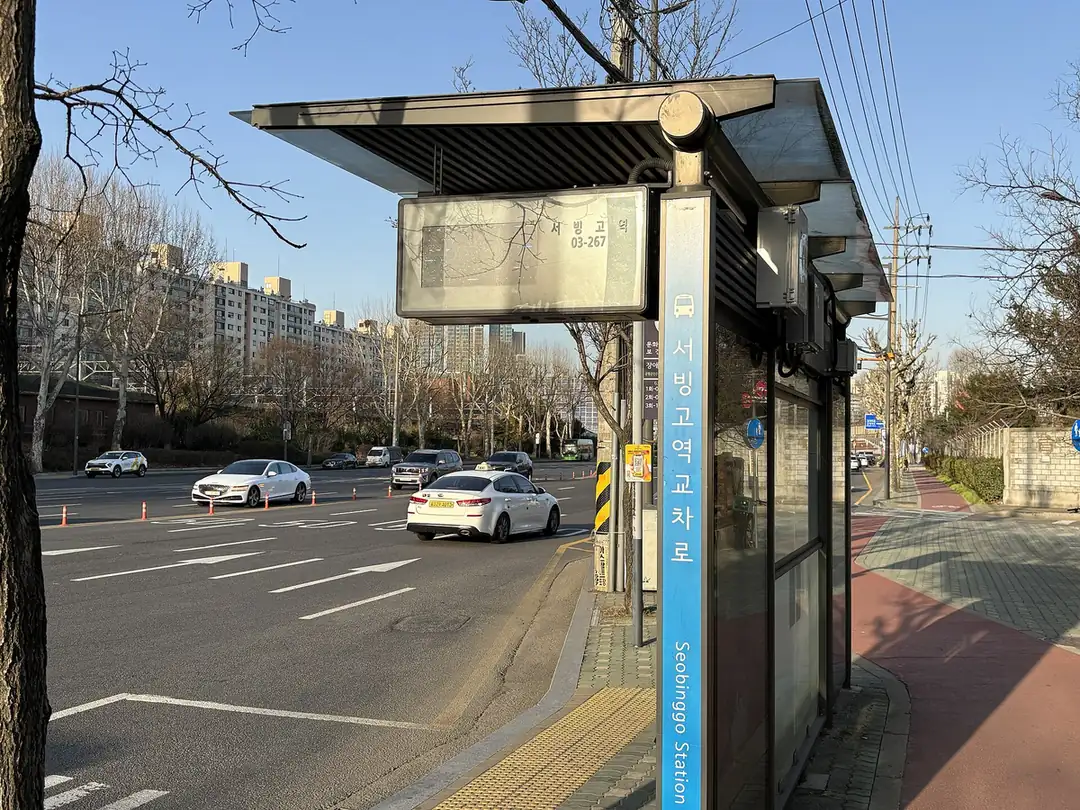
Reading the results
Check four things in a route result: which line to take, the direction of travel, the exit number and the walking time for transfers. Bus results show live arrivals. See the Seoul subway guide for station numbers, first and last trains, and T-money.
Seoul subway and T-money: station numbers, first and last trains, and top-upsSeoul Subway and T-money Complete Guide: Where to Buy, How to Top Up, and Whether the Climate Card Is Worth ItSeoul subway adult base fare is 1,550 won; transfers within 30 minutes are discounted. Count separately charged trips when comparing Climate Card short-term passes, and add 3,000 won for a new physical card. You cannot board at Incheon Airport with the pass, but a covered AREX all-stop trip from Seoul can end at T1 or T2. How to buy, top up, and refund T-money; covered routes and pass choices. Verified with official sources in 2026/9.Read the full article
Naver Map also helps you check restaurant opening hours and breaks. See the Korea food guide for reservation apps and whether you need a Korean phone number.
Korean food and ordering etiquette: Naver Map opening hours and Catchtable reservations
Saved places, offline access and trips outside the city
Save hotels, restaurants and attractions in the app before departure. Keep Korean addresses and route screenshots so you can show a driver even without internet access. If an app offers offline maps, download them using hotel WiFi first; available functions depend on the app. The same preparation helps for trips outside the city. Before leaving for Suwon, for example, check which station exit and bus number you need, and when the last return bus leaves.
Suwon Hwaseong day trip: getting there from Seoul and finding the correct exit for your bus
Booking a taxi: k.ride or Kakao T?
k.ride: for international travelers, with no Kakao account required
Kakao Mobility launched k.ride for international travelers on June 4, 2024. Registration involves entering a phone number, then verification through a Google or Apple account or email; a Kakao account is not required. Whether registration with a Taiwan phone number works depends on the app at the time. The interface supports English, Japanese, Simplified Chinese and Traditional Chinese. Its official site lists automatic translation in 133 languages for destination searches and driver chats, and you can view an estimated fare before booking. The launch announcement says it books Kakao T Blue, Venti, Black and deluxe taxis. The app may display vehicle classes under English names such as Standard and Comfort.
Kakao T: widely used in Korea, with a Kakao account required
The Korea Tourism Organization describes Kakao T as the taxi app most widely used by Koreans and visitors. Service is available even on Jeju Island, and the app displays the driver’s name and license plate. First create a Kakao account through Kakao Talk. The interface supports Korean, English and Japanese. Kakao Mobility’s 2023 report noted that some overseas SIM cards could not receive verification texts and that four overseas card brands could be registered: Visa, Mastercard, JCB and American Express. This information dates from 2023, so check the latest instructions in the app; successful registration with a Taiwan phone number is not guaranteed.
TADA and TABA: backup options
TADA accepts international phone numbers and credit-card payments, with Korean and English interfaces. TABA is an app for international travelers supported by the Seoul government. Register with a phone number or Google or Apple account, then use automatic payment with a registered card. Try these when your main app cannot find a taxi.
The Korea Tourism Organization gives the following booking sequence for Kakao T and k.ride. The steps differ slightly in TADA and TABA:
- Set your pickup point and destination.
- Choose a vehicle class.
- Select a payment method and confirm the booking.
- Wait for the dispatch notification, then check the license plate and driver details before boarding.
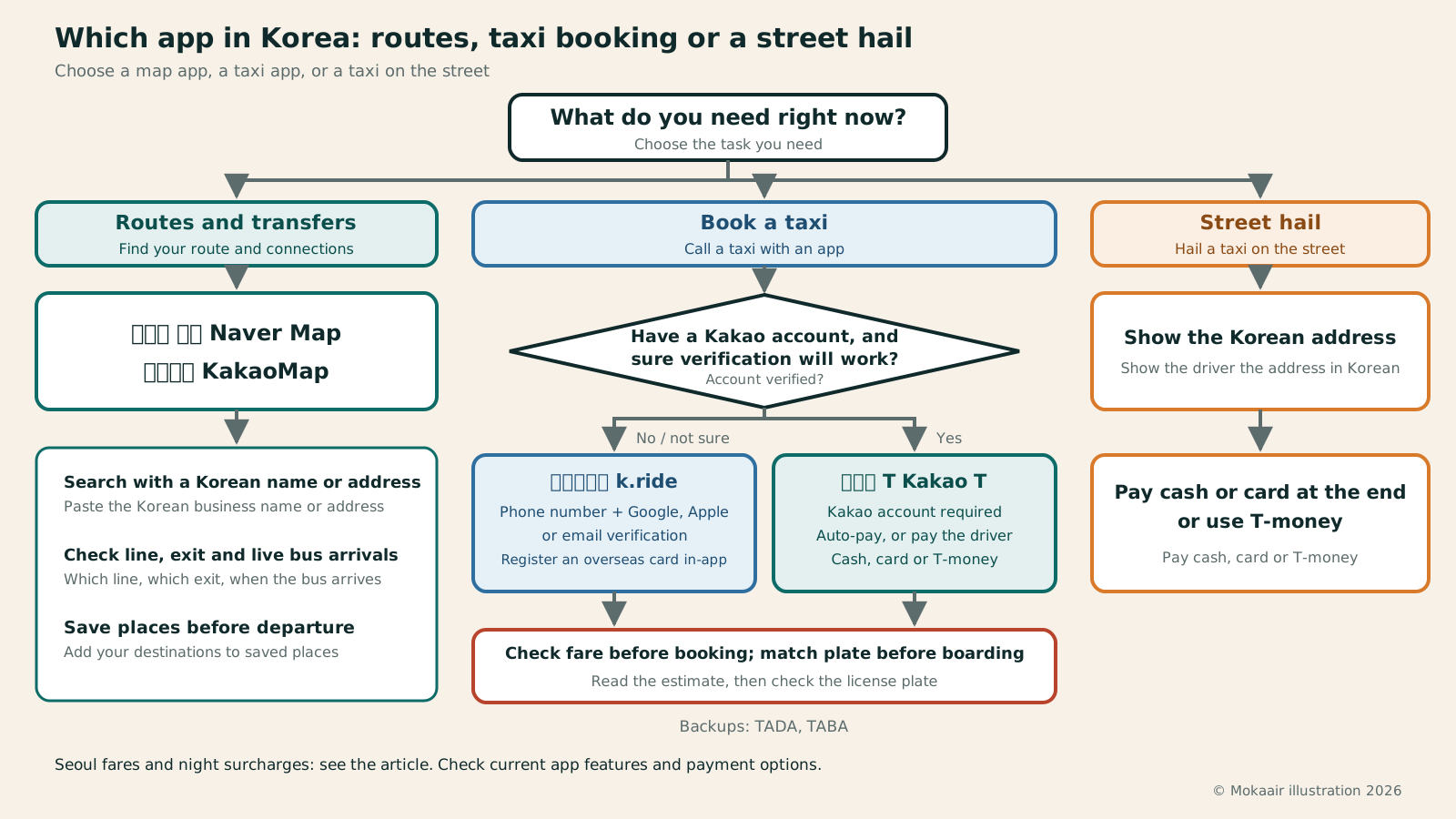
Read the full description
A decision tree beginning with “What do you need right now?” and splitting into three branches. For routes and transfers, use Naver Map (네이버 지도) or KakaoMap (카카오맵), paste the Korean business name or address, check the line, exit and live bus arrivals, and save places before departure. To book a taxi, first ask whether you have a Kakao account and are certain verification will work. If not or unsure, use k.ride (케이라이드): enter a phone number, verify through Google, Apple or email, and register an overseas-issued card in the app. If yes, use Kakao T (카카오 T), which requires a Kakao account and supports automatic payment or paying the driver with cash, card or T-money at the end of the ride. On either branch, check the fare estimate before booking and the license plate before boarding. TADA and TABA are backups. For a street hail, show the driver the Korean address and pay cash, card or T-money at the end. See the article’s table for Seoul taxi fares and late-night surcharges; features and payment options depend on the app at the time.
Paying: in the app, directly to the driver, cash and T-money
| How you get a taxi | How to pay | Keep in mind |
|---|---|---|
| k.ride | Overseas-issued card registered in the app; some overseas mobile payment services are also supported | The k.ride website and service page do not state whether you can switch to paying the driver at the end. Check the payment options in the app. |
| Kakao T | Automatic payment, or pay the driver with cash, credit card or T-money at the end | This is the Korea Tourism Organization’s guidance. Check the app to see whether your overseas-issued card can be registered. |
| Street hail | Pay the driver with cash, credit card or a transit card | If the card-payment screen displays New Taiwan dollars, select Korean won instead. |
The Korea Tourism Organization’s taxi guidance says most taxis charge by the meter, tipping is unnecessary, and you can pay with cash, credit card or a transit card. For an app-booked ride, follow the app’s receipt instructions. For a street hail, ask “영수증 주세요” when paying if you need a receipt.
How Seoul taxi fares are calculated
| Taxi class | Starting fare | Further meter increments |
|---|---|---|
| Standard mid-size taxi | KRW 4,800 for the first 1.6 km | KRW 100 per 131 meters or 30 seconds |
| Deluxe or large taxi | KRW 7,000 for the first 3 km | KRW 100 per 151 meters or 36 seconds |
Incheon Airport’s website also explains the out-of-area surcharge. When leaving the airport for a destination outside its joint service area, a Seoul taxi adds 20% after leaving that area. For example, on a trip to Paju, the surcharge begins when the taxi passes the Goyang city boundary. This guide does not quote booking fees or supplements for app classes such as Blue, Venti and Black; check the estimated fare in the app before booking. See the Incheon Airport guide for taxi stands, International Taxi flat fares and tolls. Busan has different starting distances, meter increments and late-night surcharge hours from Seoul; see the Gimhae Airport guide. Daegu Airport’s official site does not list an estimated fare into the city or a night surcharge, so do not apply Seoul or Busan surcharges there. See Daegu transport: high-speed rail to Dongdaegu, getting into town from Daegu Airport, and paying on the three subway lines.
Compare Seoul transport passes and airport transfers
Incheon Airport to Seoul: airport taxis, International Taxis and late-night arrivalsIncheon Airport to Central Seoul: AREX Express and All-Stop Trains, Airport Buses, and Late-Night ArrivalsAREX Express reaches Seoul Station from Incheon Airport in 43 minutes from T1 or 51 from T2 (13,000 won). For Hongdae, the All-Stop Train costs 4,650 won from T1 with T-money. Buses 6001/6015/6002 cost 17,000 won to Myeongdong, Seoul Station, or Hongdae. Compare four options, N6000 night buses, taxis, neighbourhood choices, and Seoul Station City Airport Terminal; official sites checked 2026/9.Read the full article
Gimhae Airport to Busan: local taxi fares and night surcharges
Street hail or app booking?
The following are practical suggestions, not official rules:
- In busy shopping districts late on weekend nights, both street hails and app bookings may involve a wait. Request a ride earlier or walk to a main road.
- Book earlier when it rains.
- For lots of luggage or a group of four or more, choose a large vehicle or minivan class, subject to the app’s options.
- When hailing a taxi, show the driver the Korean address instead of just saying the business name in Chinese or English.
- For an app-booked ride, match the license plate to the app before getting in. Sit in the back and wear your seat belt.
- A taxi can cover the gap between an outlying station and an attraction. For example, if you get off at Imjingang Station for the DMZ and do not want the roughly 20-minute walk to Imjingak or a wait for buses 058A or 058B, you can book one. Paju’s official site lists only walking and buses; the taxi option is this guide’s suggestion.
- If a late flight means reaching your hotel after midnight, see the Seoul accommodation guide for check-in arrangements.
DMZ day trip from Seoul: getting from Imjingang Station to Imjingak
Where to stay in Seoul: checking in after a late-night arrival
Seoul travel information: attractions, food and transport
Busan travel information: attractions, food and transport
Guide
How to Choose Tokyo Transit Passes: Are Suica, Welcome Suica, the Tokyo Subway Ticket, and the JR Pass Worth It?
On a first Tokyo trip, start with an IC card and pay per ride (Welcome Suica has no deposit and is valid for 28 days). If you take four or more subway rides in a day, add a 72-hour Tokyo Subway Ticket for 2,000 yen; a JR Pass is never worthwhile if you stay in Tokyo and do not go to Kansai. See what TOURIST PASMO, Suica on iPhone, and the Tokyo Metro day pass do and do not cover, with a decision chart. Prices verified in September 2026.
Guide
Narita and Haneda Airports to Central Tokyo: How to Choose Skyliner, N'EX, Keikyu, or the Airport Limousine Bus
From Narita to Tokyo: take Keisei Skyliner to Ueno in 36–41 minutes for ¥2,580; for Shinjuku or Tokyo Station, JR N'EX reaches Tokyo in as little as 53 minutes for ¥3,140; choose the TYO-NRT bus for ¥1,500 when budget comes first. From Haneda, Keikyu reaches Shinagawa in 11–14 minutes for ¥330. Includes fares and times for Access Express, Airport Limousine and Tokyo Monorail, plus a stay-area route guide; checked on official sites in 9/2026.
Guide
How to Get Online in Thailand: Airport AIS and True Tourist SIMs, eSIM, Taiwan Carrier Roaming, and Pocket WiFi (2026)
Buy an AIS or True tourist SIM at Suvarnabhumi or Don Mueang Airport, install an eSIM before departure, or use Taiwan carrier roaming? Compare official September 2026 plans and prices from AIS, True, Chunghwa Telecom and Taiwan Mobile, plus NBTC passport-registration rules: up to 3 SIMs per carrier and tourist SIMs valid for at most 60 days. A comparison table and decision chart help you choose by trip length, group size and phone eSIM support.
Guide
Taoyuan Airport Departure Guide: A1/A3 In-Town Check-in, Baggage, Liquids and Power Banks at Security, e-Gate Registration, and When to Leave (2026)
Departure-day guide from Taipei or New Taipei: check in online and confirm the terminal; use in-town check-in at A1 (06:00–21:30) or A3 (09:00–16:00), with a three-hour cutoff and different airlines; follow the 100 mL/one-liter liquids rule, the two-power-bank carry-on limit and lighter rules; check e-Gate rules for ROC nationals with household registration in Taiwan using an ROC passport, from age 10 and 120 cm; then calculate when to leave. Verified in September 2026 using Taiwan sources.
Articles that cite this one
Sources
- k.ride official website: interface languages, automatic translation in 133 languages, fare estimates, payment methods and vehicle class names · Checked:
- Kakao Mobility k.ride service page: Google, Apple and email registration, overseas-issued cards and mobile payments, and interface languages · Checked:
- Kakao Mobility launch announcement for k.ride: June 4, 2024; no Kakao account required, registration and payment, and Kakao T Blue, Venti, Black and deluxe taxis · Checked:
- Kakao Mobility announcement: k.ride expansion to 12 overseas countries, registration, automatic payment with overseas cards and overseas mobile payment services · Checked:
- Kakao Mobility Report: foreign visitors using Kakao T taxis; December 2023 information on overseas SIM verification texts and four overseas card brands · Checked:
- VisitKorea, Korea Tourism Organization: Ride-hailing Apps in Korea; registration, languages, payment and booking steps for Kakao T, k.ride, TADA and TABA · Checked:
- VisitKorea, Korea Tourism Organization: Taxi; most taxis use meters, tipping is unnecessary, and cash, credit cards and transit cards are accepted · Checked:
- App Store: NAVER Map; developer NAVER Corp., interface languages and features · Checked:
- App Store: KakaoMap; developer Kakao Corp., interface languages and features · Checked:
- Korean government policy briefing, korea.kr: conditional approval of Google’s 1:5000 map export, February 27, 2026, and its conditions · Checked:
- Seoul Metropolitan Government: transport fares; starting fares and meter increments for mid-size, deluxe and large taxis, effective February 1, 2023 · Checked:
- Incheon International Airport: taxis; late-night surcharge hours and percentages, and out-of-area surcharges · Checked:
- Paju DMZ Peace Tourism: directions; roughly 20 minutes on foot from Imjingang Station and village buses 058A and 058B · Checked: