Lifestyle
Git 2.56 released: a safer way to finish merge conflicts, faster history searches and smaller repository storage, as described by GitHub
A GitHub Blog post dated 28 September 2026 says the open source Git project has released Git 2.56.0. GitHub highlights git add --resolved, which helps developers avoid saving unfinished conflict fixes, plus faster merge-base search and path-walk repacks that code-hosting services can now try.
About 7 min read

What happened
On 28 September 2026 the GitHub Blog published a post by Elijah Newren saying the open source Git project has just released Git 2.56.0. Git is the version-control tool that developers use to track changes to code. According to GitHub, the release includes features and bug fixes from more than 104 contributors, 39 of whom are new. The post picks out the changes GitHub considers most noteworthy. The main ones are a safer way to stage conflicts, faster merge-base search, and making path-walk repacks better suited to server use.
Three key changes
Read the full description
Sources are collected, independently checked, then reviewed by Jev.
git add --resolved: stage only resolved conflicts
A merge conflict happens when two sets of changes touch the same part of a file and Git cannot combine them on its own. Git marks the clash inside the file with conflict markers, and the developer edits the file to settle it. The developer then stages the file, which means marking it as ready to include in the next commit. As GitHub explains, the commonly used git add -u stages every modified tracked file. That means it can also stage local changes unrelated to the conflict, and even files that still contain conflict markers. The new git add --resolved in Git 2.56 considers only paths that are currently unmerged in the index, Git's list of what is staged. Before staging, it scans those files for leftover conflict markers. If it finds any, it lists the affected paths and leaves the index unchanged.
$ git add --resolved
fatal: the following paths still have conflict markers: recipe.txt
$ # Edit recipe.txt and remove the conflict markers.
$ git add --resolved
$ git status --short
 M notes.txt
M  recipe.txt
In this example, recipe.txt is staged once its markers are removed. The unrelated edit to notes.txt stays unstaged. GitHub adds that the command can be limited with a pathspec, a pattern that selects which files to consider. Within that selection the check is all-or-nothing: if any selected file still has markers, nothing is staged. Resolved deletions and binary conflicts have no text markers and are staged normally. The command cannot be combined with git add -u or git add -A, and it ignores tracked files that were never in conflict.
Merge-base search can stop early
A merge base is the best common ancestor of two commits: the most recent shared point in their histories. Merges, three-dot diffs (comparisons showing what one branch changed since the two split) and pull request comparisons on hosting platforms all need to find it. According to GitHub, the old stopping rule could keep processing large amounts of old history even after no new merge base was possible. Git 2.56 tracks how many queued commits are still reached from only one side. As soon as one side runs out, it can stop, while still returning all merge bases.
Path-walk repacks now work with bitmaps and delta islands
Git periodically repacks a repository, compressing its stored data by saving similar objects as deltas, meaning differences from each other. According to GitHub, a path-walk repack visits objects by their location in the file tree, which often finds better delta pairings. Hosting platforms commonly rely on reachability bitmaps, which are indexes that let them quickly work out which objects to send. Some also use delta islands, rules that stop objects in one group of references from depending on objects that exist only in another group. Path-walk repacks used to be incompatible with both, and Git 2.56 removes these two restrictions. GitHub stresses, however, that the new version does not enable path-walk repacks by default. It only lets hosts of large repositories evaluate the storage savings.
Performance figures published by GitHub
| Scenario | Before | Git 2.56 / new approach | Source's framing |
|---|---|---|---|
| Merge-base traversal on a real monorepo | 0.68 s | 0.01 s | Single case cited by GitHub |
| Linux kernel git merge-base --all v4.8 v4.9 | 167,441 steps, 0.29 s | 3,887 steps, 0.01 s | Using the default v2 commit-graph |
| Production evaluation on two large monorepos | — | One about 70x faster in many cases; the other about 20x faster on average | Evaluation results as described by GitHub |
| Fluent UI repository repack size | 558.5 MB (regular repack with bitmaps) | 164.4 MB (--path-walk) | About 71% smaller, benchmark forcing delta recomputation |
Other new commands worth noting
- git history drop: according to GitHub, the experimental git history command gained reword and split in Git 2.54, and fixup in Git 2.55. Git 2.56 adds drop, which removes the selected commit and replays the commits that came after it onto its parent. It stops if the replay would conflict or overwrite local changes. It cannot handle history containing merge commits, and it cannot remove a root or merge commit.
- git refs tooling: refs are the named pointers behind branches and tags. Git 2.56 continues bringing low-level ref management together under git refs, including create, update, delete and rename. GitHub notes that git refs rename moves a ref and its reflog (the record of where that ref has pointed). It does not, however, make the branch configuration adjustments that git branch -m does.
- git branch --delete-merged: GitHub says the new version adds a way to delete, in bulk, local topic branches whose work has landed upstream. The example in the post uses the --dry-run option.
What it means for everyday users
For developers who use Git daily, the most direct change is git add --resolved. When unrelated local changes already exist during a merge, it acts as a safety rail that reduces the chance of accidentally staging unfinished conflicts or unrelated edits. The merge-base search improvement mainly affects repositories with large histories and many merges of old branches. The path-walk changes mainly concern repository hosts. Non-developers generally won't touch these changes directly, though the code hosting services they use may benefit in future. Whether and when to upgrade should depend on a team's own toolchain and compatibility needs.
Frequently asked questions
When was Git 2.56 released?
The GitHub Blog posted on 28 September 2026 that the open source Git project had just released Git 2.56.0.
How does git add --resolved differ from git add -u?
According to GitHub, git add -u stages all modified tracked files. By contrast, git add --resolved handles only files still in an unresolved merge conflict, and it refuses to stage any of them if leftover conflict markers are found. The two cannot be used together.
Will the new version automatically make repositories smaller?
No. GitHub says Git 2.56 does not enable path-walk repacks by default. It only removes their incompatibility with bitmaps and delta islands, so that hosts can evaluate them.
Is git history drop safe to use on production projects?
GitHub says git history is still experimental. It cannot handle history containing merge commits, and it cannot remove a root or merge commit. It is best to understand these limits before using it.
Are these performance figures reliable?
All the figures come from GitHub's own blog post and are individual cases and benchmarks the company cited. Actual results depend on the repository.
Browse the latest news in this topic
Lifestyle
Cloudflare launches Traces in public beta: site operators can follow every step a request takes through the platform on one timeline
On October 2, 2026, Cloudflare announced the public beta of Cloudflare Traces. Website operators and developers using Cloudflare can see a request pass through security rules, caching, routing and the origin server on a single timeline, making it easier to find why a request was blocked or slowed. New pricing takes effect on December 1, 2026. Information comes from the official Cloudflare blog.
Lifestyle
Cloudflare launches Web Search API via AI Gateway, requiring search partners to follow its crawler rules
On October 2, 2026, Cloudflare announced a Web Search API that lets AI agents query live web information through AI Gateway. The first partners are Ceramic.ai, Exa and Linkup. Cloudflare says these partners' crawlers must meet its Verified bots requirements and cite sources. This matters both to developers building AI applications and to website owners whose content may be crawled.
Lifestyle
Cloudflare open-sources Streamline: a demo of using its cloud services to add graphics to live streams and burn subtitles into videos
On October 2, 2026, Cloudflare launched and open-sourced Streamline, a developer playground showing how developers can combine Stream, Workers, Containers and Durable Objects to build their own video processing pipelines, such as adding graphics to live streams in real time or adding subtitles to videos. This article explains what it is, how it works, its limitations, and what it means for viewers and developers.
Lifestyle
Google unveils Gemini 4 Argon: cyber defenders get it first, everyone else still has to wait
On September 30, 2026, Google announced Gemini 4 Argon, which it calls its new frontier (most advanced) AI model. For now it is available only to trusted cyber defenders through the Fairwind Program. Here is what Google says the model can do, what it will cost developers, how Google says it is managing the risks, and what it means for everyday users. All figures come from Google itself.
Latest travel guides

GuideTokyo
Where to Stay in Tokyo: Comparing Shinjuku, Ueno, Tokyo Station, Shibuya, Asakusa, Ikebukuro, and Ginza, Plus Airport Access, Accommodation Tax, and Luggage Delivery
Where should you stay in Tokyo? Compare Shinjuku, Ueno, Tokyo Station, Shibuya, Asakusa, Ikebukuro, and Ginza by the same criteria: access from Narita and Haneda, transit routes, nearby attractions, neighborhood character, and who each area suits. Includes a comparison table, a Yamanote Line diagram, Tokyo’s accommodation tax as verified in 2026/9 (changing to 3% in 2027/4), and Airport TA-Q-BIN luggage shipping rules.
- Budget
- Hotels
GuideTokyo
How to Choose Tokyo Transit Passes: Are Suica, Welcome Suica, the Tokyo Subway Ticket, and the JR Pass Worth It?
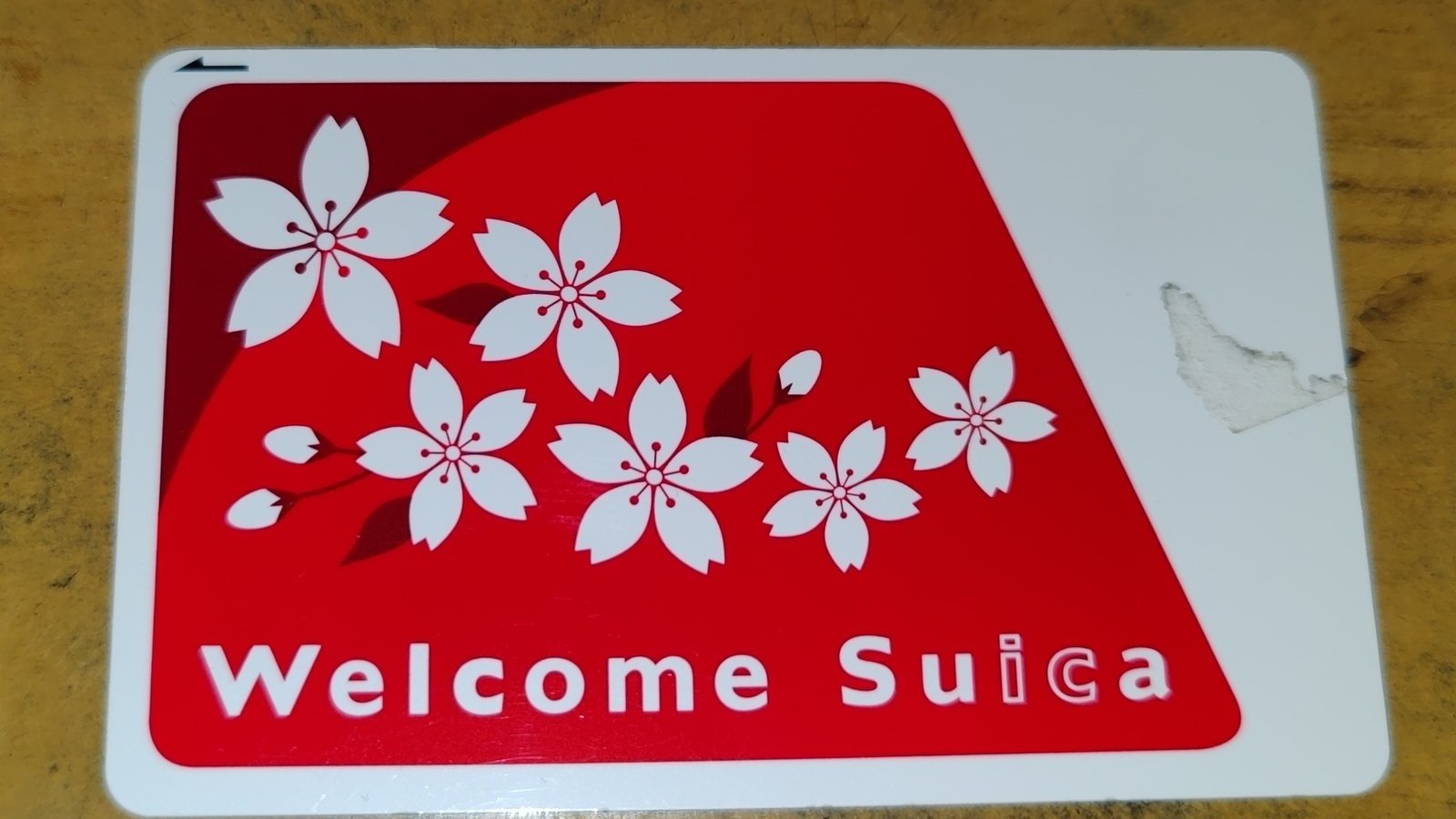
On a first Tokyo trip, start with an IC card and pay per ride (Welcome Suica has no deposit and is valid for 28 days). If you take four or more subway rides in a day, add a 72-hour Tokyo Subway Ticket for 2,000 yen; a JR Pass is never worthwhile if you stay in Tokyo and do not go to Kansai. See what TOURIST PASMO, Suica on iPhone, and the Tokyo Metro day pass do and do not cover, with a decision chart. Prices verified in September 2026.
- Transport
- Budget

GuideTokyo
Tokyo Disneyland and DisneySea Guide: Ticket Prices, Fantasy Springs, Disney Premier Access (DPA), Standby Pass, and Which Park to Choose for Your First Visit
Tokyo Disney one-day Passport prices vary: most weekdays in 9/2026 cost ¥9,900 and weekends ¥10,900. At 14:00 daily, tickets go on sale for the same date two months later. Free Priority Pass is no longer on the official service list; only paid Disney Premier Access (¥1,000–3,500 per person per use) shortens waits. Covers hours, the 25th anniversary, Standby Pass, Entry Request, Fantasy Springs access and first-visit park choice; checked on the official site in 9/2026.
- Itineraries
- Family
Sources
- Highlights from Git 2.56 - The GitHub Blog · Checked: