Guide
Taiwan Etiquette and Safety Tips: MRT Fines, Temples, Rubbish, Earthquakes and Emergency Numbers
The rules visitors actually get fined for in Taiwan and the etiquette nobody explains: no water on the MRT, priority seats, temple steps, rubbish and vapes, crossing the street, earthquakes, typhoons, tap water, doctors and the numbers to call.
Updated: About 11 min read
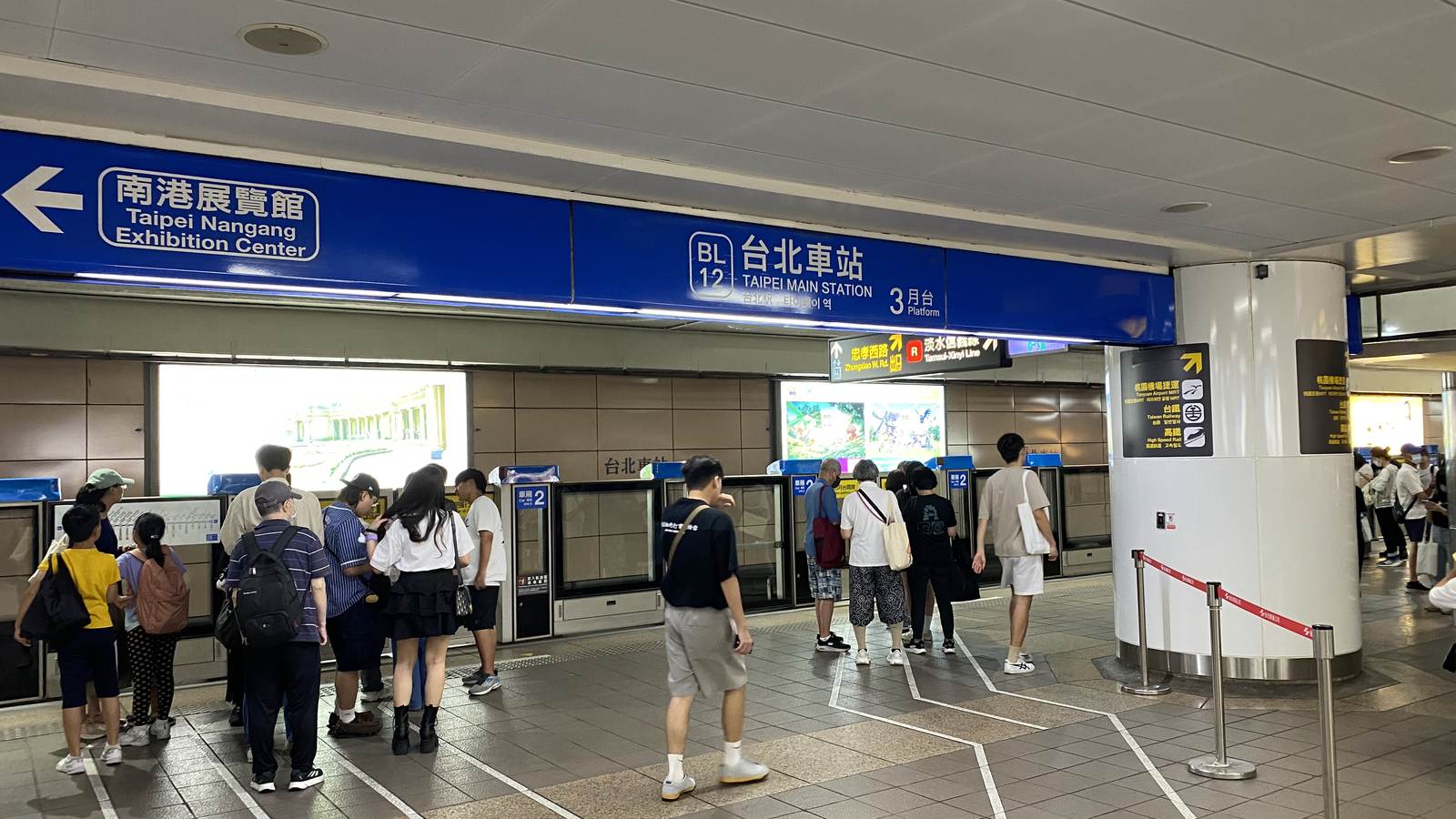
Taiwan is an easy country to visit. People queue, strangers help with directions, and a convenience store is never far away. The problems are small and specific: a sip of water on the Taipei Metro can be fined, bins are hard to find, scooters turn across your crosswalk, and an earthquake or a typhoon can rearrange your day with very little warning.
This guide covers the unwritten rules and the written ones, from the MRT and temples to typhoons and doctors. Every fine and phone number below was checked on an official page in September 2026.
On the MRT: small habits, real fines
The rule that catches most visitors: no eating or drinking once you pass the yellow line painted in front of the ticket gates. Taipei Metro (台北捷運) is explicit that this includes plain water and mineral water, and the national Mass Rapid Transit Act (大眾捷運法) lists chewing gum and betel nut in the same clause. Everything inside the line counts, platform and train included, and the fine is NT$1,500 to NT$7,500. If you feel unwell and need water, a sweet or medicine, tell the station staff and they will help. Outside the line you can eat and drink freely, so finish your bubble tea before you tap in. The fine comes from the national act, not a Taipei by-law, so assume the same rule past the gates in Taoyuan, Taichung and Kaohsiung unless a sign says otherwise.
Queues, escalators and priority seats
- Queue on the painted lines at the platform doors and let people off before you board. Blocking the gates, ticket machines, escalators or passageways and ignoring staff who ask you to move is also on the fines list.
- On escalators, hold the handrail and stand steady on the step. The metro's regulations ban running and large items on escalators, and suggest older passengers take the lift.
- Priority seats (優先席, signed 博愛座 in older notices) are dark blue and sit next to the doors in every car. Anyone who needs a seat can pick up a free sticker asking for one (讓座貼紙) at any station information counter, no proof required, and pregnant passengers can get badges. Give up your seat to anyone wearing one.
- Don't sit on the floor or on your own suitcase, which the regulations forbid, and don't lie across seats: doing that after a warning is a finable offence.
- Normal suitcases are fine. The limit is 165 cm on the longest side and 220 cm for length, width and height combined.
- If you feel ill on a train, tell any member of staff and they will call for medical help.
Everyday etiquette: tipping, shoes and temples
No tipping, but read the bill
Taiwan doesn't run on tips. The Tourism Administration (交通部觀光署) notes that hotels and restaurants customarily add a 10% service charge, so check the bill and add nothing on top. Night-market stalls and noodle shops add nothing and expect nothing; a simple xie xie (謝謝, thank you) does the job.
Shoes off at the door
If you visit someone's home, or stay in a guesthouse (民宿) or a hot-spring room with a raised step inside the entrance, a shoe rack or a row of slippers is your cue to take your shoes off. Hotels, shops and restaurants don't expect it, and at most temples you keep your shoes on unless a sign says otherwise.
Temples: the order locals follow
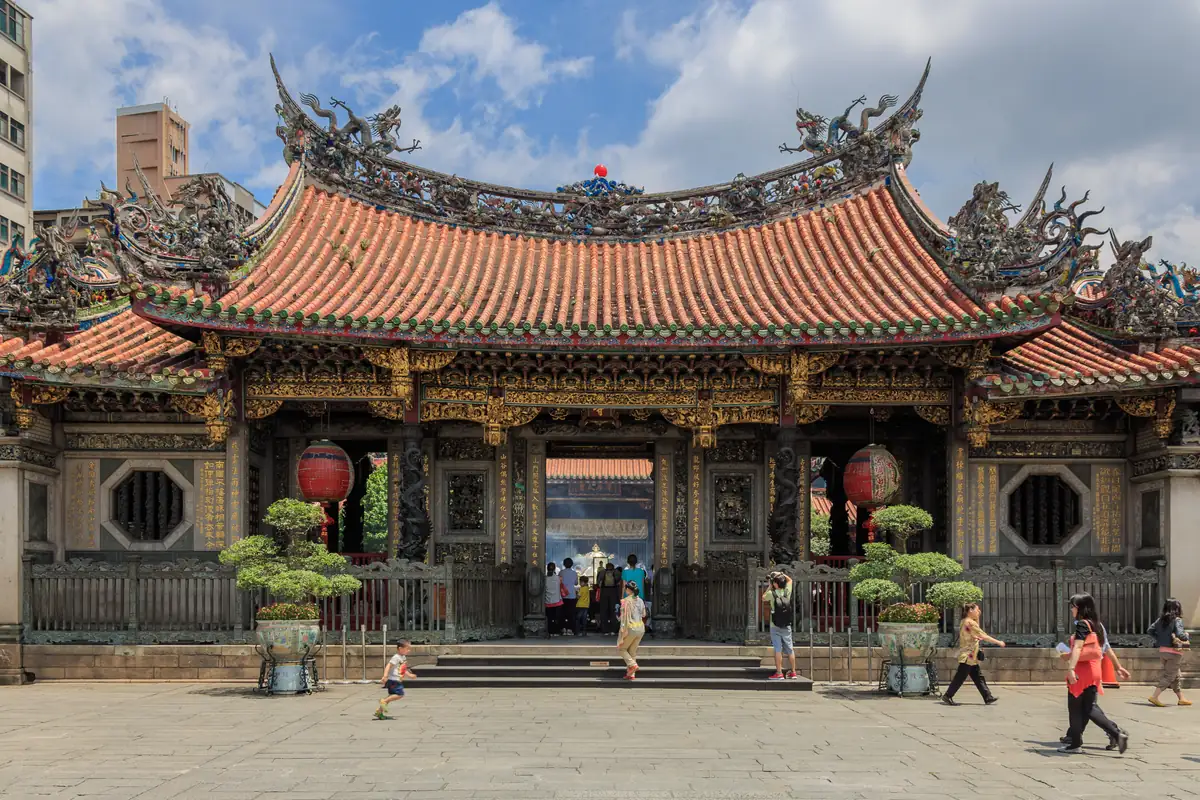
Temples are working places of worship first and sights second. Step aside for people praying, keep your voice down and ask before photographing someone mid-prayer. Longshan Temple (艋舺龍山寺) in Taipei publishes the steps it asks visitors to follow, and they are a good template for most folk temples:
- Enter through the right-hand entrance, the Dragon Gate (龍門), and leave through the Tiger Gate (虎門).
- Offerings are optional; Longshan sells biscuits and sweets at its offerings counter if you want to bring some.
- Put your palms together, tell the deity your name, date of birth, current address and what you are asking for, then bow three times.
- Pay respects to the deities in order instead of heading straight for the one you came to see. Longshan's own guide calls going directly to the matchmaker god (月老) for a red thread impolite.
- For a fortune slip (籤詩), ask permission by throwing a pair of moon blocks (筊); only a yes result (聖筊) lets you draw. Lift one stick just far enough to read its number, leave it in the pot, and confirm the number with three yes results in a row. One slip answers one question, and Longshan's interpretation desk explains slips from 10am to 7pm.
Rubbish and smoking: where the fines are
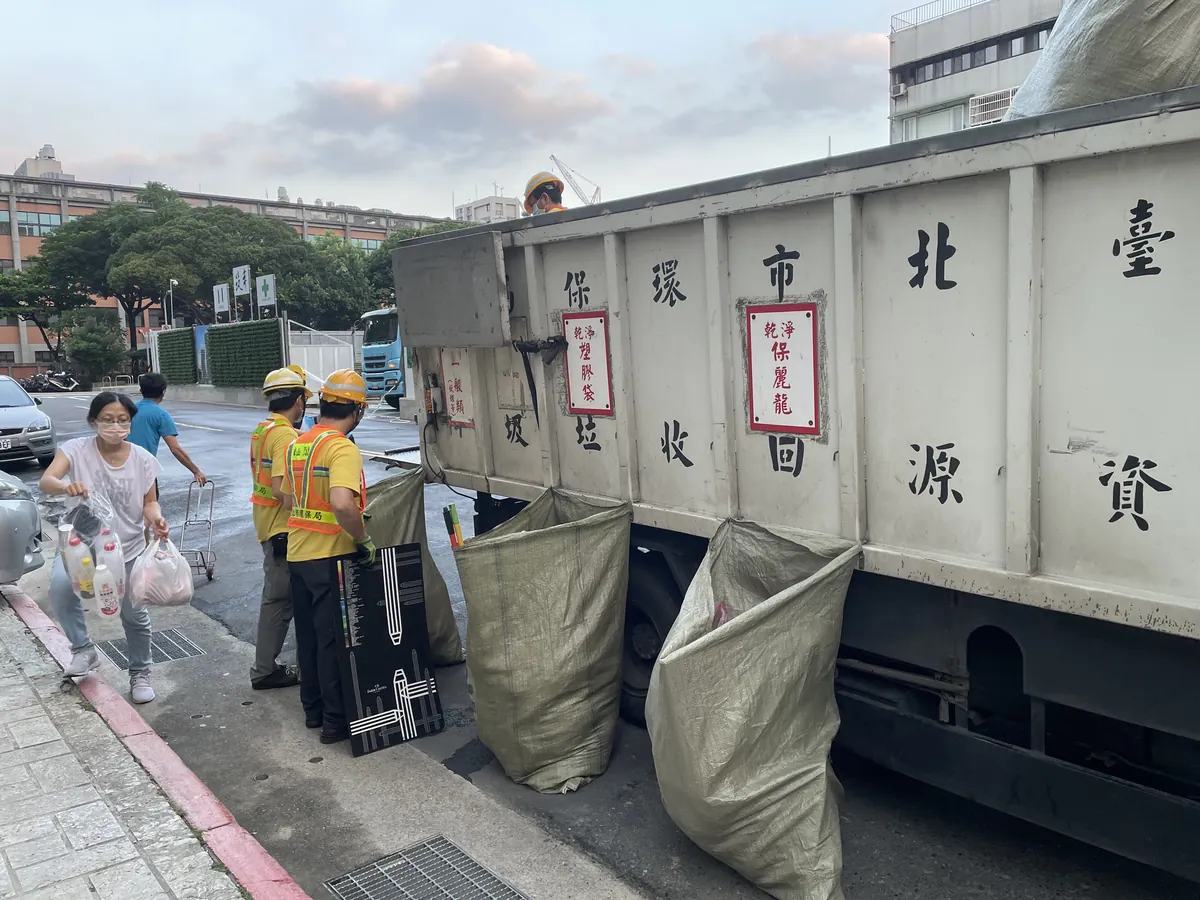
Public bins are scarce, and that is deliberate: households pay for their own rubbish. Taipei's Department of Environmental Protection has been removing bins from problem spots on residential streets and plans to keep them mainly in shopping districts, night markets and tourist spots. So carry your rubbish until you find a bin, or take it back to your hotel. Empty drink cups are easier: Taipei tells people to hand them in at chain drink shops, convenience stores, fast-food chains and supermarkets, whatever brand the cup is. Never stuff a bag of household rubbish into a street bin: Taipei fines that from NT$3,600. If you rent an apartment, ask your host how collection works. Taipei households buy the city's official rubbish bags, NT$5 for a 14-litre bag, and take them out to the garbage truck on its route.
Smoking is banned in stations, on public transport and in taxis, and inside hotels, shopping centres, restaurants, bars and other indoor public places unless there is a separate smoking room. Lighting up in a no-smoking place costs NT$2,000 to NT$10,000 under the Tobacco Hazards Prevention Act (菸害防制法). E-cigarettes are a bigger trap: the act bans using them anywhere, along with heated tobacco that has not passed the government's health-risk review, and the fine is the same. Leave the vape at home.
| What | Where | Penalty |
|---|---|---|
| Eating or drinking (even water), chewing gum or betel nut past the yellow line | MRT stations and trains | NT$1,500 to NT$7,500 |
| Lying across seats, or crossing the platform's yellow safety line, after staff warn you | MRT trains and platforms | NT$1,500 to NT$7,500 |
| Riding without a valid ticket | Taipei Metro | The fare plus a charge of 50 times the fare |
| Smoking in a no-smoking place | Stations, public transport, taxis, indoor public places | NT$2,000 to NT$10,000 |
| Using an e-cigarette or unapproved heated tobacco | Anywhere in Taiwan | NT$2,000 to NT$10,000 |
| Putting household rubbish in a street bin | Taipei City | From NT$3,600 |
Crossing the street
Traffic drives on the right and scooters are everywhere. The law is on your side: under the Road Traffic Safety Rules (道路交通安全規則), a vehicle approaching a crosswalk must stop and let pedestrians cross, with or without a signal. The danger is vehicles turning across your crosswalk on the same green light: right-turning cars and scooters come from behind your shoulder, left-turners from the far side. Look over your shoulder before you step out, keep looking while you cross, and don't assume a driver will stop because the rule says so.
Scooters also park along pavements and in the covered arcades (騎樓) in front of shops, so walk predictably. Don't rent one unless your licence is valid in Taiwan and you are used to heavy traffic. At a bus stop, raise your hand as your bus approaches so the driver stops.
Earthquakes and typhoons
Earthquakes
Small earthquakes are part of life in Taiwan. For a strong one, the Central Weather Administration (中央氣象署) sends an alert to phones in the counties expected to shake hard: a loud alarm and a pop-up titled 國家級警報. It goes out by cell broadcast, which not every phone supports, and gives seconds to tens of seconds of warning at best, so don't rely on a foreign phone. The CWA's advice:
- Indoors: drop, cover and hold on (趴下、掩護、穩住). Protect your head, get under a sturdy table, keep away from windows, and don't run outside.
- Outdoors: move to open ground, watch for falling signboards and flowerpots, and keep away from construction sites and utility poles. Don't rush into a building.
- In a car or taxi: no sudden braking. Slow down, pull over and stay inside with the engine off.
- After the shaking: don't use lifts, take the stairs out of any damaged building, wear shoes because of broken glass, expect aftershocks, and stay away from beaches and harbours in case of a tsunami.
Typhoons
If a typhoon heads for Taiwan during your trip, follow the Central Weather Administration's typhoon warnings (颱風警報) and watch for closures. Each city and county government decides whether to close offices and schools, and the Directorate-General of Personnel Administration (行政院人事行政總處) lists every decision on one page. The rules fix the timing: a full-day or morning closure is announced the evening before, between 7pm and 10pm, and an afternoon closure by 10:30am. Formally only government offices and schools close, but tours, ferries, flights and trains are often cancelled too, so check each booking.
Water, doctors and emergency numbers
Taiwan's tap water leaves the treatment plants clean, but what reaches your glass depends on the building. Taiwan Water Corporation (台灣自來水公司) asks people to boil it before drinking, because it can pick up microbes in a building's tanks and pipes. Taipei Water Department (臺北自來水事業處) is more confident about the capital's supply and has installed direct-drinking fountains (直飲台) in places such as MRT stations and parks. In a hotel you can't check the tank, so use the kettle, the water dispenser or bottled water, and refill at fountains, drinking outside the MRT's no-eating zone.
Taiwan's National Health Insurance covers residents, and foreigners only join with a resident certificate, usually after six months, so as a visitor you pay the full self-pay price (自費). For minor problems a neighbourhood clinic (診所) or a pharmacy (藥局) is the quick option; for anything serious, go to a hospital emergency department or call 119. Bring your passport, keep the receipt (收據) and ask for a medical certificate (診斷證明書) for your insurance claim. The Tourism Administration's Useful Tips page lists major hospitals in Taipei, Taichung and Kaohsiung.
| Number | Use it for | Notes |
|---|---|---|
| 110 | Police | Free call |
| 119 | Fire and ambulance | Free call |
| 112 | Emergency calls when mobile reception is poor | Free call |
| 0800-011-765 | Tourism Administration travel information hotline | Toll-free, 24 hours a day, in Mandarin, English, Japanese and Korean |
Read the full description
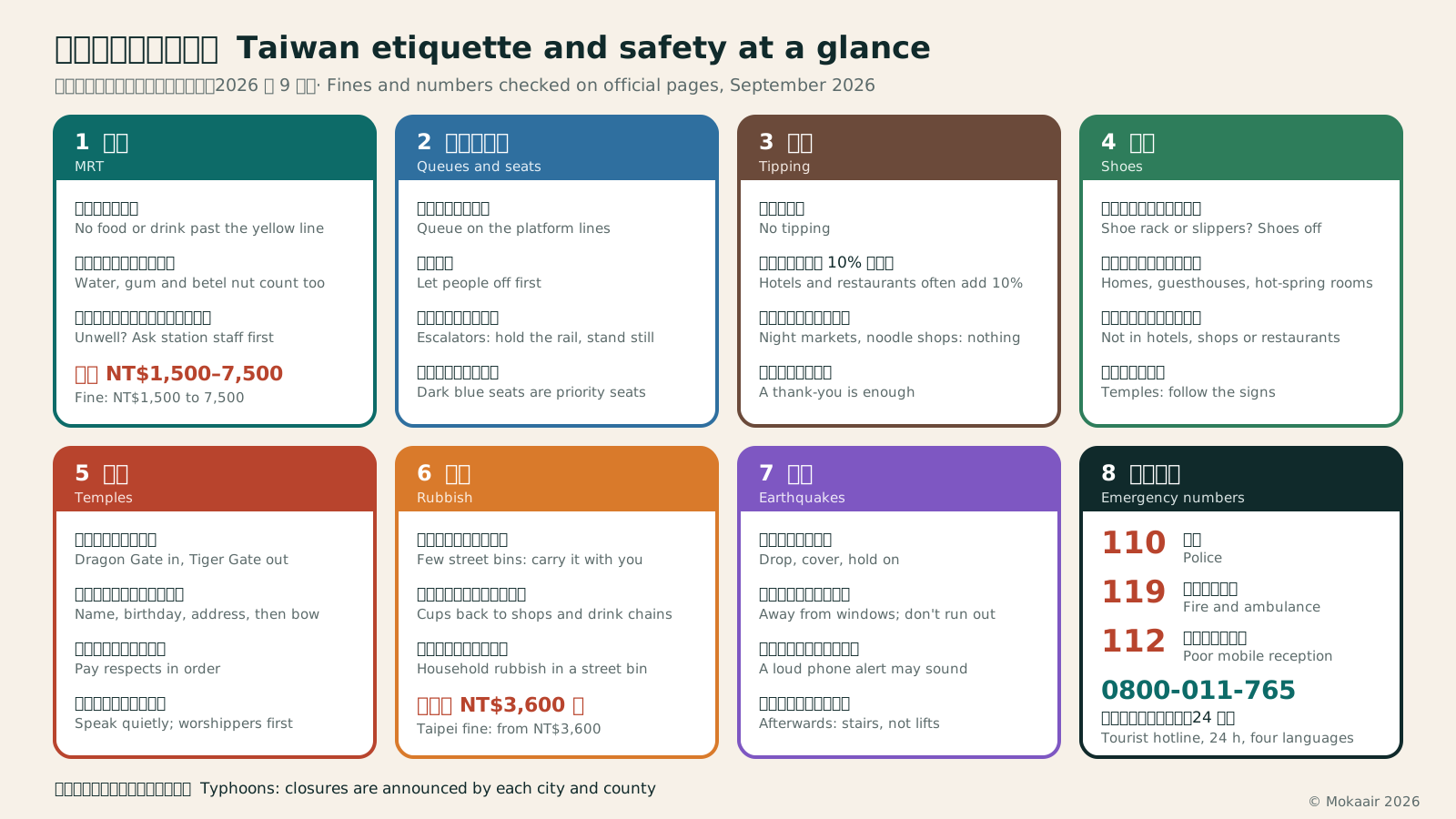
八格速查:一、捷運黃線內禁止飲食,連喝水、口香糖、檳榔都算,罰鍰新臺幣 1,500 至 7,500 元;二、依月台排隊線排隊、先下後上、電扶梯握扶手站穩、深藍色座位是優先席;三、不用給小費,飯店餐廳常加 10% 服務費;四、門口有鞋架或拖鞋就脫鞋;五、寺廟由龍門進、虎門出,報上姓名生日地址,依序參拜;六、街上垃圾桶少,空杯交給超商或連鎖飲料店,臺北家戶垃圾丟清潔箱罰 3,600 元起;七、地震時趴下、掩護、穩住,震後不搭電梯;八、緊急電話 110 警察、119 消防與救護車、112 收訊不良時、觀光署 24 小時旅遊諮詢熱線 0800-011-765。Eight cells: no eating or drinking past the MRT yellow line, not even water, fine NT$1,500 to 7,500; queue on platform lines, let people off, hold the escalator rail, dark blue seats are priority seats; no tipping, hotels and restaurants often add 10%; take shoes off where you see a shoe rack or slippers; temples: in at the Dragon Gate, out at the Tiger Gate, tell the deity your name, birthday and address; few bins, return cups to shops, Taipei fines household rubbish in street bins from NT$3,600; earthquakes: drop, cover, hold on, no lifts afterwards; emergency numbers 110 police, 119 fire and ambulance, 112 with poor reception, 0800-011-765 tourist hotline.
Taipei: things to do, where to stay and getting around
Kaohsiung: plan the southern leg of your trip
Guide
Before and After Booking a Restaurant in Japan: Confirmations, Late Arrivals, and Cancellations
Practical guidance for restaurant reservations in Japan, from choosing the correct branch and checking booking status to contacting the restaurant when travel delays occur. Rules vary by restaurant; keeping your confirmation email matters more than memorizing general advice.
Guide
When Trains Stop Running in Japan: Official Updates, Keeping Tickets, and Backup Priorities
A route appearing in your navigation app does not mean trains are running. During delays or suspensions, first identify the operator and affected sections, then decide whether to wait, reroute, or cancel the day's long-distance outing.
Sources
- Taipei Metro FAQ: no eating or drinking inside the yellow line · Checked:
- Taipei Metro: Regulations for Use of the Taipei Metro System (Chinese, amended 2026-02-26) · Checked:
- Mass Rapid Transit Act, Article 50 (Laws and Regulations Database) · Checked:
- Taipei Metro FAQ: priority seats and seat stickers · Checked:
- Tourism Administration: Useful Tips (service charge, emergency numbers, hospitals) · Checked:
- Tourism Administration: travel information service and 0800-011-765 hotline · Checked:
- Mengjia Longshan Temple: how to pray · Checked:
- Taipei Department of Environmental Protection: fine for household rubbish in street bins · Checked:
- Taipei Department of Environmental Protection: returning empty drink cups · Checked:
- Taipei Department of Environmental Protection: where street bins are placed · Checked:
- Tobacco Hazards Prevention Act (Laws and Regulations Database) · Checked:
- Road Traffic Safety Rules, Article 103 (Laws and Regulations Database) · Checked:
- Central Weather Administration: earthquake safety advice · Checked:
- Central Weather Administration: how earthquake early warnings are delivered · Checked:
- Central Weather Administration: Public Warning Service and earthquake alerts · Checked:
- DGPA: natural disaster office and school closures · Checked:
- Regulations on suspending work and classes during natural disasters · Checked:
- Taiwan Water Corporation FAQ: drinking tap water · Checked:
- Taipei Water Department FAQ: direct drinking water · Checked:
- National Health Insurance Administration: enrolment of foreign nationals with a resident certificate · Checked: