GuideBusan
Gyeongju Day Trip from Busan: KTX or Intercity Bus, Daereungwon–Bulguksa Bus Routes, Admission and Donggung Palace and Wolji Pond at Night
Busan–Gyeongju day return: KTX Busan→Gyeongju stations, 28–37min, then bus from Geoncheon-eup; Nopo's Busan East→downtown deluxe bus ~50min/₩7,700. Daereungwon (Cheonmachong ₩3,000)→Cheomseongdae→Gyochon/Hwangnidan-gil lunch→bus 10/11: Bulguksa (free)→12: Seokguram→downtown Donggung/Wolji at dusk (until 22:00). City bus ₩1,500; intercity +9% from 2026-10-01. Spring cherry/autumn foliage timing. Fares/times checked 9/2026: both terminals', city and temple official websites.
About 11 min read
We may earn a commission through these links, at no extra cost to you.
Less than an hour from Busan, Gyeongju is one of the best places to set aside a day for during a Busan trip. The entire city preserves the remains of a thousand years of Silla history: ancient burial mounds sit in downtown parks, Bulguksa and Seokguram are World Heritage sites, and Donggung Palace and Wolji Pond offer beautiful night views. The only challenges are getting there and moving between attractions: Gyeongju Station, where KTX stops, is outside downtown, while intercity buses take you straight to the city center. This guide first compares KTX and intercity buses, then lays out a day trip from Daereungwon to Bulguksa and Seokguram, finishing with the night views before returning to Busan. It includes directions for Gyeongju city buses 10, 11 and 12, plus admission fees and opening hours for each attraction. Fares and times were checked in 9/2026 against the official websites of the Busan and Gyeongju bus terminals, Gyeongju City and the temples.
Busan to Gyeongju: KTX or Intercity Bus
| Transport | Boarding in Busan | Journey time and frequency | Adult fare | On arrival in Gyeongju |
|---|---|---|---|---|
| KTX/SRT | Busan Station (Busan Station on subway Line 1) | 28 to 37 minutes; 50 KTX and SRT departures combined per day; first 04:45, last 22:16 | Check Korail's official website for KTX fares; SRT standard class ₩10,100 | Stops at Gyeongju Station (formerly Singyeongju Station, in Geoncheon-eup); transfer to bus 700 or 711, or take a taxi downtown |
| Intercity bus | Platform 27 at the East Intercity Bus Terminal inside Busan Central Bus Terminal (Nopo Station, the terminus of subway Line 1) | About 50 minutes (Gyeongju City gives 50 minutes to 1 hour 10 minutes); roughly every 10 to 30 minutes from 06:20 to 21:30, plus a late-night departure at 22:00; about 50 departures daily | Deluxe ₩7,700; late-night ₩9,200; all routes increase by 9% from 2026-10-01 | Arrives directly at downtown Gyeongju Intercity Bus Terminal, within walking distance of Daereungwon and Hwangnidan-gil |
| Return intercity bus | Gyeongju Intercity Bus Terminal to Nopo | About 1 hour; 07:00 to 22:40; 50 departures daily | Standard ₩6,000, deluxe ₩7,700; other routes run to West Busan (Sasang) for ₩9,500 and Haeundae for ₩10,500 | Last departure 22:40, leaving time for the night views |
| Return KTX | Gyeongju Station to Busan Station | 27 to 35 minutes; last departure 23:46 (arrives in Busan at 00:13) | As above | Take bus 711 or a taxi from downtown to Gyeongju Station first; the last bus 711 departing Gyeongju Station leaves at 20:23 |
The main difference is at the Gyeongju end. KTX is fast, but Gyeongju Station—officially renamed from Singyeongju Station, though the SRT fare table still says Singyeongju—is in Geoncheon-eup, west of downtown. You need to take bus 700 or 711, or a taxi, into the city center. Once waiting and transfer time are included, it may not be faster overall than the bus. Intercity buses stop directly at downtown Gyeongju Intercity Bus Terminal, just a few minutes' walk from Daereungwon and Hwangnidan-gil, making them convenient for both a morning arrival and a return after the night views. In Busan, board at Busan Central Bus Terminal at Nopo Station. The same building contains an express bus terminal serving Seoul and other destinations, and the East Intercity Bus Terminal. Buses to Gyeongju leave from platform 27 in the intercity terminal. All services on the timetable use deluxe buses, labeled "udeung," with an adult fare of ₩7,700; the 22:00 late-night service costs ₩9,200. Busan East Terminal has announced a 9% increase across all intercity routes from 2026-10-01, so check the official website for fares after that date. You can book intercity bus tickets through T-money's intercity bus booking website or Bustago, or buy them at the terminal. Weekend morning departures fill up quickly.
Read the full description
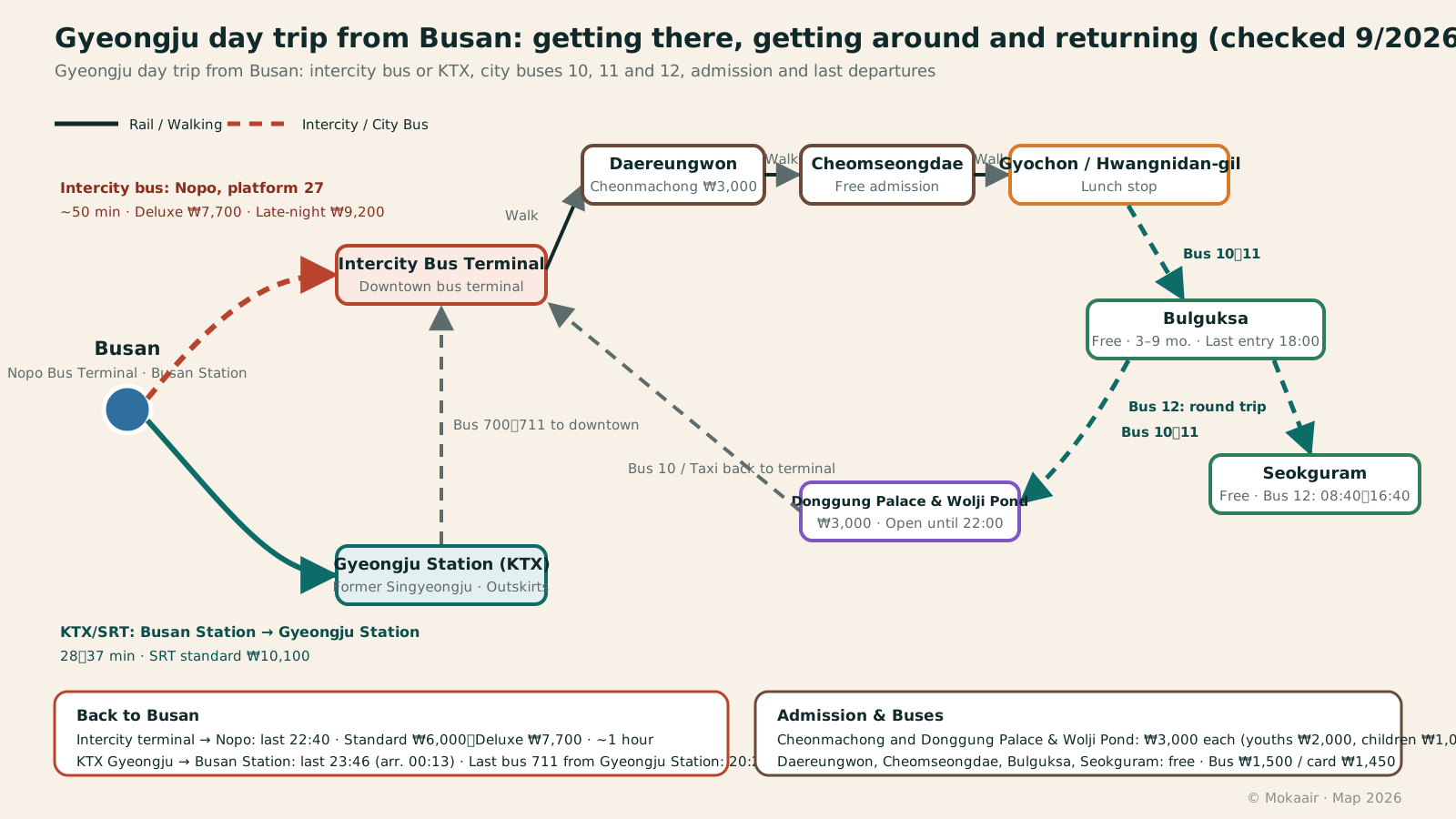
Left: Busan. Intercity buses leave Busan East Terminal at Nopo, platform 27: ~50 min to Gyeongju Intercity Terminal; deluxe ₩7,700, late-night ₩9,200. KTX/SRT: Busan Station→Gyeongju Station (formerly Singyeongju, outside downtown), 28–37 min; SRT standard ₩10,100. Bus 700 or 711 connects to downtown. City loop: walk from the terminal to Daereungwon (Cheonmachong ₩3,000), Cheomseongdae (free), then Gyochon or Hwangnidan-gil for lunch. Bus 10 or 11→Bulguksa (free; last entry 18:00 in months 3–9); bus 12↔Seokguram (free; 08:40–16:40); bus 10 or 11→Donggung Palace and Wolji Pond (₩3,000; open until 22:00, last entry 21:30); bus 10/taxi→terminal. Return to Busan: last intercity bus to Nopo 22:40; standard ₩6,000, deluxe ₩7,700; ~1 hour. Last KTX Gyeongju Station→Busan Station 23:46, arriving 00:13; last bus 711 from Gyeongju Station 20:23. Admission: Cheonmachong and Donggung Palace and Wolji Pond each ₩3,000; youths ₩2,000, children ₩1,000. Daereungwon park, Cheomseongdae, Bulguksa and Seokguram free. City bus ₩1,500; transit card ₩1,450. Dashed lines: intercity/city buses. Solid lines: rail/walking.
If you would rather avoid arranging transfers yourself, or want to fit more stops into one day, a Gyeongju day tour from Busan is a convenient option; private car charters are also common. Traveling independently by public transport costs roughly twenty thousand won for the day, including return intercity buses and three city bus rides. The main differences are flexibility and whether you can stay for the night views.
Gyeongju Day Tours from Busan, Private Car Charters and Attraction Tickets
A Day in Gyeongju: Daereungwon to Donggung Palace and Wolji Pond
Morning: Daereungwon, Cheonmachong and Cheomseongdae
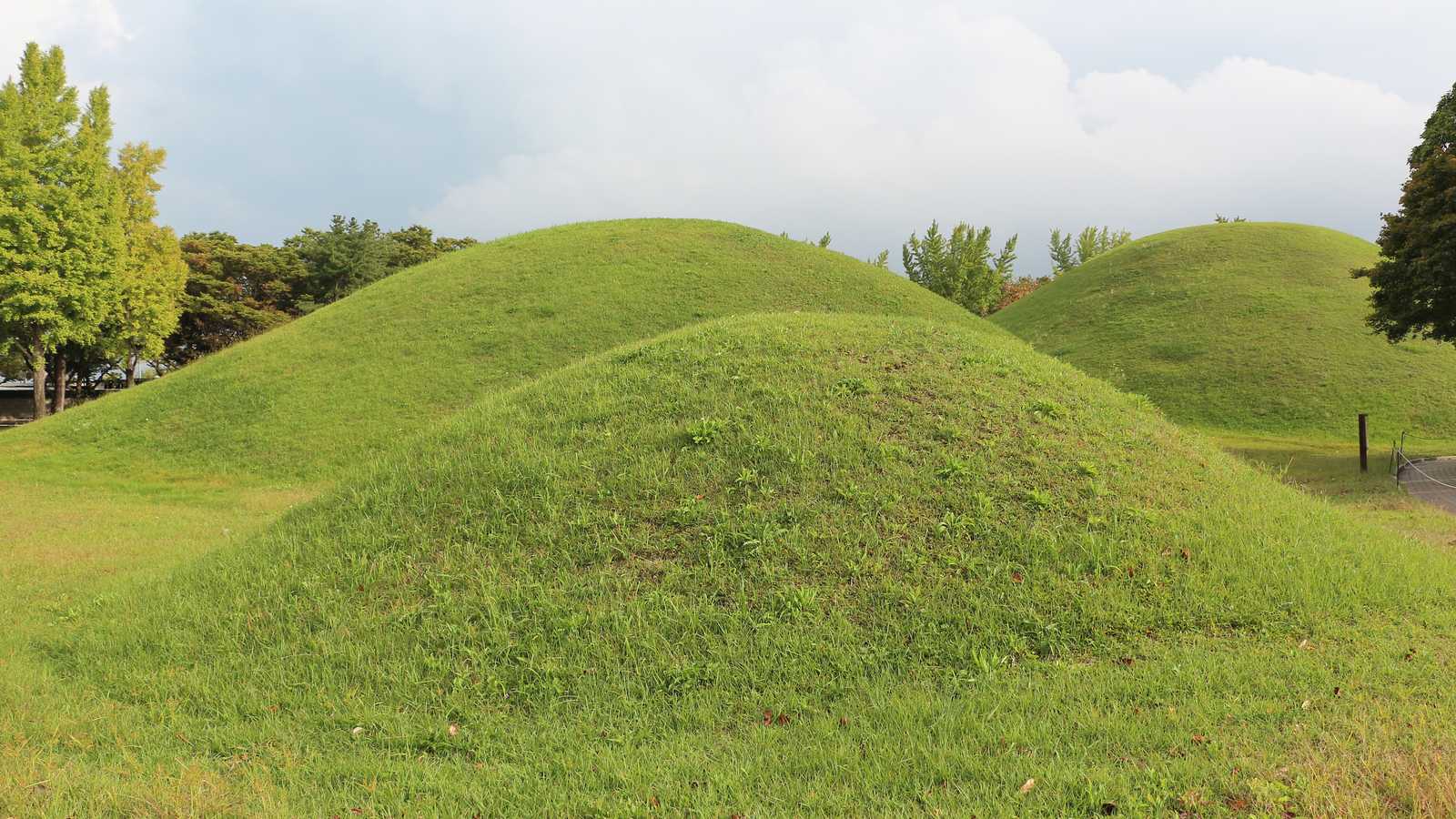
Walk east from Gyeongju Intercity Bus Terminal to your first stop, Daereungwon: a large downtown area filled with rounded Silla burial mounds. The park itself is free, but entering Cheonmachong, the tomb you can go inside, requires a ticket: adults ₩3,000, youths ₩2,000 and children ₩1,000. It opens from 09:00 to 22:00, with ticket sales and admission ending at 21:30, every day of the year. Just outside Daereungwon's south gate is Cheomseongdae, a Silla-era astronomical observatory standing on the lawn, free to visit. Nearby, you will find canola flowers in spring and pink muhly grass in autumn. Continue south to Gyochon Hanok Village and the Choe family residence; everything in this area is within walking distance.
Lunch: Gyochon or Hwangnidan-gil
You have two lunch options: try Gyeongju specialties at a traditional restaurant in Gyochon, such as Gyori gimbap, soup with rice or a Korean set meal, or walk back to Hwangnidan-gil, west of Daereungwon. This street is lined with cafés, small restaurants and bakeries in converted hanok houses. It gets crowded on weekends, so arrive early for popular places. Hwangnidan-gil lies between Daereungwon and the bus terminal; after exploring, return to the bus stop in front of the terminal for a bus to Bulguksa.
Afternoon: Bulguksa and Seokguram
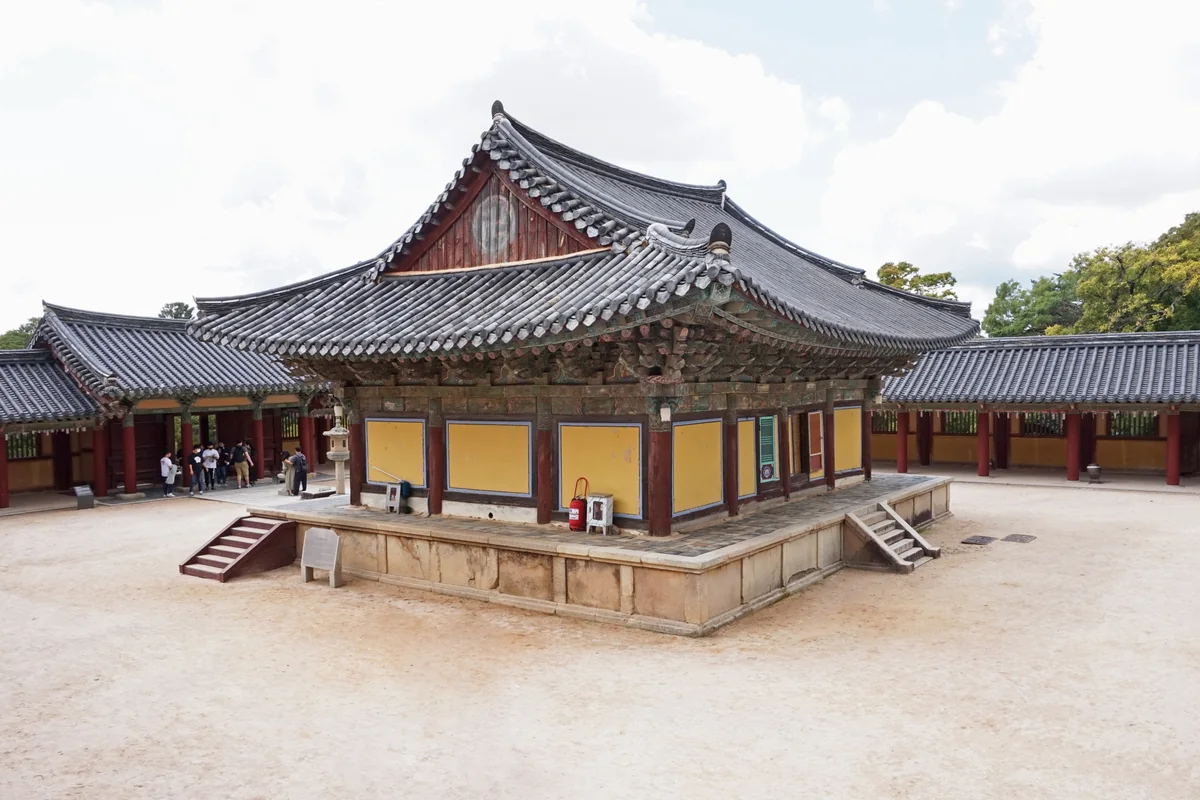
Take bus 10 or 11 from outside the intercity bus terminal to the Bulguksa stop. These routes run around the same loop in opposite directions. Bus 10 heads north from the terminal via Bunhwangsa and Bomun Tourist Complex before reaching Bulguksa. Bus 11 heads south via Donggung Palace and Wolji Pond, Gyeongju National Museum and Tongiljeon to Bulguksa, then loops back through Bomun. Take whichever arrives first; stop names are displayed onboard. Admission to Bulguksa has been free since 2023/5/4. From month 3 through month 9, it opens at 09:00 and admission ends at 18:00; in months 2 and 10, admission ends at 17:30; from month 11 through month 1, it ends at 17:00. It opens year-round, and pets are not allowed. Parking costs ₩2,000 for small vehicles and ₩4,000 for large vehicles. Seokguram is on Mount Tohamsan above Bulguksa. It has also been free since 2023/5/4 and keeps the same opening hours as Bulguksa. Take bus 12 uphill from Bulguksa; there are 10 departures daily between 08:40 and 16:40. Return buses from Seokguram to Bulguksa leave on the hour. From the parking lot, the grotto is about a 10-minute walk along a mountain path. Allow an hour for Bulguksa and an hour and a half for Seokguram, including transport. Head uphill before three in the afternoon so closing time does not leave you rushing.
Evening: Donggung Palace and Wolji Pond at Night, Then Back to Busan
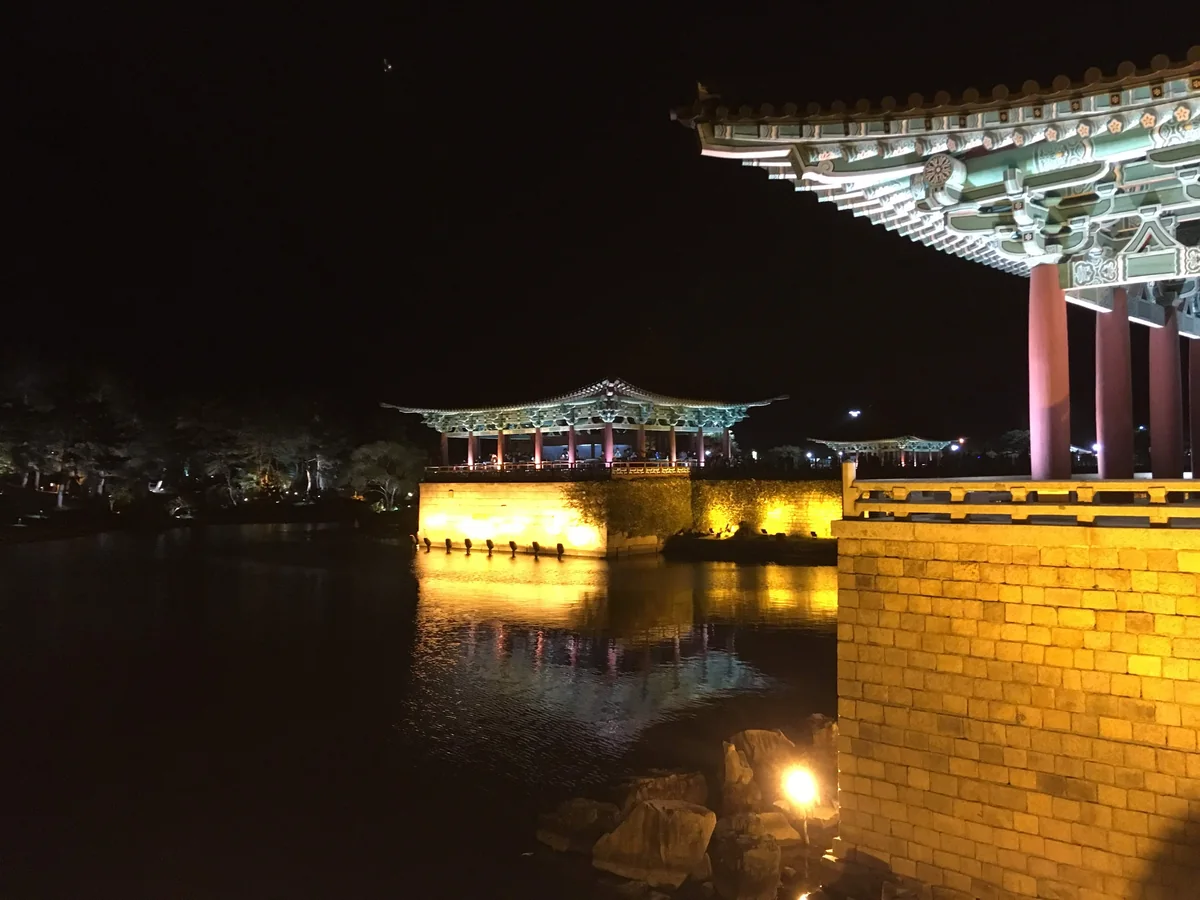
After coming down from Seokguram, take bus 11 or 10 from the Bulguksa stop toward downtown and get off at Donggung Palace and Wolji Pond; the onboard display shows its Korean name, Donggung-gwa Wolji. This was a secondary palace of the Silla royal court, with an artificial lake. It is unremarkable by day; the reflections after the lights come on at night are the main attraction. Admission costs ₩3,000 for adults, ₩2,000 for youths and ₩1,000 for children. It opens from 09:00 to 22:00, with ticket sales and admission ending at 21:30, every day of the year. Parking is free. After enjoying the night views, take bus 10 or a taxi back to the intercity bus terminal. The last bus to Nopo leaves at 22:40. If returning by KTX, remember that Gyeongju Station is outside downtown and arrange a taxi first.
How to Ride Gyeongju City Buses
Gyeongju city buses cost ₩1,500 per adult for a one-way ride. Paying with a transit card such as T-money gives a ₩50 discount, bringing the fare to ₩1,450. After tapping out, you get one free transfer within 30 minutes, excluding transfers to the same route. Children and youths ride free with a transit card. Visitors mainly need these routes: buses 10 and 11 are circular routes linking the intercity bus terminal, Daereungwon, Donggung Palace and Wolji Pond, the museum, Bomun and Bulguksa. Bus 10 runs from 06:00 to 21:40, and bus 11 from 06:15 to 22:00, with 28 departures each. Off-peak gaps can reach 40 to 50 minutes; if you miss a bus, wait at a nearby café. Bus 12 runs only between Bulguksa and Seokguram. Buses 700 and 711 connect Gyeongju Station (KTX), the intercity bus terminal, Donggung Palace and Wolji Pond, and Bulguksa. Bus 711 departs Gyeongju Station from 07:07 to 20:23, with 10 departures daily. Check live arrivals on Naver or Kakao maps; stops also have electronic displays.
| Bus | Route | First and last departures from the starting point | Notes |
|---|---|---|---|
| 10 | Intercity terminal, Daereungwon, Bunhwangsa, Bomun, Bulguksa, Tongiljeon, Donggung Palace and Wolji Pond, museum, back to the intercity terminal | 06:00 to 21:40; 28 departures daily | Clockwise; reaches Bulguksa via Bomun |
| 11 | Intercity terminal, Donggung Palace and Wolji Pond, museum, Tongiljeon, Bulguksa, Bomun, Bunhwangsa, back to the intercity terminal | 06:15 to 22:00; 28 departures daily | Counterclockwise; reaches Bulguksa via Donggung Palace and Wolji Pond |
| 12 | Runs between Bulguksa and the Seokguram parking lot | 08:40 to 16:40; 10 departures daily | Departures from Seokguram to Bulguksa are on the hour |
| 700, 711 | Gyeongju Station (KTX), intercity terminal, Donggung Palace and Wolji Pond, Bulguksa | 711: 07:07 to 20:23, 10 departures daily; check the official website for bus 700 schedules | For KTX travelers |
When to Go for Spring Cherry Blossoms and Autumn Foliage
Gyeongju is famous in Korea for its cherry blossoms. The streets around Daereungwon, the circuit around Bomun Lake and Heungmu-ro are lined with cherry trees, usually reaching full bloom around early April, a little earlier than Seoul. Intercity and city buses are packed during that week, so leave one departure earlier. For autumn foliage, head to Bulguksa and the mountain road to Seokguram, usually from late October to early November. In summer, the burial mound area has no shade, so visit Bulguksa in the morning and downtown in the late afternoon. In winter, Bulguksa stops admitting visitors at 17:00, so reverse the route: visit Bulguksa first in the morning, then return downtown in the afternoon for the tombs and night views.
Before You Go
- Outbound: platform 27 at Busan East Intercity Bus Terminal at Nopo Station; deluxe fare ₩7,700; departures roughly every 10 to 30 minutes from 06:20. Fares increase by 9% from 2026-10-01.
- Return: the last bus from Gyeongju Intercity Bus Terminal to Nopo leaves at 22:40; the last KTX leaves at 23:46. Gyeongju Station is outside downtown.
- Top up your transit card first: Gyeongju buses cost ₩1,450 by card, with one free transfer within 30 minutes.
- Bulguksa and Seokguram are free, but have admission cutoffs: 18:00 in months 3 to 9, 17:30 in months 2 and 10, and 17:00 in months 11 to 1.
- Cheonmachong and Donggung Palace and Wolji Pond cost ₩3,000 each; last admission is 21:30.
- Weekends and blossom season are crowded. City bus intervals can reach 40 to 50 minutes, so leave buffer time.
Three Days and Two Nights in Busan: Haeundae, Gamcheon and Nampo-dong
Seoul–Busan KTX and SRT Ticket Guide: Booking, KORAIL PASS and Getting to Gyeongju
Transport Guide: Gimhae Airport to Downtown Busan
Busan City Guide: Attractions, Accommodation and Airport Transport
Busan Food Directory: Local Restaurants in Seomyeon, Nampo-dong and Haeundae
Guide
How to Choose Tokyo Transit Passes: Are Suica, Welcome Suica, the Tokyo Subway Ticket, and the JR Pass Worth It?
On a first Tokyo trip, start with an IC card and pay per ride (Welcome Suica has no deposit and is valid for 28 days). If you take four or more subway rides in a day, add a 72-hour Tokyo Subway Ticket for 2,000 yen; a JR Pass is never worthwhile if you stay in Tokyo and do not go to Kansai. See what TOURIST PASMO, Suica on iPhone, and the Tokyo Metro day pass do and do not cover, with a decision chart. Prices verified in September 2026.
Guide
Tokyo Disneyland and DisneySea Guide: Ticket Prices, Fantasy Springs, Disney Premier Access (DPA), Standby Pass, and Which Park to Choose for Your First Visit
Tokyo Disney one-day Passport prices vary: most weekdays in 9/2026 cost ¥9,900 and weekends ¥10,900. At 14:00 daily, tickets go on sale for the same date two months later. Free Priority Pass is no longer on the official service list; only paid Disney Premier Access (¥1,000–3,500 per person per use) shortens waits. Covers hours, the 25th anniversary, Standby Pass, Entry Request, Fantasy Springs access and first-visit park choice; checked on the official site in 9/2026.
Guide
Narita and Haneda Airports to Central Tokyo: How to Choose Skyliner, N'EX, Keikyu, or the Airport Limousine Bus
From Narita to Tokyo: take Keisei Skyliner to Ueno in 36–41 minutes for ¥2,580; for Shinjuku or Tokyo Station, JR N'EX reaches Tokyo in as little as 53 minutes for ¥3,140; choose the TYO-NRT bus for ¥1,500 when budget comes first. From Haneda, Keikyu reaches Shinagawa in 11–14 minutes for ¥330. Includes fares and times for Access Express, Airport Limousine and Tokyo Monorail, plus a stay-area route guide; checked on official sites in 9/2026.
Guide
Taoyuan Airport Departure Guide: A1/A3 In-Town Check-in, Baggage, Liquids and Power Banks at Security, e-Gate Registration, and When to Leave (2026)
Departure-day guide from Taipei or New Taipei: check in online and confirm the terminal; use in-town check-in at A1 (06:00–21:30) or A3 (09:00–16:00), with a three-hour cutoff and different airlines; follow the 100 mL/one-liter liquids rule, the two-power-bank carry-on limit and lighter rules; check e-Gate rules for ROC nationals with household registration in Taiwan using an ROC passport, from age 10 and 120 cm; then calculate when to leave. Verified in September 2026 using Taiwan sources.
Sources
- Busan East Intercity Bus Terminal: East Busan → Gyeongju Service Information (departures, platform 27, deluxe ₩7,700, late-night ₩9,200, about 50 minutes) · Checked:
- Busan East Bus Terminal: Notice of Intercity Bus Fare Increases from 2026/10/1 (9% across all routes) · Checked:
- Gyeongju Intercity Bus Terminal: Gyeongju → Busan (Nopo-dong) Timetable/Fares (departures, standard ₩6,000, deluxe ₩7,700, about 1 hour) · Checked:
- Gyeongju Intercity Bus Terminal: Gyeongju → West Busan (Sasang) Timetable/Fares (deluxe ₩9,500) · Checked:
- Gyeongju Intercity Bus Terminal: Gyeongju → Busan (Haeundae) Timetable/Fares (deluxe ₩10,500) · Checked:
- Gyeongju Traffic Information Center: Fare Guide (bus ₩1,500, ₩50 transit card discount, transfers within 30 minutes) · Checked:
- Gyeongju Traffic Information Center: Route Information (stops, first/last departures and schedules for buses 10, 11, 12, 700 and 711) · Checked:
- Gyeongju Culture and Tourism: Admission Guide (Cheonmachong, Cheomseongdae, Donggung Palace and Wolji Pond, Gyeongju National Museum) · Checked:
- Gyeongju Culture and Tourism: Transport Information (Busan–Gyeongju KTX 30 minutes; intercity bus 50 minutes to 1 hour 10 minutes) · Checked:
- Gyeongju Facilities Management Corporation: Donggung Palace and Wolji Pond (open 09:00 to 22:00, ticket sales end 21:30, admission, parking) · Checked:
- Gyeongju Facilities Management Corporation: Cheonmachong (open 09:00 to 22:00, ticket sales end 21:30, admission, parking fees) · Checked:
- Bulguksa: Visiting Hours and Fees (free since 2023-05-04, monthly opening hours, parking fees) · Checked:
- Seokguram: Visiting Hours and Fees (free since 2023-05-04, opening hours, parking fees) · Checked:
- Seokguram: Directions (buses 10, 11 and 700 to Bulguksa, bus 12 uphill, departures on the hour, 10-minute walk from the parking lot) · Checked:
- SR (SRT): Train Fares and Timetables (download page for the 2026-09-01 fare table and KTX·SRT timetable) · Checked:
- SR (SRT): SRT Fare Table, 2026-09-01 Attachment (Busan–Singyeongju SRT standard class ₩10,100) · Checked:
- SR (SRT): Train Timetable, 2026-09-01 Attachment (Busan–Gyeongju 28 to 37 minutes, schedules, first/last departures) · Checked: